



Flydubai Flight Diverts to Saudi Arabia After Pilot Altercation
49 sourcesUpdated Sep 30, 2026
Sponsored
Yasmin Abukasis took the call from her daughter Miriam. Miriam said one pilot tried to kill the other pilot with a knife. They heard shouting and saw a lot of blood. She started screaming “come help” and some people went in and caught the guy.
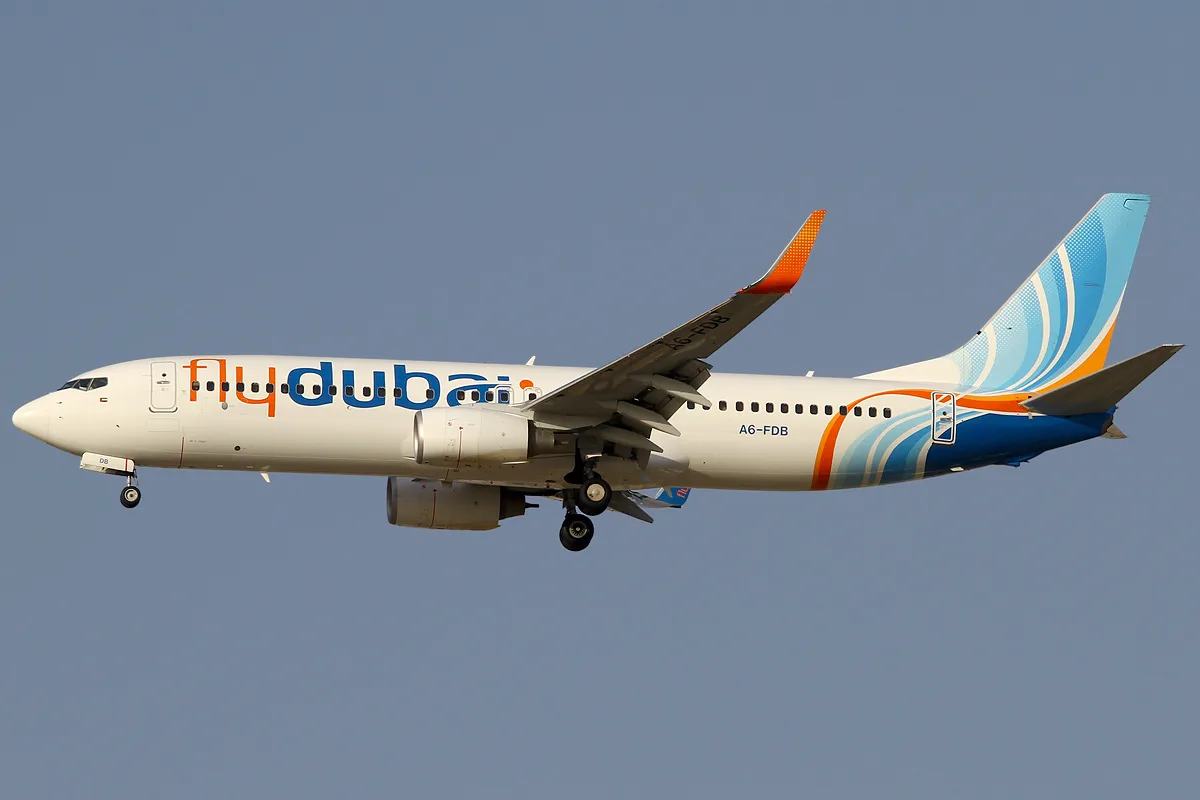
The fight had broken open in the flight deck of a Boeing 737 MAX 8 flying as Flydubai flight FZ1073 from Dubai to Tel Aviv. Around 150 passengers were on board, most of them Israeli. Blood was visible. Crew and passengers forced their way in and restrained the attacker. Both the captain and the first officer were injured.

All the while, the plane started going down very fast. People thought they were going to die, Yasmin Abukasis said, repeating her daughter’s report from the seats. The aircraft dropped from nearly 34,000 feet to less than 17,000 feet between 0521 and 0522 GMT, according to Flightradar24. The loss of altitude took roughly one minute.
In that same stretch the emergency code on the flight changed from a general emergency to unlawful interference and then back again. The unlawful interference code, 7500, is the international signal a plane transmits when it may have been hijacked or otherwise seized. The general emergency code is 7700. A transponder code is the four-digit number an aircraft broadcasts so air traffic controllers can identify it and see its status at a glance. After the code sequence the plane briefly entered Jordanian airspace before returning to Saudi Arabia. The 7500 signal had already gone out. From the ground the aircraft’s intent and control remained unclear.
The Israeli military scrambled fighter jets. Contact with the aircraft and its intent were still unclear. Officials could not rule out a hijacking. Israeli Chief of the General Staff Eyal Zamir held a situational assessment with the air force commander and other officials as the character of the emergency remained open. Whether the incident was terrorism-related stayed contested among Israeli officials. The operational priority was the return of the Israeli passengers still on the diverted flight. Netanyahu’s office said, “The incident is under control, and all measures are currently being deployed in order to return the Israeli passengers safely to Israel.”

A regional official who had been briefed on the incident said a fight broke out in the cockpit, though what sparked it remains unclear. The emergency was a cockpit altercation, not a confirmed external hijacking. The two pilots already at the controls had fought each other inside the flight deck until both required medical care. An investigation into the altercation was under way. Cluster 2, which operates several other airports in Saudi Arabia, said the two men had been taken to a hospital.
Flydubai said the flight “experienced an incident while en route.” The airline said “all passengers are safe and accounted for.” Photographs of a passenger with a bloodied T-shirt circulated through Israeli media after the event. Some Israeli media reported that one of the pilots was Omani and the other Emirati, though those reports went unconfirmed by the airline and by officials on the ground. Neither Flydubai nor the authorities of the countries involved released the pilots’ nationalities or offered a detailed public account of how the fight unfolded. The motive for the violence between the two men remained unresolved.
Flydubai is a low-cost carrier owned by the government of Dubai. Its fleet is made up entirely of Boeing 737 variants, a twin-engine single-aisle type used by airlines worldwide. The carrier has nearly 100 of the aircraft, including 69 of the MAX 8. Direct commercial flights between Dubai and Tel Aviv began after the United Arab Emirates and Israel normalized relations in 2020. The UAE became a popular holiday destination for Israeli tourists, and the Dubai–Tel Aviv corridor grew into a route popular with Israeli travelers. Flydubai has kept daily flights on it since the link opened. For six years the connection carried ordinary commercial traffic between the two cities. Violence inside a cockpit on that run remained rare.

The aircraft’s course was now set for Tabuk Airport in northwestern Saudi Arabia. It landed at 9:45 a.m. local time. A separate account timed the arrival at 9:49 a.m. The airport operates as both a civilian field and a military base in the kingdom. An AFP correspondent who was present in Tabuk saw heavy security near the airport, with several police vehicles and an ambulance parked at the terminal.
Meir Zohar, the father of passenger Ido Zohar, told AFP, “We heard on the news what happened in the sky of Abu Dhabi.” his son sent a text message saying he was well. “He told us that everything is okay, he didn’t tell me that much.” Beyond the text, Zohar said he had no other news.
At Ben Gurion Airport near Tel Aviv, families gathered to await the return of their loved ones. Reporters collected there as well. The Israeli passengers remained in Tabuk.
How it spread
It's concerning that an altercation could incapacitate both pilots at once, and airlines need stricter protocols to prevent this.
The sudden altitude drop must have terrified everyone on board, even if the plane landed without further incident.