


BRICS Leaders Bridge Divisions to Adopt New Delhi Declaration
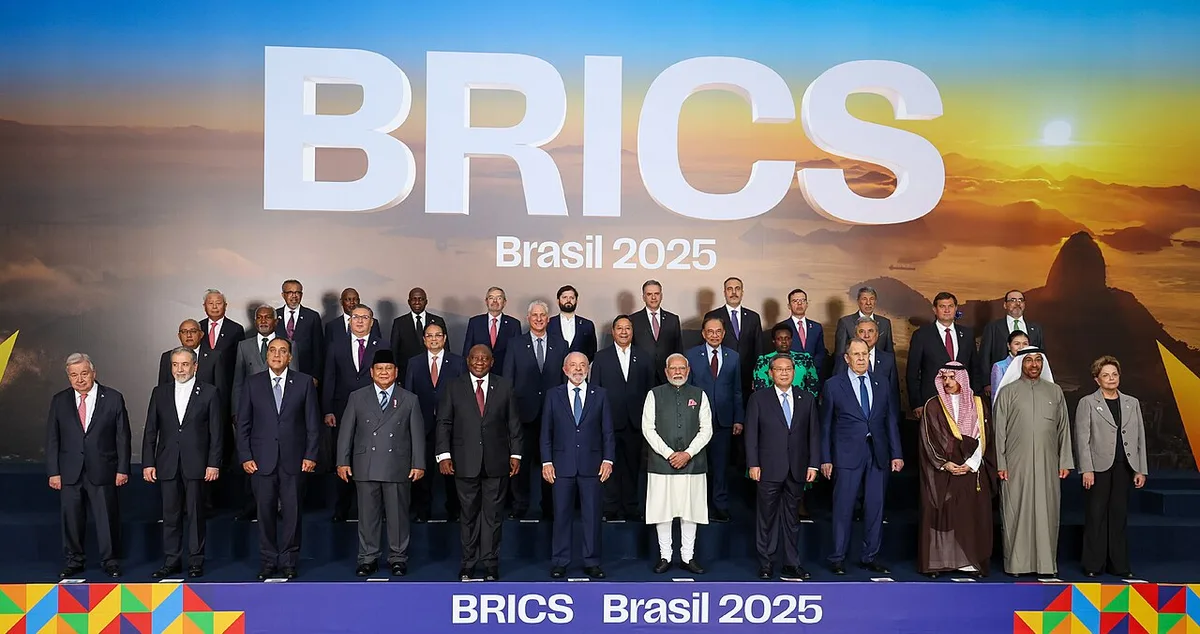
BRICS leaders unanimously adopted the consensus-backed New Delhi Declaration at the 18th summit hosted by India after difficult negotiations among the expanded 11-member bloc, including divisions over West Asian conflicts and competing alliances. The declaration called for conflict prevention, dialogue and diplomacy; condemned terrorism, including the 2025 Pahalgam attack; supported the safety of commercial shipping; and opposed unilateral military action, tariffs and climate-linked trade barriers, while avoiding direct attribution for recent regional attacks and omitting a separate reference to the war in Ukraine. It backed comprehensive UN and Security Council reform, including greater roles for India and Brazil, stronger Global South participation in technology and global governance, and consideration of a woman as the next UN secretary-general, as well as WTO reform and greater use of local currencies while rejecting a common BRICS currency. On climate and energy, the bloc reaffirmed the Paris Agreement, allowed varied national transition paths while retaining a role for fossil fuels, and called for more climate finance for developing countries; China will chair BRICS and host the next summit.