Filming
Filming of The Motion Picture began on August 7, 1978. A few small ceremonies were performed before photography began; Roddenberry gave Wise his baseball cap, a gift from the captain of the nuclear carrier Enterprise. Wise and Roddenberry then cracked a breakaway bottle of champagne on the bridge set (with no champagne inside to avoid damaging the set). The scene of the busy crew on the Enterprise bridge just prior to Kirk's arrival was the first to be shot; Wise directed 15 takes into the late afternoon before he was satisfied with the scene. The first day's shots used 1,650 feet (500 m) of film; 420 feet (130 m) were considered "good", 1,070 feet (330 m) were judged "no good", and 160 feet (49 m) were wasted; only one-and-one-eighth pages had been shot.
Alex Weldon was hired to be supervisor of special effects for the film. Weldon was planning on retiring after 42 years of effects work, but his wife urged him to take on Star Trek because she thought he did not have enough to do. When Weldon was hired, many of the effects had already been started or completed by Rugg; it was up to Weldon to complete more complex and higher-budgeted effects for the motion picture. The first step of preparation involved analyzing the script in the number, duration, and type of effects. Before costs could be determined and Weldon could shop for necessary items, he and the other members of the special effects team worked out all possibilities for pulling off the effects in a convincing manner.
Richard H. Kline served as the film's cinematographer. Working from sketch artist Maurice Zuberano's concepts, Wise would judge if they were on the right track. Kline and Michelson would then discuss the look they wanted (along with Weldon, if effects were involved). Each sequence was then storyboarded and left to Kline to execute. The cinematographer called his function to "interpret [the] preplanning and make it indelible on film. It's a way of everybody being on the same wavelength." Kline recalled that there was not a single "easy" shot to produce for the picture, as each required special consideration. The bridge, for example, was lit with a low density of light to make the console monitors display better. It was hard to frame shots so that reflections of the crew in monitors or light spilling through floor grilles were not seen in the final print.
While Kline was concerned with lighting, print quality, and color, Bonnie Prendergast, the script supervisor, took notes that would be written up after the company had finished for the day. Prendergast's role was to ensure continuity in wardrobe, actor position, and prop placement. Any changes in dialogue or ad-libbed lines were similarly written down. Assistant director Danny McCauley was responsible for collaborating with unit production manager Phil Rawlins to finalize shooting orders and assigning extras. Rawlins, production manager Lindsley Parsons Jr., and Katzenberg were all tasked with keeping things moving as fast as possible and keeping the budget under control; every hour on stage cost the production $4000.
Despite tight security around production, in February 1978 the head of an Orange County, California Star Trek fan group reported to the FBI that a man offered to sell plans of the film set. The seller was convicted of stealing a trade secret, fined $750, and sentenced to two years' probation. Visitor's badges were created to keep track of guests, and due to the limited number were constantly checked out. Visitors included the press, fan leaders, friends of the cast and crew, and actors such as Clint Eastwood, Tony Curtis, Robin Williams and Mel Brooks. Security swept cars leaving the lots for stolen items; even the principal actors were not spared this inconvenience. New West magazine in March 1979 nonetheless revealed most of the plot, including Spock's arrival on the Enterprise, V'Ger's identity, and its reason for coming to Earth.
By August 9, the production was already a full day behind schedule. Despite the delays, Wise refused to shoot more than twelve hours on set, feeling he lost his edge afterwards. He was patient on set; betting pool organizers returned collected money when Wise never lost his cool throughout production. Koenig described working with Wise as a highlight of his career. Katzenberg called Wise the film's savior, using his experience to (as Shatner recalled) subtly make filming "actor-proof". Given his unfamiliarity with the source material Wise relied on the actors, especially Shatner, to ensure that dialogue and characterizations were consistent with the show. Gautreaux was among the actors who had not worked with a chroma key before. Wise had to explain to actors where to look and how to react to things they could not see while filming.
While the bridge scenes were shot early, trouble with filming the transporter room scene delayed further work. Crew working on the transporter platform found their footwear melting on the lighted grid while shooting tests. Issues with the wormhole sequences caused further delays. The footage for the scene was filmed two ways; first, at the standard 24 frames per second, and then at the faster 48 frames; the normal footage was a back-up if the slow-motion effect produced by the faster frame speed did not turn out as planned. The shoot dragged on so long that it became a running joke for cast members to try and top each other with wormhole-related puns. The scene was finally completed on August 24, while the transporter scenes were being filmed at the same time on the same soundstage.
The planet Vulcan setting was created using a mixture of on-location photography at Minerva Hot Springs in Yellowstone National Park and set recreation. Yellowstone was selected after filming in Turkish ruins proved to be too expensive. Securing permission for filming the scenes was difficult in the middle of the summer tourist season, but the Parks Department acquiesced so long as the crew remained on the boardwalks to prevent damage to geological formations. Zuberano, who had helped select the site for the shoot, traveled to Yellowstone and returned with a number of photos. Minor also made a trip and returned to create a large painting depicting how the scene might look. In consultations with Michelson, the crew decided to use miniatures in the foreground to create the Vulcan temples, combined with the real hot springs in the background. In the film, the bottom third of the frames were composed of miniature stairs, rocks, bits of red glass and a Vulcan statue. The center of the frame contained Nimoy's shots and the park setting, while the final third of the frame was filled with a matte painting. On August 8, the day after production began at Paramount, an 11-person second unit left for Yellowstone. The sequence took three days to shoot.
On returning to Paramount, the art department had to recreate parts of Yellowstone in a large "B tank", 110 by 150 feet (34 by 46 m) long. The tank was designed to be flooded with millions of gallons of water to represent large bodies of water. Minor set up miniatures on the tank's floor before construction and made sure that the shadows that fell on Spock at Yellowstone could be properly recreated. A plywood base was built on metal platforms to create stone silhouettes, reinforced with chicken wire. Polyurethane foam was sprayed over the framework under the supervision of the Los Angeles Fire Department. The bottom part of the statue miniature was represented by a 16-foot-high (4.9 m) fiberglass foot. Weldon matched the effects filmed at Yellowstone using dry ice and steam machines. To recreate the appearance of the swirling eddies of water in the real Yellowstone, a combination of evaporated milk, white poster paint, and water was poured into the set's pools. The pressure of the steam channeled into the pools through hidden tubing causes enough movement in the whirlpools to duplicate the location footage. Due to the requirement that the sun be in a specific location for filming and that the environment be bright enough, production fell behind schedule when it was unseasonably cloudy for three days straight. Any further scenes to recreate Vulcan would be impossible, as the set was immediately torn down to serve as a parking lot for the remainder of the summer.
The computer console explosion that causes the transporter malfunction was simulated using Brillo Pads. Weldon hid steel wool inside the console and attached an arc welder to operate by remote control when the actor pulled a wire. The welder was designed to create a spark instead of actually welding, causing the steel wool to burn and make sparks; so effective was the setup that the cast members were continually startled by the flare-ups, resulting in additional takes. Various canisters and cargo containers appear to be suspended by anti-gravity throughout the film. These effects were executed by several of Weldon's assistants. The crew built a circular track that had the same shape as the corridor and suspended the antigravity prop on four small wires that connected to the track. The wires were treated with a special acid that oxidized the metal; the reaction tarnished the wires to a dull gray that would not show up in the deep blue corridor lighting. Cargo boxes were made out of light balsa wood so that fine wires could be used as support.
As August ended, production continued to slip farther behind schedule. Koenig learned that rather than being released in 14 days after his scenes were completed, his last day would be on October 26—eight weeks later than expected. The next bridge scenes to be filmed after the wormhole sequence, Enterprise's approach to V'Ger and the machine's resulting attack, were postponed for two weeks so that the special effects for the scene could be planned and implemented, and the engine room scenes could be shot. Chekov's burns sustained in V'Ger's attack were difficult to film; though the incident took only minutes on film, Weldon spent hours preparing the effect. A piece of aluminum foil was placed around Koenig's arm, covered by a protective pad and then hidden by the uniform sleeve. Weldon prepared an ammonia and acetic acid solution that was touched to Koenig's sleeve, causing it to smoke. Difficulties resulted in the scene being shot ten times; it was especially uncomfortable for the actor, whose arm was slightly burned when some of the solution leaked through to his arm.
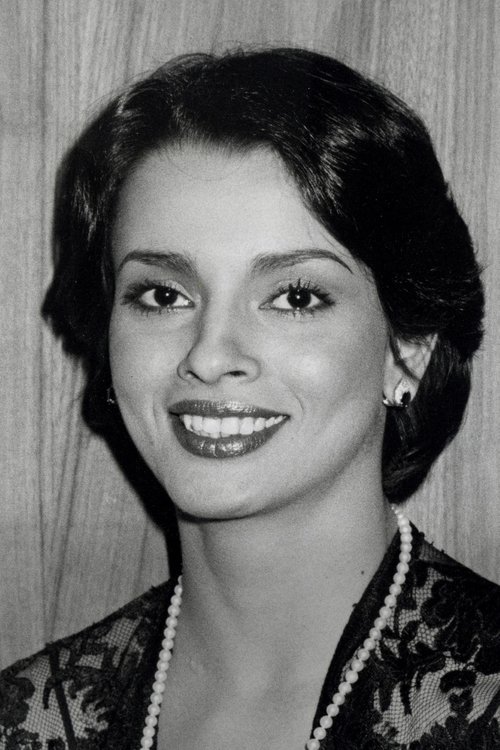
Khambatta also faced difficulties during filming. She refused to appear nude as called for in the script during the Ilia probe's appearance. The producers got her to agree to wear a thin skin-colored body stocking, but she caught a cold as a result of the shower mist, created by dropping dry ice into warm water and funneling the vapors into the shower by a hidden tube. Khambatta had to leave the location repeatedly to avoid hypercapnia. One scene required the Ilia probe to slice through a steel door in the sickbay; doors made out of paper, corrugated cardboard covered in aluminum foil, and cork were tested before the proper effect was reached. The illuminated button in the hollow of the probe's throat was a 12-volt light bulb that Khambatta could turn on and off via hidden wires; the bulb's heat eventually caused a slight burn.
On January 26, 1979, the film finally wrapped after 125 days. Shatner, Nimoy, and Kelley delivered their final lines at 4:50 pm. Before the crew could go home, a final shot had to be filmed—the climactic fusing of Decker and V'Ger. The script prescribed a heavy emphasis on lighting, with spiraling and blinding white lights. Collins was covered in tiny dabs of cotton glued to his jacket; these highlights were designed to create a body halo. Helicopter lights, 4,000-watt lamps and wind machines were used to create the effect of Decker's fusion with the living machine. The first attempts at filming the scene became a nightmare for the crew. The extreme lighting caused normally invisible dust particles in the air to be illuminated, creating the appearance that the actors were caught in a blizzard. During the retakes throughout the week the crew mopped and dusted the set constantly, and it required later technical work to eliminate the dust in the final print.
Two weeks later, the entire cast and crew joined with studio executives for a traditional wrap party. Four hundred people attended the gathering, which spilled over into two restaurants in Beverly Hills. While much of the crew readied for post-production, Wise and Roddenberry were grateful for the opportunity to take a short vacation from the motion picture before returning to work.