George Takei ( tə-KAY; born Hosato Takei, April 20, 1937) is an American actor, author, and activist. He is known for his role as Hikaru Sulu, helmsman of the USS Enterprise in the Star Trek franchise.
Takei was born to Japanese-American parents, with whom he lived in Tule Lake Segregation Center during World War II. He began pursuing acting in college, which led in 1965 to the role of Sulu, to which he returned periodically into the 1990s. Upon coming out as gay in 2005, he became a prominent proponent of LGBTQ rights and active in state and local politics. He has been a vocal advocate of the rights of immigrants, in part through his work on the 2012 Broadway show Allegiance, about the internment experience.
Takei spoke both English and Japanese growing up and remains fluent in both languages. He has won several awards and accolades for his work on human rights and Japan–United States relations, including his work with the Japanese American National Museum in Los Angeles, California.
Contents
Early life
Takei was born Hosato Takei on April 20, 1937, in Los Angeles, California, to Japanese American parents Fumiko Emily Nakamura (born in Sacramento, California) and Takekuma Norman Takei (born in Yamanashi Prefecture), who worked in real estate. His father named him George after King George VI of the United Kingdom, whose coronation took place in 1937, shortly after Takei's birth. In 1942, following the signing of Executive Order 9066, the Takei family was forced to live in the converted horse stables of Santa Anita Park before being sent to the Rohwer War Relocation Center for internment in Rohwer, Arkansas. The internment camp was in swamplands and surrounded by barbed wire fences. The family was later transferred to the Tule Lake War Relocation Center in California for internment.
Takei had several relatives living in Japan during World War II. Among them, he had an aunt and infant cousin who lived in Hiroshima and who were both killed during the atomic bombing that destroyed the city. In Takei's own words, "My aunt and baby cousin [were] found burnt in a ditch in Hiroshima." At the end of World War II, after leaving Tule internment camp, Takei's family was left without any bank accounts, home or family business; this left them unable to find any housing, so they lived on Skid Row, Los Angeles for five years. He attended Mount Vernon Junior High School and served as Boys Senior Board President at Los Angeles High School. He was a member of Boy Scout Troop 379 of the Koyasan Buddhist Temple.
Upon graduation from high school, Takei enrolled in the University of California, Berkeley, where he studied architecture. Later, he transferred to the University of California, Los Angeles, where he received a Bachelor of Arts in theater in 1960 and a Master of Arts in theater in 1964. He also attended the Shakespeare Institute at Stratford-upon-Avon in England and Sophia University in Tokyo. In Hollywood, he studied acting at the Desilu Workshop.
Career
Early career
Takei began his career in Hollywood in the late 1950s, providing voiceover for characters in the English dubbing of the Japanese monster films Rodan (1956, US: 1957) and Godzilla Raids Again (1955, US: Gigantis the Fire Monster, 1959). He appeared in the anthology television series Playhouse 90, the Perry Mason episode "The Case of the Blushing Pearls" (both 1959), and a handful of times in Hawaiian Eye during the 1960–61 season, including an eponymous episode as Thomas Jefferson Chu. He originated the role of George in the musical Fly Blackbird!, but when the show traveled from Los Angeles to Off-Broadway the West Coast actors were forced to audition and the role went to William Sugihara instead. Eventually Sugihara had to give up the role and Takei closed out the show's final months.
Takei subsequently appeared alongside such actors as Frank Sinatra in Never So Few (uncredited, 1959), Richard Burton in Ice Palace, Jeffrey Hunter in Hell to Eternity (1960), Alec Guinness in A Majority of One (1961), James Caan in Red Line 7000 (1965), and Cary Grant in Walk, Don't Run (1966).
Takei starred as a landscaper of Japanese descent in "The Encounter", a 1964 episode of the Twilight Zone. CBS considered the episode's theme of US-Japanese hatred "too disturbing" to include when the series was syndicated. "The Encounter" was not seen after its initial airing until it was released on video in 1992 as part of the Treasures of the Twilight Zone collection.
Takei guest-starred in an episode of Mission: Impossible during that show's first season in 1966. He also appeared in two Jerry Lewis comedies, The Big Mouth (uncredited, 1967) and Which Way to the Front? (1970). Takei narrated the documentary The Japanese Sword as the Soul of the Samurai (1969).
Star Trek
In 1965, producer Gene Roddenberry cast Takei as astrosciences physicist Hikaru Sulu in the second pilot for the original Star Trek television series. When the series was accepted by NBC, Takei continued in the role of Sulu, who was now the ship's helmsman.
It was intended that Sulu's role be expanded in the second season, but Takei's role in The Green Berets (1968) as Captain Nim, a South Vietnamese Army officer alongside John Wayne's character, took him away from Star Trek filming and he only appeared in half the episodes of that season. Walter Koenig as Pavel Chekov substituted for him in the other episodes. When Takei returned, the two men had to share a dressing room and a single episode script. Takei admitted in an interview that he initially felt threatened by Koenig's presence, but later grew to be friends with him as the image of the officers sharing the ship's helm panel side-by-side became iconic.
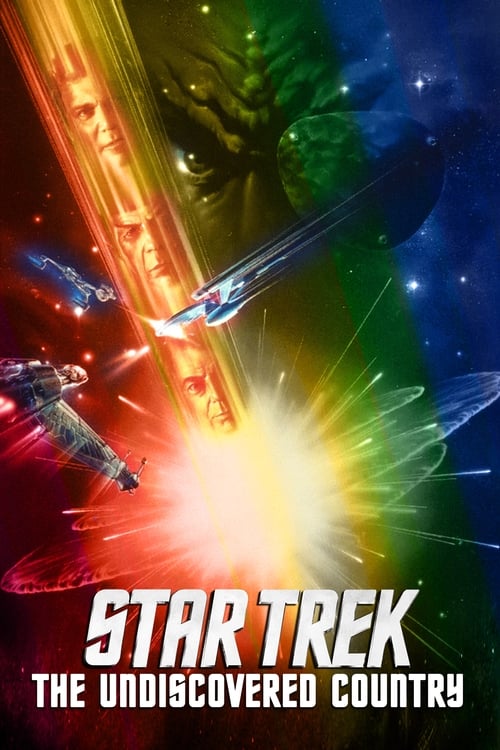
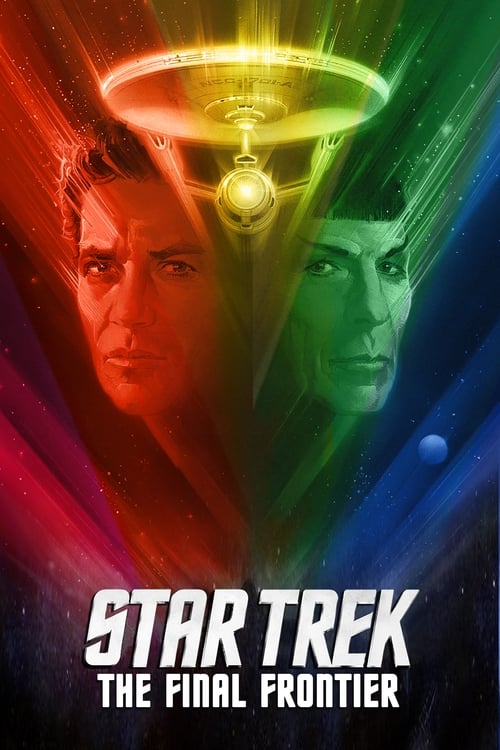
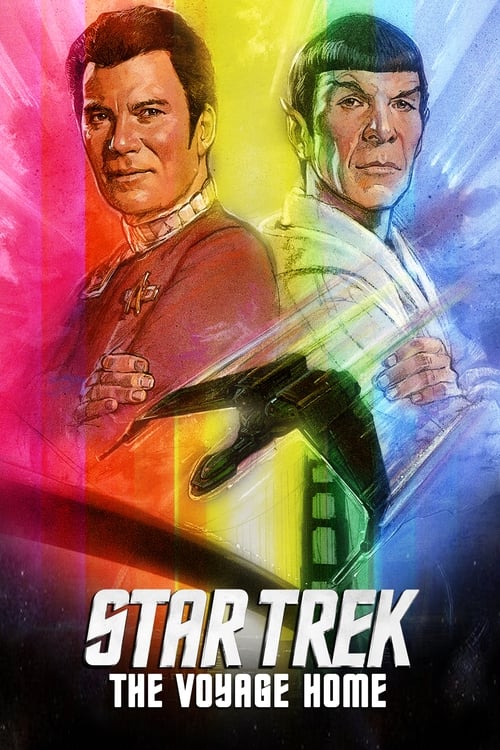
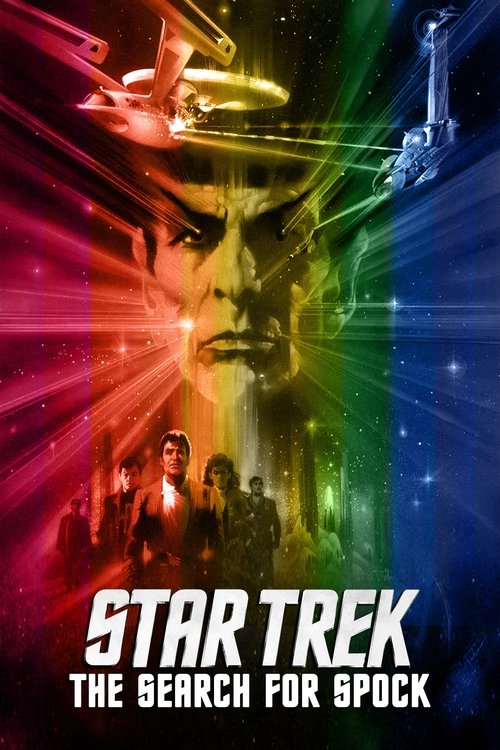
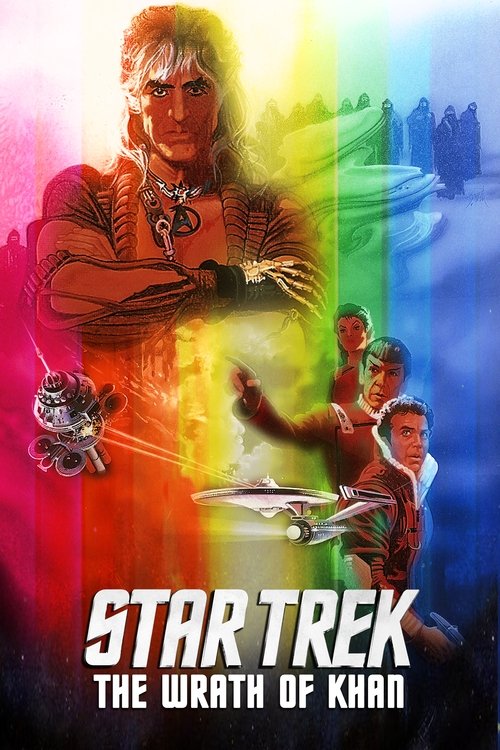
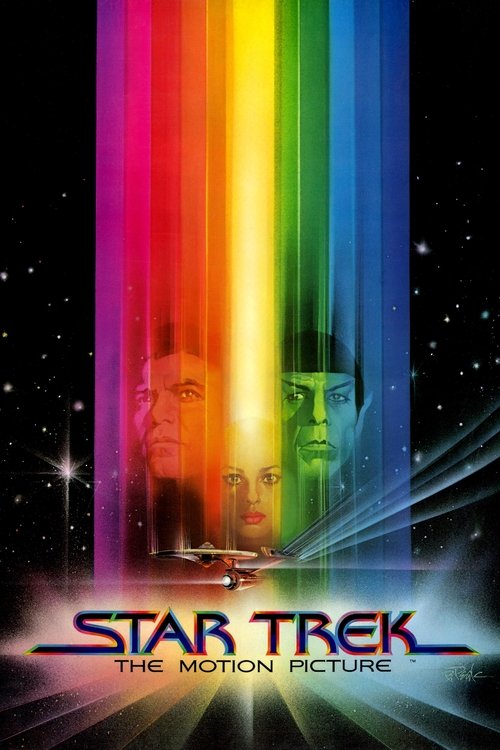
Takei has since appeared in numerous television and film productions, reprising his role as Sulu in Star Trek: The Animated Series from 1973 to 1974, and in the first six Star Trek films, the last of which promoted his character to captain of his own starship. Meanwhile, he became a regular on the science fiction convention circuit throughout the world. He has also acted and provided voice acting for several science fiction computer games, including Freelancer and numerous Star Trek games. In 1996, in honor of the 30th anniversary of Star Trek, he played Captain Sulu in an episode of Star Trek: Voyager.
Takei has spoken about personal difficulties with William Shatner. However, in an interview in the 2004 DVD set for the second season of Star Trek, Takei said of Shatner: "He's just a wonderful actor who created a singular character. No one could have done Kirk the way Bill did. His energy and his determination, that's Bill. And that's also Captain Kirk." He appeared alongside Shatner on the 2006 Comedy Central Roast of William Shatner in which the two mocked each other in good humor and embraced, Takei noting that he was "honored" to be there "despite our past tensions".
Takei is also one of six actors (the others being Jonathan Frakes, Kate Mulgrew, Michael Dorn, Avery Brooks, and Majel Barrett) to lend his voice to the 1997 video game Star Trek: Captain's Chair, reprising his role of Captain Hikaru Sulu when the player visits the bridge of the original Enterprise. In the summer of 2007, Takei played Sulu in the fan-made Internet based series Star Trek New Voyages: Phase II episode "World Enough and Time".
After Star Trek
In 1979, Takei co-wrote the science fiction novel Mirror Friend, Mirror Foe with Robert Asprin.
Takei's autobiography, To The Stars, was published in 1994. At one point, he had hoped to make a film or telefilm based on chapters dealing with the internment of Japanese-Americans during World War II, of which he had personal experience.
In January 2007, Takei began appearing on Heroes, as Kaito Nakamura, a successful Japanese businessman and father to one of the main characters, time/space-travelling Hiro Nakamura, who also happens to be an obsessive fan of Star Trek. In the first episode in which Takei appears, "Distractions", the license plate of the limo he arrives in is NCC-1701, another reference to the Star Trek series. He appeared in all four seasons of the show.
Takei appeared on the first episode of Secret Talents of the Stars, singing country music, but was not selected to proceed to the next stage. However the point became moot as the series was abruptly cancelled after the opening episode.
In 2008, Takei appeared on the 8th season of the reality TV series I'm a Celebrity... Get Me Out of Here! on the British ITV television network. He lived in the Australian bush for 21 days and nights, doing tasks along with fellow campers to gain better meals and survive eviction from the show. His politeness and calmness made him popular with the other campers. Out of 12 participants the British public voted him into 3rd place behind 2nd placed Martina Navratilova and winner Joe Swash.
In 2009, Takei appeared in an episode of Star Wars: The Clone Wars as the Neimoidian general, Lok Durd, the first time a leading actor from Star Trek worked in a Star Wars production. In April that year, he voiced a fictitious version of himself in the NASA animated short "Robot Astronomy Talk Show: Gravity and the Great Attractor", part of the web-series IRrelevant Astronomy produced by NASA's Spitzer Space Telescope. Takei (and his husband Brad Altman) appeared in a documentary short titled George & Brad in Bed (2009) that profiled their relationship and was a guest on NPR's Wait Wait... Don't Tell Me!.
In 2010, Takei recorded a series of public service announcements for the Social Security Administration to help promote applying online for benefits.
Takei has garnered attention for his Facebook page, where he posts daily humorous pictures, many of which are related to science fiction, LGBT culture, and political satire. Takei's Facebook account has attracted over 9 million followers, some of whom are unfamiliar with Takei or Star Trek. He has been lauded as "the funniest guy on Facebook". In September 2013, Takei used his Facebook page to defend Nina Davuluri, who was targeted by a backlash of racist and xenophobic comments after being named Miss America 2014. He later appeared in a joint ABC interview with Davuluri, in which she revealed that she is a Trekkie. Takei told her, "In Star Trek we have this creed: 'Infinite diversity in infinite combinations'. That's what Starfleet was all about so you're a part of that." Davuluri ended the interview by stating, "I have to say 'Live Long and Prosper'" at which point Takei offered her the Vulcan salute, which she returned. However, Takei also attracted criticism from some people with disabilities in 2014 for his posting of a meme on Facebook and Twitter which shows a wheelchair-using woman standing up to reach something from the top shelf in a store and is captioned "there has been a miracle in the alcohol isle" [sic]. Disabled people responded that people need not be paralyzed to need wheelchairs; Takei then removed the post and apologized on Facebook for his comments.
Legal issues
In November 2017, former actor and model Scott R. Brunton told The Hollywood Reporter that Takei drugged and groped him in Takei's condo in 1981, when Brunton was 23 years old. Takei denied the allegation, writing on Twitter: "I have wracked my brain to ask if I remember Mr. Brunton, and I cannot say I do. ... Non-consensual acts are so antithetical to my values and my practices, the very idea that someone would accuse me of this is quite personally painful." In response to the allegation, Mic, Slate, Refinery29, Upworthy, GOOD and Futurism announced they would be cutting ties with Takei.
On May 24, 2018, the New York Observer's Shane Snow reported that Brunton had "changed his story", describing his encounter with Takei as a "great party story" and confessing to "not remembering any touching" of his genitalia. Snow also consulted toxicologists, who suggested Brunton likely had postural hypotension rather than a drugged drink, and a former senior deputy district attorney, who contended "there's nothing to prosecute" if it was the case that Takei stopped physical contact with Brunton after being denied consent. That same month, Takei posted Snow's article on his social media platforms while publicly forgiving Brunton for his misdeeds, stating: "despite what he has put us through, I do not bear Mr. Brunton any ill will, and I wish him peace."
Activism and advocacy
Takei was an alternate delegate from California to the 1972 Democratic National Convention. The following year he ran for a seat on the Los Angeles City Council, finishing second of five candidates in the special election and losing by 1,647 votes; the winner, David Cunningham Jr., received 42% of the votes cast and Takei received 33%. During the campaign, Takei's bid for the city council caused one local station to stop running the repeats of the original Star Trek series until after the election and KNBC-TV to substitute the premiere episode of the Star Trek animated series scheduled by the network with another in which his character did not appear, in attempts to avoid violating the FCC's equal-time rule. The other candidates in the race complained that Takei's distinctive and powerful voice alone, even without his image on television every week, created an unfair advantage.
Los Angeles mayor Tom Bradley later appointed Takei to the board of directors of the Southern California Rapid Transit District, making him part of the team that initiated and planned the Los Angeles subway system. Takei was called away from the set of Star Trek: The Motion Picture in 1978 to cast the tie-breaking vote for the creation of the Los Angeles subway system. He served on the board from 1973 to 1984.
In 1980, Takei began a campaign for California state assemblyman (District 46) from the greater Los Angeles area. However, he chose to withdraw after his opponent challenged the airing of episodes of Star Trek on local television under the Federal Communications Commission's Fairness Doctrine "equal time" regulations, saying also that "this is the wrong time to interrupt my career as an actor and author." He also appeared as a sadistic Japanese POW camp commander in the World War II film Return from the River Kwai (1989).
As of 2006, Takei serves as a spokesperson for the Human Rights Campaign "Coming Out Project". In 2006, he embarked on a nationwide "Equality Trek" speaking tour sharing his life as a gay Japanese American, his 18-year relationship with Altman, Frontrunners, and Star Trek, encouraging others to share their own personal stories. In the wake of the 2007 controversy over former NBA player Tim Hardaway, who had stated "I hate gay people", Takei recorded a mock public service announcement which began as a serious message of tolerance, then turned the tables on Hardaway by proclaiming that while he may hate gay people, gay people love him and other "sweaty basketball players", and promising Hardaway that "I will have sex with you". This was aired on Jimmy Kimmel Live! Takei also appeared on the Google float at San Francisco Pride 2007.
Personal life
Relationships
In October 2005, Takei revealed in an issue of Frontiers magazine that he is gay and had been in a committed relationship with his partner, Brad Altman, for 18 years; the move was prompted by then California governor Arnold Schwarzenegger's veto of same-sex marriage legislation. Takei said "It's not really coming out, which suggests opening a door and stepping through. It's more like a long, long walk through what began as a narrow corridor that starts to widen." Nevertheless, Takei's sexuality had been an open secret among Star Trek fans since the 1970s, and Takei did not conceal his active membership in LGBTQ organizations, including Frontrunners, where he developed public friendships with openly gay couples such as Kevin and Don Norte. In an on-air telephone interview with Howard Stern in December 2005, Takei explained, "[We (gay people)] are masculine, we are feminine, we are caring, we are abusive. We are just like straight people, in terms of our outward appearance and our behavior. The only difference is that we are oriented to people of our own gender." Takei also described Altman as "a saint" for helping to take care of Takei's terminally ill mother.
On May 16, 2008, Takei announced that he and Altman would be getting married. They were the first same-sex couple to apply for a marriage license in West Hollywood. On June 17, shortly after Takei and Altman obtained their marriage license, they spread the news by holding a press conference outside the West Hollywood city auditorium. They were married on September 14, 2008, at the Democracy Forum of the Japanese American National Museum in Los Angeles, of which Takei is one of the founders and serves as a member of its board of trustees. Walter Koenig was his best man, and Nichelle Nichols, eschewing the title "matron of honor", was "best woman". Reverend William Briones of the Nishi Hongwanji Buddhist Temple of Los Angeles presided.
Takei and Altman appeared in a celebrity edition of The Newlywed Game TV show, which the GSN cable network aired October 13, 2009. They were the first same-sex couple to be featured on the show. Takei and Altman won the game, winning $10,000 for their charity, the Japanese American National Museum.
Religious beliefs
Takei is a Buddhist. His father practiced Zen Buddhism and his mother practiced Shin Buddhism. He kept a small shrine when the family was incarcerated at an internment camp during World War II. After the war, Takei attended Sunday school at Senshin Buddhist Temple in Los Angeles, California. Takei and husband Brad Altman were married in 2008 at a Buddhist ritual performed by the Reverend William Briones.
Awards and recognition
In 1986, Takei was inducted into the Hollywood Walk of Fame with a star at 6681 Hollywood Boulevard for his work in television.
In 2004, the government of Japan conferred upon Takei the Order of the Rising Sun, Gold Rays with Rosette, which represents the fourth highest of six classes associated with the award. This decoration was presented in acknowledgment of his contributions to US–Japanese relations.
Asteroid 7307 Takei is named in his honor. Upon learning of the decision to name the asteroid after him, he said, "I am now a heavenly body. I found out about it yesterday. ... I was blown away. It came out of the clear, blue sky—just like an asteroid."
In November 2007, Takei was given a Lifetime Achievement Award by the San Diego Asian Film Festival.
In June 2012, the American Humanist Association gave Takei the LGBT Humanist Award.
In July 2013, the National Association of Asian American Professionals honored Takei with the NAAAP100 award for his contributions to the Asian community.
In May 2014, the Gay & Lesbian Alliance Against Defamation honored Takei with the GLAAD Vito Russo Award, which is presented to an openly LGBT media professional who has made a significant difference in promoting equality for the LGBT community.
In May 2015, the Japanese American National Museum honored Takei with its Distinguished Medal of Honor for Lifetime Achievement and Public Service at the Japanese American National Museum's 2015 Gala Dinner in Los Angeles.
On June 10, 2016, California State University, Los Angeles presented Takei with an honorary Doctorate of Humane Letters for his contributions. In 2019, he was awarded the Inkpot Award.