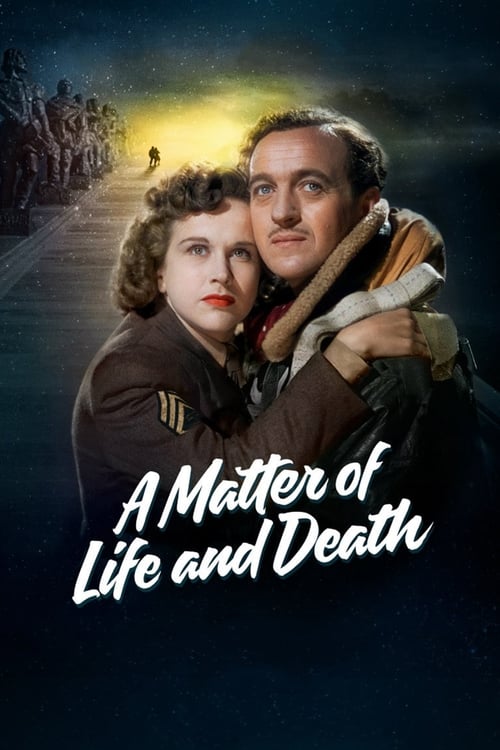
Marius Re Goring (23 May 1912 – 30 September 1998) was an English stage and screen actor. He often portrayed urbane and morally grey characters, and is best remembered for the four films he made with Powell & Pressburger, particularly as Conductor 71 in A Matter of Life and Death and as Julian Craster in The Red Shoes. He is also known for playing the titular role in the long-running TV drama series, The Expert.
Contents
Early life
Goring was born on 23 May 1912 in Newport, Isle of Wight. He was the son of the eminent physician and researcher Charles Buckman Goring (1870–1919), the author of The English Convict, and Kate Winifred (née Macdonald, 1874–1964), a professional pianist of Scottish descent who was also a suffragette. He had an older brother, Donald, who died in Yemen, in 1936, from injuries sustained in a motor vehicle accident.
After attending The Perse School in Cambridge, where he became a friend of an older boy, the future documentary film maker Humphrey Jennings, Goring studied modern languages at the University of Frankfurt am Main, the Ludwig-Maximilians-Universität München, the University of Vienna, and the University of Paris.
Career
Encouraged by both of his parents to pursue his acting ambitions, he made his professional debut in 1927 playing Harlequin. He studied under Harcourt Williams at the Old Vic dramatic school from 1929 to 1932. In 1931, he toured Germany and France with the English Classical Players performing in Shakespearean and classic English plays. Having become fluent in French and German, he joined La Compagnie des Quinze, under the directorship of Michel Saint-Denis, in 1934. He would later encourage Saint-Denis to come to England and work as a director. His early stage career in England included appearances at the Old Vic, Sadler's Wells and in the West End from 1932 through to 1940. During that period, he played a variety of Shakespearean roles at the Old Vic, including the title role in Macbeth and Romeo in Romeo and Juliet (1933), Feste in Twelfth Night (1937), in addition to Trip in Sheridan's The School for Scandal. He first worked in the West End in a 1934 revival of Granville-Barker's The Voysey Inheritance at the Shaftesbury Theatre.
In 1929, he became a founding member of British Equity, the actors' union, served on its council from 1949 and was three times its vice-president from 1963 to 1965, 1975 to 1977 and again from 1980 to 1982. Goring's relationship with his union was fraught with conflict: he took it to litigation on three occasions. In 1978, regarding the issue of the supremacy of a referendum to decide Equity rules, he took it as far as the House of Lords and won his case. In 1992, he unsuccessfully sought to end the restriction on the sale of radio and television programmes to apartheid South Africa. Stressing that he opposed apartheid and would not perform for segregated audiences, he argued that the ban was depriving actors of work, and stated that he wished to stage a production of the play She Stoops to Conquer with an all-black cast. This particular litigation nearly bankrupted him, due to heavy court costs.
In November 1931, at the age of nineteen, he married twenty-nine year old Mary Westwood Steel (1902-1994) at Gretna Green, Scotland (they had a second marriage ceremony in a London register office in February 1932) and their only child, a daughter Phyllida Mariette Goring, was born in March 1932 and died in 2018. The marriage did not succeed and he became engaged in 1935 to ballet choreographer and designer, Susan 'Susy' Salaman, older sister of Merula Salaman, wife of Alec Guinness. Susy contracted acute encephalitis in late 1935 and was left brain-damaged. Goring wanted to go ahead with the wedding but Susy's father, Michel Salaman, would not allow it.
Honours
He was made a Fellow of the Royal Society of Literature in 1979 and appointed Commander of the Order of the British Empire (CBE) in 1991.
Personal life
Goring was married three times, to Mary Westwood Steel, Lucie Mannheim, and Prudence Fitzgerald. He had a daughter, Phyllida, with his first wife.
As an adult, Goring regularly performed French and German roles, and was frequently cast in the latter because of his name, coupled with his red-gold hair and blue eyes, fluency in both languages, and a marriage to German actress Lucie Mannheim. However, he did not possess any known German ancestry. In a 1965 interview, he explained that he was not of German descent, stating that "Goring is a completely English name." As BFI Screenonline noted, "Goring, in nearly 50 films, maintained an urbane image - when, that is, he wasn't being notably sinister. Wholly British as he was, he was remarkably adept at suggesting foreigners."
Death
He died from stomach cancer in 1998 aged 86 at his home in Rushlake Green, East Sussex. He is buried in the churchyard of St Mary the Virgin, Warbleton, East Sussex near Rushlake Green with his wife, Prudence, who died in 2018.
Portrayal in fiction
Goring appears as a character in the 2023 BBC radio play, A Wireless War, in which he is recruited by the Radio Drama Company to voice Adolf Hitler in a serial about the rise of Nazi Germany. He is played by Josh Bryant-Jones.