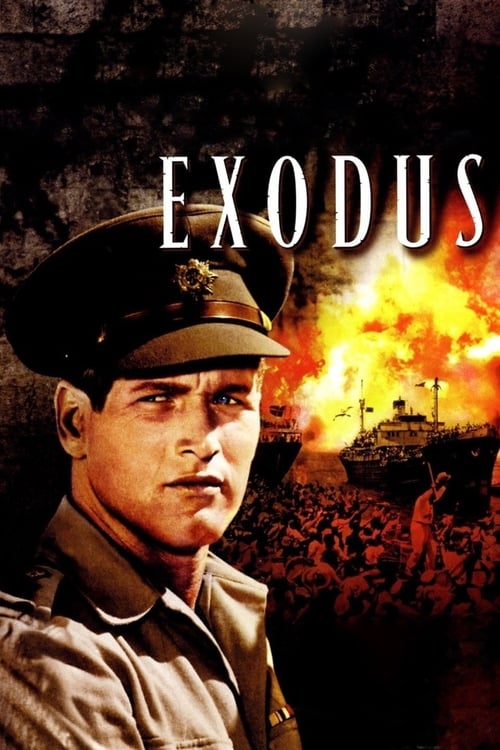
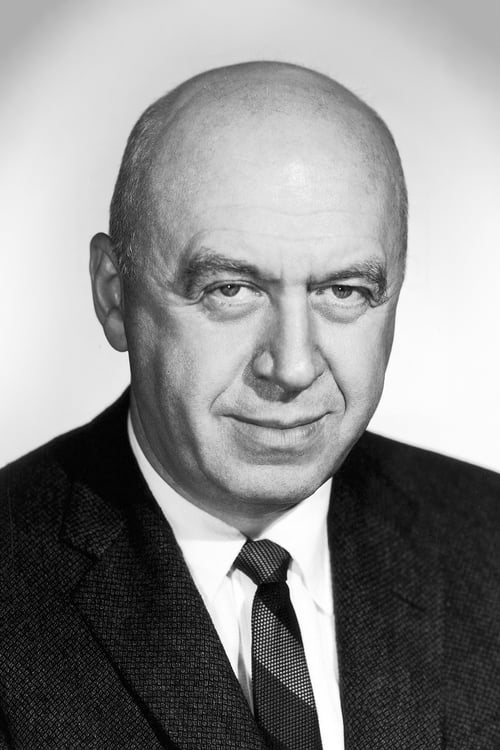
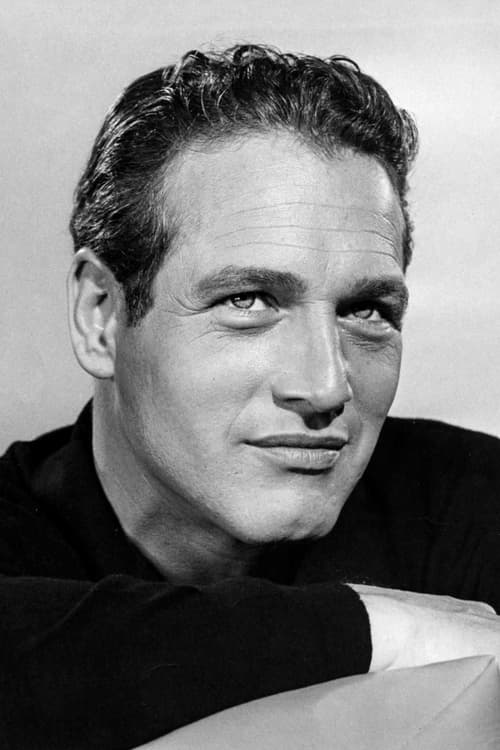

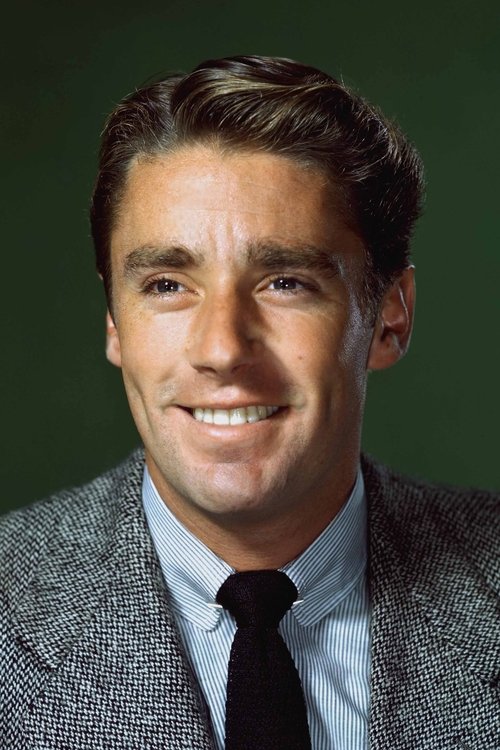


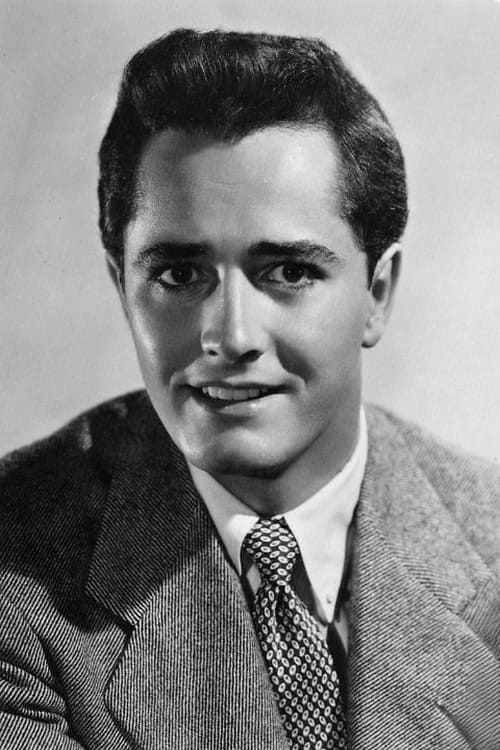
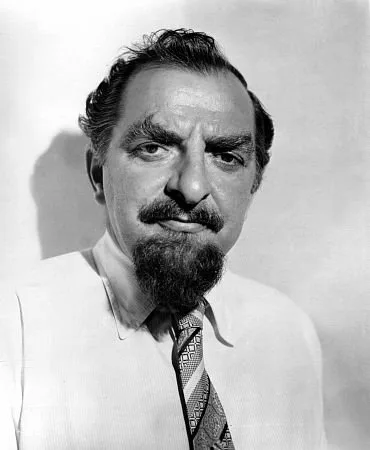

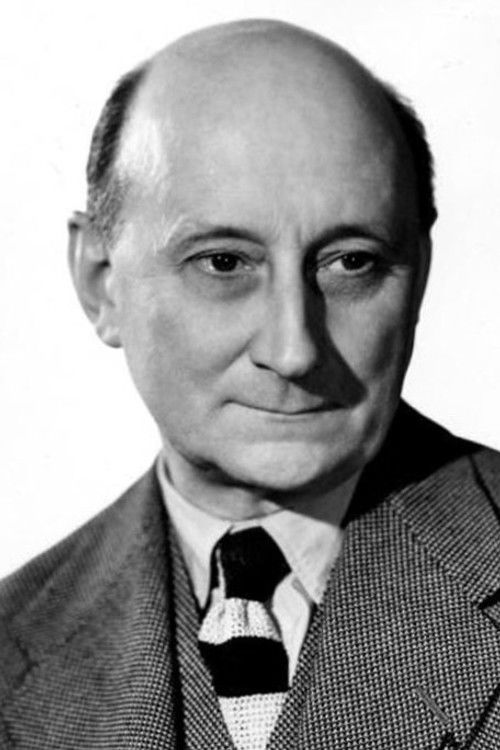
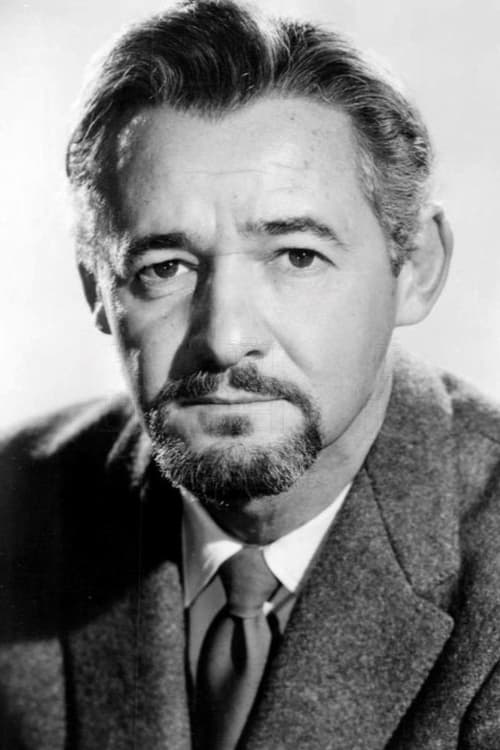

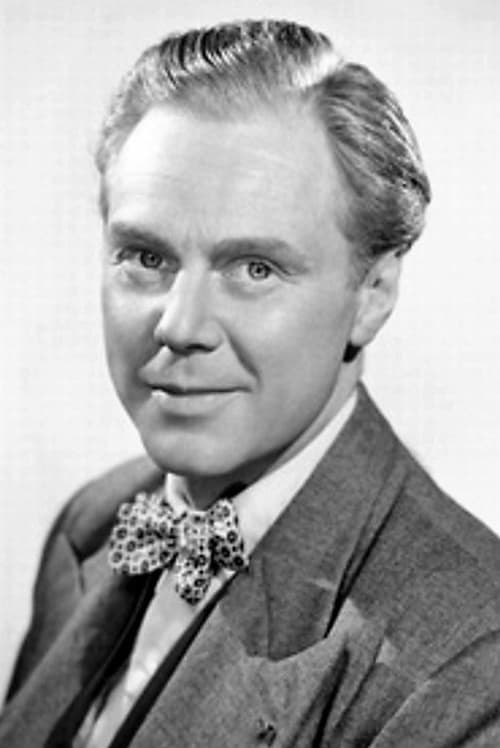
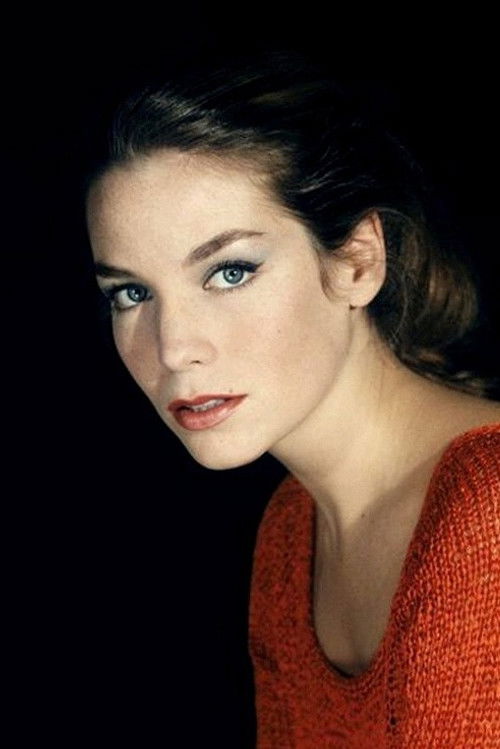
Exodus is a 1960 American epic historical drama film about the founding of the State of Israel. Produced and directed by Otto Preminger, the screenplay was adapted by Dalton Trumbo from the 1958 novel of the same name by Leon Uris. The film stars an ensemble cast including Paul Newman, Eva Marie Saint, Ralph Richardson, Peter Lawford, Lee J. Cobb, Sal Mineo, John Derek and George Maharis. The film's soundtrack music was written by Ernest Gold.
Preminger openly hired screenwriter Trumbo, who had been on the Hollywood blacklist for over a decade for being a communist and refusing to testify before the House Un-American Activities Committee, forcing him to work under assumed names. (He won the 1957 Academy Award for Best Screenplay under the pseudonym "Robert Rich.") Together with Spartacus, also written by Trumbo, Exodus is credited with ending the practice of blacklisting in the US motion picture industry.
Released on December 15, 1960, by United Artists, the film earned $8.7 million at the box office in the United States and Canada, and $20 million worldwide.
Contents
Plot
After the Second World War, Katherine "Kitty" Fremont, a widowed American nurse, is sightseeing in Cyprus following a tour of duty for the U.S. Public Health Service in Greece. Her guide mentions the Karaolos internment camp on Cyprus, where thousands of Jews — many Holocaust survivors — are being detained. The British refuse them passage to Palestine. British General Sutherland, who knew her late husband, suggests Kitty volunteer at the internment camp. Feeling uncomfortable around Jews, she initially refuses but reconsiders.
At Karaolos, Kitty grows fond of Karen Hansen Clement, a Danish-Jewish teenager she meets in the camp, and offers to take her to America, but Karen declines. Her mother and siblings were Holocaust victims, and she is searching for her missing father while promoting the Zionist cause.
When Haganah rebel Ari Ben Canaan, a wartime captain in the British Army's Jewish Brigade, smuggles 611 Jews aboard a cargo ship for an illegal voyage to Palestine, military authorities blockade Famagusta harbor to prevent the ship's departure. Karen is among the Karaolos internees aboard the ship bound for Palestine. When Kitty learns Karen is aboard the ship, she uses her influence with Sutherland to be permitted to board to ensure Karen and other refugees boarded voluntarily. Karen confirms she has boarded voluntarily. The refugees stage a hunger strike, and Ari threatens to blow them up with the ship if not permitted to sail. When Kitty volunteers to stay onboard to provide medical services, Ari insists she must join the hunger strike. Eventually, the British permit the ship, renamed Exodus, to sail.
As opposition to partitioning Palestine into Arab and Jewish states intensifies, Karen's beau, Dov Landau, joins the Irgun, a radical pro-Zionist militant group led by Akiva Ben Canaan, Ari's uncle. Akiva interrogates Dov, who confesses to being a Sonderkommando in Auschwitz, where he learned dynamiting skills. Akiva's violent activities run counter to his brother Barak, Ari's father, who heads the mainstream Jewish Agency, working to create a Jewish state through political and diplomatic means. Barak fears the Irgun will derail these efforts.
Karen relocates to Gan Dafna, a Jewish kibbutz near Mount Tabor, close to the moshav where Ari was raised. Kitty and Ari fall in love, but Kitty pulls back after meeting Ari's family and learning about his previous love. Dafna, who was kidnapped, tortured, and murdered by Arabs, is the namesake of the Gan Dafna kibbutz. Ari helps locate Karen's father, Dr. Clement, now committed to a mental hospital in Jerusalem and in a dissociative state caused by the horrors he suffered in a Nazi concentration camp.
Production
Exodus was filmed on location in Israel and Cyprus. Although filming key elements of Exodus on the Mediterranean island of Cyprus was authentic, as it was the location of the British internment camps for Jewish refugees trying to reach Palestine, it was difficult, as the island was in the middle of a Greek insurgency against British rule, led by the Greek nationalist organisation EOKA. EOKA was considered a terrorist organisation by the British authorities in Cyprus, who were opposed to the filming of a movie on the island that seemed to combine anti-British sentiments with a storyline that appeared to show terrorist action could be successful. As a result, the British authorities refused to help Otto Preminger with the logistical side of filming. The only assistance given by the British authorities was the placement of an armed guard on the large number of decommissioned rifles used as props in the film, to prevent them from falling into the hands of EOKA and being recommissioned.
Relations between the director and actors were difficult, particularly with the male lead, Paul Newman. After Newman's suggested changes to the script were rejected by Preminger, and the actor given a dressing down for making the suggestions, Newman hid a mannequin on a high balcony on which he was due to play out a fight scene. At the end of the scene, Newman pretended to stumble, and threw the mannequin over the balcony. Not realising this was a practical joke, Preminger collapsed and required medical attention. At other times, Preminger and Newman were barely on speaking terms.
Leon Uris, author of the source novel Exodus, was originally signed to write a screenplay of the film, but Preminger rejected his script as excessively anti-British and anti-Arab. Preminger instead hired blacklisted writer Dalton Trumbo, with whom he collaborated on a script in forty days. Trumbo had never visited Israel, resulting in initial errors, such as locating the site of the Acre prison break, located in a coastal city, as taking place in the middle of the desert. Trumbo also made less use of Biblical themes than Uris wanted. His biographer wrote that Trumbo refused "to go back to Old Testament times, and follow the Jews through the centuries of the Diaspora and the horror of the Holocaust". Trumbo and Preminger did not share Uris's preoccupation with history as moulding the Israeli national character.
Paul Newman and Eva Marie Saint had previously appeared together as George Gibbs and Emily Webb, teenage lovers who subsequently marry in a 1955 musical version of Thornton Wilder's Our Town with Frank Sinatra as the stage manager, an episode of the anthology television series Producer's Showcase. Newman and Saint sing a duet during the malt shop sequence.
Reception
Bosley Crowther of The New York Times described the film as a "dazzling, eye-filling, nerve-tingling display of a wide variety of individual and mass reactions to awesome challenges and, in some of its sharpest personal details, a fine reflection of experience that rips the heart". The film's "principal weakness", Crowther wrote, "is that it has so much churning around in it that no deep or solid stream of interest evolves—save a vague rooting interest in the survival of all the nice people involved".
Philip K. Scheuer of the Los Angeles Times described the film as "a kaleidoscopic yet memorable impression of highlights from the long-time best seller by Leon Uris", with a "generally excellent" screenplay by Trumbo. Variety declared, "There is room to criticize Exodus—its length might be shortened to advantage; perhaps Preminger tried to crowd too much incident from the book for dramatic clarity, and some individual scenes could be sharpened through tighter editing. But the good outweighs the shortcomings. Preminger can take pride in having brought to the screen a Twentieth Century birth of a nation."
Richard L. Coe of The Washington Post stated that the film "has this vitality of the immediate and will be of incalculable influence in reaching those unfamiliar with the background of Israel ... It is safe to say that in several years, when this film will have played much of the world, its influence will have become critical." The Monthly Film Bulletin wrote, "Exodus lacks the historical imagination to cope with its theme on one level, the human awareness to dramatise it on the other. At the end of three and a half hours, its approach remains more exhausting than exhaustive. And the determination to be fair to all sides—almost the only character the script is prepared to dislike is the Nazi leader of the Arab terrorists—produces some strange consequences."
Roger Angell of The New Yorker wrote, "Such a bubbling pot of intrigue, violence, and hatred would almost seem to guarantee a lively film, but Mr. Preminger has approached his task with a painstaking reverence that would have been more suitable if he had been filming the original work of this title. He permits nearly everyone in his large cast to state his ideological and political convictions before and after each new turn of events, and the result is an awesome talkfest that is all too rarely interrupted by the popping of rifles."
Awards and nominations
The film was screened at the 1961 Cannes Film Festival, but was not entered into the competition for the Golden Palm.
Soundtrack
The musical score, by Ernest Gold, won the Academy Award for Best Music Score of a Dramatic or Comedy Picture at the 33rd Academy Awards, and the main theme has been widely recorded by other artists.
A version of the theme by Ferrante & Teicher reached number 2 on the Billboard Hot 100 in January 1961. Other versions were recorded by jazz saxophonist Eddie Harris, Mantovani, Grant Green, Manny Albam, Andy Williams, Peter Nero, Connie Francis, Quincy Jones, the 1960s British instrumental band the Eagles and the Duprees, who sang the theme with lyrics written by Pat Boone.
Other artists to record the song include Edith Piaf (who sang French lyrics), gospel pianist Anthony Burger (in the Gaither Vocal Band's "I Do Believe"), and classical pianist Maksim Mrvica. Davy Graham reinvented the main theme on his 1963 album The Guitar Player. Trey Spruance of the Secret Chiefs 3 rescored the theme for "surf band and orchestra" on the album 2004 Book of Horizons. Howard Stern uses it for comedic effect when discussing aspects of Jewish life. The WWF used the main theme as wrestler Mr. Perfect's song. A portion of the theme was played live by 1970s Southern rock band Black Oak Arkansas, whose three lead guitarists used eBows to play the theme in harmony, embedded into an arrangement of the Buddy Holly song "Not Fade Away".
Legacy
Often characterized as a "Zionist epic", the film has been identified by many commentators as having been enormously influential in stimulating Zionism and support for Israel in the United States. While Preminger's film softened the anti-British and anti-Arab sentiment of the novel, the film remains contentious for its depiction of the Arab–Israeli conflict.


