Planet of the Apes
Producer Arthur P. Jacobs had first thought of former Bond girl Ursula Andress for Nova, and extensive auditions were held for the role, with one of the women tested being Angelique Pettyjohn, who had played a warrior in the Star Trek episode "The Gamesters of Triskelion". Filming was to commence in May 1967, but as late as April 17 Charlton Heston noted in his diary, "The casting problem's really Nova: who will do it, and how naked can she be. The tests I saw were not good." Zanuck eventually asked Jacobs and Mort Abrahams if they would test Harrison. "[Dick] did it very nicely," Abrahams said.
"He said, 'I'd like you to consider Linda.' Linda was in the acting school that was on the lot at that point and about four or five times a year the students did little scenes live on a soundstage and the producers and directors on the lot were invited to attend. So I'd seen her act and I said to Dick, 'We will be glad to meet with Linda,' and [director] Frank[lin Schaffner] and I would chat with her and talk about the part but that she would be treated like an actress, not as an affiliation with anybody else. And he said, 'That's the way it has to be.' And we did and we thought she was fine."
In the 1998 AMC documentary Behind the Planet of the Apes, Harrison said of her role as Nova, "I thought about animal instincts, the way [Nova] would move and the way she would react would be more the way an animal would react, more from fear. It seemed to be what the director wanted." After her test, Harrison was hired to play the role for which she would later be known. Harrison, Mort Abrahams said, was
"delighted to get it, because she'd only done little tiny bit parts in a couple of pictures before that. I was pleasantly surprised by her. She called me one day and asked if she could bring her sister along with her onto location. I said, 'Sure, of course, no problem.' And I was delighted because she was going out with the head of the studio. She could have been the biggest pain in the ass alive. And I would be in a terribly awkward position if she started with the limousines and the special means and whatever the hell it is—or complaining about whatever. But never a peep out of her. Most pleasant, most charming, very cooperative, very hard-working. She was always there half an hour before her call and she always stayed on for a half hour just in case. Interested in everything that went on, and was a total joy. I couldn't ask for a more cooperative actor."
Planet of the Apes commenced filming on May 21, 1967 and ended August 10, 1967. The first scenes were shot on locations near Page, Arizona. Horseshoe Bend on the Colorado River stood in for the Forbidden Zone, through which Taylor, Zira, Cornelius, and Harrison's Nova fled after escaping from Ape City. Harrison, who had the company of her oldest sister Kay on location with her, found working in the desert "beautiful", and marveled "how they move an entire production, like a little mini-town, and set up."
"I don't know if people viewed me differently because I was Richard Zanuck's girlfriend. I was so delighted and grateful to be in this picture that I probably never saw the negative side as much. I just didn't. I remember one piece of advice Dick gave me: He said, 'You go to work on time and listen to your director and do your job. And I don't want to hear any complaints about you!' I had to be even more careful and nice because I was his girlfriend."
Heston noted in his diary on June 16, 1967 that "Linda H. has problems, but Frank's keeping her nearly immobile in her scenes, which works." Harrison noted that as Heston knew it was her "first big picture", he took it upon himself to coach her. Harrison was admittedly still "camera-shy", so Heston "taught me to favour the camera. Don't look right into it. Look off to the side, don't look too far, you know, not to turn my head this way. And he would say turn it just here. Don't go all the way back. And he held my hand for a lot of things." Their off-screen relationship, Harrison said, tended to reflect their on-screen relationship.
"Heston had a quiet quality about him and was very courteous with me. He encouraged me to favor the camera. I was a newcomer in many ways – which may have helped my character. I'm sure Heston had his doubts about me; however, he never showed them. He treated me more like a child than an adult and not much was discussed between us, in character or out. When you idolize someone like I did, you tend to submit rather than assert yourself. Again, this worked in our roles and the relationship between us, as Taylor and Nova. Heston was terrific to work with and so helpful and such a gentleman."
As the "rookie" on the set, Harrison credited the help she received from the veteran actors: "Everybody that was involved in it, they all realized I was a neophyte, I was like 21 years old so they kind of took me under their wing, since I hadn't done acting that much."
Kim Hunter recalled working with Harrison on the Planet of the Apes set:
"She was a lovely girl and so pretty, such a lovely figure and consumed with the work. I also remember her in relation to the Valium I used to take to relax because of the makeup. She asked what my strength was. It was five milligrams, or whatever, and she said, 'Oh, my God, that little? I never go to sleep without ten at least.' I do remember that conversation."
At one point, it was decided that Nova was pregnant, and scenes were filmed around the Page locations revealing Nova's pregnancy. In the penultimate drafts of Planet of the Apes, Taylor was killed by the bullet of an ape sniper while Nova, pregnant with Taylor's child, escaped and vanished into the Forbidden Zone. Although Harrison believed it was Heston who rejected the idea of Nova's pregnancy, those scenes were deleted, according to screenwriter Michael Wilson, "at the insistence of a high-echelon Fox executive who found it distasteful. Why? I suppose that, if one defines the mute Nova as merely "humanoid" and not actually human, it would mean that Taylor had committed sodomy." It was also decided that Nova's pregnancy would detract from the film's ending. In any case, all Harrison's scenes with Heston and Hunter in the sequence of Nova's pregnancy were cut. "There's probably a great deal of footage of it somewhere."
After filming in the desert concluded, production moved to Malibu Creek State Park, northwest of Los Angeles, on Las Virgenes Road off Mulholland Highway, where the 20th Century Fox's Malibu Ranch was located. Ape City was built on the ranch, and a field of corn grown, by which Heston first encounters Harrison. "It was stinking hot," Harrison recalled. "The scenes of us in cages were also shot at Ape City." From the Malibu Ranch, production moved to the coast, where the penultimate scenes were shot between Malibu and Oxnard. The final scenes were filmed in a secluded cove between Zuma Beach and Point Dume on the far eastern end of Westward Beach. Harrison's Nova was the sole human witness to Taylor's outburst on the beach, after which she looks up and, in the film's iconic ending, sees the ruined Statue of Liberty, without comprehending why it has caused her mate's grief.
Harrison's favourite scenes were shot at the coast. She "thought that was kind of neat. And then jumping on his horse and riding with him and he turned around and I smiled. And we were going off to wherever – was out there. And that would have been a great way to start – well, they sort of started the next one that way."
In later years, Harrison said she was conscious of the film's socio-political undertones:
"We were the flower children. We were the baby boomers. We were at war. We were changing and making transitions. What was seeping through people's consciousness in that era was a fear of Russia and a fear of the bomb... It revealed what a lot of us were feeling but couldn't talk about, and that was the race issue."
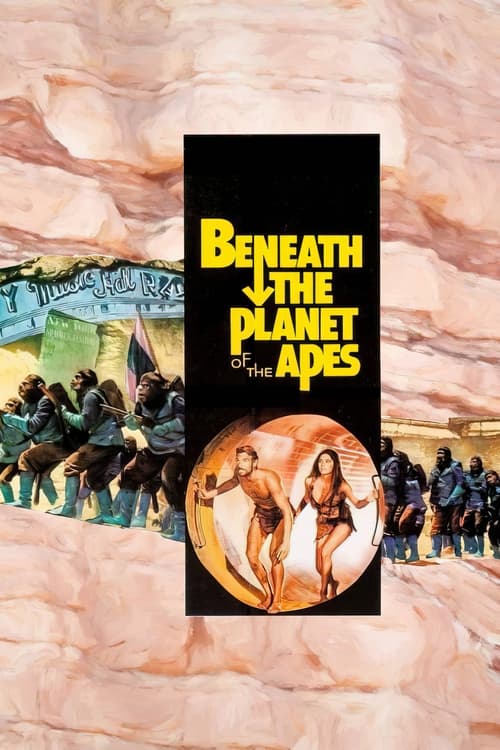
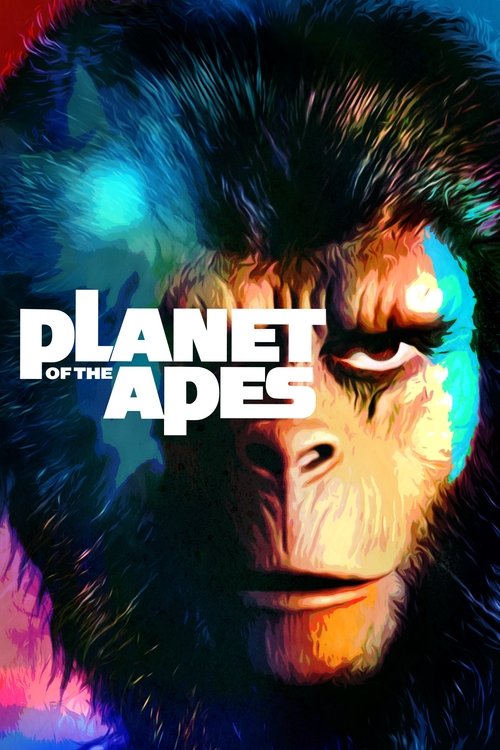
Planet of the Apes premiered in February 1968. The film was a hit upon its release, as well as a critical and commercial success. In the opening credits, Harrison was billed under the tag "introducing Linda Harrison"; although she had appeared in three previous films. Zanuck wanted to draw attention to Harrison because he felt the role would catapult her to stardom. Harrison impressed audiences with her hourglass figure, long dark hair, and large brown eyes, which, in the absence of spoken dialogue, did most of her acting, though some critics were unimpressed. Renata Adler of the New York Times dismissed Harrison as “Heston's Neanderthal flower girl. She wiggles her hips when she wants to say something." The success of Planet of the Apes spawned four sequels, an animated cartoon series, a live-action TV series, a remake by Tim Burton, and a reboot that spawned four films. Heston and Harrison appeared in the first sequel, Beneath the Planet of the Apes. Three decades later, Harrison had a brief cameo in the 2001 reboot, which also featured Heston.
On August 27, 1998, the Academy of Motion Picture Arts and Sciences presented a 30th anniversary screening of Planet of the Apes. Harrison attended, along with Heston, Kim Hunter, Roddy McDowall and John Chambers. The film was also an inductee of the 2001 National Film Registry list.