
Linda Melson Harrison (born July 26, 1945) is an American television and film actress. She played Nova in the science fiction film classic Planet of the Apes (1968) and the first sequel, Beneath the Planet of the Apes; she also had a cameo in Tim Burton's 2001 remake of the original. She was a regular cast member of the 1969–70 NBC television series Bracken's World. She was the second wife of film producer Richard D. Zanuck (Jaws, Cocoon, Driving Miss Daisy, Charlie and the Chocolate Factory); her youngest son is producer Dean Zanuck (Road to Perdition, Charlie and the Chocolate Factory).
Contents
Early life
Linda Melson Harrison was born in Berlin, Maryland. She was the third of five daughters of Isaac Burbage Harrison, a nurseryman, and his wife, Ida Virginia Melson, a beautician. She was the middle child, with two older sisters, Kay and Gloria, and two younger sisters, Jane and Joan. The Harrisons, like Linda's maternal Melson ancestors, had a long history in the Delmarva region. According to Ancestry.com, the Melson family were mid-17th century immigrants to Maryland from Melsonby St James in North Yorkshire. The Anglo-Welsh Harrisons had been resident for generations in West Kirby, Cheshire, when one Richard Harrison, son of another Richard Harrison, emigrated in the early 17th century from West Kirby to the New Haven Colony in what is now Connecticut, thence to Maryland. Richard's descendant, Harrison's paternal grandfather, Joseph G. Harrison, and Joseph's older brother, Orlando Harrison (Mayor of Berlin 1900–1910 and 1916–1918 and Maryland State Senator for Worcester County, 1916-1928), established J.G. Harrison & Sons Nurseries, which were, at one time, the largest fruit tree nursery business in America, employing some five hundred workers. The former Harrison Laboratory at the University of Maryland, College Park campus, which Harrison attended briefly, was named for her paternal great-uncle, Senator Orlando Harrison.
"I knew she'd be a star when she was only five," Ida Harrison told an interviewer in 1969. Mrs Harrison, who described her middle daughter as "a little ham", enrolled her in ballet and acrobatics classes at age five. By age six, Harrison was performing on stage, and liking it. She attended Berlin's Buckingham Elementary School, which her mother and all her sisters attended. In 1956, when she was eleven, Harrison's acrobatic performance earned her first prize in the Delmarva Chicken Festival Talent Contest. Six years later, at the same festival, Harrison won the "Miss Delmarva" beauty contest. By the time she entered Berlin's Stephen Decatur High School, Harrison had become a skilled acrobatic dancer. Harrison also dreamed of becoming an actress and a star.
It was Harrison's plan to become an actress by entering and winning beauty contests, then travel to California to be seen and noticed. When she was in her teens, Harrison worked summers as a waitress at Phillips Crab House in Ocean City, Maryland; she was dating the son of the restaurant's owners when she flew to California for the Miss America beauty contest. From time to time, she appeared as a narrator on local TV programs carried on Baltimore TV station WMAR. Harrison essayed her first dramatic role while attending Stephen Decatur High School, that of "Connie Fuller" in the senior class production of the 1940 Kaufman/Hart play George Washington Slept Here. On Saturday, May 19, 1962, William Hockersmith crowned her Miss Berlin at the Miss Berlin Beauty Pageant, which was held at the high school. A month later, Harrison represented her home town at the Delmarva Chicken Festival beauty contest.
Career
Breaking into the industry
In New York, Kay and Linda shared an apartment and their mother Ida's credit card. Harrison scored some success as a model, but she disliked New York and was homesick for Maryland. Less than a year later, she returned home; following her plan to become an actress by winning beauty contests, she entered the 1964 Miss Delmarva beauty pageant as Miss Berlin, and won. Harrison followed her 1964 victory by entering the Miss Maryland beauty pageant, a preliminary event to the Miss America pageant, itself the final preliminary event to the Miss International contest, which would be held in Long Beach, California, in mid-June 1965. Harrison won the contest over nineteen other girls; that June, as Miss Maryland, she flew to California for the Miss America contest. She thought the trip would last for two weeks. Bidding farewell to her boyfriend, she scheduled her return home in two weeks, after she was crowned Miss America. But she was first-runner up, not the winner. Harrison was "devastated", and so deeply disappointed over losing that she wept backstage.
Her striking good looks and hourglass figure, however, had gained the notice of Mike Medavoy, then an agent at the General Artist Corporation. "You ought to be in pictures," Medavoy told her. In August 1965, Medavoy obtained a "personality test" for her at 20th Century Fox. No acting was involved; Harrison answered questions directed to her from off-camera, while speaking into the camera on various subjects. The test earned her Fox's standard 60-day option agreement, scheduled to expire in November 1965. During her 60-day option period, Harrison studied with Fox acting coach, Pamela Danova.
In October 1965, prior to the expiration of her option, Fox assigned Harrison as the date of studio attorney Harry E. Sokolov for the premiere of The Agony and the Ecstasy. She was selected as Sokolov's date because "Harry was from Baltimore." Harrison was excited, because it was her first premiere, and because the film co-starred Charlton Heston, who had been her idol since she had seen Ben-Hur. At the post-premiere party, which she attended with her studio-assigned date, Harrison was thrilled to meet her longtime idol, Heston, with whom she would soon co-star in Planet of the Apes. At the premiere, Harrison met Sokolov's boss, Fox's Vice President in Charge of Production Richard D. Zanuck. Zanuck, Harrison said later, was immediately "smitten" and fell "madly in love" with her, and she with him, and they began to date. Harrison's acting career, as well as her life, became inextricably intertwined with their subsequent relationship.
Early roles
Right after meeting Zanuck, Harrison signed Fox's standard seven-year contract in November and was placed in the studio's Talent Training School. Although Harrison told interviewers that Zanuck had created the school so "he could keep an eye on me", the school was actually a former Fox institution which Zanuck had revived to train aspiring, talented young actors and actresses under contract to Fox; besides Harrison, the student roster included Jacqueline Bisset, James Brolin, Tom Selleck and Edy Williams. Under coaches Pamela Danova and Curt Conway, Harrison attended drama classes, speech classes, fencing classes, dance and body movement classes, and lectures by veteran actors, actresses, directors, writers, publicity agents, and teachers. In addition to her strenuous round of classes, Harrison worked with a speech coach to eradicate her Eastern Maryland accent.
Harrison's first assignment under her new Fox contract was as a "Biker Chick" in Men Against Evil, a TV pilot which became the TV series Felony Squad. "I had three words, "Go, man, go!" I was all of 20, and dressed in this really racy motorcycle outfit. Those were my first words! This was still the era of stardom and premieres. When you were put under a studio contract, every minute of your life was so exciting, because you were doing something so unique and special." (Three years later, Harrison co-starred as Felony Squad star Dennis Cole's love interest in the NBC TV series Bracken's World.) Harrison's next assignment was in the Batman TV series, where she appeared briefly as one of three high school cheerleaders in the episodes "The Joker Goes to School" and "He Meets His Match, The Grisly Ghoul", aired in early March 1966. To prepare Harrison for her few seconds onscreen, her Fox dance coach worked Harrison and her fellow cheerleaders early in the morning and on through the day. Linda, a former high school cheerleader, complained, "You're going to use up all my energy, so when the shot comes, I won't have any." Her coach complained that "Linda Harrison gave me a hard time." After the brief late afternoon shot, Harrison's overworked leg muscles failed on her way home, and Zanuck had to carry her upstairs to their Wilshire-Westwood apartment.
All during this period, Dick was telling me about this fabulous book called Planet of the Apes and that it was going to make a great movie. He said, "I want you to play the ape, Dr. Zira."
On March 8, 1966, immediately after her brief appearance on Batman, Harrison was filmed in ape makeup for a proposed film version of Pierre Boulle's satirical novel, Monkey Planet, later released as Planet of the Apes. Zanuck had financed the test in order to show Fox's money men that, despite all doubts to the contrary, the Planet of the Apes project was feasible. The test, written by Rod Serling and directed by Franklin J. Schaffner, starred Harrison's idol, Charlton Heston, and Edward G. Robinson as Heston's nemesis, Dr. Zaius. Harrison appeared as Zira, the role ultimately played by Kim Hunter, while Harrison's Talent School classmate fellow contract actor, James Brolin, took on Roddy McDowall's role of Cornelius.
Planet of the Apes
Producer Arthur P. Jacobs had first thought of former Bond girl Ursula Andress for Nova, and extensive auditions were held for the role, with one of the women tested being Angelique Pettyjohn, who had played a warrior in the Star Trek episode "The Gamesters of Triskelion". Filming was to commence in May 1967, but as late as April 17 Charlton Heston noted in his diary, "The casting problem's really Nova: who will do it, and how naked can she be. The tests I saw were not good." Zanuck eventually asked Jacobs and Mort Abrahams if they would test Harrison. "[Dick] did it very nicely," Abrahams said.
"He said, 'I'd like you to consider Linda.' Linda was in the acting school that was on the lot at that point and about four or five times a year the students did little scenes live on a soundstage and the producers and directors on the lot were invited to attend. So I'd seen her act and I said to Dick, 'We will be glad to meet with Linda,' and [director] Frank[lin Schaffner] and I would chat with her and talk about the part but that she would be treated like an actress, not as an affiliation with anybody else. And he said, 'That's the way it has to be.' And we did and we thought she was fine."
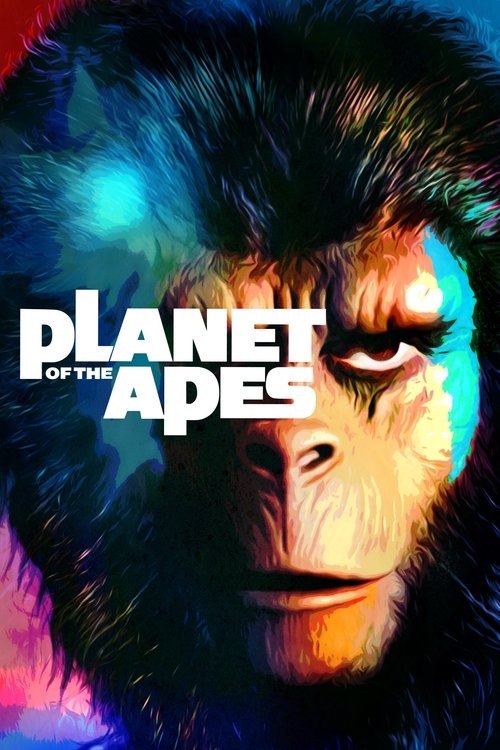
In the 1998 AMC documentary Behind the Planet of the Apes, Harrison said of her role as Nova, "I thought about animal instincts, the way [Nova] would move and the way she would react would be more the way an animal would react, more from fear. It seemed to be what the director wanted." After her test, Harrison was hired to play the role for which she would later be known. Harrison, Mort Abrahams said, was
"delighted to get it, because she'd only done little tiny bit parts in a couple of pictures before that. I was pleasantly surprised by her. She called me one day and asked if she could bring her sister along with her onto location. I said, 'Sure, of course, no problem.' And I was delighted because she was going out with the head of the studio. She could have been the biggest pain in the ass alive. And I would be in a terribly awkward position if she started with the limousines and the special means and whatever the hell it is—or complaining about whatever. But never a peep out of her. Most pleasant, most charming, very cooperative, very hard-working. She was always there half an hour before her call and she always stayed on for a half hour just in case. Interested in everything that went on, and was a total joy. I couldn't ask for a more cooperative actor."
Beneath the Planet of the Apes
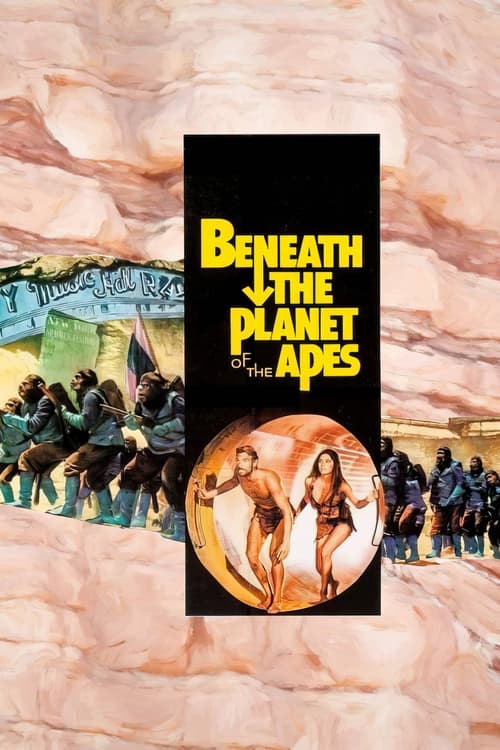
Linda Harrison's second outing in her most famous role was in the first sequel to Planet of the Apes. She admitted "it wasn't as good as the first", saying that the original "had a top director and cinematographer. You couldn't beat Franklin J. Schaffner. In the second film we made it for less."
No sequels had been contemplated at the time of the production of Planet of the Apes; it was only during that film's success that a sequel was discussed. Neither Charlton Heston nor Kim Hunter wanted to do another Apes film; Roddy McDowall pleaded another commitment; and Harrison herself was ambivalent. She was engaged to her mentor, Richard Zanuck and "no longer totally concerned with being an actress. I don't even want to do another picture. But since this is a sequel to the one I did last year, I felt obligated. "Ted Post was a wonderful television director," Harrison said, "fabulous to work with, an actor's dream. I could get away with murder with him."
Although her role as Nova was expanded, the sequel was a disappointing rush to production to capitalize on the original. Harrison's character eked out one word before she was shot to death, but nothing fresh was added. The budget was half that of Planet of the Apes. Director Ted Post said, "It moved basically as an entertainment piece, nothing more." Post wanted the script rewritten. "I was very unhappy with the script, and I thought the script was far from what it should have been. The story was unclear, and didn't measure up." On his first reading of the script for Beneath the Planet of the Apes, star James Franciscus phoned Charlton Heston. "Jesus Christ, Chuck," he said, "have you read this piece of crap?"
Post knew Harrison's role was difficult to do anything with.
"Linda was a wonderfully cooperative young lady that needed direction. Had no technique and no real acting experience. She was engaged to marry Dick Zanuck. So in Planet of the Apes they put her in with Frank Schaffner, then in mine, they underwrote her. They had nothing for her to do in this one, except just be part of the sequel. In other words, she was so badly conceived in the writing that I had to conceive actions for her to make her belong to the piece. And the big action which I gave her – and I think she came off beautifully with it – was to try to understand what these people were trying to communicate to her. And struggling to understand and feeling sympathetic vibrations coming from these people. So I gave her something which was not in the script to play and she played that, I think, very simpatico, very beautifully."
Bracken's World and wrongful termination suits
While filming Beneath the Planet of the Apes, Harrison was cast as one of a trio of starlets in the Fox-produced NBC TV series Bracken's World. It was, she said, "a series Dick [Zanuck]) for a long time had wanted to do. So I got that part and I had to finish Beneath and go right into the pilot..." She played Paulette Douglas, a naive young woman and aspiring actress, who tried to balance studio pressures with her romance with a studio stuntman (Harrison's Felony Squad co-star Dennis Cole). The series also starred Emmy Award-winning actress Jeanne Cooper as Douglas's pushy mother. Harrison began filming the day after she finished her work on Beneath the Planet of the Apes. "And I had to start remembering lines! Silence may be golden," she told an interviewer in October 1969, "but no one knows how happy I am to be off the gold standard."
Harrison was noted as "one of the most refreshing young faces to light up TV screens this new season." Fox publicists issued press releases glossing over Harrison's deficient education and claiming for her a passion for Shakespeare, Voltaire, and Aristotle which she never possessed. Midway through its second season, Bracken's World was cancelled. Harrison said later that the studio wanted recognizable stars every week, instead of allowing the regular cast to grow as an ensemble, as was the case with shows such as Star Trek. "Had they done it like a continuing drama and focused on the regular characters, it would have lasted longer," she said. "NBC, however, wanted a one-hour contained show, so they would stock each episode with a big guest star. After a while, you run out of story."
After Bracken's World was cancelled, Harrison was caught in the 20th Century Fox proxy shareholder war that began in December 1970. Harrison's husband, Richard Zanuck, was one of the majority shareholders of the company with his father, studio head Darryl Zanuck, and his mother, actress Virginia Fox, then the estranged wife of Darryl. The proxy battle pitched Harrison's husband and mother-in-law against her father-in-law, after the studio had posted losses in consecutive years. In the course of the struggle, then-studio chief Darryl fired his son. Harrison's contract was abruptly terminated in November 1970. The reason given was that her presence might prove "embarrassing" to the studio. Harrison, who was by then pregnant with her first son, later sued for wrongful termination, breach of contract, alleged defamation, and infliction of emotional distress. Harrison was named in the $22 million lawsuit her husband filed November 1, 1971, against Darryl, Fox, the studio chairman and CEO Dennis C. Stanfill, and Fox Executive Committee chairman William T. Gossett. In his suit Zanuck contended that he, Harrison, and former Fox executive David Brown had been wrongly terminated and subjected to humiliation and embarrassment. The suit was settled out of court. The terms and amounts of Harrison's settlements were never disclosed.
Films and television: 1974–1988
In 1974, after a sabbatical of several years, Harrison attempted to return to her career. She desperately wanted the role of Roy Scheider's wife in Jaws, and urged her husband to give it to her. Zanuck asked director Steven Spielberg if he would consider Harrison, but Spielberg preferred actress Lorraine Gary, whom he had seen in a TV movie, The Marcus Nelson Murders, and cast her instead of Harrison "because she was right for the part." Harrison was upset over Spielberg's preference for Gary, feeling that her husband should have gotten her the part. "I really wanted Dick to go to bat for me this one time." As a consolation, Universal chief Sid Sheinberg, Lorraine Gary's husband, got Harrison a part in Airport 1975 as Gloria Swanson's personal assistant, Winnie. Though the movie starred Harrison's long-time idol, Charlton Heston, Harrison had no scenes with him, and "would have much rather had Jaws on my resume." Years later, in an April 2012 interview, Harrison offered a reason she had lost the role because "They said Roy Scheider couldn't get a girl as beautiful as me."
Despite her disappointment over losing the coveted Jaws role, Harrison was fascinated by Gloria Swanson, and spent hours with her on sets between takes. "She took a special liking to me. She really went on about the sex she had with Joe Kennedy. There wasn't anything she wouldn't say. He was going to marry her, but he couldn't leave Rose and the children, he was a wonderful lover, and she'd detail it." Airport 1975 was the first time Harrison appeared under the name "Augusta Summerland", which her guru had chosen for her.
After Airport 1975, Harrison guest-starred on several TV shows. As "Augusta Summerland", she appeared on Barnaby Jones in episode #67 "The Alpha-Bravo War" (air date: October 24, 1975); on Switch in episode #24 "Death Squad" (air date: April 6, 1976); and again on Barnaby Jones in episode #114 "The Damocles Gun" (air date: October 20, 1977). In the 1980s, Harrison resumed studying acting and enrolled in an acting school. When the school held a showcase presentation of its students' work, Harrison invited her by-then ex-husband and his third wife, Lili Fini Zanuck. The Zanucks needed a middle-aged actress to play Barrett Oliver's mother in their upcoming production of Cocoon; after viewing Harrison's scenes, they told her there might be a part for her. "So I had an interview with Ron Howard and he said 'You got the part.'" Harrison reprised her role as Susan in the 1988 sequel, Cocoon: The Return, which failed to achieve the commercial and critical success of its predecessor.
Later work: 1990 to 2015
In 1990, Harrison moved back home to Berlin, where she opened a consignment shop which she named "Harrison's Peach Tree" half a mile from the house where she was born and raised. Several years later, wanting to be closer to her sons, she returned to Los Angeles and obtained a real estate license, like her eldest sister, Kay. In 1995, she landed a small part as the "Madam" in Wild Bill. In 1998, she appeared as herself in the Kevin Burns TV documentary Behind the Planet of the Apes about the making of the first five Planet of the Apes films. In October 1998, Harrison attended her first science fiction convention in New Jersey. Also in attendance were Jonathan Harris, Marta Kristen, Mark Goddard and Angela Cartwright, of the original Lost in Space TV series; Lou Ferrigno of The Incredible Hulk TV series; and Bela Lugosi Jr. and Sara Karloff. Harrison found it "rewarding when you really haven't done anything for a number of years and then, all of a sudden, people want your autograph. It was very gratifying." Eventually, Harrison became an institution at Planet of the Apes cons. "I like it. It's very good. You're being appreciated for your work." In 2001, she had a cameo as the "Woman in Cart" in Tim Burton's remake of Planet of the Apes. "They are much more brutal in the new movie," she said. "And strong. They literally hurl the humans 50 or 60 feet." Most of the footage Harrison shot was omitted from the final, so "if you blink you miss me. They showed my shots all over the place, but it got cut out."
In 2013, Harrison began filming Midnight Massacre, on which she served as executive producer and co-star. The post-apocalyptic thriller, set in the near future, is loosely based on Shakespeare's Julius Caesar. The film's final release date was December 15, 2023.
Awards
In 2008, the 40th anniversary of the release of Planet of the Apes, Harrison traveled to Catalonia, Spain, where on October 11, she was awarded the Maria Honorifica at the Festival Internacional de Cinema Fantàstic de Catalunya in recognition of her career.