Television
In 1957, Barbera reteamed with his former partner Hanna to produce cartoon films for television and theatrical release. The two brought their different skills to the company as they had at MGM. Barbera was a skilled gag writer and sketch artist, while Hanna had a gift for timing, story construction, and recruiting top artists. Major business decisions would be made together, though each year, the title of president alternated between them. A coin toss gave Hanna precedence in the naming of the new company first called H-B Enterprises but soon changed to Hanna-Barbera Productions. Barbera and Hanna's MGM colleague George Sidney, the director of Anchors Aweigh, became the third partner and business manager in the company and arranged a deal for distribution and working capital with Screen Gems, the television division of Columbia Pictures, who took part ownership of the new studio.
The first offering from the new company was The Ruff & Reddy Show, a series which detailed the friendship between a dog and a cat. Despite a lukewarm response for their first theatrical venture, Loopy De Loop, Hanna-Barbera soon established themselves with two successful television series: The Huckleberry Hound Show and The Yogi Bear Show. A 1960 survey showed that half of the viewers of Huckleberry Hound were adults. This prompted the company to create a new animated series, The Flintstones. A parody of The Honeymooners, the new show followed a typical Stone Age family with home appliances, talking animals, and celebrity guests. With an audience of both children and adults, The Flintstones became the first animated prime-time show to be a hit. Fred Flintstone's signature exclamation, "yabba dabba doo", soon entered everyday usage, and the show boosted the studio to the top of the TV cartoon field. The company later produced a futuristic version of The Flintstones, known as The Jetsons. Although both shows reappeared in the 1970s and 1980s, The Flintstones was far more popular.
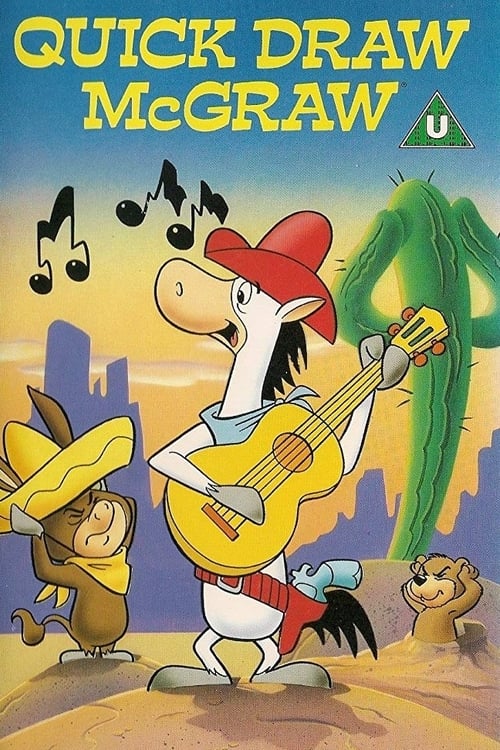
By the late 1960s, Hanna-Barbera Productions was the business's most successful television animation studio. The Hanna-Barbera studio produced over 3,000 animated half-hour television shows. Among the more than 100 cartoon series they produced were The Quick Draw McGraw Show, Top Cat, Jonny Quest, The Magilla Gorilla Show, The Atom Ant/Secret Squirrel Show, Scooby-Doo, Super Friends, and The Smurfs. The company also produced animated specials based on Alice in Wonderland, Jack and the Beanstalk, Cyrano de Bergerac, and feature-length films Charlotte's Web and Heidi's Song.
As popular as their cartoons were with 1960s audiences, they were disliked by artists. Television programs had lower budgets than theatrical animation, and this economic reality caused many animation studios to go out of business in the 1950s and 1960s, putting many people in the industry out of work. Hanna-Barbera was key in developing of an animation technique known as limited animation, which allowed television animation to be more cost-effective but often reduced quality. Hanna and Barbera had first experimented with these techniques in the early days of Tom and Jerry. To reduce the cost of each episode, shows often focused more on character dialogue than detailed animation.
The number of drawings for a seven-minute cartoon decreased from 14,000 to nearly 2,000, and the company implemented innovative techniques such as rapid background changes to improve viewing. Critics criticized the change from detailed animation to repetitive movements by two-dimensional characters. Barbera once said that they chose to adapt to the television budgets or change careers. The new style did not limit the success of their animated shows, enabling Hanna-Barbera to stay in business, providing employment to many who would otherwise have been out of work. Limited animation paved the way for future animated series such as The Simpsons, SpongeBob SquarePants, and South Park.
In December 1966, Hanna-Barbera Productions was sold to Taft Broadcasting, renamed Great American Communications in 1987, for $12 million. Barbera and Hanna remained at the head of the company until 1991. The company was sold to the Turner Broadcasting System for an estimated $320 million. Turner began using Hanna-Barbera's television catalog as material for its new Cartoon Network cable channel in 1992, and by the mid-1990s, Hanna-Barbera was producing several original series for Cartoon Network, among them Dexter's Laboratory and The Powerpuff Girls. In 1996, Turner merged with Time Warner, owners of Warner Bros., who eventually absorbed Hanna-Barbera into Warner Bros. Animation.
Barbera and Hanna continued to advise their former company. They periodically worked on new Hanna-Barbera shows, including shorts for the series The Cartoon Cartoon Show and feature film versions of The Flintstones (1994) and Scooby-Doo (2002). In a new Tom and Jerry cartoon produced in 2000, The Mansion Cat, Barbera voiced the house owner.
Ten days before Hanna's death from throat cancer in March 2001, Hanna-Barbera was absorbed into Warner Bros. Animation, with the unit dedicated to the Cartoon Network original series spun off into Cartoon Network Studios. Barbera remained active as an executive producer for Warner Bros. on direct-to-video cartoon features and television series such as What's New, Scooby-Doo? and Tom and Jerry Tales. He also wrote, co-storyboarded, co-directed, and co-produced The Karate Guard (2005), the return of Tom and Jerry to the big screen. His final animated project was the direct-to-video feature Tom and Jerry: A Nutcracker Tale (2007).