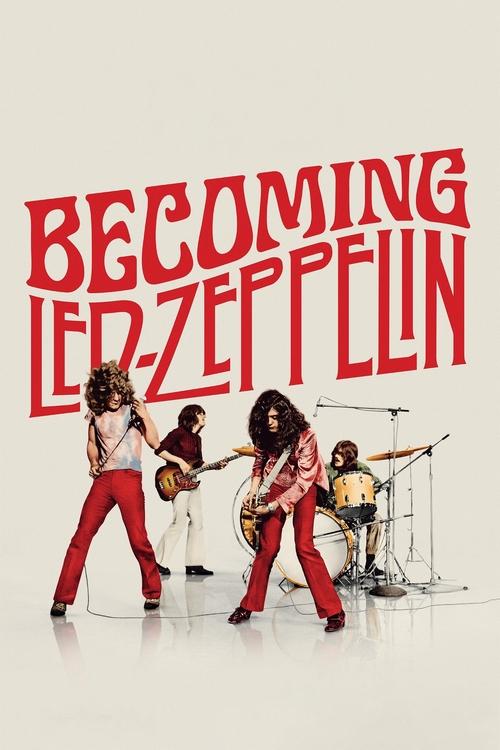
John Paul Jones (born John Baldwin; 3 January 1946) is an English musician, multi-instrumentalist and record producer who was the bassist and keyboardist for the English rock band Led Zeppelin between 1968 and 1980. He was a session musician and arranger prior to the point when he formed the band with Jimmy Page in 1968 (having previously collaborated with Page on other recording sessions). Jones developed a solo career after drummer John Bonham died and Led Zeppelin disbanded in 1980. He has collaborated with musicians in a variety of genres, including the supergroup Them Crooked Vultures with Dave Grohl, Josh Homme, and Alain Johannes. He was inducted into the Rock and Roll Hall of Fame in 1995 as a member of Led Zeppelin.
Contents
Early years
John Baldwin was born in Sidcup, then a part of Kent, on 3 January 1946. He started playing piano when he was six, learning from his father, Joe Baldwin, a pianist and arranger for big bands in the 1940s and 1950s, notably with Ambrose and his Orchestra. His mother was also in the music business, which allowed the family to often perform together touring around England as a vaudeville comedy act. His influences ranged from the blues of Big Bill Broonzy and the jazz of Charles Mingus to the classical piano of Sergei Rachmaninoff.
Because his parents often toured, Baldwin was sent to boarding school at a young age. He was a student at Christ's College, Blackheath, London where he studied music formally. At the age of 14, Baldwin became choirmaster and organist at a local church. That year, he bought his first bass guitar, a Dallas Tuxedo solid-body electric; later, he bought other basses that he part-exchanged until he bought the 1962 Fender Jazz Bass that he used until 1976. Jones has said he was inspired to take up the bass by the fluid playing of Chicago musician Phil Upchurch on his "You Can't Sit Down" song, which includes a memorable bass solo.
Career
Session work
Baldwin joined his first band, The Deltas, at the age of 15. He then played bass for jazz-rock London group, Jett Blacks, a collective that included guitarist John McLaughlin. His big break came in 1962, when he was hired by Jet Harris and Tony Meehan of the successful British group the Shadows for a two-year stint. Shortly before hiring Baldwin, Harris and Meehan had just had a number 1 hit with "Diamonds" (a track on which Jones' bandmate-to-be Jimmy Page had played). Baldwin's collaboration with the Shadows nearly prevented the future formation of Led Zeppelin, when the parties engaged in talks about the possibility of Baldwin replacing their bassist Brian Locking, who left the band in October 1963, but John Rostill was ultimately chosen to fill the position.
In 1964, on the recommendation of Meehan, Baldwin began studio session work with Decca Records. From then until 1968, he played on hundreds of recording sessions. He soon expanded his studio work by playing keyboards, arranging and undertaking general studio direction, resulting in his services coming under much demand. He worked with numerous artists including the Rolling Stones on Their Satanic Majesties Request (Jones' string arrangement is heard on "She's a Rainbow"); Herman's Hermits; Donovan (on "Sunshine Superman", "Hurdy Gurdy Man", and "Mellow Yellow"); Jeff Beck; Françoise Hardy; Cat Stevens (on "Matthew and Son"); Rod Stewart; Shirley Bassey; Lulu; and numerous others. As well as recording sessions with Dusty Springfield, Jones also played bass for her Talk of the Town series of performances. His arranging and playing on Donovan's "Sunshine Superman" resulted in producer Mickie Most using his services as choice arranger for many of his own projects, with Tom Jones, Nico, Wayne Fontana, the Walker Brothers, and many others. In 1967, Most, as music supervisor, also tasked Jones with arranging the music for Herman's Hermits' theatrical film Mrs. Brown, You've Got a Lovely Daughter, released in January 1968. Such was the extent of Jones' studio work – amounting to hundreds of sessions – that he said years later that "I can't remember three-quarters of the sessions I was on."
It was during his time as a session player that Baldwin adopted the stage name John Paul Jones. This name was suggested to him by a friend, Andrew Loog Oldham, who had seen a poster for the 1959 film John Paul Jones in France. He released his first solo recording as John Paul Jones, "Baja" (written by Lee Hazlewood and produced by Oldham) / "A Foggy Day in Vietnam", as a single on Pye Records in April 1964.
Jones has stated that, as a session musician, he was completing two or three sessions a day, working six or seven days a week. However, by 1968 he was feeling burned out by the heavy workload: "I was arranging 50 or 60 things a month and it was starting to kill me."
Led Zeppelin
During his time as a session player, Jones often crossed paths with guitarist Jimmy Page, a fellow session veteran. In June 1966, Page joined the Yardbirds, and in 1967 Jones contributed to that band's Little Games album. The following winter, during the sessions for Donovan's The Hurdy Gurdy Man, Jones expressed to Page a desire to be part of any projects the guitarist might be planning. Later that year, the Yardbirds disbanded, leaving Page and bassist Chris Dreja to complete previously booked Yardbirds dates in Scandinavia. Before a new band could be assembled, Dreja left to take up photography. Jones, at the suggestion of his wife, asked Page about the vacant position, and the guitarist eagerly invited Jones to collaborate. Page later explained:
I was working at the sessions for Donovan's Hurdy Gurdy Man, and John Paul Jones was looking after the musical arrangements. During a break, he asked me if I could use a bass player in the new group I was forming. He had a proper music training, and he had quite brilliant ideas. I jumped at the chance of getting him.
Vocalist Robert Plant and drummer John Bonham joined the two to form a quartet. Initially dubbed the "New Yardbirds" for the Scandinavian dates, the band soon became known as Led Zeppelin.
Jones was responsible for the classic bass lines of the group, notably those in "Ramble On" and "The Lemon Song" (Led Zeppelin II), and shifting time signatures, such as those in "Black Dog" (Led Zeppelin IV). As half of Led Zeppelin's rhythm section with drummer John Bonham, Jones shared an appreciation for funk and soul rhythmic grooves which strengthened and enhanced their musical affinity. In an interview he gave to Global Bass magazine, Jones remarked on this common musical interest:
Yeah, we were both huge Motown and Stax fans and general soul music fans, James Brown fans. Which is one of the reasons why I've always said that Zeppelin was one of the few bands to "swing". We actually had a groove in those days. People used to come to our shows and dance, which was great. To see all the women dancing, it was really brilliant. You didn't necessarily see that at a Black Sabbath show or whatever: So we were different in that way. We were a groovy band. We used all our black pop music influences as a key to the rock that went over the top.
After Led Zeppelin
Led Zeppelin dissolved in 1980 with the death of John Bonham. "At the time that John died, I had just moved to Devon to bring up my family", Jones said. "So, after the split, I was completely out of everything. And I must say I didn't miss it."
Jones subsequently collaborated with artists including Diamanda Galás, R.E.M., Jars of Clay, Heart, Ben E. King, Peter Gabriel, Foo Fighters, Lenny Kravitz, Cinderella, The Mission, La Fura dels Baus, the Harp Consort, Brian Eno, the Butthole Surfers, and Uncle Earl.
He appeared on sessions and videos for Paul McCartney and was involved in the soundtrack of the film Give My Regards to Broad Street. In 1985, Jones was asked by director Michael Winner to provide the soundtrack for the film Scream for Help, with Jimmy Page appearing on two tracks. Jones provides vocals for two of the songs. He recorded and toured with singer Diamanda Galás on her 1994 album, The Sporting Life (co-credited to John Paul Jones). In 1985, Jones joined Page and Plant for the Live Aid concert, with Phil Collins and Tony Thompson on drums. The former members again re-formed for the Atlantic Records 40th Anniversary concert on 14 May 1988. Page, Plant and Jones, with John Bonham's son Jason, closed the event. In 1992, Jones arranged the orchestration on the R.E.M. album Automatic for the People.
In 1995, the band Heart released a live acoustic album called The Road Home. It was produced by Jones, and featured him playing several instruments. Also in 1995, Andrew Lawrence-King's Harp Consort released a set of three Spanish language songs in 17th-century style of Jones's own composition, accompanied by baroque instruments including harps, chitarrone, guitars, lirone, viola da gamba and percussion (this 10-minute CD, titled Amores Pasados, was coupled with The Harp Consort's debut record, Luz y Norte).
Zooma, his debut solo album, was released in September 1999 on Robert Fripp's DGM label and followed up in 2001 by The Thunderthief. Both albums were accompanied by tours, in which he played with Nick Beggs (Chapman Stick) and Terl Bryant (drums).
In 2004, he toured as part of the group Mutual Admiration Society, along with Glen Phillips (the front man for the band Toad the Wet Sprocket) and the members of the band Nickel Creek.
Legacy
Jones is widely considered to be one of the most highly influential and important bassists, keyboard players and arrangers in the history of rock music. Many notable rock bassists have been influenced by Jones, including John Deacon of Queen, Tom Hamilton of Aerosmith, Geddy Lee of Rush, Steve Harris of Iron Maiden, Flea of Red Hot Chili Peppers, Gene Simmons of Kiss, and Krist Novoselic of Nirvana. Chris Dreja, the rhythm guitarist and bassist of the Yardbirds, has described him as "the best bass player in Europe". Music publications and magazines have ranked Jones among the best rock bassists of all time. He was named the best bassist on Creem Magazine's 1977 Reader Poll. In 2000, Guitar magazine ranked him third in the "Bassist of the Millennium" readers' poll. Rolling Stone magazine ranked him number 14 on its list of the "50 Greatest Bassists of All Time" in 2020.
In October 2010, Jones was awarded a "Gold Badge Award" by The British Academy of Songwriters, Composers and Authors for his outstanding contribution to Britain's music and entertainment industry. On 10 November 2010, he was honoured with the "Outstanding Contribution Award" at the Marshall Classic Rock Roll of Honour Awards. In 2014, Jones ranked first on Paste magazine's list of "20 Most Underrated Bassists."
Personal life
Jones married Maureen Hegarty in the spring of 1966; they reside in west London. They have three daughters. According to The Sunday Times Rich List 2009, Jones's net worth was £40 million.
Discography
Solo
The Sporting Life (1994) with Diamanda Galás
Zooma (1999)
The Thunderthief (2001)
Scream for Help (1985)
with various artists
No Introduction Necessary (1968)
with Led Zeppelin
Led Zeppelin (1969)
Led Zeppelin II (1969)
Led Zeppelin III (1970)
Led Zeppelin IV (1971)
Houses of the Holy (1973)
Physical Graffiti (1975)
Presence (1976)
In Through the Out Door (1979)
Coda (1982)
with Them Crooked Vultures
Them Crooked Vultures (2009)
Session and production work
with Donovan
Mellow Yellow (1966)
with Yardbirds
Little Games (1967)
with the Rolling Stones
Their Satanic Majesties Request (1967)
with Billy Nicholls
Would You Believe (1968)
with The Mission
Children (1988)
with R.E.M.
Automatic For The People (1992)
with Butthole Surfers
Independent Worm Saloon (1993)
with Heart
The Road Home (1995)
with Seasick Steve
You Can't Teach an Old Dog New Tricks (2011)
Hubcap Music (2013)
Filmography
Mrs. Brown, You've Got a Lovely Daughter (1968) – music arranger: songs
The Song Remains the Same (1976)
Give My Regards to Broad Street (1984)
Scream for Help (1984) – composer
The Secret Adventures of Tom Thumb (1993) – composer
Risk (1994) – composer
Celebration Day (2012)