










Dustin Lee Hoffman (born August 8, 1937) is an American actor and filmmaker. As one of the key leading man actors in the formation of New Hollywood, Hoffman is known for his versatile portrayals of antiheroes and emotionally vulnerable characters. Among his numerous accolades are two Academy Awards, four BAFTA Awards, five Golden Globe Awards, and two Emmy Awards as well as a nomination for a Tony Award. He was honored with the Cecil B. DeMille Award in 1997, the AFI Life Achievement Award in 1999, and the Kennedy Center Honors Award in 2012.
Hoffman studied at the Los Angeles Conservatory of Music before he decided to go into acting, for which he trained at the Pasadena Playhouse. He made his film debut with the black comedy The Tiger Makes Out (1967). He went on to receive two Academy Awards for Best Actor playing a man going through a divorce in Kramer vs. Kramer (1979) and an autistic savant in Rain Man (1988). He was Oscar-nominated for The Graduate (1967), Midnight Cowboy (1969), Lenny (1974), Tootsie (1982), and Wag the Dog (1997). Other notable roles include in Little Big Man (1970), Straw Dogs (1971), Papillon (1973), Marathon Man (1976), All the President's Men (1976), Ishtar (1987), Dick Tracy (1990), Hook (1991) and Chef (2014).
In the 21st century, he mostly transitioned to supporting roles in films such as Finding Neverland (2004), I Heart Huckabees (2004), and Stranger than Fiction (2006), as well as Meet the Fockers (2004) and its sequel Little Fockers (2010), The Meyerowitz Stories (2017), and Megalopolis (2024). Hoffman has voiced roles in The Tale of Despereaux (2008) and the Kung Fu Panda film series (2008–present). In 2012, he made his directorial debut with Quartet.
Hoffman made his Broadway debut in the 1961 play A Cook for Mr. General. He subsequently starred as Willy Loman in the 1984 revival of Death of a Salesman and reprised the role a year later in a television film, earning a Primetime Emmy Award for Outstanding Actor in a Limited Series or Movie. In 1989, he received a Tony Award for Best Actor in a Play nomination for his role as Shylock in The Merchant of Venice. He has received three Drama Desk Awards, for his performances in Eh? (1967), Jimmy Shine (1969), and Death of a Salesman (1984), respectively.
Contents
Early life and education
Dustin Lee Hoffman was born on August 8, 1937, in Los Angeles, California, the younger of two sons of Harry Hoffman (1907–1990) and Lillian (née Gold; 1909–1982). His father worked as a prop supervisor (set decorator) at Columbia Pictures before becoming a furniture salesman.
Hoffman was named after stage and silent screen actor Dustin Farnum. He has an elder brother Ronald, who is a lawyer and economist. Hoffman is Jewish, from an Ashkenazi Jewish family of immigrants from Kiev, Russian Empire, and Iași, Romania. The family's surname was spelled Гойхман (Goikhman) in Russia.
His upbringing was nonreligious, and he has said, "I don't have any memory of celebrating holidays growing up that were Jewish", and that he had "realized" he was Jewish at around the age of 10.
Hoffman graduated from Los Angeles High School in 1955 and enrolled at Santa Monica College with the intention of studying medicine. But he decided to become an actor, and left in the following year to join the Pasadena Playhouse, although when he told his family about his career goal, his Aunt Pearl warned him, "You can't be an actor. You are not good-looking enough." He also studied with Lee Strasberg and has stated that he did not study with either Sanford Meisner or Stella Adler.
Hoffman initially hoped to become a classical pianist, having studied piano during much of his youth and in college. While at Santa Monica College, he also took an acting class, which he assumed would be easy, and "caught the acting bug". He recalls: "I just was not gifted in music. I did not have an ear." Once his aspirations shifted to acting, he spent the following 10 years doing odd jobs, being unemployed, and struggling to get any available acting roles, a lifestyle he was later to portray in the comedy film Tootsie. Hoffman composed a song called "Shooting the Breeze", alongside Bette Midler who wrote the words.
Career
1960–1966: Early theatre roles
Hoffman's first acting role was at the Pasadena Playhouse, alongside future Academy Award–winner Gene Hackman. After two years there, Hackman headed for New York City, with Hoffman soon following. Hoffman, Hackman, and Robert Duvall lived together in the 1960s, whilst all three of them focused on finding acting jobs. Hackman remembers, "The idea that any of us would do well in films simply didn't occur to us. We just wanted to work". Hoffman's appearance—Duvall described him as Barbra Streisand in drag—and small size made him uncastable, Vanity Fair later wrote. During this period, Hoffman got occasional television bit parts, including commercials but, needing income, he briefly left acting in order to teach.
Hoffman then studied at Actors Studio and became a dedicated method actor. In 1960 Hoffman was cast in a role in an off-Broadway production and followed with a bit part in his Broadway debut in production, A Cook for Mr. General (1961). In 1962, he appeared in Rabbit Run Theatre's summer stock production of Write Me a Murder in Madison, Ohio and served as an assistant director to Ulu Grosbard on The Days and Nights of BeeBee Fenstermaker at off-Broadway's Sheridan Square Playhouse. In 1964, Hoffman appeared in Three Men on a Horse at Princeton's McCarter Theatre and in 1965, in off-Broadway's Harry, Noon and Night with Joel Grey. On June 23, 1965, he played Mendy in a practice run of Philip Roth's abandoned off-Broadway play The Nice Jewish Boy, directed by Gene Saks and co-starring Melinda Dillon. Grosbard and Hoffman reunited for a 1965 recording of Death of a Salesman starring Lee J. Cobb and Mildred Dunnock, with Hoffman playing Bernard. He was assistant director for Grosbard's 1965 off-Broadway production of A View from the Bridge starring Robert Duvall and Jon Voight, and in late 1965 stage-managed and appeared in Grosbard's The Subject Was Roses on Broadway. Hoffman's "sharply outlined and vividly colored" performance in off-Broadway's The Journey of the Fifth Horse in April 1966 was followed by another critical success in the play Eh?, by Henry Livings, which had its U.S. premiere at the Circle in the Square Theatre on October 16, 1966. Sidney W. Pink, a producer and 3D-movie pioneer, discovered Hoffman in one of his off-Broadway roles and cast him in Madigan's Millions. Through the early and mid-1960s, Hoffman made appearances in television shows and movies, including Naked City, The Defenders and Hallmark Hall of Fame.
Hoffman starred in the 1966 off-Broadway play Eh?, for which he received a Drama Desk Award. He made his film debut in The Tiger Makes Out in 1967, alongside Eli Wallach. In 1967, immediately after wrapping up principal filming on The Tiger Makes Out, Hoffman flew from New York City to Fargo, North Dakota, where he directed productions of William Gibson's Two for the Seesaw and William Saroyan's The Time of Your Life for the Fargo-Moorhead Community Theatre. The $1,000 he received for the eight-week contract was all he had to hold him over until the funds from the movie materialized.
1967–1969: The Graduate and breakthrough
Director Mike Nichols auditioned Hoffman in 1966 for a lead role in the Broadway musical The Apple Tree but rejected him because he could not sing well enough, and gave Alan Alda the part. However, Nichols was so impressed with Hoffman's overall audition that he cast him as the male lead in the movie The Graduate (1967). The role was that of Benjamin Braddock, a recent college graduate who has an affair with Mrs. Robinson, the wife of his father's law partner. It was Hoffman's first major role; he received an Academy Award nomination for it, but lost to Rod Steiger for In the Heat of the Night.
Although David Zeitlin joked in Life magazine that "if Dustin Hoffman's face were his fortune, he'd be committed to a life of poverty", The Graduate was a gigantic box office hit for Embassy Pictures, making Hoffman a major new star at the same time. The film received near-unanimous good reviews. Time magazine called Hoffman "a symbol of youth" who represented "a new breed of actors". The film's screenwriter, Buck Henry, notes that Hoffman's character made conventional good looks no longer necessary on screen, "A whole generation changed its idea of what guys should look like. ... I think Dustin's physical being brought a sort of social and visual change, in the same way people first thought of Bogart. They called him ugly". Hoffman's success amazed friends from his early years as an actor, who told him "You were the last one I expected to make it". Biographer Jeff Lenburg wrote that "newspapers across the country were deluged with thousands of letters from fans", with one example published in The New York Times: "I identified with Ben. ... I thought of him as a spiritual brother. He was confused about his future and about his place in the world, as I am. It's a film one digs, rather than understands intellectually".
Turner Classic Movies critic Rob Nixon notes that Hoffman represented "a new generation of actors". He credits Hoffman with breaking "the mold of the traditional movie star and brought to their roles a new candor, ethnicity, and eagerness to dive deep into complex, even unlikable characters." Nixon expands on the significance of the film to Hoffman's career: "In The Graduate, he created a lasting resonance as Ben Braddock that made him an overnight sensation and set him on the road to becoming one of our biggest stars and most respected actors." Hoffman, however, mostly credits director Mike Nichols for taking a great risk in giving him, a relative unknown, the starring role: "I don't know of another instance of a director at the height of his powers who would take a chance and cast someone like me in that part. It took tremendous courage."
1970–1979: Film stardom and acclaim
This was followed by his role in Little Big Man (1970), where Jack Crabb, his character, ages from teenager to a 121-year-old man. The film was widely praised by critics, but was overlooked for an award except for a supporting nomination for Chief Dan George. Hoffman continued to appear in major films over the next few years. Who Is Harry Kellerman and Why Is He Saying Those Terrible Things About Me? (1971), Straw Dogs (also 1971), and Papillon (1973). He returned to Broadway in 1974, directing All Over Town. Hoffman next starred in Lenny (1974), for which he was again nominated for Best Actor. Lenny was based on the life of stand-up comedian Lenny Bruce, who died at the age of 40, and was known for his open, free-style and critical form of comedy which integrated politics, religion, sex, and vulgarity. Expectations were high that Hoffman would win an Oscar for his portrayal, especially after his similar role in Midnight Cowboy. Film critic Katharine Lowry speculates that director Bob Fosse "never gave him a chance" to go far enough into developing the character. "We never understand what, besides the drugs he injected, made him tick like a time bomb", she says.
However, notes author Paul Gardner, "directing Lenny, his most ambitious project, exhausted Fosse emotionally and physically. It turned his life inside out", with shooting days often lasting 10 to 12 hours: "The Lenny Bruce project, based on Julian Barry's play, had gone through two studios and three scripts, and was a problem child, like Lenny himself. But Fosse wanted to do it, and he wanted Dustin Hoffman". Hoffman initially turned the part down, saying: "I didn't think the script was strong enough and I wasn't sure I was the one to play the role." While considering the part, he read Lenny Bruce's autobiography and looked at films with Bruce performing stand-up to live audiences. In the same interview with Playboy he recounted: "I began to feel an affinity with him, a realization that there was a lot of Lenny Bruce in me. My wife felt it too ... I realized that I'd have to make use of my own spontaneity because he was so spontaneous. And I admired his guts ... That intimacy is what an actor tries to get ... It occurred to me that if I had known him, I would have wanted us to be friends ... and he was a provocateur, and I love to provoke." Movie critic Judith Crist gave Hoffman credit for the ultimate success of the film:
What is important is that Bruce's routines are so artfully reconstructed, the juice of his creativity so carefully strained, that the claim to genius is justified. And for that Dustin Hoffman deserves full credit, vanishing into the Bruce persona to simply stunning effectiveness,… Hoffman captures the restlessness, the velocity of a man's mouth straining to keep pace with a jet-propelled intelligence…
1980–1989: Career expansion
In Tootsie (1982), Hoffman portrays Michael Dorsey, a struggling actor who finds himself dressing up as a woman to land a role on a soap opera. His co-star was Jessica Lange. Tootsie earned ten Academy Award nominations, including Hoffman's fifth nomination. Under direction by Sydney Pollack, Hoffman's role demanded "a steady bombardment of opposites—edgy then funny, romantic then realistic, soft then quivering." To film critic David Denby, Hoffman's character "embodies vulnerability and drive in perfect proportion. He has the knack of making everything he does seem perilous, and so audiences feel protective of him and root for him." Hoffman's acting was made more difficult than necessary, however, as he was not given the rehearsal time Pollack promised, "I like to be very prepared, and I feel that the success or failure of a film is many times determined before you start principal photography. I wanted rehearsal very much. I was promised two weeks and was grieved that I didn't get it. We also followed the risky course of starting to shoot with a screenplay that wasn't completed".
Fellow actor Gary Oldman reported that, during a telephone conversation with Hoffman, the latter recalled having made comments toward a "very powerful" industry figure who ensured that he was unable to find work in Hollywood for some time following Tootsie. In 1983, Hoffman became a Major Donor for The Mirror Theater Ltd, alongside Paul Newman and Al Pacino, matching a grant from Laurance Rockefeller. The men were inspired to invest by their connection with Lee Strasberg, as Lee's then daughter-in-law Sabra Jones was the Founder and Producing Artistic Director of The Mirror.
In 1983, Hoffman signed on to star in The Yellow Jersey, which was to be a bicycle-racing drama set during the Tour de France. Hoffman was passionate about the project, considering several directors, firstly Michael Cimino whom he later fired due to the director's uncompromising way of working. The film's producers, however, failed to find a suitable replacement, so the film was not made.
In 1984, Hoffman starred as Willy Loman in the Broadway revival of Arthur Miller's play Death of a Salesman. He reprised his role in a TV movie of the same name, for which he won the 1985 Emmy Award for Outstanding Lead Actor along with a Golden Globe. Hoffman first read the play at the age of 16, but today considers the story much like his own: "It was a blueprint of my family. I was the loser, the flunky, and my brother, a high-school varsity football player, was Biff." Author Marie Brenner notes that Hoffman "has been obsessed with the play" throughout his career: "For years he has wanted to be Willy Loman; when he discovered that Arthur Miller was his neighbor in Connecticut, they began to talk about it in earnest." For Hoffman, the story also left a deep emotional impact from the time he first read it, "I read that play, and I was just destroyed by it. It was like finding out something terrible about my family. I just shook. I felt like my family's privacy had been invaded. I couldn't even talk about it for weeks". Hoffman rehearsed for three weeks with the play's original star, Lee J. Cobb, and remembers seeing his stage performance: "I'll never forget that period in my life. It was so vivid, so intense, watching Lee J. Cobb and his sixteen-inch guns as Willy. God, how I think about what I saw on that stage!" Brenner adds that Hoffman "has been training like a boxer for the role that so exhausted Cobb he had to be replaced after four months." The original play was directed by Elia Kazan, who Hoffman considers "the perfect director, the best there ever was. ... God, I would have done anything to have worked with Kazan."
1990–2010: Established actor
In 1991, Hoffman voiced substitute teacher Mr. Bergstrom in The Simpsons episode "Lisa's Substitute". He was credited under the pseudonym Sam Etic, a play on "Semitic". Throughout the 1990s, Hoffman appeared in many large, studio films, such as Dick Tracy (1990) (where his Ishtar co-star Beatty plays the titular character), Hero (1992) and Billy Bathgate (1991) co-starring with Nicole Kidman (who was nominated for a Golden Globe). Hoffman also played the title role of Captain Hook in Steven Spielberg's Hook (also 1991), earning a Golden Globe nomination, and the narrator in Dr. Seuss Video Classics: Horton Hears a Who! (also 1992); in Hook, Hoffman's costume was so heavy that he had to wear an air-conditioned suit under it. Hoffman played the lead role in Outbreak (1995), alongside Rene Russo, Kevin Spacey, Morgan Freeman, Cuba Gooding Jr. and Donald Sutherland. In the film, Hoffman is a medical doctor, serving as a Colonel in the U.S. Army Medical Corps., working at the United States Army Medical Research Institute of Infectious Diseases (USAMRIID), who uncovers a newly discovered Ebola-like virus which came to the U.S. from Africa in an infected monkey. Hoffman races to stop the virus's spread and find a vaccine before it becomes a worldwide pandemic with no cure. It was one of the films that was produced by his production banner, Punch Productions.
The film is described by critic Roger Ebert as "one of the great scare stories of our time, the notion that deep in the uncharted rain forests, deadly diseases are lurking, and if they ever escape their jungle homes and enter the human bloodstream, there will be a new plague the likes of which we have never seen." Critic David Denby credits Hoffman with giving the movie much of its thriller-like quality:
Tanks and men pour in to herd the terrified population here and there, and Dustin Hoffman, as the supersleuth Army doctor, gives such a lip-biting, anguished performance he absolves the movie of slickness. Hoffman isn't good, exactly; he's tense, edgy, and righteous, like a B-movie actor from the fifties.
Following that, he appeared in the 1996 revenge drama/legal thriller Sleepers (1996) with Robert De Niro, Brad Pitt, Jason Patric, and Kevin Bacon. In the mid-1990s, Hoffman starred in—and was deeply involved in the production of—David Mamet's American Buffalo (also 1996), and an early effort of film editor Kate Sanford. In 1997, Hoffman starred opposite John Travolta in the Costa Gavras film Mad City. Hoffman gained his seventh Academy Award nomination for his performance in Wag The Dog (1997), in a role that allowed Hoffman the chance to work with both Robert De Niro and Denis Leary. The movie is a black comedy film produced and directed by Barry Levinson, who also directed Hoffman in Rain Man in 1988. The story takes place a few days before a presidential election, where a Washington, D.C. spin doctor (De Niro) distracts the electorate from a sex scandal by hiring a Hollywood film producer (Hoffman) to construct a fake war with Albania. Hoffman, as a caricature of real life producer Robert Evans, according to some, "gives the kind of wonderfully funny performance that is liable to win prizes, especially since its mixture of affection and murderous parody is so precise. Stanley (Hoffman) conducts business meetings in tennis clothes or in robe and slippers", notes critic Janet Maslin.
2010–present
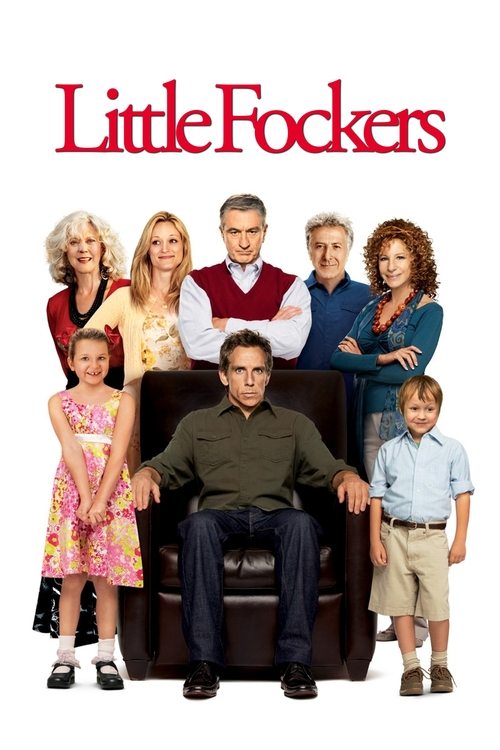
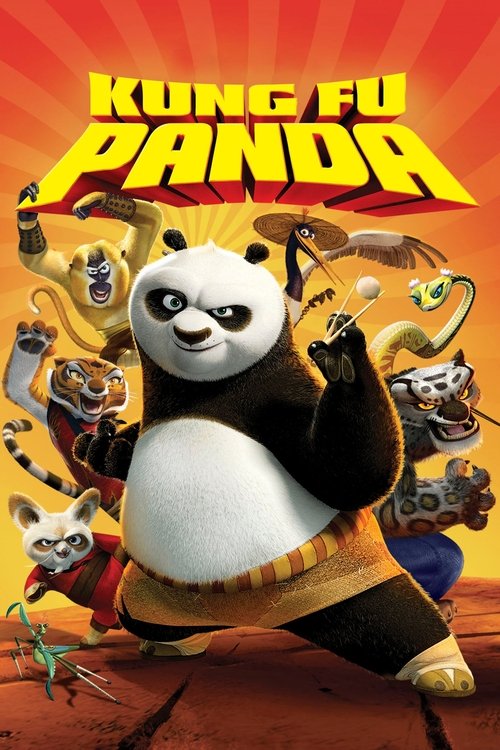
He appears in Little Fockers, the critically panned yet financially successful 2010 sequel to Meet the Fockers. However, his character plays a significantly smaller role than in the previous installment. In 2011, Hoffman reprised his role as Master Shifu in the commercially and critically successful animated film Kung Fu Panda 2. In 2012, Hoffman's audiobook recording of Jerzy Kosinski's Being There was released at Audible.com. Hoffman starred in the HBO horse racing drama Luck, as a man involved in bookmaking and casino operations. Luck was canceled in March 2012 after one season following the death of three horses on set.
In 2012, Hoffman made his directorial debut with Quartet, starring Maggie Smith, Tom Courtenay, Pauline Collins, Billy Connolly, and Michael Gambon. The BBC comedy-drama premiered at the 2012 Toronto Film Festival where it earned respectable reviews from critics. Smith was nominated for Golden Globe for her performance. In 2015, Hoffman starred in Roald Dahl's Esio Trot, a BBC television film adaptation of Roald Dahl's classic novel, adapted by Richard Curtis and co-starring Judi Dench. Hoffman received an Emmy Award for Best Performance by an Actor. In 2016, he once again lent his voice to Master Shifu in the animated feature Kung Fu Panda 3.
In 2017, Hoffman starred in Noah Baumbach's Netflix film The Meyerowitz Stories alongside Adam Sandler, Ben Stiller, Elizabeth Marvel and Emma Thompson. The film premiered at the Cannes Film Festival on May 21, 2017, where it received a four-minute standing ovation. In 2017, Hoffman was honored with the Gotham Awards Tribute alongside Sofia Coppola, Nicole Kidman, Edward Lachman. Hoffman was introduced by Elizabeth Marvel.
In 2020, it was announced that Hoffman would make his return to the Broadway stage in Scott Rudin's revival of Our Town as the Stage Manager. Hoffman's last appearance on stage was 30 years prior in The Merchant of Venice in 1989. Due to the COVID-19 pandemic, Broadway theaters remained shut until 2021. Hoffman appeared alongside Candice Bergen, Dianna Agron and Simon Helberg in As They Made Us directed by Mayim Bialik. He also starred alongside Sissy Spacek and his son Jake Hoffman in Darren Le Gallo's directorial film debut Sam & Kate which began filming in February 2022. In September 2021, he was attached to feature comedy film Mr. Shaw Goes To Hollywood as MGM studio head, Louis B Mayer. Filming would tentatively commence fall 2021.
Legacy and reputation
David Thomson of The Guardian described of Hoffman as a central figure of the late 60s, 70s and 80s" adding, "He is a part of what has turned out a very ambiguous vintage: it also includes Jack Nicholson, Robert Redford, Warren Beatty and Woody Allen, actors who cannot quite make up their minds whether they are adorable still or national treasures."
In 2017, the Gotham Awards announced that they would recognize Hoffman for his lifetime achievement in film. The director of the Independent Filmmaker Project (IFP) and Made in NY Media Center stated, "We are thrilled to present Dustin Hoffman with the Actor Tribute. Starting with his breakthrough role in the timeless classic The Graduate to his highly praised turn in his upcoming film, The Meyerowitz Stories, Dustin's wide range of roles – often portraying antiheroes or the marginalized – and the creative choices he has embodied in these complex characters, has firmly placed him amongst the most compelling actors to have graced the screen."
Actress Elizabeth Marvel introduced Hoffman where she talked about the influence he has had over her career and stated, "His work is never anything less than extraordinary".
Acting credits and accolades
In 1999, Hoffman was honored by the American Film Institute, who celebrated him with the 27th Life Achievement Award. Those who praised him and celebrated his work included Edward Norton, Jon Voight, Goldie Hawn, Cuba Gooding Jr., and Kathy Bates. Jack Nicholson presented Hoffman with the award. Upon receiving the award he quoted the poet Emily Dickinson, "Not knowing when the dawn will come, I open the door".
In 2009, Hoffman received an Honorary Cesar Medal at the César Awards. In 2012, Dustin Hoffman received Kennedy Center Honors, with the following commendation: "Dustin Hoffman's unyielding commitment to the wide variety of roles he plays has made him one of the most versatile and iconoclastic actors of this or any other generation". Those who honored him at the ceremony included Robert De Niro, Liev Schreiber, Naomi Watts, and Billy Connolly.
Personal life
Marriage and relationships
After meeting in 1963, Hoffman married Anne Byrne in May 1969. He adopted Karina (born 1967), Byrne's child from a previous marriage, and with Byrne had daughter Jenna (born October 15, 1969). In 1970, Hoffman and Byrne were living in Greenwich Village in a building next door to a townhouse occupied at the time by members of the Weathermen, when a bomb was accidentally detonated in the townhouse's basement, killing three. In the 2002 documentary The Weather Underground, Hoffman can be seen standing in the street during the aftermath of the explosion. The couple divorced in 1980.
After Hoffman's separation, he began seeing Lisa Gottsegen, their families having had a relationship together growing up. She was finishing her Juris Doctor degree, and the couple married on October 12, 1980. They have four children: Jacob Edward (born March 20, 1981), Rebecca Lillian (born March 17, 1983), Maxwell Geoffrey (born August 30, 1984) and Alexandra Lydia "Ali" (born October 27, 1987).
In an interview, he said that all of his children from his second marriage had bar or bat mitzvahs and that he is a more observant Jew now than when he was younger. He has also lamented that he is not fluent in Hebrew.
Activism
Hoffman has long supported the Democratic Party and Ralph Nader. In 1997 he was one of a number of Hollywood stars and executives to sign an open letter to the German chancellor Helmut Kohl protesting against the treatment of Scientologists in Germany, which was published as a newspaper advertisement in the International Herald Tribune.
Cancer treatment
Hoffman was successfully treated for cancer in 2013.
Sexual misconduct allegations
In 2017, seven women accused Hoffman of sexual misconduct or assault. Anna Graham Hunter alleged that, while she was 17 and working as an intern on a TV production of Death of a Salesman, Hoffman made inappropriate jokes and comments around her and asked her to give him foot massages. Hoffman released an apology to Hunter, saying "I have the utmost respect for women and feel terrible that anything I might have done could have put her in an uncomfortable situation", continuing, "I am sorry. It is not reflective of who I am." Online magazine Slate reported in 2017 that Meryl Streep had differences with Hoffman which include him slapping her in a scene and him groping her breast. However, a representative for Streep responded to Slate saying it was not an accurate rendering of their 1979 meeting. Streep's representative stated "there was an offense and it is something for which Dustin apologized. And Meryl accepted that."
In December 2017, comedian John Oliver unexpectedly questioned Hoffman about the allegations during the 20th anniversary screening of Wag the Dog at the 92nd Street Y. "It's 'not reflective of who I am' – it's that kind of response to this stuff that pisses me off," Oliver said. "Do you understand how that feels like a dismissal?" Hoffman said he felt blindsided by the line of questioning, remarking "You've made the case better than anyone else can. I'm guilty. Because someone has alleged something, I'm guilty. You push a button. It's all over the world: I'm a predator. I'm this and that, and it's not true." Hoffman has not publicly responded to the other six allegations.
Bill Murray, who costarred with Hoffman in Tootsie (1982) and The Lost City (2005), defended him, saying, "I heard what happened to him, and Dustin Hoffman is a really decent person. He's crazy, a Borscht Belt flirt, has been his whole life. (But) he's a really sweet man." Actors
Chevy Chase and Liam Neeson also came to his defense.