Critical reception
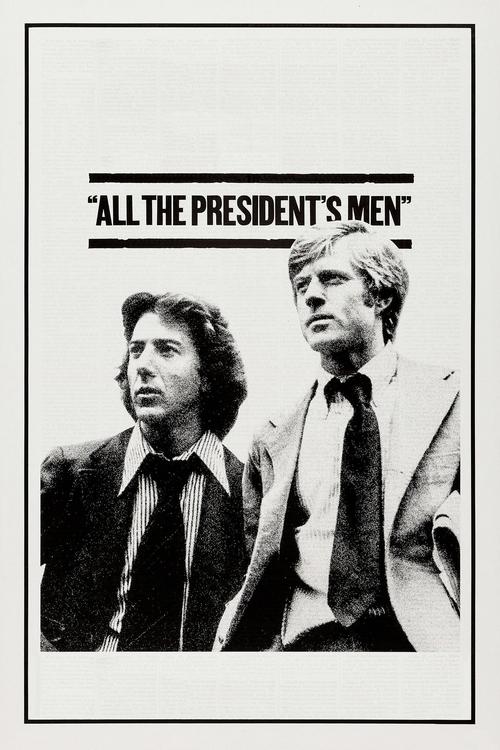
All the President's Men has received near-universal acclaim from many film critics, both on its release and in the years immediately following it. On the review aggregator website Rotten Tomatoes, the film holds an approval rating of 95% based on 76 reviews. The website's critics consensus reads, "A taut, solidly acted paean to the benefits of a free press and the dangers of unchecked power, made all the more effective by its origins in real-life events." On Metacritic, which assigns a weighted average score out of 100 to reviews from mainstream critics, the film received an average score of 84, based on reviews from 18 critics, indicating "universal acclaim".
At the time of the film's release, Roger Ebert of the Chicago Sun-Times awarded the film 3½ stars out of 4, writing: "It provides the most observant study of working journalists we're ever likely to see in a feature film. And it succeeds brilliantly in suggesting the mixture of exhilaration, paranoia, self-doubt, and courage that permeated The Washington Post as its two young reporters went after a presidency." Variety praised the "ingenious direction [...] and scripting" that overcame the difficult lack of drama that a story about reporters running down a story might otherwise have. Gene Siskel gave the film four stars. In his Chicago Tribune review, he wrote, "Director Alan J. Pakula duplicates the surprise and suspense of his Klute while avoiding the overstatement and pandering paranoia of his more recent political thriller, The Parallax View. Pakula's greatest achievement is the way he unobtrusively weaves outside events into narrative of the reporters' story." Siskel also named it the best film of 1976 on his year-end list.
Vincent Canby of The New York Times wrote, "Newspapers and newspapermen have long been favorite subjects for movie makers—a surprising number of whom are former newspapermen, yet not until All The President's Men, the riveting screen adaptation of the Watergate book by Carl Bernstein and Bob Woodward, has any film come remotely close to being an accurate picture of American journalism at its best." Rex Reed wrote, "Just to think about Watergate (and there are those, I'm told, who prefer not to) is to chatter the brain with a million details, telephone conversations, notebook jottings, investigations and technical problems that could be very dull indeed on film. Awesomely, and with tremendous intelligence, Alan Pakula, the director, has assembled each element with the panache of a mystery novelist. The result is a movie that literally keeps the audience glued to the edge of the seat with nail-biting tension and excitement." Kathleen Carroll of the New York Daily News gave the film a full four-star rating and wrote that it "offers a rousing argument for the preservation of freedom of the press that precious right that allows reporters like Bob Woodward and Carl Bernstein to ferret out the truth." Charles Champlin of the Los Angeles Times called it "quite beyond anything else, an engrossing mystery movie, with atmosphere, suspense, surprise, conflict, danger, secret messages, clandestine meetings, heroes, villains and a cast of leading and supporting characters that might have emerged from an unlikely collaboration of, let us say, Gore Vidal and Raymond Chandler."
Desmond Ryan of The Philadelphia Inquirer called it "not only a stunningly accurate account of the way big-city newspapers operate, down to the last paper clip and derisive curse, but it is also a superlative movie by any standard. The acting from Redford and Dustin Hoffman as Bob Woodward and Carl Bernstein is immaculate and understated, and it is matched right down to the last bit part. It is equalled by Alan Pakula's high-tension direction and William Goldman's tautly accurate screenplay." Stanley Eichelbaum of the San Francisco Examiner wrote, "People should enjoy it, since it has the knockout force of an American Z, without the heavy doses of manipulative melodrama. It's eminently entertaining, providing much the same fascination and wry humor as The Front Page, a romantic treatment of the same aspects of competitive, relentlessly aggressive journalism. The film's brilliance largely emanates from the lean, astringent, compellingly realistic, quasi-documentary style brought to it by director Alan J. Pakula (Klute, The Parallax View, etc.) and screenwriter William Goldman. Like the book, the film has the hypnotic impact of a detective thriller in its sharp, subtle retelling of the involved story of the Watergate break-in and Woodward and Bernstein's role in unraveling the cover-up."
Susan Stark of the Detroit Free Press wrote, "The circuitous, sometimes perilous, nearly always frustrating adventure of the two newsmen who broke the conspiracy of silence about the Watergate scandals makes one terrific chunk of material for a movie, Wisely, Robert Redford, who acquired screen right to the book even before it was published, stuck to his gun, leaning hard on the dramatic, as opposed to the political elements in the material. The hard dramatic approach of the film, envisioned by Redford and executed with consummate skill by Alan J. Pakula, works wondrously well, from just about any point of view. In aesthetic terms, it works because the film carries no unnecessary expository baggage. No one is preaching here; no one is pushing a message, except by implication." Joe Pollack of the St. Louis Post-Dispatch wrote, "Making a movie hero out of an investigative newspaper reporter is an extremely difficult task. Investigative reporting simply isn't very exciting, nor very dramatic. It involves a lengthy search for sources and tedious checking and cross-checking of facts, combined with an amount of telephone-calling and door-knocking that can become very dull. All the President's Men has turned these potential minuses into gigantic pluses, and comes through as a wonderful motion picture, one that explores the abuses of power and the work of the free press with a mighty magnifying glass. It glorifies the work of the reporter without making it glamorous." Sally Smith of The Atlanta Constitution said, "A 'reporter' movie in the tradition of the '30s and '40s it is not. There are no fast-talking, cigar-chewing editors, no screaming telephones and no thundering presses. 'Scoop' is never mentioned. Instead, the film is close to a dramatized documentary. For those in the audience expecting an emotional catharsis it may be slightly disappointing, but this low-key realism – as opposed to being a shrill polemic against Nixon – is why the movie works."
Clyde Gilmour of the Toronto Star called it a "fascinating movie from Warner Bros. [that] vividly but scrupulously dramatizes the almost mythological exploits of the men who uncovered the Big Cover-Up. And it does this while portraying the often-distorted world of a big-city newspaper with an honesty and fidelity seldom, if ever, approached in previous films about the press." Martin Malina of the Montreal Star called it "the biggest and the best portrait of newspaper reporting that Hollywood has yet achieved." Dave Lanken of the Montreal Gazette called it "a good picture and one that will undoubtedly do very well. It will both satisfy and create continuing interest in the comeuppance of the world's highest elected crime overlord." Michael Walsh of The Province wrote, "Watergate challenged the free press and produced one of journalism's finest hours. All the President's Men insures [sic] that its lessons will be understood and remembered."
Internationally, Patrick Gibbs of The Daily Telegraph wrote, "Mr Pakula places implicit confidence in this story, tightly scripted by William Goldman, with only an occasional fictional touch and in his experienced actors led by Robert Redford and Dustin Hoffman as the two reporters, though no great feats are called for in the way of interpretation." Colin Bennett of The Age wrote, "Documentary is the best way to tackle a story that's so incredibly close, if it is to be made into entertainment at all. So it's a handicap that two film stars, rather than unknown faces, were deemed necessary to mime Woodstein's astonishment as each new fragment of thread in the pattern is revealed. Characterisation is totally unimportant, however; and the two actors play it straight, sans heroics, concentrating on the stunning business in hand, the only business that really matters." Romola Costantino of The Sun-Herald remarked, "This movie is sure to be a great success, but it won't necessarily be because of its brilliant reconstruction of the Watergate story. Most people have forgotten about that by now. As for the impressive skill of direction, the realistic, clear dialogue, or the fact that it relives, with mounting suspense, one of the most incredible scandals of this century not even these could have ensured this film's success away from America. There's no sex, no violence, and most of it is telephone calls or takes place behind office desks. But it can't miss, because it also offers two hours in the company of those charismatic stars, Dustin Hoffmann [sic] and Robert Redford, as the dedicated newspaper reporters, Carl Bernstein and Bob Woodward, from the Washington Post, who were responsible for the whole shake-up."
The film continued to receive acclaim long after its release. Chris Nashawaty of Entertainment Weekly, reviewing Blu-ray releases of both this film and Network in 2011, called it "a victory lap for American journalism – the triumphant flip side to Network's self-loathing take on the media. It also anticipated our current WikiLeaks era, with Robert Redford (Woodward) and Dustin Hoffman (Bernstein) milking anonymous sources and burning shoe leather to speak truth to power. These films are timeless and essential, raising thorny questions we're still struggling to answer 35 years later. That must have been heavy stuff to be hit with at the multiplex in 1976. Maybe that's why Rocky walked away with Best Picture." In a rare dissenting review published in 1985, Dave Kehr of the Chicago Reader was critical of the writing, calling the film "pedestrian" and "a study in missed opportunities".


_-_Martin_Balsam.jpg?width=400)