



Barbara Joan "Barbra" Streisand ( STRY-sand; born April 24, 1942) is an American singer, songwriter, actress, author, and filmmaker. Over a career spanning more than six decades, she has achieved success across multiple fields of entertainment, and has earned all four of the major performing art awards—Emmy, Grammy, Oscar, and Tony (EGOT).
Streisand began performing in the early 1960s in nightclubs and Broadway theaters, which led to guest appearances on various television shows. Signing with Columbia Records, Streisand retained full artistic control of her performances in exchange for accepting lower pay—an arrangement that continued throughout her career. Her studio debut The Barbra Streisand Album (1963) won the Grammy Award for Album of the Year. During her recording career, Streisand has amassed a total of 31 RIAA platinum-certified albums, including People (1964), The Way We Were (1974), Guilty (1980), The Broadway Album (1985), and Higher Ground (1997). She was the first woman to score 11 number one albums on the US Billboard 200—from People to Encore: Movie Partners Sing Broadway (2016)—and remains the only artist to top the chart in six decades. Streisand also topped the US Billboard Hot 100 with five singles: "The Way We Were", "Evergreen", "You Don't Bring Me Flowers", "No More Tears (Enough Is Enough)", and "Woman in Love".
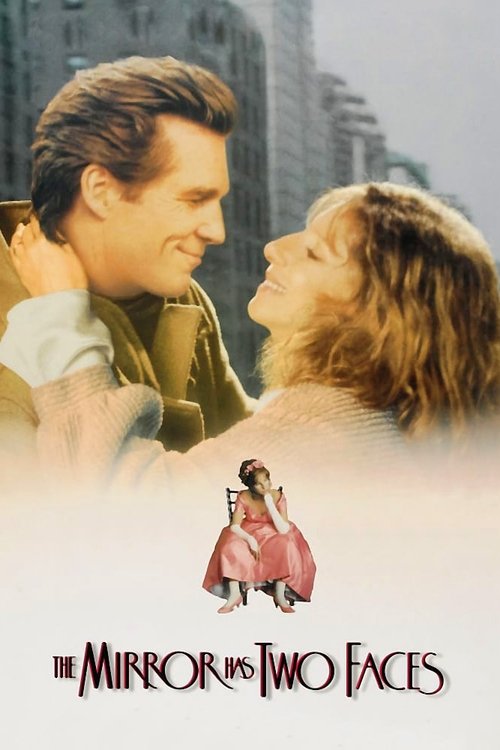
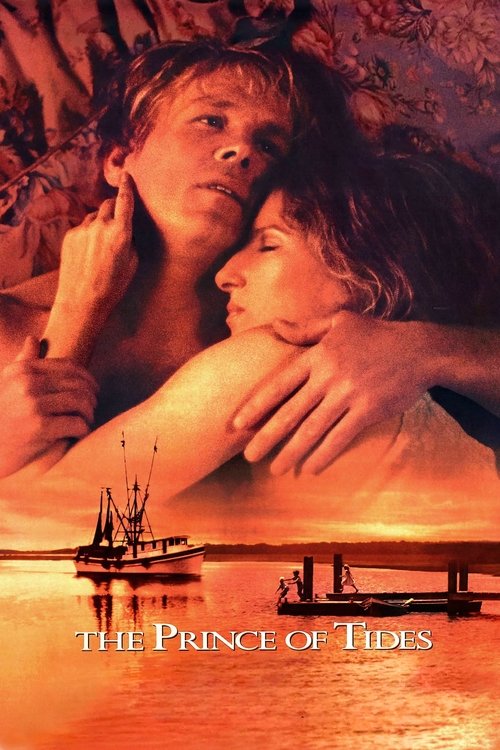
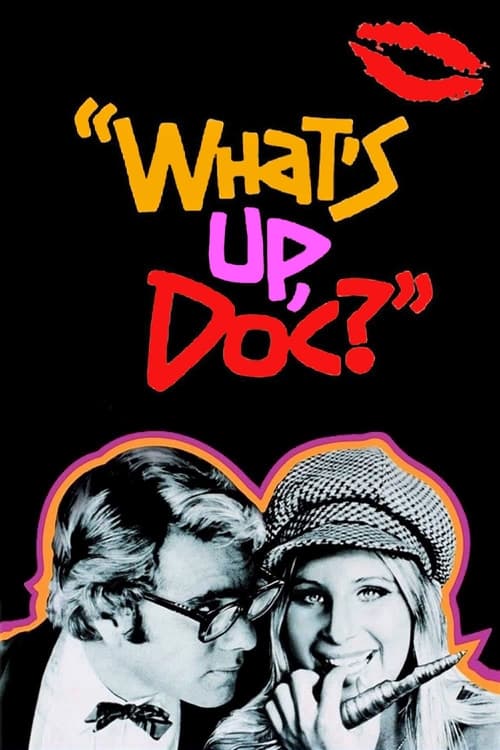
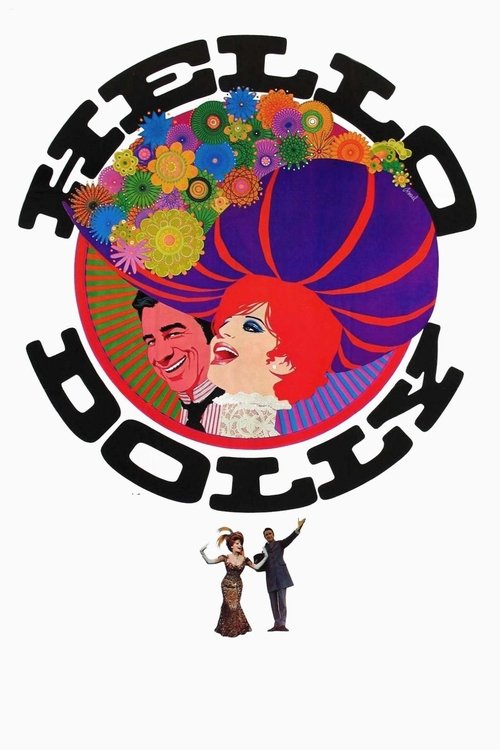
In the latter 1960s, after having established success as a vocalist, Streisand ventured into film. She starred in the critically acclaimed Funny Girl (1968), winning the Academy Award for Best Actress. Additional fame on the big screen followed with the extravagant musical Hello, Dolly! (1969), the screwball comedy What's Up, Doc? (1972), and the romantic drama The Way We Were (1973). Streisand won the Academy Award for Best Original Song for writing the love theme from A Star Is Born (1976), the first woman to be honored as a composer. With the release of Yentl (1983), Streisand became the first woman to write, produce, direct, and star in a major studio film. The film won an Oscar for Best Original Score and a Golden Globe for Best Motion Picture Musical. Streisand also received the Golden Globe Award for Best Director, becoming the first (and for 37 years, the only) woman to win that award. Streisand then produced and directed The Prince of Tides (1991), and The Mirror Has Two Faces (1996).
With sales exceeding 150 million records worldwide, Streisand is one of the best-selling recording artists of all time. According to the Recording Industry Association of America (RIAA), she is the third-highest certified female artist in the United States, with 68.5 million certified album units. Billboard ranked Streisand as the greatest solo artist on the Billboard 200 chart, as well as the top Adult Contemporary female artist of all time. Her accolades span ten Grammy Awards, including the Grammy Lifetime Achievement Award and the Grammy Legend Award; nine Golden Globe Awards; five Emmy Awards; four Peabody Awards; two Academy Awards; the Screen Actors Guild Life Achievement Award; the Honorary Palme d'Or; and the Presidential Medal of Freedom.
Contents
Early life
Family
Streisand was born April 24, 1942, in Brooklyn, New York City, to Diana Ida (née Rosen; 1908–2002) and Emanuel Streisand (1908–1943). Her mother had been a soprano in her youth and considered a career in music, but later became a school secretary. Her father was a high school teacher at the same school, where they first met. Streisand's family is Jewish. Her paternal grandparents emigrated from Galicia (modern-day Poland and Ukraine) in the Austro-Hungarian Empire, and her maternal grandparents from the Russian Empire, where her grandfather had been a cantor.
In August 1943, a few months after Streisand's first birthday, her father died at age 34 from complications from an epileptic seizure, possibly the result of a head injury years earlier. The family fell into near poverty, with her mother working as a low-paid bookkeeper. As an adult, Streisand remembered those early years as always feeling like an "outcast", explaining, "Everybody else's father came home from work at the end of the day. Mine didn't." Her mother tried to pay their bills but could not give her daughter the attention she craved: "When I wanted love from my mother, she gave me food," Streisand says.
Streisand recalled that her mother had a "great voice" and sang semi-professionally on occasion. In a 2016 interview with Rosie O'Donnell, Streisand recounted that when she was 13, she and her mother recorded some songs on tape during a visit to the Catskills. That session was the first time Streisand ever asserted herself as an artist, which also became her "first moment of inspiration."
She has an older brother, Sheldon, and a younger half-sister, singer Roslyn Kind, from her mother's remarriage to Louis Kind in 1950.
Education
Streisand began her education at the Jewish Orthodox Yeshiva of Brooklyn when she was five. She was considered bright and inquisitive; however, she lacked discipline, often shouting answers to questions out of turn. She next attended Public School 89 in Brooklyn, and during those early school years began watching television and going to movies. "I always wanted to be somebody, to be famous... You know, get out of Brooklyn."
Streisand became known by others in the neighborhood for her voice. She remembers sitting on the stoop in front of their apartment building with the other kids and singing: "I was considered the girl on the block with the good voice." That talent became a way for her to gain attention. She would often practice her singing in the hallway of her apartment building, which gave her voice an echoing quality.
She made her singing debut at a parent–teacher association assembly, where she became a hit to everyone but her mother, who was mostly critical of her daughter. Streisand was invited to sing at weddings and summer camp, along with having an unsuccessful audition at MGM records when she was nine. By the time she was 13, her mother began supporting her talent, helping her make a four-song demo tape, including "Zing! Went the Strings of My Heart" and "You'll Never Know".
Becoming an actress was her main objective. That desire was made stronger when she saw her first Broadway play, The Diary of Anne Frank, when she was 14. The star in the play was Susan Strasberg, whose acting she wanted to emulate. Streisand began spending her spare time in the library, studying the biographies of various stage actresses such as Eleanora Duse and Sarah Bernhardt. In addition, she began reading novels and plays and studying the acting theories of Konstantin Stanislavski and Michael Chekhov.
In 1956, she attended Erasmus Hall High School in Brooklyn, where she became an honor student in modern history, English, and Spanish. She also joined the Freshman Chorus and Choral Club, where she sang with another choir member and classmate, Neil Diamond. Diamond recalls, "We were two poor kids in Brooklyn. We hung out in the front of Erasmus High and smoked cigarettes." The school was near an art movie house, and he recalls that she was always aware of the films they were showing. She had a crush on 15-year-old US Chess Champion and fellow student Bobby Fischer, whom she found to be "very sexy".
Career
Beginnings
Living on her own at 16, Streisand took various menial jobs to have some income. During one period, she lacked a permanent address, and found herself sleeping at the home of friends or anywhere else she could set up the army cot she carried around. When desperate, she returned to her mother's flat in Brooklyn for a home-cooked meal. However, her mother was horrified by her daughter's "gypsy-like lifestyle", wrote biographer Karen Swenson, and again begged her to give up trying to get into show business, but Streisand took her mother's pleadings as even more reason to keep trying: "My desires were strengthened by wanting to prove to my mother that I could be a star."
Streisand took a job as an usher at the Lunt-Fontanne Theater for The Sound of Music early in 1960. During the run of the play, she heard that the casting director was auditioning for more singers, and it marked the first time she sang in pursuit of a job. Although the director felt she was not right for the part, he encouraged her to begin including her talent as a singer on her résumé when looking for other work.
Streisand asked her boyfriend, Barry Dennen, to tape her singing, copies of which she could then give out to possible employers. Dennen found a guitarist to accompany her.
We spent the afternoon taping, and the moment I heard the first playback I went insane ... This nutty little kook had one of the most breathtaking voices I'd ever heard ... when she was finished and I turned off the machine, I needed a long moment before I dared look up at her.
Dennen grew enthusiastic and he convinced her to enter a talent contest at the Lion, a gay nightclub in Manhattan's Greenwich Village. She performed two songs, after which there was a "stunned silence" from the audience, followed by "thunderous applause" when she was pronounced the winner. She was invited back and sang at the club for several weeks. During this time, disliking her name, she changed it from "Barbara" to "Barbra".
In the early days of her career, Streisand was repeatedly told she was too ugly to be a star and was advised to get a nose job, which she declined to do.
Streisand was next asked to audition at the Bon Soir nightclub, after which she was signed up at $125 a week. It became her first professional engagement in September 1960, where she was the opening act for comedian Phyllis Diller. She recalls it was the first time she had been in that kind of upscale environment: "I'd never been in a nightclub until I sang in one."
Stardom
Streisand has recorded 50 studio albums, almost all with Columbia Records. Her early works in the 1960s (her debut The Barbra Streisand Album, The Second Barbra Streisand Album, The Third Album, My Name Is Barbra, etc.) are considered classic renditions of theatre and cabaret standards, including her pensive version of the normally uptempo "Happy Days Are Here Again". She performed this in a duet with Judy Garland on The Judy Garland Show. Garland referred to her on the air as one of the last great belters. They also sang "There's No Business Like Show Business", with Ethel Merman joining them.
Beginning with My Name Is Barbra, her early albums were often medley-filled keepsakes of her television specials. Starting in 1969, she began attempting more contemporary material, but like many talented singers of the day, she found herself out of her element with rock. Her vocal talents prevailed, and she gained newfound success with the pop and ballad-oriented Richard Perry-produced album Stoney End in 1971. The title track, written by Laura Nyro, was a major hit for Streisand.
During the 1970s, she was also highly prominent on the pop charts, with Top 10 recordings such as "The Way We Were" (US No. 1); "Evergreen (Love Theme from A Star Is Born)" (US No. 1); "No More Tears (Enough Is Enough)" (1979, with Donna Summer), which as of 2010 is reportedly still the most commercially successful duet, (US No. 1); "You Don't Bring Me Flowers" (with Neil Diamond) (US No. 1); and "The Main Event" (US No. 3), some of which came from soundtrack recordings of her films. As the 1970s ended, Streisand was named the most successful female singer in the U.S. — only Elvis Presley and The Beatles had sold more albums. In 1980, she released her best-selling effort to date, the Barry Gibb-produced Guilty. The album contained the hits "Woman in Love" (which spent several weeks on top of the pop charts in the fall of 1980), "Guilty", and "What Kind of Fool".
After years of largely ignoring Broadway and traditional pop music in favor of more contemporary material, Streisand returned to her musical-theater roots. Columbia Records objected that the songs she wanted to sing were not pop songs, but Streisand asserted the full creative control her contract gave her—'I've always had the right to sing what I want'—with 1985's The Broadway Album, which was unexpectedly successful, holding the coveted No. 1 Billboard position for three straight weeks and being certified quadruple platinum. The album featured tunes by Rodgers and Hammerstein, George Gershwin, Jerome Kern, and Stephen Sondheim, who was persuaded to rework some of his songs especially for this recording. The Broadway Album was met with acclaim, including a Grammy nomination for album of the year, and handed Streisand her eighth Grammy as Best Female Vocalist. After releasing the live album One Voice in 1986, Streisand was set to release another album of Broadway songs in 1988. She recorded several cuts for the album under the direction of Rupert Holmes, including "On My Own" (from Les Misérables), a medley of "How Are Things in Glocca Morra?", and "Heather on the Hill" (from Finian's Rainbow and Brigadoon, respectively), "All I Ask of You" (from The Phantom of the Opera), "Warm All Over" (from The Most Happy Fella), and an unusual solo version of "Make Our Garden Grow" (from Candide). Streisand was not happy with the direction of the project and it was scrapped. Only "Warm All Over" and a reworked, lite FM-friendly version of "All I Ask of You" were ever released, the latter appearing on Streisand's 1988 effort, Till I Loved You. At the beginning of the 1990s, Streisand started focusing on her film directorial efforts and became almost inactive in the recording studio. In 1991, a four-disc box set, Just for the Record, was released. A compilation spanning Streisand's entire career to date, it featured over 70 tracks of live performances, greatest hits, rarities, and previously unreleased material.
Artistry
Streisand possesses a mezzo-soprano vocal range, which Howard Cohen of the Miami Herald described as "peerless". Whitney Balliett wrote, "Streisand wows her listeners with her shrewd dynamics (in-your-ear soft here, elbowing-loud there), her bravura climbs, her rolling vibrato, and the singular Streisand-from-Brooklyn nasal quality of her voice – a voice as immediately recognizable in its way as Louis Armstrong's." Music writer Allegra Rossi adds that Streisand creates complete compositions in her head:
Even though she can't read or write music, Barbra hears melodies as completed compositions in her head. She hears a melody and takes it in, learning it quickly. Barbra developed her ability to sustain long notes because she wanted to. She can mold a tune that others cannot; she's able to sing between song and speech, keeping in tune, carrying rhythm and meaning.
While she is predominantly a pop singer, Streisand's voice has been described as "semi-operatic" due to its strength and quality of tone. According to Adam Feldman of Time Out, Streisand's "signature vocal style" is "a suspension bridge between old-school belting and microphone pop." She is known for her ability to hold relatively high notes, both loud and soft, with great intensity—which led classical pianist Glenn Gould to call himself "a Streisand freak"—as well as for her ability to make slight but unobtrusive embellishments on a melodic line.
Since about 2010 critics and audiences noted that her voice had "lowered and acquired an occasionally husky edge". However, New York Times music critic Stephen Holden noted that her distinctive tone and musical instincts remained, and that she still had "the gift of conveying a primal human longing in a beautiful sound". Paul Taylor of The Independent wrote that Streisand "has sounded a little scratchy and frayed, though the stout resolve and superb technique with which Streisand manages to hoist it over these difficulties has come to seem morally as well aesthetically impressive." Reviewing Streisand's 2014 studio album Partners, Gil Naveh of Haaretz described Streisand's voice as "velvety, clear and powerful ... and the passing years have given it a fascinating depth and roughness."
Personal life
Marriages and relationships
Streisand has been married twice. Her first husband was actor Elliott Gould, whom she married on September 13, 1963. They announced their separation on February 12, 1969, and divorced on July 6, 1971. They had one child, Jason Gould, who appeared as her on-screen son in The Prince of Tides.
In 1969 and 1970, Streisand dated Canadian Prime Minister Pierre Trudeau.
She started a relationship with hairdresser/producer Jon Peters in 1973. He went on to be her manager and producer. They broke up in 1982 during the making of Yentl but remain friends. She is the godmother of his daughters, Caleigh Peters and Skye Peters.
Streisand briefly dated film director Michael Cimino in early 1983, though they kept their relationship secret. Cimino had considered her for a role in his planned adaptation of The Fountainhead by Ayn Rand, which was not made.
From November 1983 to October 1987, Streisand lived with Baskin-Robbins ice cream heir Richard Baskin, who composed the lyrics to "Here We Are At Last" on her 1984 album Emotion. They remained friends after the split, and Baskin would accompany Streisand to public events in between her subsequent romances.
She dated actor Don Johnson from December 1987 until at least September 1988; they recorded a duet of "Till I Loved You".
Streisand briefly dated actors Richard Gere in 1983 and Clint Eastwood in 1989.
From 1989 to 1991, she was involved with composer James Newton Howard.
Streisand dated tennis champion Andre Agassi from 1992 to 1993. Writing about the relationship in his 2009 autobiography, Agassi said: "We agree that we're good for each other, and so what if she's twenty-eight years older? We're simpatico, and the public outcry only adds spice to our connection. It makes our friendship feel forbidden, taboo – another piece of my overall rebellion. Dating Barbra Streisand is like wearing Hot Lava."
Name
Streisand changed her name from "Barbara" to "Barbra" because, she said, "I hated the name, but I refused to change it." Streisand further explained: "Well, I was 18 and I wanted to be unique, but I didn't want to change my name because that was too false. You know, people were saying you could be Joanie Sands, or something like that. (My middle name is Joan.) And I said, 'No, let's see, if I take out the 'a,' it's still 'Barbara,' but it's unique." A 1967 biography with a concert program said, "the spelling of her first name is an instance of partial rebellion: she was advised to change her last name and retaliated by dropping an "a" from the first instead."
According to Streisand, her surname is pronounced with an "s" sound "like sand on the beach," not the "z" sound often used. The Apple voice digital assistant Siri originally pronounced her surname wrong, prompting Streisand to personally contact Apple CEO Tim Cook to complain about the pronunciation, which Apple soon corrected.
Politics
In the early years of her career, Streisand's interest in politics was limited, with the exception of her participation in activities of the anti-nuclear group Women Strike for Peace in 1961 and 1962. In 1968, her political activism increased, and she helped promote the presidential campaign of Eugene McCarthy who held an anti–Vietnam War stance. In July 1968, with Harry Belafonte and others, she performed at the Hollywood Bowl in a fundraising concert sponsored by the Southern Christian Leadership Conference to benefit the poor.
Streisand has been an active supporter of the Democratic Party and many of its causes. She was among the celebrities on President Richard Nixon's 1971 list of political enemies. In 1972, she assisted the presidential campaign of anti-war candidate George McGovern by headlining the benefit concert Four for McGovern, organized by actor Warren Beatty and record producer Lou Adler; her concert recording was released as Live Concert at the Forum. The next year, in association with liberal activist Stanley Sheinbaum and the American Civil Liberties Union, Streisand performed a benefit at the mansion of film mogul Jennings Lang to pay for the legal defense of Daniel Ellsberg of Pentagon Papers fame. Accompanied by a small combo including Marvin Hamlisch on piano, Streisand took paid song requests from the star-studded audience and by telephone to bring the night's total to $50,000.
In 1984, Streisand joined Jane Fonda and ten other television and film industry notables to establish the activist group Hollywood Women's Political Committee (HWPC), the membership eventually growing to 300. The HWPC fought for liberal causes for more than a decade, contributing to the Democratic Party's taking majority control in the 1986 U.S. Senate elections, and in 1992 funding Bill Clinton's presidential election as well as helping to usher in the Year of the Woman by electing more women senators. In 1995 Streisand spoke at Harvard's John F. Kennedy School of Government about the role of the artist as citizen, in support of arts programs and funding.
Streisand was critical of George W. Bush, as she wrote a memo to Democrats expressing her concerns about how the party was not standing up enough to the president.
Streisand is a supporter of LGBT rights and backed the "No on 8" campaign in an unsuccessful attempt to defeat California Proposition 8 of 2008.
Philanthropy
In 1984, Streisand donated the Emanuel Streisand Building for Jewish Studies to the Hebrew University of Jerusalem, in the Mount Scopus campus, in memory of her father, an educator and scholar who died when she was young.
Streisand has personally raised $25 million for organizations through her live performances. The Streisand Foundation, established in 1986, has contributed over $16 million through nearly 1,000 grants to "national organizations working on preservation of the environment, voter education, the protection of civil liberties and civil rights, women's issues and nuclear disarmament".
In 2006, Streisand donated $1 million to the William J. Clinton Foundation in support of former President Bill Clinton's climate change initiative.
In 2009, Streisand gifted $5 million to endow the Barbra Streisand Women's Cardiovascular Research and Education Program at Cedars-Sinai Medical Center's Women's Heart Center. In September that year, Parade magazine included Streisand on its Giving Back Fund's second annual Giving Back 30 survey, "a ranking of the celebrities who have made the largest donations to charity in 2007 according to public records", as the third most generous celebrity. The Giving Back Fund claimed Streisand donated $11 million, which The Streisand Foundation distributed. In 2012 she raised $22 million to support her women's cardiovascular center, bringing her own personal contribution to $10 million. The program was officially named the Barbra Streisand Women's Heart Center.
At Julien's Auctions in October 2009, Streisand, a longtime collector of art and furniture, sold 526 items, with all the proceeds going to her foundation. Items included a costume from Funny Lady and a vintage dental cabinet purchased by the performer at 18 years old. The sale's most valuable lot was a painting by Kees van Dongen.
In December 2011, she appeared at a fundraising gala for Israel Defense Forces charities.
In June 2020, she gifted George Floyd's daughter, Gianna Floyd, Disney shares.
Legacy
Streisand is regarded as the "Queen of the Divas" by various media outlets. The New York Times called her among the three of America's Most Beloved Divas (alongside Dolly Parton and Patti Labelle). Vulture honored her enduring legacy saying her works influence "extends to Céline Dion, the 1980s output of Lionel Richie and Luther Vandross, and the more maudlin ballads of Mariah Carey, Adele, and Whitney Houston." In 2022, Forbes hailed Streisand as the "Queen of the Charts" for her longevity on the Billboard charts, and she was ranked at number 88 on Billboard's 2025 "Top 100 Women Artists of the 21st Century" list. The Los Angeles Times also hailed her as the "most influential female vocalist" and the "most revolutionary of performers" for being responsible for changing the rules for female performers to come. CNN listed her as one of the most romantic singers of the 20th century. In 2023, Rolling Stone ranked Streisand at number 147 on its list of the 200 Greatest Singers of All Time. In 1997, New York magazine acknowledged her fashion sense saying "she embarked on a surreal, chameleonic, personal fashion quest" that single-handedly began the retro revolution in the 1960s.
Honors
Streisand was presented the Distinguished Merit Award by Mademoiselle in 1964, and selected as Miss Ziegfeld in 1965. In 1968, she received the Israel Freedom Medal, the highest civilian award of Israel, and she was awarded Pied Piper Award by ASCAP and Prix De L'Academie Charles Cros in 1969, Crystal Apple by her hometown City of New York, Woman of Achievement in the Arts by Anti-Defamation League in 1978. In 1984, Streisand was awarded the Women in Film Crystal Award for outstanding women who, through their endurance and the excellence of their work, have helped to expand the role of women within the entertainment industry. She received the Woman of Courage Award by the National Organization for Women (NOW), the Ordre des Arts et des Lettres and Scopus Award by American Friends of the Hebrew University.
She received Breakthrough Awards for "making films that portray women with serious complexity" at the Women, Men and Media symposium in 1991. In 1992, she was given the Commitment to Life Award by AIDS Project Los Angeles (APLA), and the Bill of Rights Award by the American Civil Liberties Union of Southern California, the Dorothy Arzner Special Recognition by Women in Film, and the Golden Plate by the Academy of Achievement. She was honored with the Harry Chapin Humanitarian Award from the ASCAP in 1994 and the Peabody Award in 1995, the same year she was accorded an Honorary Doctorate in Arts and Humanities by Brandeis University. She was also awarded Filmmaker of the Year Award for "lifetime achievement in filmmaking" by ShowEast and Peabody Award in 1996, Christopher Award in 1998.
In 2000, President Bill Clinton presented Streisand with the National Medal of Arts, the highest honor specifically given for achievement in the arts, and Library of Congress Living Legend, she also received the highest honor for a career in film AFI Life Achievement Award from American Film Institute and Liberty and Justice Award from Rainbow/PUSH Coalition, Gracie Allen Award, First Annual Jewish Image Awards in 2001, and Humanitarian Award "for her years of leadership, vision, and activism in the fight for civil liberties, including religion, race, gender equality, and freedom of speech, as well as all aspects of gay rights" from Human Rights Campaign in 2004. In 2007, French President Nicolas Sarkozy presented Streisand with Legion of Honour, the highest decoration in France, and President George W. Bush presented her Kennedy Center Honors, the highest recognition of cultural achievement.
In 2011, she was given Board of Governors Humanitarian Award for her efforts on behalf of women's heart health and her many other philanthropic activities." by Cedars-Sinai Heart Institute. She received the L'Oréal Paris Legend Award in 18th Elle Magazine Women in Hollywood. In 2012, she received a Lifetime Achievement Award from the Women Film Critics Circle. She was accorded an Honorary Doctorate of Philosophy by the Hebrew University of Jerusalem in 2013. In that year, she was also recipient of the Charlie Chaplin Award for Lifetime Achievement by the Film Society of Lincoln Center as the only female artist to direct, write, produce, and star in the same major studio film, Yentl, along with a Lifetime Achievement Glamour Awards.
Professional memberships
As one of the most acclaimed actresses, singers, directors, writers, composers, producers, designers, photographers and activists in every medium that she's worked in, Streisand is the only artist who is concurrently a member of the American Society of Composers, Authors and Publishers, Screen Actors Guild, American Federation of Television and Radio Artists, Academy of Motion Pictures Arts and Sciences and Actors' Equity Association, as well as the honorary chairwoman of the board of directors of Hadassah's International Research Institute on Women.
"Streisand effect"
In a 2003 lawsuit, Streisand claimed that a website illustrating coastal erosion invaded her privacy because one of its more than 12,000 images happened to show her Malibu, California, home; Streisand wanted the photo removed from the site. The suit was dismissed and the resultant publicity prompted hundreds of thousands of people to download the photo, which had been accessed only four times prior to Streisand initiating legal action. The term Streisand effect was coined to refer to an attempt to censor information which unintentionally publicizes that information.
Namesakes
The Barbra Streisand Cup is a rugby union match held in Sydney, Australia each year played between the Sydney Convicts, Australia's first gay and inclusive Rugby Union club, and the Maccabi Rugby FC, Sydney's only Jewish rugby team. The match is typically played in or around April, between the rival clubs and is named in Streisand's honour as she is known to have a large fan base in both the gay and the Jewish communities.
Awards and nominations
Barbra Streisand is one of the most decorated entertainers in history. She has won two Academy Awards – one for Best Actress in Funny Girl and another for Best Original Song for "Evergreen", making her the first woman to receive the latter. Streisand has earned 10 Grammy Awards, including Album of the Year for The Barbra Streisand Album. She was also awarded the prestigious Grammy Legend Award, an honor received by only 14 other artists, as well as the Grammy Lifetime Achievement Award. She has won five Emmy Awards, comprising four Primetime Emmys and one Daytime Emmy. She has received four Peabody Awards, the Screen Actors Guild Life Achievement Award and nine Golden Globes. Additionally, she received a Special Tony Award in 1970, recognizing her contributions to Broadway. In 2011, she was honored as MusiCares Person of the Year by the Grammy Foundation for her artistic achievement in the music industry.
Tours
According to Pollstar in March 2020, Streisand is the twelfth highest-grossing female artist in the 21st century, grossing $287 million from 69 shows.
Autobiography
Streisand's writing of her autobiography stalled at various stages, and Viking Press announced in May 2015 that they anticipated publishing her long-awaited memoir in 2017, spanning Streisand's entire life and career.
Upon the release of My Name Is Barbra on November 7, 2023, her BBC interview concluded with Streisand claiming she wanted "to have more fun" in life.
Books
Streisand, Barbra (2023). My Name Is Barbra. New York: Viking Press. ISBN 9780525429524.
Streisand, Barbra (2027). And By the Way. New York: Penguin Random House. ISBN 9798217041787.