


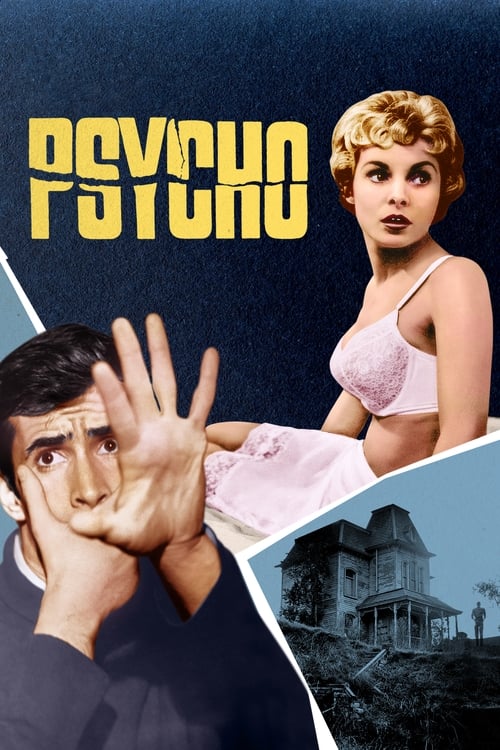
Anthony Perkins (April 4, 1932 – September 12, 1992) was an American actor. He is best known for portraying Norman Bates in Alfred Hitchcock's 1960 film Psycho.
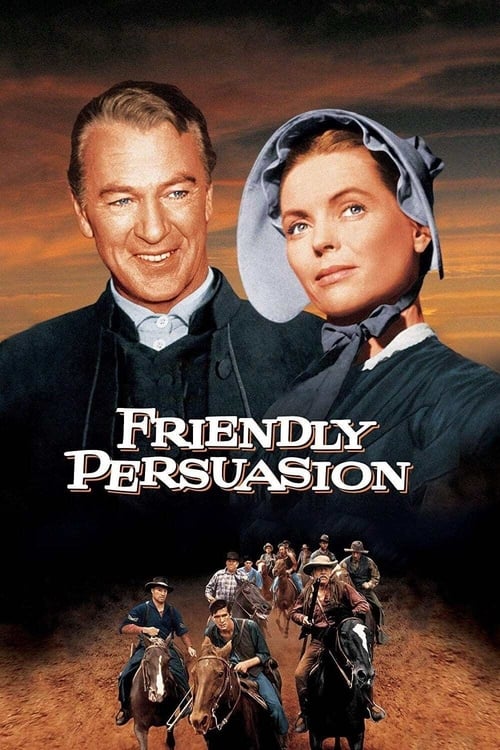
Perkins' first film role was in The Actress (1953). The next year, he debuted on Broadway in Tea and Sympathy, a performance for which he received critical acclaim. In 1956, he played his first major film role in Friendly Persuasion, which earned him a Golden Globe Award for Best New Actor of the Year and a nomination for the Academy Award for Best Supporting Actor. Following the film's success, he signed a seven-year contract with Paramount Pictures, where he was regarded as the studio's last matinee idol. In 1957, he starred in Fear Strikes Out. During this period, Paramount promoted Perkins in romantic roles. He also took on more dramatic roles, including the Broadway production of Look Homeward, Angel, for which he was nominated for a Tony Award, and the film On the Beach (1959).
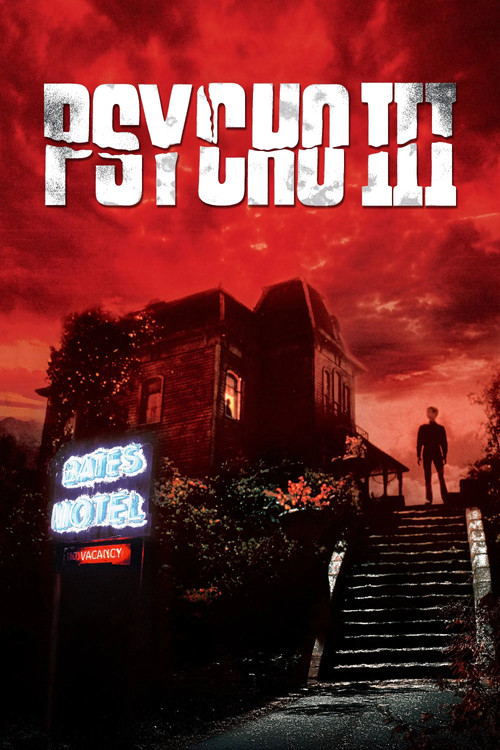
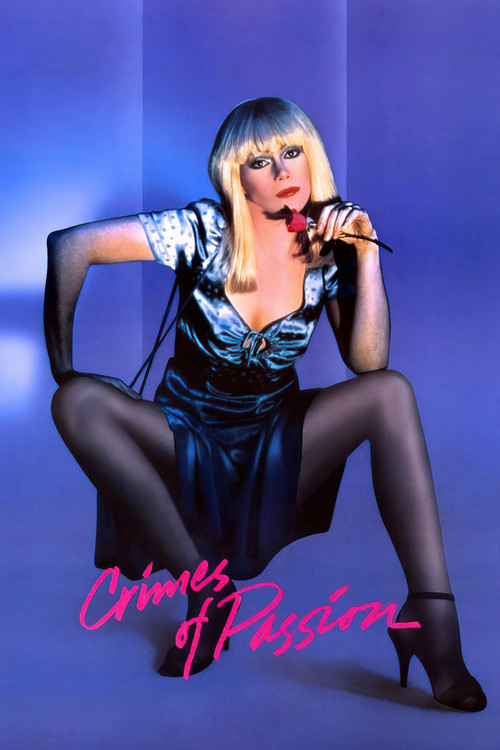
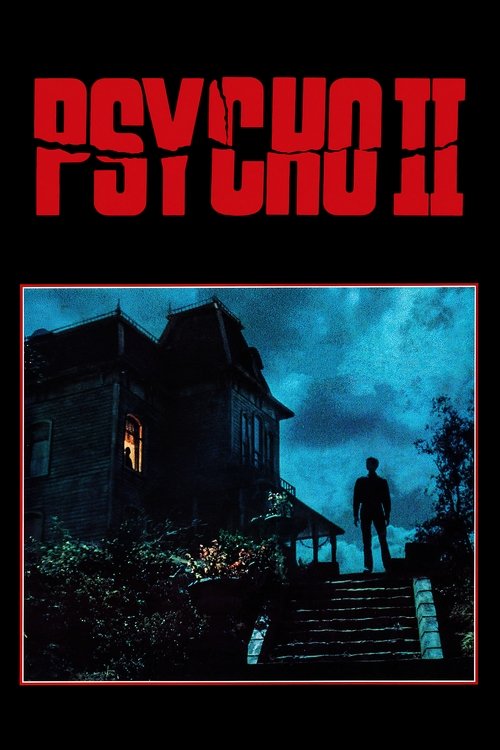
Psycho, a horror thriller in which he was cast against type, then profoundly changed his image, after which Perkins moved to France and worked for several years in Europe. The first film he made there, Goodbye Again (1961), earned him a Cannes Film Festival Award for Best Actor and a David di Donatello for Best Actor. His other European films include Orson Welles' The Trial (1962). He returned to American cinema with Pretty Poison (1968). Other films include Catch-22 (1970), for which he was nominated for a National Society of Film Critics Award for Best Supporting Actor (shared with his role in WUSA, also released in 1970), The Life and Times of Judge Roy Bean (1972), Murder on the Orient Express (1974), Mahogany (1975) and Crimes of Passion (1984). In the later part of his career, Perkins often portrayed troubled, neurotic or mentally unstable characters. He reprised the role of Norman Bates in Psycho II (1983), Psycho III (1986), and Psycho IV: The Beginning (1990). His performance in Psycho III, which he also directed, earned him a nomination for the Saturn Award for Best Actor.
His final acting role was in the NBC television film In the Deep Woods, which aired a month after his death on September 12, 1992, from AIDS-related causes.
Contents
Early life
Early life: 1932–1937
Anthony Perkins was born on April 4, 1932, in Manhattan, New York City, the son of actor Osgood Perkins (1892–1937) and Janet Esselstyn (née Rane; 1894–1979). His paternal great-grandfather was the wood engraver Andrew Varick Stout Anthony. Throughout his early years, Perkins had limited contact with his father, who was occupied with acting roles.
The family employed a French nanny named Jeanne, which led to Perkins's fluency in French. In a 1983 interview with People magazine, he recalled, "I became abnormally close to my mother; whenever my father came home I was jealous. It was the Oedipal thing in a pronounced form, I loved him but I also wanted him to be dead so I could have her all to myself."
Osgood Perkins died of a heart attack on September 21, 1937. Following his father's death, Perkins experienced intense feelings of guilt. He later stated, "I was horrified. I assumed that my wanting him to be dead had actually killed him. I prayed and prayed for my father to come back. I remember long nights of crying in bed. For years I nursed the hope that he wasn't really dead. Because I'd see him on film, it was as if he were still alive. He became a mythic being to me, to be dreaded and appeased."
After his father's death: 1937–1947
A consistent female companion in Perkins's life was aspiring playwright Michaela O'Harra, who developed a close relationship with his mother. According to accounts from those who knew the family, including childhood friend John Kerr, the bond between O'Harra and Perkins's mother was notably intimate. While the exact nature of their rapport has been subject to interpretation, it has been widely suggested they were in a lesbian relationship. It was also during that time that Perkins's mother, according to his account, began to sexually abuse him. Perkins said, in a 1983 interview, "She was constantly touching me and caressing me. Not realising what effect she was having, she would touch me all over, even stroking the inside of my thighs right up to my crotch." The behavior continued into his adulthood.
In 1942, when Perkins was ten years old, his family moved to Boston. Through her connections in the theatre industry, his mother secured a position at the American Theatre Wing's Boston Stage Door Canteen, where she managed many of the canteen's operations. The job provided financial support for the two of them. When she was occupied with work, Perkins was often sent to stay with his grandmother.
During this period, Perkins began to struggle at the public school he attended. He was described as a "gifted drifter" and began exhibiting rebellious behaviour, which was attributed to his mother's neglect. In response, she enrolled him at Brooks School in North Andover, Massachusetts. The experience proved difficult: his childhood stutter reemerged, he avoided athletic activities, and his mother insisted he participate in baseball. The pressure of the new environment led to extended school absences during his second year due to consecutive bouts of scarlet fever, and his academic performance declined.
Perkins eventually negotiated with his mother that if he improved his grades, he would be permitted to return to Boston for school the following year. He subsequently ranked in the top third of his class. His headmaster noted that Perkins was significantly more mature than his peers and lacked interest in many of their typical activities. Following this improvement, he was allowed to transfer back to Boston.
Summer stock: 1947–1950
As Perkins matured, the absence of his father became increasingly significant to him. According to his mother, as he observed other boys with their fathers, he began to feel the loss of his own more acutely. His connection to his late father developed through an interest in theatre. To support this interest, a family friend who operated a summer stock company agreed to allow Perkins to participate in minor roles, initiating his early involvement in summer stock theater.
Perkins's first experience was with the Brattleboro Summer Theater in Vermont, where he performed small parts in Junior Miss, Kiss and Tell, and George Washington Slept Here. In addition to acting, he worked in the box office, earning $25 per week and obtaining his Equity card. The following year, in keeping with an earlier promise, his mother enrolled him at Buckingham Browne & Nichols School, an all-boys school in Cambridge, Massachusetts. There, he distinguished himself and gained a reputation as the class magician and pianist. He was known for his impersonations, including a popular imitation of actor Roddy McDowall, which he frequently performed between classes.
In 1948, Perkins returned to summer stock theatre, this time at the Robin Hood Theatre in Arden, Delaware, where his mother had secured a position as a manager. He again ran the box office and took on stage roles. His most notable performance that summer was in Sarah Simple. During this time he met Charles Williamson, the first boy to whom he was attracted romantically.
The following academic year, Perkins joined the varsity tennis team and the glee club at school. He also became co-literary editor of the school newspaper, The Spectator, to which he occasionally contributed articles. Around this period, Perkins began to question his sexuality.
College: 1950–1953
After Perkins graduated from high school in 1950, he enrolled at Rollins College in Winter Park, Florida, having been persuaded to attend after a college representative visited his school.
That summer, Perkins returned to the Robin Hood Theatre in Delaware, which had by then become a prominent summer stock venue. While working there, he reconnected with Charles Williamson. They spent time together during breaks, including having lunch and swimming. Perkins developed a romantic attraction to Williamson during this time, though the feelings were not expressed or acted upon.
During that summer, Perkins also played the role of Fred Whitmarsh in Years Ago, a part he would later reprise in its film adaptation.
At Rollins College that fall, Perkins struggled to find the same sense of community he had previously experienced. His arrival coincided with a period marked by heightened scrutiny and discrimination against gay individuals, later known as the Lavender Scare. There were a few supportive peers, including Fred Rogers, who would later become known as a children's television host; Rogers allowed Perkins to use his piano, which he appreciated.
Perkins participated in several stage productions and frequently changed fraternities, a pattern that frustrated his mother. During his time at Rollins, he reportedly began to explore his sexuality more openly. Not long after his arrival, a number of homosexual students—many of whom were his acquaintances—were expelled and arrested after a fellow student had beaten one of them. According to Perkins's biographer Charles Winecoff, who interviewed former alumni, Perkins's association with a theater professor helped him avoid disciplinary action.
Despite avoiding expulsion, his association with those involved led to growing tension between him and other students, who knew of Perkins's sexuality. As a result of the increasingly hostile environment, Perkins transferred to Columbia University in New York City.
Career
1950s
While still a student at Rollins College, Perkins traveled to California during summer vacation in hopes of beginning a film career. Aware that Metro-Goldwyn-Mayer was producing a screen adaptation of Years Ago, he spent time around the studio lot, hoping to be noticed by a casting director and offered a screen test.
Perkins later recounted that he spent the summer running errands and delivering food for the studio guards. During a screen test for Margaret O'Brien, a director needed someone to appear in the background, and a studio worker suggested using Perkins. He was called in to stand in front of the camera, and when the director asked him to move, he responded, drawing attention to himself. This unplanned appearance led to his involvement in the screen test.
Later that summer, Perkins was cast in the role of Fred Whitmarsh in the film adaptation, retitled The Actress (1953), alongside Jean Simmons and Spencer Tracy. The film was directed by George Cukor, who had been collaborator and friend of Perkins's late father.
Perkins gained wider recognition in 1954 when he replaced John Kerr in the lead male role of Tea and Sympathy on Broadway, directed by Elia Kazan, another friend of his father. In the play, he portrayed Tom Lee, a college student perceived as homosexual who experiences personal growth through a romantic encounter with a woman. It was one of the first major Broadway productions to depict homosexuality explicitly, and it attracted a significant gay audience. Perkins had auditioned for the play with the prospect of co-starring with Deborah Kerr, whom he idolized and who helped him relax during his reading. However, one disappointment was that shortly after he was cast, Kerr was replaced by Joan Fontaine with whom he had no chemistry. Nevertheless, the role bore autobiographical parallels for Perkins, and he later described it as one of the most meaningful performances of his career.
Joan Fickett, who played opposite Perkins in the play, commented on his suitability for the role, noting the authenticity and emotional depth he brought to the character. The play's success and Perkins's performance drew renewed interest from Hollywood.
According to biographer Charles Winecoff, Perkins was drafted during the run of Tea and Sympathy, despite the Korean War having recently ended; he then informed the Selective Service that he was a "practicing homosexual" to be deemed unfit for military service. Having to reveal his orientation reportedly left Perkins deeply affected.
1960s
After signing with Paramount Pictures in 1955, Perkins was cast in a succession of leading roles intended to solidify his image as a romantic and masculine screen presence. By the time he had completed three films for the studio, Paramount had reportedly invested approximately $15 million in his career, prior to the release of any of the films. This significant investment contributed to growing tensions between Perkins and the studio.
Perkins, for his part, expressed dissatisfaction with the direction of his film career. While his contract allowed him to return to the Broadway stage, the majority of his fame stemmed from his film work, where Paramount consistently placed him in conventional leading-man roles. Perkins reportedly sought to be recognized as a serious character actor rather than a teen idol. His resistance to being typecast, particularly in roles that emphasized traditional masculinity, resulted in the loss of certain opportunities, including the roles of Shell Oil Junior in Some Like It Hot and Tony in West Side Story.
Additional tension reportedly arose between Perkins and Paramount president Barney Balaban. According to multiple accounts, Balaban objected to Perkins's homosexuality and his relationship with actor Tab Hunter (who himself had no similar pressure from his studio, Warner Bros.). Perkins was allegedly pressured by the studio to end the relationship and was urged to undergo conversion therapy during his contract period. One associate of Perkins recalled a conversation in which Perkins responded to the studio's demands by affirming his relationship with Hunter.
Sources suggest that Perkins resisted studio pressure until approximately 1959, during the period between filming Tall Story and Psycho. Around this time, efforts by studio executives to distance him from Hunter were reportedly successful. This separation is often cited as a contributing factor in Perkins's decision to buy out the remainder of his contract with Paramount, following a similar move previously made by Hunter at Warner Bros.
In 1960, Perkins starred as Norman Bates in Alfred Hitchcock's Psycho. The film was produced on a limited budget, with both Perkins and co-star Janet Leigh accepting reduced salaries. Much of the crew was borrowed from Hitchcock's television series Alfred Hitchcock Presents. In Robert Bloch's source novel, Norman Bates is middle-aged, overweight and unattractive; Hithcock sought to subvert expectations by casting the young, slender and handsome Perkins, who was mostly known for playing wholesome and likable characters. Even though Perkins was deliberately cast against type, the character also echoed his natural quirkiness and the nervous energy he had projected in previous roles.
1970s
In the early 1970s, Perkins transitioned into supporting roles in major Hollywood productions, appearing in Catch-22 (1970) and WUSA (1970). That same year, he directed and acted in the Off-Broadway production Steambath.
Perkins also starred in the made-for-television thriller How Awful About Allan (1970), again portraying a psychologically unstable character. Though it received little attention upon release, the film later gained a small cult audience after entering the public domain, which increased its accessibility. He next appeared in the French crime drama Someone Behind the Door (1971). Perkins once more played a mentally unstable character, and the film had limited impact.
In 1971, Perkins starred in another French production, the murder mystery Ten Days' Wonder, his second film with Claude Chabrol where he reunited with Orson Welles. The film featured two recurring narrative motifs in Perkins's career: his character suffers from mental troubles, and becomes romantically involved with a stepmother as in Desire Under the Elms (1958) and Phaedra (1962).
Perkins reunited with Tuesday Weld in Play It as It Lays (1972). The Chicago Sun-Times praised the film for its writing, direction, and casting, noting that Weld and Perkins brought emotional depth to their characters. Weld won a Golden Globe for her performance, and both she and Perkins were considered potential contenders for Academy Award nominations, though neither received one. Perkins later referred to his performance in the film as his best.
Later in 1972, Perkins appeared in a supporting role in The Life and Times of Judge Roy Bean, a Western directed by John Huston and starring Paul Newman. Perkins played a traveling minister who aligns himself with Newman's character. The film marked his second appearance with Newman following WUSA, and his only shared credit with his former partner Tab Hunter.
In 1974, Perkins was part of the ensemble cast of Murder on the Orient Express. The film reunited him with former co-stars Ingrid Bergman (Goodbye Again, 1961) and Martin Balsam (Psycho, 1960). It was both a critical and commercial success. That same year, Perkins co-starred with Beau Bridges and Blythe Danner in Lovin' Molly. The film was relatively well received.
1980s and 1990s
In 1980, Perkins appeared in the action film North Sea Hijack. He then co-starred in the Canadian thriller Deadly Companion. The film received limited attention, though Perkins's performance was noted positively in a few reviews.
Perkins reprised his role as Norman Bates in Psycho II (1983), which was a commercial success. Shortly thereafter, Perkins traveled to Australia to star in the mini-series For the Term of his Natural Life (1983), which received strong viewership ratings.
In 1984, Perkins appeared in The Glory Boys, a British television thriller mini-series co-starring Rod Steiger. According to reports, tensions arose on set between the two actors. Perkins next co-starred with Kathleen Turner as a deranged antagonist in Ken Russell's Crimes of Passion (1984), a film he felt was compromised in the editing process but that later developed a cult status.
Perkins then reprised the Norman Bates character again in Psycho III (1986), which was also his first film as a director. Perkins said he chose to direct the film due to his appreciation of the script, on which he commented: "I felt this would be a good script for an unknowing director to take on because the scenes were so well written, they directed themselves." Prior to filming, he stated: "It's a question of affinity with the material. And I know this story. I should. I've lived with it-and sometimes tried to live it down-for more than 20 years". His performance in that film earned him a Saturn Award nomination for Best Actor. Despite the recognition, that second sequel to Psycho was less successful than its predecessors, which led to bouts of diminished self-confidence for Perkins.
Following Psycho III, Perkins returned to television with a guest-starring role in the mini-series Napoleon and Josephine: A Love Story (1987). In 1988, Perkins received praise for his role in the horror film Destroyer, which was otherwise deemed a disappointment. That same year, Perkins made his second and last film as a director, the dark comedy Lucky Stiff, in which he did not appear. While not commercially successful upon release, the film later gained a minor cult following.
Perkins continued to work in the horror genre with appearances in Edge of Sanity (1989), Daughter of Darkness (1990), and I'm Dangerous Tonight (1990). He filmed a pilot for a dark comedy television sitcom titled The Ghost Writer, in which he played a horror novelist receiving unearthly visits from the ghost of his deceased wife. Perkins saw this project as a potential transition into more comedic roles. However, the pilot was not picked up for series development.
Missed roles
Perkins auditioned for the lead roles in East of Eden and Rebel Without a Cause, both of which were awarded to James Dean. Rumors suggested that Perkins's loss of the East of Eden role led director Elia Kazan to cast him as Tom Lee in the Broadway production of Tea and Sympathy, but Kazan publicly denied this. Perkins was later cast in Friendly Persuasion over Dean and, following Dean's demise, replaced him in This Angry Age.Perkins was offered the lead in the film adaptation of Harold Robbins's A Stone for Danny Fisher, but declined the part. The project was ultimately reworked into King Creole, a musical starring Elvis Presley, with whom Perkins was occasionally compared. He was also offered the role of Shell Oil Jr. in the 1959 film Some Like It Hot. Perkins declined the role under pressure from Paramount executives, who reportedly objected to him appearing in drag.
Around the time he signed on to Psycho, Perkins was considered for the lead in Dooley, a biographical film written by Robert Anderson. Directors George Roy Hill and Joshua Logan were interested in the project, but Paramount did not approve the production costs, and Perkins was not permitted to audition.
Perkins was seriously considered for the role of Tony in the 1961 film adaptation of West Side Story, but was again prevented from auditioning by Paramount. Despite not participating in the project, this led to his friendship with lyricist Stephen Sondheim.
Perkins was the original choice of both Tennessee Williams and director Tony Richardson for the lead role in the 1963 Broadway revival of The Milk Train Doesn't Stop Here Anymore, opposite Tallulah Bankhead. Due to a scheduling conflict, Perkins was unable to take the role, and Tab Hunter was cast instead.
He was also cast as Robert, the lead role in Stephen Sondheim's musical Company, but declined the part, citing scheduling conflicts and later attributing his decision to anxiety over the long performance commitment. Some commentators also speculated that his decision was influenced by perceptions of the character's queer-coded traits.
In the early 1990s, Perkins agreed to voice the character of Dr. Wolfe, a dentist, in The Simpsons episode "Last Exit to Springfield". He died before the role could be recorded, and the part was ultimately voiced by Simpsons regular Hank Azaria.
Artistry
Influences
Perkins, having grown up in New York as the son of a theater performer, was heavily influenced by stage actors in the early years of his interest in acting. Slowly, however, his influences shifted, especially with the new wave of Method actors on the big screen. In 1958, Perkins told Holiday magazine that the single performance that influenced him most was Marlon Brando's in On the Waterfront: "That's the direction I want to go as an actor. To convey the maximum with the simplest, barest means." He also mentioned James Dean later on: "Well, I was certainly impressed with the originality of [Dean's] talent. Of course, it was popular at the time of his emergence."
Perkins was a lifelong member of the Actors Studio, an institution both Brando and Dean attended as well, which could have contributed to his interest in the Method. Perkins's posthumous biographer, Charles Winecoff, though, dismisses any ideas that Perkins was a Method actor: "Young Perkins fell somewhere in between the mannered style of his father's era and the new, seemingly organic style exemplified by Brando and Dean."
Especially in his early years, Perkins took advice from a host of his costars, a majority of whom were experienced and revered actors in their own right. The most influential of his fellow stars were Gary Cooper and Henry Fonda.
Acting style
Despite his many celebrated performances, Perkins never discussed the method with which he acted. Many said he was somewhere between his father's style of acting (building a character from the outside in) and the Method technique (building a character from the inside out). Recalling how he prepared for his mental breakdown scene in Fear Strikes Out, actress Norma Moore said he was especially "serious, very intent, very nervous before shooting ... pacing, not talking to anybody, shaking his hands." The film's director, Robert Mulligan, said that Perkins was "riding on instinct, very giving and very trusting and very brave." A year later, when Perkins played Eugene Gant for Broadway in Look Homeward, Angel, not much had changed. "His approach was a purely pragmatic one," friend George Roy Hill remembered, "he had no theories to get in his way."
There is evidence to suggest that Perkins used previous (sometimes traumatic) experiences to drive his performance. During his debut run on Broadway in Tea and Sympathy, Perkins was allegedly drafted into the army, which he dodged by admitting he was a homosexual. This backfired, leading to harsh mistreatment at the hands of the Selective Service that reportedly scarred him so much he wouldn't speak about it. His boyfriend was there when he returned home, listening to him crying and whimpering. He later said that Perkins incorporated the same whimpering into his performance as Tom Lee in Sympathy. Perkins, though, never hinted at this in a rare mention of his technique when speaking about the scene in Friendly Persuasion when Josh Birdwell decides to enlist:
"That scene started [filming at] about 9:30 in the morning and by 1 o'clock the unions at that time declared that we had to go to lunch, right in the middle of the scene—just before my close-up. And [William Wyler, the director] came to me and said, 'I'm really sorry about this. You're doing a fabulous job and I want you to hold onto this if you possibly can. Why don't you go back to your room and sort of concentrate and reread the script? I'm very very sorry; we'll start again in an hour.' Well, I went to the commissary and had two cheeseburgers and a malted and came back and sat down and started over again. I didn't have the self-consciousness as an actor to find that that would be a difficult thing to do, so since I didn't think it was gonna be difficult, it wasn't ... Well, youth can do anything."
Many of Perkins's films distinguished him as a talented actor of the day, garnering numerous awards and nominations. Turner Classic Movies summarized: "A masterful character actor, Perkins's ability to convey mental instability in a fashion that was simultaneously disturbing, affecting, and darkly humorous made him a unique and valuable talent."
Public image
Early persona
In the early part of his career, Perkins often played shy, sensitive young men. His characters were conceived as both wholesome and unusual, exhibiting an endearing and sometimes quirky awkwardness. "He was supposed to be gawky, you know," costar Jean Simmons recalled, "with the sleeves too short and all that stuff." Former partner Tab Hunter spoke similarly about Perkins: "Beneath the boyishness (...), there was a lot of tension—not news to anyone who's seen Tony on-screen. The familiar body language wasn't an act. He slouched around with his hands shoved deep in his pockets, and he jiggled his foot unconsciously—a nervous twitch."
Despite his well-documented habits, the authenticity of them has been challenged by some of Perkins's friends and colleagues. Alan Sues, who worked with Perkins on Tea and Sympathy, noted, "You know, if you play that kind of sensitive, I-don't-know-if-I-can-get-through-this sort of thing, people come to you. His approach was that he was suffering, that stuff was going on inside of him, and I don't think it was. His strong suit was knowing how to project an image." Although Hunter expressed similar doubts ("I began to wonder how much of his sheepish appeal was genuine," he wrote in 2005, "and how much was manufactured, used to mask very calculated, methodical intentions"), he did believe overall that Perkins was dealing with a lot of backlash from Paramount over his sexuality, which therefore led him to become as brooding as he was.
However real or fake the mannerisms were, they caught on in the press, which had a field day when Perkins, who didn't know how to drive, was photographed hitchhiking to the set of Friendly Persuasion. He was often described as "boyish" by fan magazines, and his odd habits, from the way he dressed to the meals he ate, were written about in detail. Photoplay called Perkins a "barefoot boy with cheek" in a 1957 issue, while later portraying him as an embarrassed singer when they photographed him during recording sessions. Perkins seemingly played into this quirky yet insecure persona, venting to McCall's:
"I'm not really suited to be a movie star. I have no confidence in myself. I'm not interested in money. I'm not good-looking. I have a hunch in my spine. I can't see worth a damn. I have a very small head. I haven't many opinions. I dislike nightclubs—the kind of things that give you easy publicity. I have no string of French girls. I'm not tough. I can't put on a show in public. I'm much too sensitive for Hollywood. I'm an easy target."
1950s sex symbol
While under contract with Paramount, Perkins was heavily promoted by the studio not only as a teen idol but also as a sex symbol, something Perkins saw as a sacrifice to his serious acting prospects. They cast him in a succession of romantic lead roles, whether they were beside relative unknowns such as Norma Moore and Elaine Aiken or major stars such as Sophia Loren and Audrey Hepburn. Although he was briefly depicted in drag in The Matchmaker with Shirley MacLaine, Perkins's image in these films was consistently romantic and meant to be attractive to women. Despite his 140-pound stature, Perkins delivered a shirtless performance in both Desire Under the Elms and Green Mansions. This ended up being detrimental to Perkins's career, costing him the leads in both the 1959 film Some Like It Hot and the 1961 film West Side Story.
Perkins's early popularity was increased by the plentiful stories circulating in fan magazines about his purported dating life. Perkins was frequently reported as "losing his heart" to a woman, whether it was Natascia Mangano or Elaine Aiken. Perkins was often claimed to be "infatuated" with many of his leading women, whether they were married or not. Soon, Perkins's dating life became as prominent in the media as his career, something that deeply irritated him.
Perkins's singing career in the late 1950s was consistent with teen idol status; many of his songs centered around romantic themes.
Post-Psycho
Following his performance as Norman Bates in Psycho, Perkins's public image changed markedly as he became permanently associated with that role in the public's eye. He gradually stopped playing wholesome, sensitive roles and instead found himself increasingly typecast as dark, eerie or maniacal characters, which overshadowed the versatility he had shown in his earlier comedic and dramatic roles. Perkins acknowledged that whereas he had started out as a "a light, sophisticated comedy actor", Psycho had changed the public's perception of him. Later in his career, he came to be seen as a "horror icon". His roles in the 1980s included the insane, lecherous clergyman in Crimes of Passion and Dr Jekyll/Mr Hyde/Jack the Ripper in Edge of Sanity. Commenting on Perkins's numerous performances in unsettling or sinister roles, a review in the Los Angeles Times stated : "“Anthony Perkins’ films aren't just dark. They're inky black... To know [his characters] is to loathe them."
During the last decade of his career, Perkins appeared in an increasing number of genre pictures; his son Osgood later commented that his father became relegated to making "bad horror movies".
Despite this typecasting, Perkins embraced his association with Psycho and the Norman Bates role, which he reprised in several sequels. During the production of Psycho III, he said: " It doesn't worry me at all that people identify me with the role. It is my role. But one of the reasons I went on a worldwide tour to promote 'Psycho 2' was to give people the chance to see the difference between the nuts I play on the screen and the real me. I have played quite a few psychologically disturbed people and I never forget that a lot of people have grown up with me as Norman Bates.' He stated in 1990: "I think 'Psycho' is one of the things that's given me longevity in this business. But of course it's also kept me from roles. You know I would have hated to disappear like so many actors in the '50s did. In a way, it's a challenge to overcome something like that. I'm still here. That's all I know".
Personal life
Sexuality
Speculation about Perkins's sexuality began early in his career, particularly after his Broadway debut in Tea and Sympathy in which he portrayed a gay character.
Perkins had his first heterosexual experience at the age of 39 with actress Victoria Principal while filming The Life and Times of Judge Roy Bean in 1971, as confirmed by Principal herself. At the time, he was undergoing conversion therapy with psychologist Mildred Newman. In his 2021 biography of director Mike Nichols, Mark Harris wrote that both Perkins and his longtime partner Grover Dale pursued conversion therapy with the belief that their homosexuality was an obstacle to personal happiness. Harris notes that while Newman and her partner and colleague Bernard Berkowitz were not conversion therapists, they promoted the view that homosexuality was a form of arrested development.
In a 1999 documentary on Perkins, director Sidney Lumet recounted a conversation in which Perkins openly identified as homosexual and that Perkins told him he had moved past that phase (of uncertainty, seemingly) in his life. Accounts from friends, colleagues, and partners have generally characterized Perkins as homosexual rather than bisexual, citing his history of same-sex relationships and limited romantic involvement with women prior to his marriage.
Some contemporaries, including his former partner Tab Hunter, suggested that Perkins maintained a carefully constructed public persona. Hunter remarked that Perkins often presented himself in a particular way and that this self-presentation may have diverged from his private identity, adding: "I don't know for sure what [Perkins] was really like."
In 1983, at the time of Psycho II's release, Perkins granted an interview to People where he discussed his sexuality, disclosing that he had not had sex with a woman until his thirties and that the thought had previously "terrified" him. He mentioned that several of his female co-stars, including Ava Gardner, Jane Fonda, Ingrid Bergman, and Brigitte Bardot, had expressed romantic or sexual interest for him, which he had been too frightened to pursue. He stated: "I had wild fantasies, but my erotic experience was mostly solitary. Along the way I'd had homosexual encounters, but that kind of sex always felt unreal to me and unsatisfying." In that interview, Perkins also mentioned being sexually abused by his mother and suggested that this may have influenced his perceptions of women.
Relationships
According to the posthumous biography Split Image by Charles Winecoff, Perkins had exclusively same-sex relationships until his late 30s. These included relationships with Tab Hunter, Christopher Makos, Grover Dale, and French songwriter Patrick Loiseau.
Tab Hunter acknowledged his relationship with Perkins in his 2005 autobiography Tab Hunter Confidential: The Making of a Movie Star. According to Hunter, the two met at the Chateau Marmont in 1956 during the filming of Friendly Persuasion. Their relationship lasted four years and included a number of shared experiences, such as a stay in a private villa in Rome in March 1957 and a joint appearance on Jukebox Jury that May.
Early in their relationship, Perkins informed Hunter that he had been cast by Paramount Pictures in Fear Strikes Out, a role Hunter had previously portrayed on television and had hoped to reprise in a film adaptation. Despite the personal and professional disappointment, Hunter stated that their relationship continued privately as their schedules allowed.
According to Hunter, Paramount Pictures expressed concern over their relationship and its potential impact on Perkins's public image, reportedly leading to tension between Perkins and studio executives. Hunter recalled that these pressures did not immediately affect their personal relationship, which he later described as "a wonderful time in my life". However, the relationship ended in 1959, shortly before the production of Psycho, and the two had limited contact afterward
In 1971, after not seeing each other for almost a decade, they were reunited on the set of The Life and Times of Judge Roy Bean. According to Hunter's recollection, this happened while Perkins was ending his relationship with dancer Grover Dale and had begun conversion therapy with Mildred Newman. The last time they saw each other was in 1982, when Hunter visited Perkins to discuss a potential role for Perkins in the Western parody film Lust in the Dust. Hunter later recalled that he had intended to contact Perkins shortly before his death in 1992 but learned of his passing as he reached for the phone. In later interviews, including for The Advocate and the 2015 documentary Tab Hunter Confidential, Hunter reflected on the significance of their relationship, describing Perkins as "a special part of my journey" and noting the contrast in their personalities and ambitions.
Friendships
Throughout his career in Hollywood, Perkins worked with numerous well-known figures, many of whom later spoke positively about him. His relationships with co-stars were often marked by mutual respect and fondness. Sophia Loren, who worked with Perkins on Desire Under the Elms (1958), was frequently photographed smiling with him during a later reunion in Europe.
Actress Elaine Aiken later recalled social outings with Perkins during the filming of The Lonely Man.
Venetia Stevenson described a close friendship with Perkins, saying he often confided in her and stayed over at her home, which was located near the residences of both Perkins and Tab Hunter. Stevenson emphasized the platonic nature of their relationship, attributing their bond to the kind of closeness that can exist between a woman and a gay man.
Perkins also maintained strong friendships with male colleagues. On the set of Psycho, he developed a collaborative relationship with director Alfred Hitchcock, who accepted many of Perkins's creative suggestions for the character of Norman Bates. Even after Perkins relocated to France, he remained a regular guest at Hitchcock's dinners. During production of The Trial, Perkins and director Orson Welles developed a very good working relationship and a genuine sympathy for each other. Perkins even considered writing a book about the director. He carried a tape recorder in his coat for weeks but ultimately abandoned the project out of concern that it might offend Welles. Welles later expressed disappointment that Perkins did not follow through, stating, "Oh, why didn't you [do it]? Why didn't you? I would have loved it!"
Among his most well-known friendships was that with Stephen Sondheim. Perkins and Sondheim briefly lived together and collaborated professionally, most notably on the 1973 film The Last of Sheila, which they co-wrote. Sondheim later recalled that Perkins shared his sensibilities and that working together on the screenplay was particularly enjoyable. Although Perkins was reportedly offered leading roles in several of Sondheim's musicals, he declined due to scheduling conflicts. Sondheim went on to become the godfather to both of Perkins's children and was present at his final birthday celebration.
Character and interests
Perkins was often remembered by colleagues and acquaintances as a shy and introspective individual with a charismatic presence. Writer Bruce Jay Friedman, who later worked with Perkins on the production Steambath, described him as "enormously charming" and "very controlled", noting that Perkins often appeared to be processing multiple thoughts simultaneously. Mary Tyler Moore, who co-starred with him in the television movie First, You Cry, similarly described him as charming and dedicated to his craft, contrasting her expectation of a sophisticated persona with the more grounded individual she encountered.
Former partner Tab Hunter echoed these sentiments, while also acknowledging Perkins's complexity. He characterized Perkins as somewhat guarded and elusive, suggesting that Perkins selectively revealed aspects of himself to others. Despite this, Hunter described Perkins as humorous, intelligent, and deeply private, noting that he had few close confidants and maintained an enigmatic presence even among friends.
Perkins's reserved nature was evident in his preference for solitary pursuits. From an early age, he was an avid reader with a particular interest in science fiction. This interest in reading paralleled a lifelong engagement with writing. While attending the Browne & Nichols School, he served as co-literary editor of the student newspaper The Spectator. His interest in writing culminated in the co-authorship of the screenplay for The Last of Sheila with Stephen Sondheim, his only screenwriting credit. Reflecting on the experience, Perkins once remarked that acting came naturally to him, while writing was more challenging and required sustained effort.
Despite his introversion, Perkins enjoyed social and recreational activities. He was an avid Scrabble player and frequently played the game with friends, including early romantic partners. He was also a fan of The Ed Sullivan Show, on which he eventually appeared. Perkins's enthusiasm for games extended to appearances on television game shows such as What's My Line? and Password.
Tab Hunter recalled various leisure activities the two shared, including receiving a deluxe ping-pong table from Perkins as a Christmas gift and playing matches together. While Perkins did not have a strong interest in athletics, he occasionally joined Hunter at horse shows or on trips to Lake Arrowhead, preferring activities that highlighted his intellectual and comedic sensibilities.
Political views
Perkins was a supporter of the Democratic Party and aligned himself with various progressive causes, including civil rights and feminism. In 1965, he participated in the Selma to Montgomery marches advocating for African American voting rights. He performed at the "Stars for Freedom" rally, where he entertained marchers by singing folk songs and delivering short remarks.
He was also an advocate for gender equality. In 1983, Perkins stated, "Women's liberation has liberated me too". He spoke in favor of shared parental responsibilities, asserting that men should be involved in nurturing roles such as feeding and changing diapers.
Though he remained largely private about his own sexuality during his lifetime, Perkins occasionally voiced support for gay rights. In an interview with author Boze Hadleigh, he described the notion that marriage should be exclusively between a man and a woman as "archaic", and noted that the ability to raise children was not limited to heterosexual couples.
In addition to his advocacy, Perkins supported causes related to HIV/AIDS. Before his own diagnosis, he volunteered with Project Angel Food, a nonprofit organization that delivers meals to individuals affected by HIV and AIDS. In September 1986, he also appeared in a public service announcement encouraging the public to "fight AIDS with the facts".
Religion
Perkins identified as an atheist throughout his life, though he celebrated holidays such as Christmas in a secular, non-religious context.
Perkins rarely spoke publicly about religion. When he did express personal views, they often related to the intersection of religion and social issues. In his interview with Boze Hadleigh, Perkins criticized the use of religion to oppose same-sex marriage, remarking, "Common sense isn't really that common, particularly when religion enters the picture".
Death
During the filming of Psycho IV: The Beginning, Perkins was undergoing treatment for facial palsy. He was tested for HIV after an article in the tabloid newspaper National Enquirer said he was HIV-positive. Berenson said Perkins had not been tested for HIV but had been given a series of blood tests in Los Angeles for the palsy on the side of his face. Berenson said she assumed that someone had tested his blood for the virus and leaked the results to the tabloid.
Perkins hid his AIDS diagnosis from the public for two years, going in and out of hospitals under assumed names. During this time, his wife and children were regularly tested. It was not until a few weeks before his death that he went public with his condition, although he had been working on films during his illness. He died at his Los Angeles home on September 12, 1992, from AIDS-related pneumonia, at age 60. In a statement prepared before his death, Perkins said, "I chose not to go public about [having AIDS] because, to misquote Casablanca, 'I'm not much good at being noble,' but it doesn't take much to see that the problems of one old actor don't amount to a hill of beans in this crazy world. I have learned more about love, selflessness and human understanding from the people I have met in this great adventure in the world of AIDS than I ever did in the cutthroat, competitive world in which I spent my life."
His urn, inscribed "Don't Fence Me In", is in an altar on the terrace of his former home in the Hollywood Hills.
Legacy
Perkins's defining role as Norman Bates has made him a cultural icon. Since Psycho's 1960 release, countless references, spoofs, and documentaries have been made about the thriller and his homicidal character, and it has led many to pronounce the motion picture as the greatest horror film of all time. The American Film Institute named Norman Bates the second greatest villain of all time, only behind Hannibal Lecter from The Silence of the Lambs.
The character of Norman Bates has been referenced numerous times in both music and film. In 1964, four years after the release of Psycho, Bob Dylan referenced the film extensively on his track "Motorpsycho Nitemare", a humorous tale about a traveling salesman. Perkins is mentioned by name:
In 1977, Blondie referenced Norman Bates on their track "Kidnapper": "Hey, you've got an unnerving face/And twitchin' eyes like Norman Bates." In 1981, English band Landscape released the song "Norman Bates" with the chorus "My name is Norman Bates; I'm just a normal guy." In 1999, Eminem referenced Bates on "Role Model": "I'm 'bout as normal as Norman Bates with deformative traits/... Mother, are you there? I love you/I never meant to hit you over the head with that shovel (That shovel)." In 2004, Kanye West paid homage to Perkins's homicidal character on "Gossip Files": "Uh, they are the dream (Killer Norman Bates)." In 2015, fifty-five years after the film's release, Lil Wayne mentioned the character on "Amazing Amy": "I'm Norman Bates and this bitch ain't normal, our kids gon' be nuts (Not the babies!)." Perkins is mentioned by name in the 1996 horror film Scream when a character quotes a line of dialogue from Psycho: "'We all go a little mad sometimes'–Anthony Perkins, Psycho."
Perkins's first major motion picture, Friendly Persuasion, received an abrupt resurgence in interest in the 1980s after President Ronald Reagan labeled the film as his favorite. It also served diplomatic purposes: during one of their five summit meetings, Reagan gifted the film to Soviet General Secretary Mikhail Gorbachev because he viewed the film as symbolic of the need to find an alternative to war as a means of resolving differences between peoples. Fear Strikes Out also was subjected to similar treatment after it was nominated for the American Film Institute's 2008 list in the sports film category. His European films were also praised: eight years after Perkins's death, film critic Roger Ebert called The Trial a masterpiece.