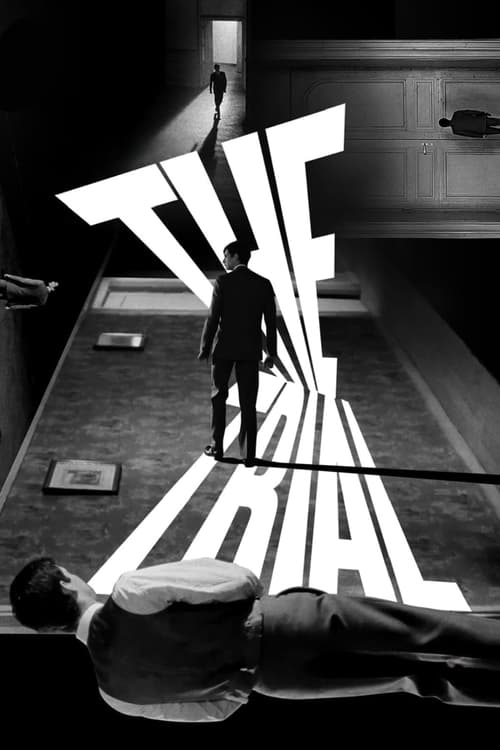





The Trial (French: Le Procès) is a 1962 drama film written and directed by Orson Welles, based on the 1925 posthumously published novel of the same name by Franz Kafka. Welles stated immediately after completing the film: "The Trial is the best film I have ever made". The film begins with Welles narrating Kafka's parable "Before the Law" to pinscreen scenes created by the artists Alexandre Alexeieff and Claire Parker.
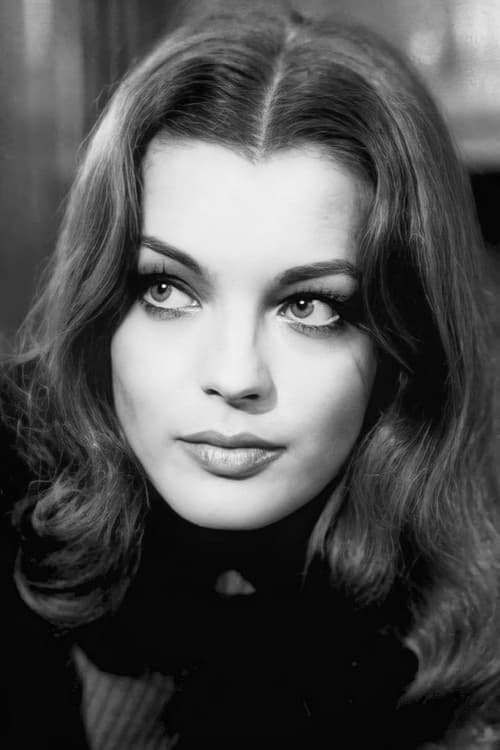
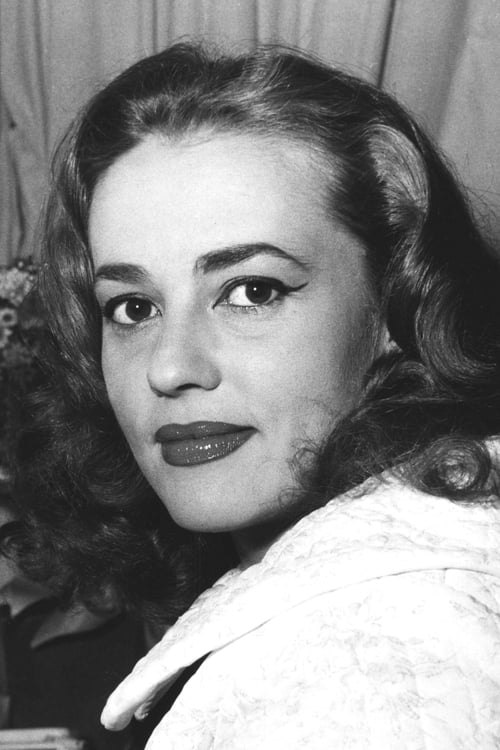
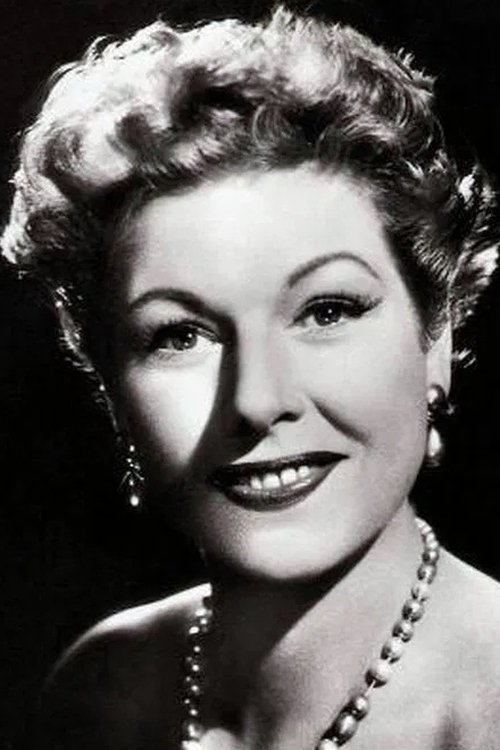
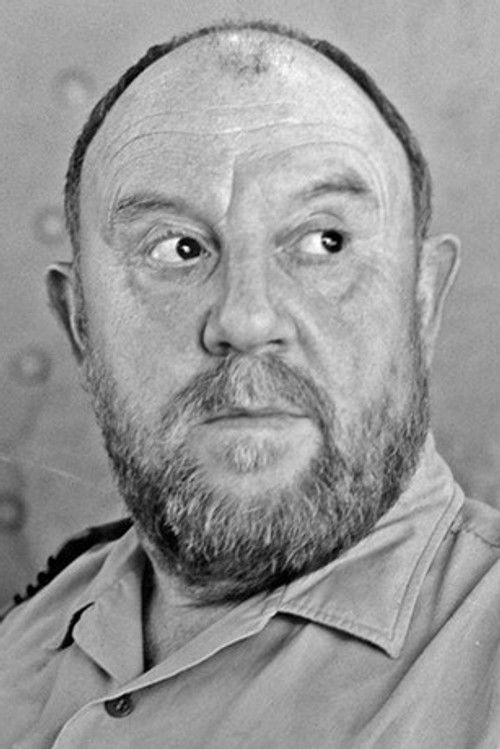
Anthony Perkins stars as Josef K., a bureaucrat who is accused of a never-specified crime, and Jeanne Moreau, Romy Schneider and Elsa Martinelli play women who become involved in various ways in Josef's trial and life. Welles plays the Advocate, Josef's lawyer and the film's principal antagonist.
The Trial has grown in reputation over the years, and some critics, including Roger Ebert, have called it a masterpiece. It is often praised for its scenic design and cinematography, the latter of which includes disorienting camera angles and unconventional use of focus.
Contents
Plot
Josef K. is sleeping in his bedroom, in an apartment he shares with other lodgers. He is awakened when a man in a suit opens his bedroom door. Josef assumes the glib man is a policeman, but the intruder does not identify himself and ignores Josef's demand to produce police ID. Several detectives enter and tell Josef he is under open arrest. In another room Josef K. sees three co-workers from his place of employment; they are there to provide evidence regarding some unstated crime. The police refuse to inform Josef K. of his misdeeds, or if he is even being charged with a crime, and they do not take him into custody.
After the detectives leave, Josef converses with his landlady, Mrs. Grubach, and neighbor, Miss Bürstner, about the strange visit. Later he goes to his office, where his supervisor thinks he has been having improper relations with his teenaged female cousin. That evening, Josef attends the opera, but is abducted from the theater by a police inspector and taken to a courtroom, where he attempts in vain to confront the still-unstated case against him.
Josef returns to his office and discovers the two police officers who first visited him being whipped in a small room. Josef's uncle Max suggests that Josef consult with Hastler, a law advocate. After brief encounters with the wife of a courtroom guard and a roomful of condemned men awaiting trial, Josef is granted an interview with Hastler, which proves unsatisfactory.
Hastler's mistress suggests that Josef seek the advice of the artist Titorelli, but this also proves unhelpful. Seeking refuge in a cathedral, Josef very briefly discusses his case with a priest. Hastler abruptly appears at the cathedral to confirm the priest's assertion.
On the evening before his thirty-first birthday, Josef is apprehended by two executioners and taken to a quarry pit, where he is ordered to remove some of his clothing. The executioners pass a knife back and forth, apparently deliberating on who will do the deed, before handing the knife to the condemned man, who refuses to commit suicide. The executioners leave Josef in the quarry and toss dynamite in the pit. Josef laughs at his executioners and picks up the dynamite. From a distance one can hear an explosion and smoke billows into the air.
Production
In 1960, Welles was approached by producer Alexander Salkind to make a film from a public domain literary work. Salkind had originally wanted Welles to make a film of Nikolai Gogol's novella Taras Bulba. When Salkind found out that producer Harold Hecht was already making a version of Taras Bulba with Yul Brynner in the lead, he offered Welles a list of 82 other film titles to choose from. From that selection, Welles decided The Trial would be the most feasible film to make. (Earlier that year, Michael Lindsay-Hogg—who may have been Welles's son—had casually mentioned an idea to Welles about adapting The Trial as a stage play, prompting Welles to state that The Trial was an important book and that he, Welles, should re-read it.) Salkind promised that Welles would have total artistic freedom and he would not interfere with Welles' creation. They later discovered that the book was not yet in the public domain and that they needed to obtain the rights to the property.
Salkind committed 650 million French francs (U.S.$1.3 million in 1962 currency) to the budget for The Trial and secured backing from West German, French and Italian investors.
Welles took six months to write the screenplay. In adapting the work, he rearranged the order of Kafka's chapters. In this version, the chapter line-up read 1, 4, 2, 5, 6, 3, 8, 7, 9, 10. However, the order of Kafka's chapters was arranged by his literary executor, Max Brod, after the writer's death, and this order is not definitive. Welles also modernized several aspects of the story, introducing computer technology and changing Miss Bürstner's profession from a typist to a cabaret performer. Welles also opened the film with a fable from the book about a man who is permanently detained from seeking access to the Law by a guard. To illustrate this allegory, he used the pin screen animation of Alexandre Alexeieff and Claire Parker, who created animated prints using thousands of pins.
Welles also changed the manner of Josef K.'s death. Kafka originally had the executioners pass the knife over the head of Josef K., thus giving him the opportunity to take the weapon and kill himself, in a more dignified manner—Josef K. does not; instead he is fatally stabbed by his executioners in the heart, and as he dies Josef K. says "like a dog." In the film, whilst the executioners still offer him the knife, Josef K. refuses to take it, and goads the executioners by yelling "You'll have to do it!" The film ends with the smoke of the fatal dynamite blast forming a mushroom cloud in the air while Welles reads the closing credits on the soundtrack.
Release
Welles initially planned to premiere The Trial at the Venice Film Festival in September 1962, but the film was not completed in time. The festival organizers showed the Academy Award winning musical West Side Story instead.
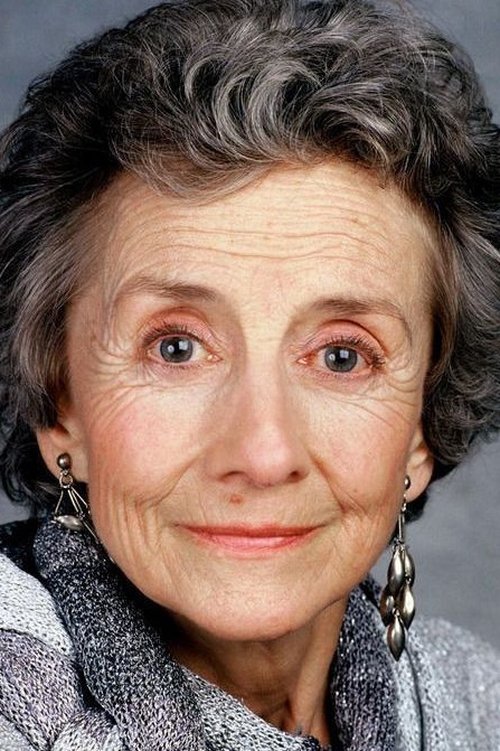
Welles continued to edit the film up until its December 1962 premiere in Paris. In an interview with the BBC, he mentioned that on the eve of the premiere he jettisoned a ten-minute sequence (it is actually about six minutes long) where Josef K. meets with a computer scientist (played by Greek actress Katina Paxinou) who uses her technology to predict his fate. Welles explained the last-minute cut by noting: "I only saw the film as a whole once. We were still in the process of doing the mixing, and then the premiere fell on us... [The scene] should have been the best in the film and it wasn't. Something went wrong, I don't know why, but it didn't succeed."
Ultimately, the US theatrical release of The Trial came in 1963.
Box office
The film earned US $1,403,700 in North America, the UK and the British Commonwealth. It did not make a profit.
Critical reception
The Trial polarized critics upon release. Immediately after its completion, Welles said, "Say what you like, but The Trial is the best film I have ever made." The film was reacted to more positively in France, where it won the Best Film award of the French Syndicate of Cinema Critics in 1963.
Charles Higham's 1970 biography of Welles dismissed the film as "an agonizing experience [...] a dead thing, like some tablet found among the dust of forgotten men, speaking a language that has much to say to us, but whose words have largely been rubbed away."
The film has continued to polarize film critics and scholars, yet while it still has its detractors, contemporary analysis is far more positive. In his 1996 biography of Welles, David Thomson said the film was "an astonishing work, and a revelation of the man... a stunning film". Today, the film enjoys enthusiastic reviews; on Rotten Tomatoes, 84% of 44 critical reviews awarded the film a positive review, with an average rating of 7.7/10. Film critic Roger Ebert called the film "an exuberant use of camera placement and movement and inventive lighting," awarding it a full four stars.
Film critic Leonard Maltin gave The Trial a rating of 3 and a half out of 4 stars and described it as "[g]ripping, if a bit confusing" and "not for all tastes."
While film critic Pauline Kael writes that the film was somewhat of a "light-plot set" where it embodied the dissolving of and montage of light.
In the British Film Institute's 2002 Sight & Sound poll, Argentine film critic and historian Fernando Martín Peña voted The Trial one of his 10 favorite films.
Post-release history
In 1981, Welles planned to create a documentary on the making of The Trial. Cinematographer Gary Graver was hired to film Welles addressing a University of Southern California audience on the film's history. The footage was shot with a 16mm camera on color reversal stock, but Welles never completed the proposed documentary. The footage is now in the possession of Germany’s Filmmuseum Munich, and has since been restored.
No copyright was ever filed on The Trial, which resulted in the film being a public domain title in the US. Although it is possible that the copyright was restored by the URAA, no "Notice of Intent to Enforce" was filed with the US Copyright Office.
In 2000, a restored version based on the long-lost original 35mm negative was released on DVD by Milestone Films. As of 2015, a 2K restoration by Rialto Pictures is playing in DCP format in various North American cities. A 4K restoration of the film was released by the Criterion Collection on September 19, 2023.