Most Bipartisan Moments in Modern American History
From landmark civil rights votes to congressional singalongs on the Capitol steps, these are the moments both parties actually agreed. Vote for the ones that best captured genuine cross-aisle unity.
What counts: Ranked by how genuinely both parties crossed lines to act together and how lasting the result was. Vote margins and ratings are approximate, especially for pre-C-SPAN era tallies and subjective 'spirit' scores.
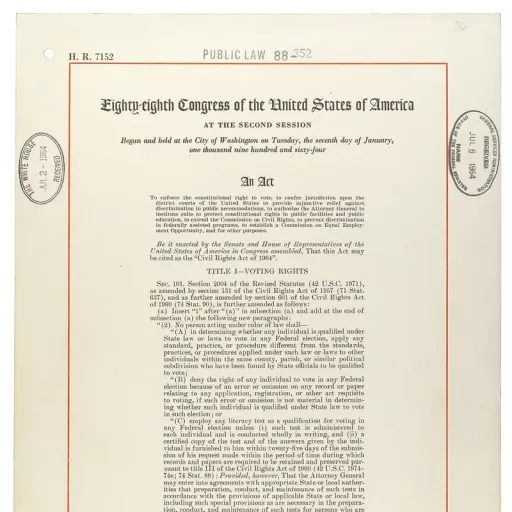
A Southern Democratic filibuster was broken only because Senate Republicans supplied the decisive votes, turning LBJ's arm-twisting and Everett Dirksen's floor leadership into the template for how big, painful change gets made in America. It remains the gold standard against whic
Year: 1964Senate Vote: 73-27House Vote: 289-126Bipartisan Spirit: 9/10Lasting Impact: 10/10
added by Yourlist Editorialin 3 rankingsTitle VI of the Civil Rights Act of 1964
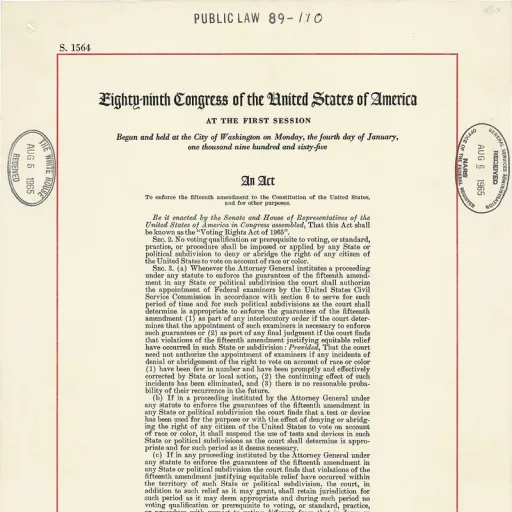
0Coming a year after the Civil Rights Act, this bill passed with even wider margins as Republicans and Northern Democrats jointly dismantled Jim Crow's ballot-box machinery. Its near-unanimous House and Senate totals show a Congress briefly acting as one body against a shared mora
Year: 1965Senate Vote: 77-19House Vote: 328-74Bipartisan Spirit: 9/10Lasting Impact: 10/10
added by Yourlist Editorialin 3 rankingsVoting Rights Act of 1965
0Americans with Disabilities Act (1990)
George H.W. Bush signed a sweeping civil-rights expansion that sailed through Congress with overwhelming support from both parties, proof that disability rights had become one of the few issues nobody wanted to be seen opposing. Senator Bob Dole, himself disabled by a war wound,
Year: 1990Senate Vote: 91-6House Vote: 377-28Bipartisan Spirit: 9.5/10Lasting Impact: 9/10
added by Yourlist Editorialin 2 rankingsAmericans with Disabilities Act of 1990
0Congress Singing 'God Bless America' (Sept. 11, 2001)
Hours after the towers fell, shell-shocked members of both parties stood shoulder to shoulder on the Capitol steps and spontaneously sang together, a raw, unscripted image of unity that no piece of legislation ever quite matched. It didn't produce a law, but it produced the emoti
Year: 2001Senate Vote: —House Vote: —Bipartisan Spirit: 10/10Lasting Impact: 5/10
added by Yourlist Editorial
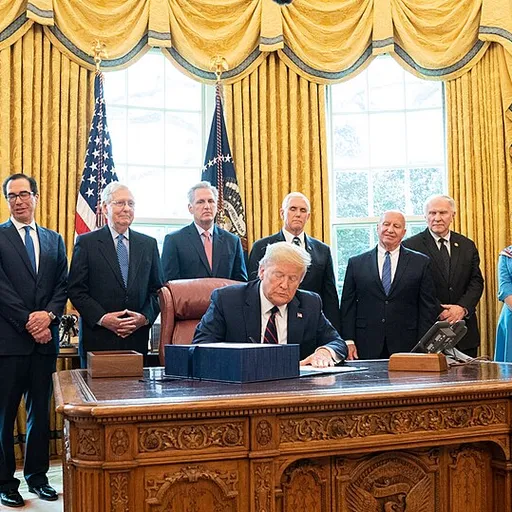
0As COVID-19 shut down the economy overnight, a Republican Senate, Democratic House, and Trump White House hammered out a $2 trillion rescue package in days, passing the Senate unanimously. It's the closest modern Washington has come to wartime-style consensus spending.
Year: 2020Senate Vote: 96-0House Vote: voice voteBipartisan Spirit: 9.5/10Lasting Impact: 8/10
added by Yourlist Editorialin 2 rankingsCoronavirus Aid, Relief, and Economic Security Act
0Social Security Amendments of 1983
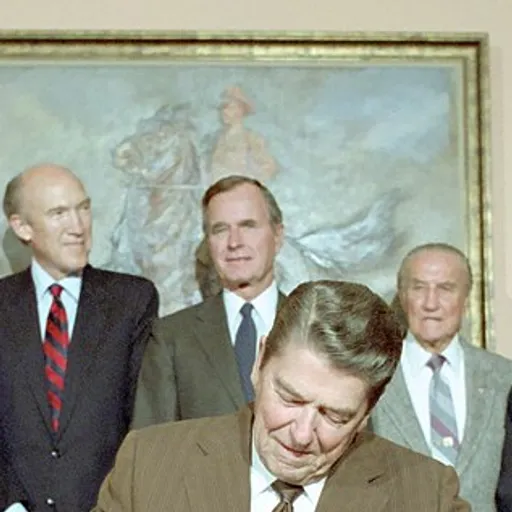
Facing imminent trust-fund insolvency, Ronald Reagan and Speaker Tip O'Neill—ideological opposites who genuinely liked each other—used a bipartisan commission to broker a grand bargain of tax hikes and benefit tweaks. It's the last time Washington fixed Social Security's finances
Year: 1983Senate Vote: 58-14House Vote: 243-102Bipartisan Spirit: 8.5/10Lasting Impact: 8/10
added by Yourlist Editorialin 2 rankings
0No Child Left Behind Act (2001)
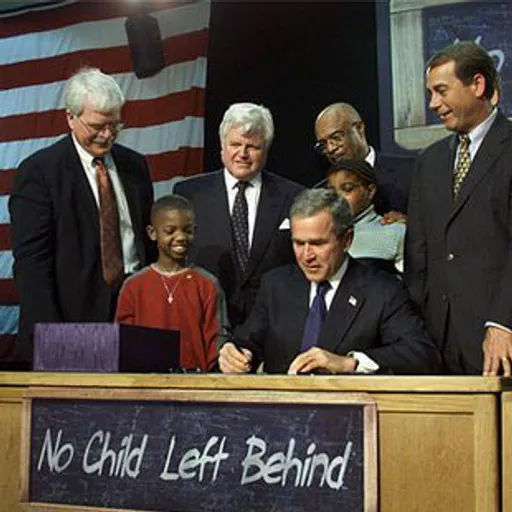
Liberal lion Ted Kennedy and conservative George W. Bush became unlikely co-authors of a sweeping education overhaul built on standardized testing and accountability. Its later unpopularity on both left and right doesn't erase how strange and genuine the original Kennedy-Bush all
Year: 2001Senate Vote: 87-10House Vote: 384-45Bipartisan Spirit: 8.5/10Lasting Impact: 6/10
added by Yourlist Editorialin 2 rankingsNo Child Left Behind Act
0Passed six weeks after 9/11 with barely a dissenting vote, the Act showed a Congress united by fear and resolve, even as its surveillance provisions would later become a rare source of bipartisan regret from libertarian Republicans and civil-liberties Democrats alike. The unity w
Year: 2001Senate Vote: 98-1House Vote: 357-66Bipartisan Spirit: 8/10Lasting Impact: 7.5/10
added by Yourlist Editorialin 2 rankingsPatriot Act
0Immigration Reform and Control Act (1986)
Reagan signed a deal trading amnesty for roughly three million undocumented immigrants in exchange for promised employer sanctions and border enforcement, brokered by lawmakers like Alan Simpson and Romano Mazzoli from opposite parties. Both sides now cite its unfulfilled enforce
Year: 1986Senate Vote: 63-24House Vote: 238-173Bipartisan Spirit: 7.5/10Lasting Impact: 6.5/10
added by Yourlist Editorialin 2 rankingsImmigration Reform and Control Act of 1986
0Personal Responsibility and Work Opportunity Act (1996)
Bill Clinton triangulated with a Republican Congress led by Newt Gingrich to 'end welfare as we know it,' a deal neither side's base fully loved but both leaderships needed politically. It stands as the signature achievement of the Clinton-era bipartisan center that barely exists
Year: 1996Senate Vote: 78-21House Vote: 328-101Bipartisan Spirit: 7/10Lasting Impact: 7.5/10
added by Yourlist EditorialPersonal Responsibility and Work Opportunity Act
0Family and Medical Leave Act (1993)
After Republican vetoes killed it twice under Bush, a new Democratic Congress and Bill Clinton finally passed guaranteed unpaid family leave with solid GOP crossover support, showing an idea can become bipartisan once it survives long enough. It remains the baseline federal leave
Year: 1993Senate Vote: 71-27House Vote: 265-163Bipartisan Spirit: 7/10Lasting Impact: 7/10
added by Yourlist EditorialFamily and Medical Leave Act of 1993
0Balanced Budget Act (1997)
Clinton and a Republican Congress under Gingrich and Trent Lott struck a deal that balanced the federal budget for the first time in decades while creating CHIP, the children's health insurance program. It's the odd case of fiscal conservatives and a Democratic president jointly
Year: 1997Senate Vote: 85-15House Vote: 346-85Bipartisan Spirit: 8/10Lasting Impact: 6.5/10
added by Yourlist Editorial
0TARP / Emergency Economic Stabilization Act (2008)
With the financial system in freefall, a lame-duck Bush administration and a Democratic Congress pushed through a $700 billion bank bailout that most members hated politically but passed anyway to prevent collapse. Both parties later ran against their own vote, but the crisis-for
Year: 2008Senate Vote: 74-25House Vote: 263-171Bipartisan Spirit: 6/10Lasting Impact: 8/10
added by Yourlist Editorial
0Facing a debt-ceiling standoff and possible default, Obama and House Republicans under John Boehner cobbled together a deal built on an automatic 'sequester' neither side actually wanted, betting the threat of mutual pain would force a later grand bargain. The bargain never came,
Year: 2011Senate Vote: 74-26House Vote: 269-161Bipartisan Spirit: 6.5/10Lasting Impact: 6/10
added by Yourlist Editorialin 2 rankingsBudget Control Act of 2011
0In the middle of the Trump presidency's polarization, criminal justice reformers from Van Jones to Jared Kushner to Chuck Grassley pushed through sentencing and prison reforms that shrank federal incarceration with broad support from both parties. It's the rare Trump-era law that
Year: 2018Senate Vote: 87-12House Vote: 358-36Bipartisan Spirit: 8.5/10Lasting Impact: 7/10
added by Yourlist EditorialFirst Step Act
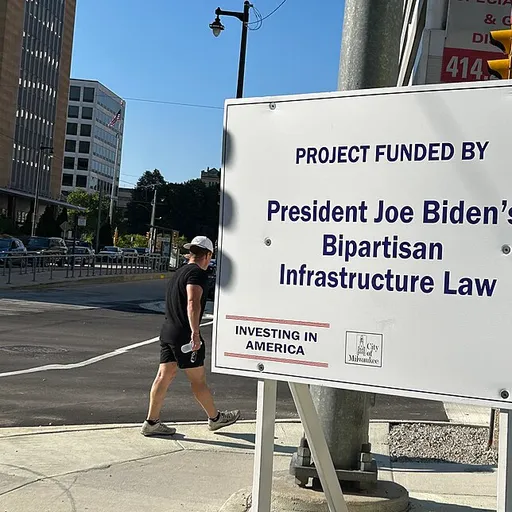
0Infrastructure Investment and Jobs Act (2021)
A group of ten Senate Republicans and Joe Biden negotiated a trillion-dollar roads-and-bridges package while progressives grumbled it wasn't big enough and conservatives grumbled it was a Trojan horse—yet it passed anyway with real crossover votes in both chambers. It showed old-
Year: 2021Senate Vote: 69-30House Vote: 228-206Bipartisan Spirit: 7/10Lasting Impact: 7.5/10
added by Yourlist Editorialin 2 rankingsInfrastructure Investment and Jobs Act
0Fear of Chinese technological dominance united enough Republicans and Democrats to pour roughly $52 billion into domestic semiconductor manufacturing, a rare case of industrial policy earning conservative votes. National security anxiety proved a more durable glue than shared ide
Year: 2022Senate Vote: 64-33House Vote: 243-187Bipartisan Spirit: 6.5/10Lasting Impact: 7/10
added by Yourlist EditorialCHIPS and Science Act
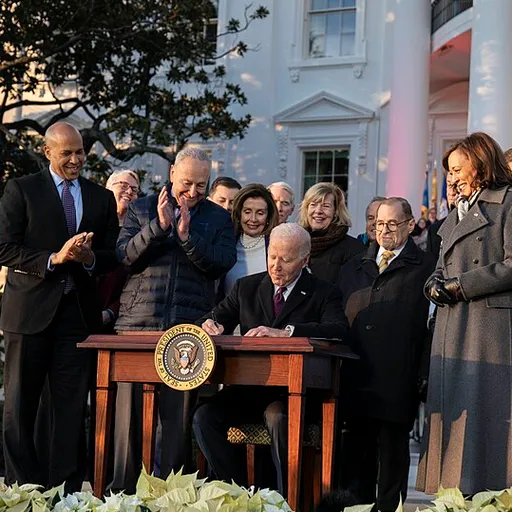
0Respect for Marriage Act (2022)
After the Dobbs decision raised fears the Supreme Court might revisit same-sex marriage, twelve Senate Republicans crossed over to federally protect marriage equality, a stunning reversal from a party that fought it a decade earlier. It's a case study in how fast 'unthinkable' bi
Year: 2022Senate Vote: 61-36House Vote: 258-169Bipartisan Spirit: 6/10Lasting Impact: 6.5/10
added by Yourlist EditorialRespect for Marriage Act
0