




Cockpit stabbing on Israel flight demands hard pilot vetting
Passengers and crew stopped a midair stabbing and dive on a Dubai-to-Tel Aviv jet. Israeli leaders call it an attempted crash; the airline says motive is unproven. Pilot access is the real stake.
IJR · Sep 30, 2026 · 4 min read
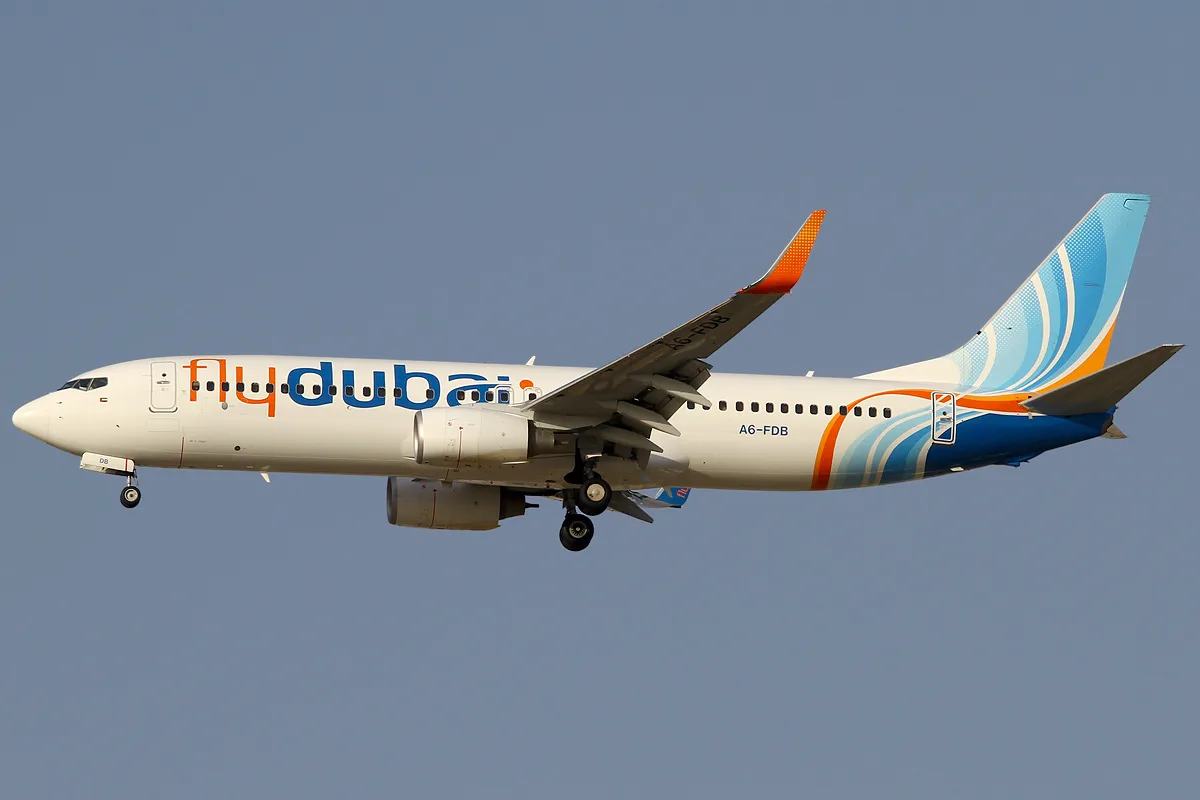
The wounded captain of Flydubai flight FZ1073 clicked open the cockpit door release as the Boeing 737 MAX 8 dropped thousands of feet over Saudi Arabia. That single act let passengers and crew into the fight for the aircraft.
One pilot had stabbed the other and tried to crash the plane.
Flight FZ1073 left Dubai for Tel Aviv with about 170 to 175 people aboard, one account putting the total at 174 including 27 children. Roughly two hours into the trip the jet, cruising near 33,000 to 34,000 feet, plunged on the order of 14,000 to 18,000 feet in under a minute. An emergency code of 7700 went out around 05:31 GMT. It changed to 7500, the signal for unlawful interference, at 05:38 GMT, then returned to 7700. The aircraft briefly crossed into Jordanian airspace before turning back into Saudi airspace and heading for Tabuk. It landed at Prince Sultan bin Abdulaziz International Airport at about 9:45 a.m. local time. Both pilots were hospitalized. Saudi authorities arrested the co-pilot. Passengers spent about eight hours on the ground before a replacement flydubai aircraft carried them to Ben Gurion Airport. Photos after landing showed damage to the rudder and vertical stabilizer.
Israeli Prime Minister Benjamin Netanyahu called the episode an extremely serious security incident. In his words: One pilot stabbed the second and tried to crash the plane. Passengers and crew broke into the cockpit, neutralised him, and stabilised the aircraft. He added that they saved many lives and prevented a heavy disaster, and separately: I salute these heroes. They saved many lives and prevented a major disaster. He ordered tighter security checks for pilots on both Israeli and non-Israeli carriers flying into Israel. Fox News headlined the core claim plainly: Netanyahu says co-pilot stabbed captain, tried to crash Israel-bound flight.
Defense Minister Israel Katz went further on the nature of the act. He called it an attempted jihadist terrorist attack thwarted only through the bravery of several Israeli passengers. Katz said the terrorist had one intention: to crash the aircraft with everyone on board. An Israeli official identified the co-pilot as an Omani national. The captain was identified as Indian national Smit Machchhar, based in Dubai. Doron Spielman, a spokesperson for Netanyahu’s office, was among those describing the sequence to the press. Itamar Ben-Gvir is among the Israeli officials named in the aftermath.
The airline’s position is different and should be stated in its own terms. Flydubai confirmed an in-flight incident and said crew members traveling on the flight secured the aircraft before the diversion. The underlying reasons and motives behind this event are unknown and remain subject to a formal investigation, the airline said, urging parties to refrain from premature speculation. Siddhartha Butalia, a flydubai senior vice president, said the airline would not disclose the pilots’ nationalities and that circumstances would become clearer once investigators had the black boxes; he noted rudder damage and no serious injuries among passengers. The UAE’s civil aviation authority opened its own inquiry into what it termed a security incident. Who started the violence and why remains under formal investigation. That is the other side’s case as the record gives it.
What the passengers and crew did is not abstract. After the dive, people rushed the front of the cabin and broke into the cockpit. A passenger subdued the attacker inside. A reserve, off-duty flydubai crew, including pilots in civilian clothes, was already aboard; those pilots took the controls and landed the jet at Tabuk. A video verified by Reuters showed two bloodied men on the cockpit floor, one identified as the attacker and wearing co-pilot’s epaulettes. Yasmin Abukasis said her daughter Miriam, who was on the flight, heard screaming and saw a man holding a knife force a pilot to the floor, with blood everywhere. Netanyahu quoted a passenger’s description: The plane went into a spin and began to dive. Almog Italie, Dalia Shpigel, Yitzhak Lieber, and Ofir Spiegel are among the passengers and family members named in coverage of the chaos and the recovery. Israeli warplanes were reportedly scrambled during the event.
Public safety here is not a slogan. The people who hold the controls of a passenger jet hold the lives of everyone behind the locked door. Limited government does not mean indifference to that lever. The rule of law requires a real investigation in Saudi custody, not a rush to close the file, and it also requires governments that receive those flights to know who is in the cockpit before the wheels leave the ground. National sovereignty is the same point in different clothes: Israel’s decision to tighten checks on pilots of Israeli and foreign carriers flying into the country is the minimum response when an aircraft full of its citizens nearly comes apart at altitude. Ordinary travelers—families, children, workers—do not get a vote on airline hiring or third-country pilot screening; they only get the consequences. Free enterprise still depends on carriers and regulators who treat cockpit access as a security question, not only a staffing one. Taxpayers and ticket-holders both pay when that standard slips.
None of this requires inventing a motive the airline says is unproven. The facts already on the table are enough. A stabbing in the flight deck. A dive measured in tens of thousands of feet. A door release clicked by a wounded captain. Passengers and crew forcing their way in. An arrested co-pilot. Two men in hospital. A plane with a damaged rudder on the ground in Tabuk. Netanyahu’s order for tighter pilot checks stands as the immediate policy move. Saudi interrogation of the suspect continues. The black boxes and the formal inquiries will produce whatever they produce.
They saved many lives. They prevented a heavy disaster.