


Robinhood Rolls Out AI Trading Agents and Weekend Trading Plans

More than 150,000 customers opened agentic accounts after Robinhood launched agentic trading in May 2026. Those agents already call the company’s tools nearly 30 million times a day. That volume was the quiet foundation under the dual reveal Vlad Tenev delivered on stage at the George R. Brown Convention Center in Houston on Tuesday evening, September 29, when HOOD Summit 2026 turned to AI trading agents and weekend trading hours for a curated list of U.S. stocks and ETFs.
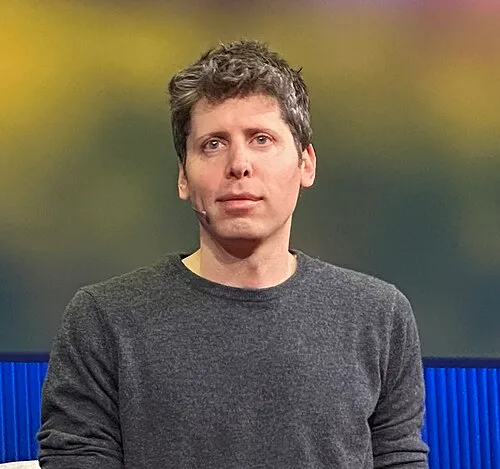
A CoinDesk photograph fixed him.
“Ownership doesn’t work without markets, and markets don’t work without traders,” Tenev said.
The agents would sit inside the app. The weekend hours would reach past the ordinary close and into Saturday and Sunday. Neither system received its full operating detail that night. What the summit put forward first was the claim itself—more tools for people who trade as a practice, and more hours in which to use them—framed as one continuous offer rather than two separate products. Outside the hall the stock still had to answer whether that claim would hold.

By early Wednesday HOOD was higher by roughly 3 percent. Schaeffer’s showed a 4.7 percent rise before the bell. Benzinga had the shares at $122.52, up 5.42 percent. Investor’s Business Daily watched them surge at the open, then reverse. The stock had been climbing since a 52-week low of $63.51 in late March 2026 and sat above its 100-day moving average. Short interest rose 9.1 percent in the most recent period. The 36.17 million shares sold short equaled 4.6 percent of the float. Options stayed inexpensive: Schaeffer’s Volatility Index stood at 58 percent, the 10th percentile of its annual range, and the Volatility Scorecard read 74 out of 100.
“One of our top priorities as a company is to be number one for active traders,” Abhishek Fatehpuria said. “More assets, and then more hours,” he added, describing the strategy. The contest among retail brokerages had already moved past commissions toward access, speed, and automation, pitting Robinhood against both crypto-native platforms and traditional houses.
On Fox Business, Adam Johnson warned that the AI agent could be a little too wild and that HOOD looked expensive at 55 times earnings next to the S&P 500. The price had registered the claim. What the agents would be allowed to touch had not.
The answer sat inside the app. A customer named the agent, opened a dedicated agentic account, and chose a model from OpenAI or Anthropic. OpenAI’s GPT-Luna ran free through the end of 2026. An AI agent, unlike a chatbot that only answers questions, can research markets, form a strategy, and place trades within the limits the customer sets. The agent could reach only the funds held in that separate account. It could not borrow on margin at launch. Manual approval of every trade was the default setting, adjustable later by the user.

“We’re making Robinhood the best place in the world for active traders by delivering tools once reserved for hedge funds, big banks, and quant firms,” Tenev said.
“With safety and security at its core, we're setting the standard for what agentic finance can be,” Fatehpuria said. The path ran through the Robinhood Trading MCP. Algorithmic trading executes orders through automated instructions that account for time, price, and volume—work institutions have run for decades. Loops, still coming, will let a customer set standing, recurring instructions so an agent can trade automatically day or night. One Loop might scan the market every morning and act when conditions match; another might run a continuous overnight search. The customer can shut any Loop off.
“Whether you're an expert or are just getting started with AI, you're at a disadvantage if you're not using Robinhood,” Fatehpuria said.
What remained was not only who could trade, but which hours the trade could fill. A Saturday headline will soon meet a Saturday fill. Robinhood plans weekend trading for a curated list of U.S. stocks and ETFs, pending regulatory review and expected early next year. The sessions will run through Bruce ATS. They extend the 24 Hour Market launched in 2023, which already lets customers trade hundreds of stocks and ETFs from Sunday at 8 p.m. Eastern through Friday at 8 p.m. Eastern. What that window left shut were Saturday and Sunday—the stretch between Friday evening and the Sunday reopen.

“Breaking news doesn’t wait for an opening bell. With the upcoming launch of weekend trading, we’re making sure our customers won’t have to either, no matter what day it is,” Steve Quirk said.
The ordinary U.S. equity session still opens and closes on weekdays. Both the New York Stock Exchange and Nasdaq have filed to expand their own hours. Robinhood’s earlier market had already stretched the workweek deep into the night; the new plan fills the remaining calendar gap, across all account types, starting with that curated roster.
Robinhood Agents would roll out soon to eligible U.S. customers, together with the related products named beside them in Houston. No fixed calendar day was attached to that release. The company described the arrival only as coming soon. Weekend trading still required regulatory clearance. Until that review finished, no Saturday or Sunday equity session could open. The plan continued to point toward early next year and nowhere sooner.
“We’re about to change when the world can trade,” Jason Wallach said.