

Boston Dynamics IPO Unlikely Before 2027, Executive Says

The full story · 3 min read
Asked whether Boston Dynamics could complete an initial public offering the next year, a senior Hyundai Motor Group executive answered Reuters in two lines. “It won’t be easy,” he said. “We need to see conditions and situations.”
He spoke on condition of anonymity. Atlas, the unit’s flagship humanoid robot, had yet to reach large-scale deployment. The robotics business remained unprofitable. Hyundai Motor Group had disclosed no public timeline for a listing and no valuation target.
Hyundai Glovis filings put the arithmetic in plain view. The holds approximately an 11 percent stake in Boston Dynamics and disclosed that the unit posted a loss of 528.4 billion won in 2025—about $393.1 million for the year. Cumulative losses from 2021 through 2025 totaled nearly 1.7 trillion won, roughly $1.26 billion.
Boston Dynamics began in 1992 as a spin-off from the Massachusetts Institute of Technology, growing out of the Leg Laboratory’s work on machines that move with animal-like agility. Headquartered in Waltham, Massachusetts, it developed a line of dynamic robots that came to include the quadruped Spot, its first commercial product, and Atlas, the bipedal humanoid. The Glovis numbers covered the years after the company entered the Hyundai orbit and recorded the accumulated cost of keeping that engineering going.
Hyundai Motor took a controlling stake in 2021. Before the final step, the remaining ownership sat with Hyundai Motor itself, Kia, the parts maker Hyundai Mobis, and Hyundai Motor Group Executive Chair Euisun Chung, alongside the Glovis holding already on the books. In July 2026 the group announced it would buy SoftBank’s remaining stake—roughly 10 percent, precisely 9.65 percent. Market sources put the price near 500 billion won, about $371 million to $372 million. Hyundai completed the purchase. SoftBank was out. Full ownership was in. The robotics company now sat entirely inside the group, with no outside shareholder left on the register.
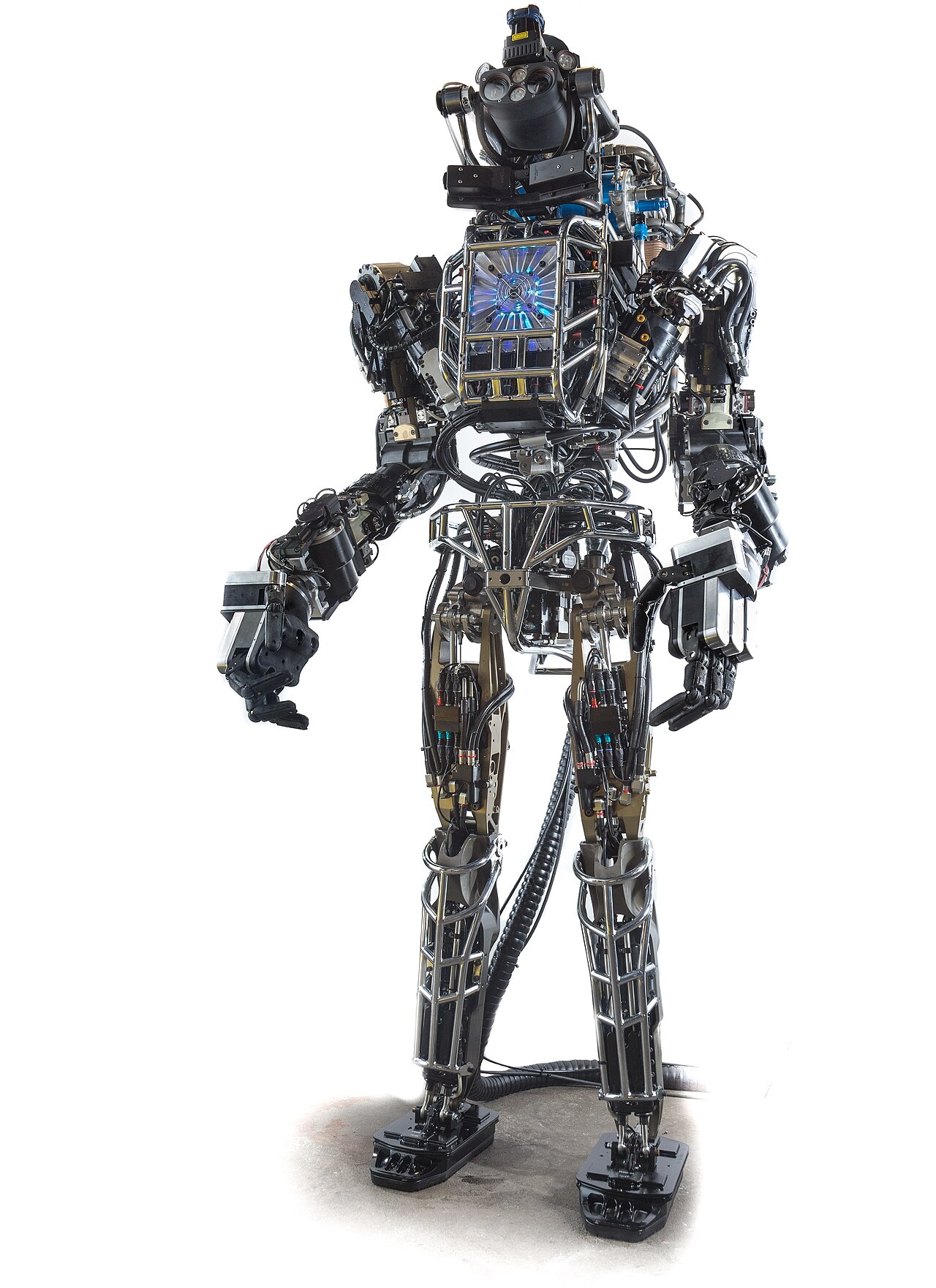
Atlas stands about five feet tall. It is a bipedal humanoid developed from Boston Dynamics’ earlier PETMAN platform and first designed for search-and-rescue tasks. Over the years the company released videos of the machine running up two-foot steps and working through parkour sequences. In April 2024 it retired the hydraulic Atlas in favor of a new generation. Hyundai brought the production version of that robot to the Consumer Electronics Show in Las Vegas in January 2026 and put it on display at the group’s booth.
Hyundai Motor’s stock more than doubled, then later gave back most of those gains amid a lack of updates on the robotics strategy.
Hyundai aims to build manufacturing capacity for 30,000 Atlas units annually by 2028. The company plans to deploy 25,000 Atlas units across Hyundai and Kia plants, starting at its Georgia plant in the United States before expanding through the manufacturing network. The production version had been shown. Getting the robots onto the plant floor at scale was the work that remained.
Kim Hyun-su, a senior fund manager at Seoul-based IBK Asset Management, drew the distinction that still holds the industry back. “I think it might take far more time for humanoid robots to replace human workers at the assembly line,” he said. “It's not difficult to make robots dancing, but it's challenging to make them carry heavy loads and get involved in manufacturing at plants.”

Demonstrations of balance and choreography travel easily; continuous factory work does not. Scaled deployment on real plant floors remains years away. The operational data needed to prove capability is still thin, and the machines have not yet shown they can shoulder the loads and the repetition that manufacturing demands.
Elon Musk has faced the same wall with Tesla’s Optimus humanoid. He has called humanoid robots “the hardest product to scale manufacturing” the electric-car maker has ever attempted. Until the robots can do the heavy work, not only the show work, the path from lab to line stays long.
Samsung Securities estimated Boston Dynamics’ market value between 50 trillion and 100 trillion won. IBK Securities, in a report published in August, projected a valuation of 141 trillion won by 2030, with expected revenue of about 11 trillion won that year. The IBK figure is nearly three times the low end of the Samsung range and clears its high end, stretching the published band from 50 trillion won to 141 trillion won.
Meritz Securities analyst Kim Joon-sung projected an IPO more likely in 2029 or 2030. He reasoned that Hyundai first needed to gather large amounts of operational data and improve the robots’ capabilities before the company could sell them broadly to external customers. Humanoid robots still could not be widely deployed in factories. That remaining gap in scaled factory use constrained the listing timeline and kept a public debut pointed at the decade’s end.
Full ownership of Boston Dynamics was already secured. The Georgia plant in the United States remained the stated first deployment gate.