
Wilton Norman Chamberlain ( CHAYM-bər-lin; August 21, 1936 – October 12, 1999) was an American professional basketball player. Standing 7 feet 1 inch (2.16 m) tall, he played center in the National Basketball Association (NBA) for 14 seasons. He was enshrined in the Naismith Memorial Basketball Hall of Fame in 1978, and was elected to the NBA's 35th, 50th, and 75th anniversary teams. Chamberlain is widely considered to be one of the greatest basketball players of all time.
According to former teammate Billy Cunningham, "The NBA Guide reads like Wilt's personal diary." Chamberlain holds 72 NBA records, including several regular season records in scoring, rebounding, and durability; blocks were not counted during his career. He remains the only player to score 100 points in a single game. He also once gathered 55 rebounds, and never fouled out. Chamberlain is the only player to average 30 points and 20 rebounds per game in a season, a feat he accomplished seven times. He once averaged 50 points per game, as well as 48 minutes per game, in a season. Chamberlain ultimately won two NBA championships, four regular-season Most Valuable Player (MVP) awards, the Rookie of the Year, one Finals MVP, and one All-Star Game MVP; he was selected to thirteen All-Star Games and ten All-NBA Teams (seven First and three Second teams). He won seven scoring, eleven rebounding, nine durability, and nine field goal percentage titles.
While in college, Chamberlain played for the Kansas Jayhawks, and lost the national championship game to the North Carolina Tar Heels in triple overtime his sophomore year. He also played for the Harlem Globetrotters before joining the NBA, where he played for the Philadelphia / San Francisco Warriors, Philadelphia 76ers, and Los Angeles Lakers. Chamberlain had an on-court rivalry with Boston Celtics' center Bill Russell, suffering a long string of losses before breaking through and winning the 1967 NBA Finals as a member of the 76ers. Chamberlain won his second championship as a member of the 1972 Lakers, a team which set a record with a 33-game winning streak. Following his professional basketball career, Chamberlain played volleyball in the short-lived International Volleyball Association (IVA). He served one term as league president and is enshrined in the IVA Hall of Fame.
Sportswriters had known Chamberlain by several nicknames during his playing career, calling attention to his height since his high school days. He disliked the ones that negatively portrayed his height, such as "Wilt the Stilt" and "Goliath", preferring "the Big Dipper", inspired by his friends who saw him dip his head as he walked through doorways. The name was retained in one of Chamberlain's signature moves, the "dipper dunk". He was one of the first players to make prominent use of shots like the fade away jump shot, and the finger roll. His success near the basket led to the widening of the lane, offensive goaltending rules, and the banning of inbound passes over the backboard. Chamberlain, who was always a poor free throw shooter, had the ability to dunk from the foul line, which led to the ruling that a free-throw shooter must keep his feet behind the line.
Contents
Early years
Wilton Norman Chamberlain was born on August 21, 1936, in Philadelphia, Pennsylvania, the sixth of nine children to southerners Olivia Ruth (née Johnson), a domestic worker, and William Chamberlain, a welder and handyman. The family lived in a middle-class neighborhood in the Haddington section of West Philadelphia. Chamberlain was raised as a Baptist.
Chamberlain's first competitive sport was track. As a fourth grader, he ran the 300-yard shuttle in the 1946 Penn Relays among older teammates. Tall from an early age, he stood 6 ft 0 in (1.83 m) by 10 years old. He nearly died of pneumonia in his early years and missed a whole year of school as a result. During early childhood, he was not interested in basketball, which he regarded as "a game for sissies". According to Chamberlain, however, "basketball was king in Philadelphia", so he eventually turned to the sport in seventh grade, while attending Shoemaker Junior High School.
High school career
Overbrook High School (1953–1955)
Chamberlain stood 6 ft 11 in (2.11 m) when he entered Philadelphia's Overbrook High School. As an avid track and field athlete, he high jumped 6 feet, 6 inches, ran the 440 yards in 49.0 seconds and the 880 yards in 1:58.3, put the shot 53 feet, 4 inches, and long jumped 22 feet.
Chamberlain was the star player for the Overbrook Hilltoppers basketball team, wearing jersey number five. Chamberlain had a natural advantage against his peers; he became renowned for his scoring talent, physical strength, and shot-blocking abilities. According to ESPN journalist Hal Bock, Chamberlain was "scary, flat-out frightening ... before he came along, very few players at the center position possessed his level of athleticism, stature, and stamina. Chamberlain changed the game in fundamental ways no other player did." In this period of his life, his three lifelong nicknames "Wilt the Stilt", "Goliath", and "The Big Dipper"—his favorite—were coined.
Chamberlain led the team to two city championships over three seasons, with Overbrook logging a 56–3 win-loss record. He broke Hall of Fame guard Tom Gola's Philadelphia-high-school scoring record (2,222 points) and graduated with 2,252 points, averaging 37.4 points per game.
Chamberlain averaged 31 points per game during his 1953 high-school season and led his team to a 71–62 win over the Northeast High School team of Hall of Fame guard Guy Rodgers. Chamberlain scored 34 points as Overbrook won the Philadelphia Public League title and gained a spot in the city championship game against West Catholic High School, the winner of the rival Catholic league. In that game, West Catholic quadruple-teamed Chamberlain throughout the game, and despite his 29 points, the Hilltoppers lost 54–42.
In his second season, Chamberlain led Overbrook to a 19–0 season. He scored a high-school record 71 points against Roxborough. The Hilltoppers comfortably won the Public League title after again beating Northeast High, as Chamberlain scored 40 points. Overbrook then won the city title by defeating South Catholic 74–50. Chamberlain scored 32 points and Overbrook finished the season undefeated.
During his summer vacations, Chamberlain worked as a bellhop at Kutsher's Hotel. Owners Milton and Helen Kutsher maintained a lifelong friendship with Chamberlain. Red Auerbach, the coach of the NBA's Boston Celtics, was also athletic director of the summer basketball league at Kutscher's; Auerbach spotted Chamberlain playing there and had him play one-on-one against University of Kansas (KU) standout and national champion B. H. Born, elected NCAA Most Outstanding Player in 1953. Chamberlain won 25–10; Born was so dejected he gave up a promising NBA career and became a tractor engineer; according to Born, "If there were high school kids that good, I figured I wasn't going to make it to the pros". Auerbach wanted Chamberlain to go to a New England university so the Celtics could draft him as a territorial pick but Chamberlain did not respond.
Christian Street YMCA
In 1953, while still a sophomore in high school, Chamberlain won his first championship. He led Christian Street YMCA to the title in the national YMCA tournament in High Point, North Carolina, beating the local favorite and defending champion High Point team 85–79. Chamberlain was the youngest member of the team.
Pittsburgh Raiders and Quakertown Fays
On December 21, 1952, Chamberlain played for the Pittsburgh Raiders under the pseudonym of George Marcus in a professional game against the Cumberland Old Germans. At the ages of 16 and 17, Chamberlain, using the same pseudonym, played several games for the semi-professional team Quakertown Fays of Quakertown, Pennsylvania, during the 1954–55 season. The games were reported in local publications, but Chamberlain tried to keep them secret from the Amateur Athletic Union because they jeopardised his eligibility to play amateur basketball.
College career
After his last Overbrook season, more than 200 universities tried to recruit Chamberlain. Among others, UCLA offered Chamberlain the opportunity to become a movie star, the University of Pennsylvania wanted to buy him diamonds, and Cecil Mosenson, Chamberlain's coach at Overbrook, was offered a coaching position if he could persuade Chamberlain to accept an offer.
Chamberlain wished to experience life away from home, so he eliminated colleges from the East Coast; he also ruled out the South because of racial segregation and felt West Coast basketball was of a lower quality than in other regions. This left the Midwest as Chamberlain's probable choice. After visiting KU and talking with the school's coach, Phog Allen, Chamberlain announced he was going to play college basketball at Kansas.
University of Kansas (1956–1958)
In 1955, Chamberlain entered the University of Kansas (KU); he was a member of Kappa Alpha Psi fraternity and was president of his pledge class. As he had at Overbrook, Chamberlain displayed his diverse athletic talent at KU. He ran the 100-yard dash in 10.9 seconds, shot-putted fifty-six feet (17 m), triple jumped more than fifty feet (15 m), and won the high jump in the Big Eight Conference track-and-field championships in three consecutive years. Chamberlain allegedly dunked on an experimental 12-foot basket set up by Phog Allen.
Chamberlain's freshman team debut was highly anticipated; the freshman team played against the varsity, who were favored to win their conference that year. Chamberlain dominated his older college teammates by scoring 42 points (16–35 from the field, 10–12 on free throws), grabbing 29 rebounds, and registering 4 blocks.
Chamberlain was the catalyst for several 1956 NCAA basketball rule changes, including the requirement for a shooter to keep both feet behind the line during a free-throw attempt. He had a 50-inch (130 cm) vertical leap, and was capable of converting foul shots by dunking without a running start, beginning his movement just steps behind the top of the key. An inbounds pass over the backboard was banned because of Chamberlain. Offensive goaltending, also called basket interference, was introduced as a rule in 1956 after Bill Russell had exploited it at San Francisco and Chamberlain was soon to enter college play.
Chamberlain's prospects of playing under coach Allen ended when Allen turned 70 and retired shortly after in accordance with KU regulations. According to biographer Robert Cherry, it is doubtful Chamberlain would have chosen KU if he had known Allen was going to retire. Chamberlain had a poor relationship with Allen's successor, Dick Harp. For many years following Chamberlain's departure from KU, critics said he wanted to leave the Midwest or was embarrassed by not being able to win a championship. In 1998, Chamberlain returned to Allen Fieldhouse in Lawrence, Kansas, to participate in a jersey-retiring ceremony for his No. 13 jersey. He said, "There's been a lot of conversation ... that I have some dislike for the University of Kansas. That is totally ridiculous."
On December 3, 1956, Chamberlain made his varsity basketball debut as a center for the Kansas Jayhawks. In his first game, he scored 52 points and grabbed 31 rebounds, breaking both all-time Kansas records in an 87–69 win against the Northwestern Wildcats, a team with Chamberlain's future NBA teammate Joe Ruklick playing center. Chamberlain led a talented squad of starters, including Maurice King, Gene Elstun, John Parker, and Ron Loneski; the Jayhawks went 13–1 until they lost a game 56–54 against the Oklahoma State Cowboys, who held the ball for the last three-and-a -half minutes with no intention of scoring a basket, which was still possible in the days before the shot clock, introduced by the NCAA in 1984.
Professional career
Harlem Globetrotters (1958–1959)
After his frustrating junior year, Chamberlain wanted to become a professional player. At that time, the NBA did not accept players until after their college graduating class had been completed; Chamberlain decided to play for the Harlem Globetrotters in 1958 for $50,000. The team enjoyed a sold-out tour of the Soviet Union in 1959; they were greeted by General Secretary Nikita Khrushchev prior to the start of a game at Moscow's Lenin Central Stadium. One Globetrotter skit involved Captain Meadowlark Lemon collapsing to the ground; instead of helping him up, Chamberlain threw him several feet into the air and caught him like a doll. Lemon, who at that time weighed 210 lb (95 kg), later said Chamberlain was "the strongest athlete who ever lived".
In later years, Chamberlain frequently joined the Globetrotters in the off-season and fondly recalled his time there because he was no longer jeered at or asked to break records, but was one of several artists who loved to entertain audiences. On March 9, 2000, the Globetrotters retired his No. 13 jersey.
Philadelphia/San Francisco Warriors (1959–1965)
Chamberlain made his NBA debut on October 24, 1959, starting for the Philadelphia Warriors. He was listed as 7 ft 1 in (2.16 m) tall and 258 lb (117 kg). He became the NBA's highest-paid player when he signed for $30,000 in his rookie contract. In comparison, the previous top earner was Bob Cousy of the Celtics with $25,000, the same sum Eddie Gottlieb used to buy the Warriors franchise in 1952.
In the 1959–60 NBA season, Chamberlain joined a Philadelphia Warriors squad that was coached by Neil Johnston. All five starters were native Philadelphians: Chamberlain, Tom Gola, Guy Rodgers, Hall-of-Fame forward Paul Arizin, and Ernie Beck. In his first NBA game, played against the New York Knicks, Chamberlain scored 43 points and grabbed 28 rebounds. In his third game, Chamberlain recorded 41 points and a then-career-high 40 rebounds in a 124–113 win over the visiting Syracuse Nationals. In his fourth game, Philadelphia played the reigning champion Boston Celtics—who were coached by Auerbach, whose offer Chamberlain had rejected several years before—and Bill Russell, who was lauded as one of the best defensive pivots in the game.
In the first of many match-ups, Chamberlain outscored Russell with 30 points against Russell's 28 points, but Boston won the game and the Chamberlain–Russell rivalry would grow to become one of the NBA's greatest of all time. On November 10, 1959, Chamberlain posted 39 points and a new career-high 43 rebounds in a 126–125 win over the visiting Knicks. He recorded a rock n' roll record in January 1960, singing That's Easy to Say and By the River.
Chamberlain was selected to the Eastern Conference All-Star team, winning the All-Star Game and the All-Star Game MVP award with a 23-point, 25-rebound performance. On January 25, 1960, Chamberlain had 50 points and 40 rebounds in an NBA game, a rare occurrence. During the game against the Detroit Pistons, Chamberlain recorded 58 points, 42 rebounds, and 4 assists in a winning effort. His 58 points were a then-career-high, and he later tied that on February 21, when he recorded 58 points and 24 rebounds in a 131–121 win over the visiting Knicks.
In his first NBA season, Chamberlain averaged 37.6 points, 27.0 rebounds and 46.4 minutes played, breaking the previous regular-season records. To this day no other player has ever averaged more rebounds or minutes played in a season, and only one player, Elgin Baylor, has ever averaged more points in a season than Chamberlain did in his rookie year. He needed only 56 games to score 2,102 points, breaking the all-time regular-season scoring record of Bob Pettit, who needed 72 games to score 2,101 points. Chamberlain broke eight NBA records, and he was named both Rookie of the Year and MVP that season.
Philadelphia 76ers (1965–1968)
In the 1964–65 NBA season, the NBA widened the lane from 12 to 16 feet (3.7 to 4.9 m), especially because of centers like Chamberlain. The Warriors' season began poorly and they experienced financial trouble. At the 1965 All-Star Weekend, Chamberlain was traded to the Philadelphia 76ers, the renamed former-rival and relocated Syracuse Nationals. Chamberlain did not like Sixers coach Dolph Schayes, who he thought had made several disrespectful remarks when they were rival players. The Warriors received $150,000 and Paul Neumann, Connie Dierking, and Lee Shaffer—who opted to retire rather than report to the Warriors. When Chamberlain left the Warriors, owner Franklin Mieuli said: "Chamberlain is not an easy man to love ... the fans in San Francisco never learned to love him. Wilt is easy to hate ... people came to see him lose."
After the trade, a reluctant Chamberlain found himself on a promising Sixers team that included veteran shooting guard and future Hall-of-Famer Hal Greer and talented role-players such as point guard Larry Costello, small forward Chet Walker, and centers Johnny "Red" Kerr and Lucious Jackson. The team also included All-Rookie forward Billy Cunningham in the new sixth man role. Cherry noted there was tension within the team because Greer was the formerly undisputed leader and was not willing to give up his authority, and Jackson, a talented center, was now forced to play power forward because Chamberlain occupied the center spot. As the season progressed; however, the three began to work together more closely.
Chamberlain posted 34.7 points and 22.9 rebounds per game overall for the season. Future Georgetown coach John Thompson, then a rookie for the Boston Celtics, elbowed Chamberlain in the face and broke his nose, causing him to wear a face mask in several games. After defeating the Cincinnati Royals—a team led by fellow All-American Oscar Robertson—in the playoffs, the Sixers played against Chamberlain's rival Boston Celtics; the press called it an even match in all positions, even at center, where Russell was expected to give Chamberlain a tough battle. The teams split the first six games and the last game was held in the Celtics' Boston Garden because of their better season record. In that Game 7, Chamberlain scored 30 points and 32 rebounds while Russell logged 16 points, 27 rebounds, and eight assists.
In the final minute, Chamberlain hit two clutch free throws and slam dunked on Russell, reducing Boston's lead to 110–109 with five seconds left. Russell's inbounds pass hit a guy-wire supporting the backboard, giving the ball back to the Sixers. Coach Schayes called timeout and decided it would be unwise to pass the ball to Chamberlain, whom he feared the Celtics would intentionally foul. Red Kerr set a pick on Sam Jones to free Chet Walker. When Greer attempted to inbound the ball to Walker, John Havlicek stole the ball to preserve the Celtics' lead. For the fifth time in seven years, Russell's team deprived Chamberlain of the title. According to Chamberlain, it was in this game people started calling him a loser. In an interview in the April 1965 issue of Sports Illustrated, Chamberlain criticized his fellow players, coaches, and NBA administrators. Chamberlain later said he could see in hindsight the interview was instrumental in damaging his public image.
Los Angeles Lakers (1968–1973)
On July 9, 1968, the trade between the Los Angeles Lakers and the Sixers was completed, making it the first time a reigning NBA MVP was traded the next season. Lakers owner Jack Kent Cooke gave Chamberlain an unprecedented contract, paying him $250,000 after taxes—about $2.3 million in real value; in comparison, previous Lakers top earner Jerry West was paid $100,000 before taxes—about $930,000 in real value.
For the 1968–69 NBA season, Chamberlain joined a squad that included his fellow former All-American forward Elgin Baylor, Hall-of-Fame guard Jerry West, backup center Mel Counts, forwards Keith Erickson and Tom Hawkins, and 5 ft 11 in (1.80 m) guard Johnny Egan. According to Cherry, Chamberlain was not a natural leader or a loyal follower, which made it difficult to fit in. While he was on cordial terms with West, Chamberlain often argued with team captain Baylor, later saying in regard to Baylor: "We were good friends, but ... [in] black culture ... you never let the other guy one-up you".
The lack of a second guard next to West and the lack of speed concerned coach Butch van Breda Kolff. After losing Clark and Hall-of-Fame guard Gail Goodrich, who joined the Phoenix Suns after the 1968 NBA expansion draft, he said: "Egan gets murdered on defense because of his [lack of] size ... but if I don't play him, we look like a bunch of trucks". The greatest problem was his tense relationship with van Breda Kolff. Pejoratively calling the new recruit "The Load", van Breda Kolff later said Chamberlain was egotistical, never respected him, too often slacked off in practice, and focused too much on his own statistics. Chamberlain described Van Breda Kolff as "the dumbest and worst coach ever". Erickson commented, "Butch catered to Elgin and Jerry ... and that is not a good way to get on Wilt's side ... that relationship was doomed from the start".
Chamberlain experienced an often-frustrating season. Van Breda Kolff benched him several times, which never happened before in his career; in mid-season, Chamberlain, a perennial scoring champion, had two games in which he scored only six and then two points. Playing through his problems, Chamberlain averaged 20.5 points and 21.1 rebounds a game that season. Cooke was pleased because ticket sales went up by 11% since acquiring Chamberlain.
In the playoffs, the Lakers defeated, 4–2, Chamberlain's old club the San Francisco Warriors after losing the first two games, then defeated the Atlanta Hawks, and then played Chamberlain's rivals, Russell's Boston Celtics. Going into the NBA Finals as 3-to-1 favorites, the Lakers won the first two games but lost the next two; Chamberlain was criticized as a non-factor in the series, being neutralized by Russell with little effort. In Game 4, Sam Jones again hit a clutch shot, this time off the wrong foot.
Coaching career
San Diego Conquistadors (1973–1974)
In 1973, the San Diego Conquistadors, a member of the NBA-rival league ABA, signed Chamberlain as a player-coach for a $600,000 salary. According to Chamberlain, part of the reason for leaving the Lakers was his belief he had the right to renegotiate his contract after winning the 1971–72 NBA championship, and was upset the Lakers did not contact him until September 1972, before which they were trying to acquire UCLA star-center Bill Walton, who ultimately decided to return to school for the 1972–73 season. The Lakers sued Chamberlain and prevented him from playing for the Conquistadors because he still owed the Lakers the option year of his contract. According to the two-year contract Chamberlain had signed prior to the 1971–72 season, if he failed to sign and mail back his next contract, his contract with the Lakers would be deemed to be renewed. The Lakers said they mailed Chamberlain a new contract in July 1973, but Chamberlain did not sign it, so the old contract should be deemed to have been renewed for the 1973–74 season. On October 10, 1973, the opening day of the Conquistadors' season, a judge ruled Chamberlain could coach the Conquistadors but could not play for any team other than the Lakers for 1973–74.
While he was barred from playing, Chamberlain mostly left coaching duties to his assistant Stan Albeck, who said Chamberlain "has a great feel for pro basketball ... the day-to-day things that are an important part of basketball ... just bored him. He did not have the patience." The players were split on Chamberlain, who was seen as competent but often indifferent, and was more occupied with promotion of his autobiography Wilt: Just Like Any Other 7-Foot Black Millionaire Who Lives Next Door, than with coaching. He once skipped a game to sign autographs for the book. In his single season as a coach, the Conquistadors finished 37–47 in the regular season and lost against the Utah Stars in the division semifinals. After the season, Chamberlain retired from professional basketball; he was displeased by the meager attendance as crowds averaged 1,843, occupying just over half of the team's 3,200-seat Golden Hall sports arena.
Career statistics
Head coaching record
Post-NBA career
After his stint with the Conquistadors, Chamberlain went into business and entertainment, made money in stocks and real estate, bought a popular Harlem nightclub which he renamed Big Wilt's Smalls Paradise, and invested in broodmares. He appeared in advertisements for TWA, American Express, Volkswagen, Drexel Burnham, Le Tigre Clothing, Foot Locker, and Lite beer from Miller.
Athletics
Chamberlain sponsored his own professional volleyball and track and field teams, and provided high-level teams for girls and women in basketball, track, volleyball, and softball.
Volleyball became Chamberlain's new athletic passion, having been a talented hobby volleyballer during his Lakers days. He became a board member of the newly founded International Volleyball Association (IVA) in 1974 and became its president in 1975. As a testament to his importance, the IVA All-Star game was televised only because Chamberlain also played in it; he was named the game's MVP. Chamberlain played occasional matches for IVA Seattle Smashers before the league folded in 1979. Chamberlain promoted the sport so effectively he was named to the IVA Hall of Fame and became one of the few athletes who were enshrined in multiple sports.
In the 1970s, Chamberlain formed Wilt's Athletic Club, a track-and-field club in southern California that was coached by UCLA assistant coach Bob Kersee in the early part of his career. The team included Florence Griffith before she set the world records in the 100 meters and 200 meters; three-time world champion Greg Foster; and future Olympic Gold medalists Andre Phillips, Alice Brown, and Jeanette Bolden. Chamberlain signed 60 athletes and planned to expand to 100. While actively promoting the sport in 1982, Chamberlain said he was considering a return to athletic competition in masters athletics; he stated he had only once been beaten in the high jump by Olympic champion Charles Dumas, and that he had never been beaten in shot put, beating Olympic discus champion Al Oerter.
Following his playing days, Chamberlain maintained his high level of fitness. In his mid-forties, he was able to humble rookie Magic Johnson in practice, and he planned a return to the NBA in the 1980s. In the 1980–81 NBA season, coach Larry Brown said the 45-year-old Chamberlain had received an offer from the Cleveland Cavaliers. When Chamberlain was 50, the New Jersey Nets made Chamberlain an offer, which he declined. He continued to maintain his physical fitness for several years, participating in several marathons. When million-dollar contracts became common in the NBA, Chamberlain increasingly felt he had been underpaid during his career. A result of this resentment was the 1997 book Who's Running the Asylum? Inside the Insane World of Sports Today, in which he criticized the NBA for being too disrespectful of former players.
Film
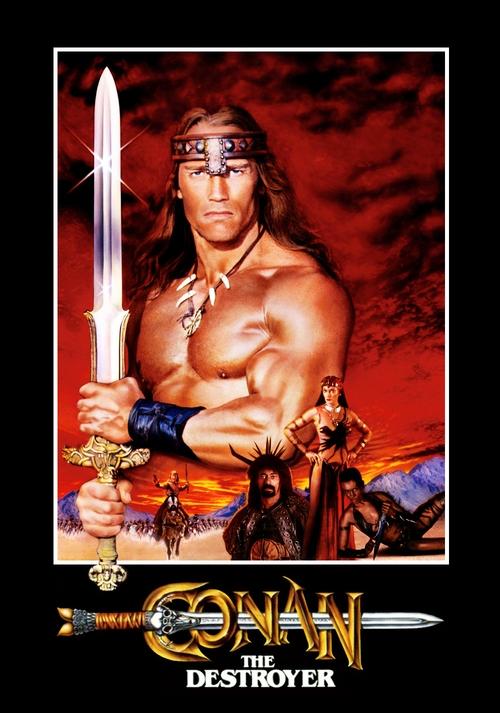
In 1976, Chamberlain, who was interested in movies, forming a film production and distribution company to make his first film, which was entitled Go For It. Chamberlain played a villainous warrior and counterpart of Arnold Schwarzenegger in the 1984 film Conan the Destroyer, including fight scenes against Schwarzenegger and Grace Jones. It remained his only credited film role.
In November 1998, he signed with Ian Ng Cheng Hin, CEO of Northern Cinema House Entertainment, to produce his own bio-pic, wanting to tell his life story his way. He had been working on the screenplay notes for over a year at the time of his death.
Death
Chamberlain, who had a history of cardiovascular disease, was briefly hospitalized for an irregular heartbeat in 1992. According to those close to him, he began taking medication for his heart problems. His condition rapidly deteriorated in 1999, and he lost fifty pounds (23 kg). After undergoing dental surgery in the week before his death, he was in great pain and seemed unable to recover from the stress. On October 12, 1999, Chamberlain died at age 63 at his home in Bel Air. His longtime attorney, Sy Goldberg, stated Chamberlain died of congestive heart failure. Goldberg said:
He was more inquisitive than anybody I ever knew. He was writing a screenplay about his life. He was interested in world affairs, sometimes he'd call me up late at night and discuss philosophy. I think he'll be remembered as a great man. He happened to make a living playing basketball, but he was more than that. He could talk on any subject. He was a Goliath.
A memorial service for Chamberlain was held at the City of Angels Church of Religious Science in Los Angeles on October 16, 1999. A second memorial service was held at his home church, Mount Carmel Baptist Church, in Philadelphia on October 21, 1999.
Several NBA players and officials remembered him as one of the greatest players in the history of basketball. On-court rival and personal friend Bill Russell stated: "the fierceness of our competition bonded us together for eternity".
Legacy
Awards and honors
Chamberlain is regarded as one of the most extraordinary and dominant basketball players in NBA history, and has been called the greatest basketball player of all time by many sources including Basketball Hall of Fame members Walt Frazier and Earl Monroe. In 2007, ESPN ranked Chamberlain the second-best center of all time behind Kareem Abdul-Jabbar, and was ranked second in Slam's "Top 50 NBA Players of All-Time in NBA History" in 2009, and sixth in ESPN's list of the top 74 NBA players of all time in 2020, and the third-best center of all-time behind Abdul-Jabbar and Bill Russell. In 2022, Chamberlain was ranked fifth in ESPN's list of the NBA 75th Anniversary Team, and sixth in a similar list by The Athletic. Contemporaneous colleagues were often terrified of playing against Chamberlain. Russell regularly feared being embarrassed by Chamberlain, and Walt Frazier called his dominance on the court "comical".
Chamberlain holds numerous official NBA all-time records. Former teammate Billy Cunningham said, "The NBA Guide reads like Wilt's personal diary." He was a scoring champion, all-time top rebounder, and accurate field-goal shooter. He led the NBA in scoring seven times, field-goal percentage nine times, minutes played eight times, rebounding eleven times, and assists once. Chamberlain is most remembered for his 100-point game, which is widely considered one of basketball's greatest records. Decades after his record, many NBA teams did not average 100 points.
In high school and college, Chamberlain was Mr. Basketball USA, NCAA Tournament Most Outstanding Player in 1957, and twice consensus first-team All-American in 1957 and 1958. His number 13 jersey was retired by the Kansas Jayhawks, Harlem Globetrotters, Golden State Warriors, Philadelphia 76ers, and Los Angeles Lakers. Chamberlain won two NBA championships, four regular-season Most Valuable Player (MVP) awards, the Rookie of the Year award, one Finals MVP award, and one All-Star Game MVP award, and was selected to 13 All-Star Games and 10 All-NBA Teams—seven First and three Second teams. He also twice made All-Defensive First Team. For his feats, Chamberlain was enshrined in the Naismith Memorial Basketball Hall of Fame in 1978, named part of the NBA 35th Anniversary Team in 1980, one of the 50 Greatest Players in NBA History in 1996, and was ranked 13th in ESPN's list "Top North American Athletes of the Century" in 1999.
During his NBA career, Chamberlain committed few fouls despite his rugged play in the post, and he never fouled out of a regular-season or playoff game in his 14-year NBA career. His career average was two fouls per game despite having averaged 45.8 minutes per game over his career. He had five seasons in which he committed fewer than two fouls per game, and a career-low of 1.5 fouls during the 1962 season, in which he also averaged 50.4 points per game. His fouls per 36 minutes—a statistic that is used to compare players who average vastly different minutes—was 1.6 per game.
Rule changes
Part of Chamberlain's impact on basketball is his direct responsibility for several rule changes in the NBA, including a widening of the lane to try to keep big men more distant from the basket, the instituting of offensive goaltending, a ban on dunking to convert free throws, and a revision of rules governing inbounding the ball, such as making it illegal to inbound the ball over the backboard. In basketball history, pundits have stated the only other player who forced such a massive change of rules is 6 ft 10 in (2.08 m) Minneapolis Lakers center George Mikan, who played a decade before Chamberlain and also caused many rule changes designed to thwart dominant centers, such as a widening the lane and defensive goaltending.
Chamberlain–Russell rivalry
The on-court rivalry between Chamberlain and Bill Russell is cited as one of the greatest of all time. Russell won 11 NBA titles in his career while Chamberlain won two. Chamberlain was named All-NBA First Team seven times in comparison to Russell's three but Russell was named the NBA MVP—then selected by players—five times against Chamberlain's four. Russell's Celtics won seven of eight playoff series against Chamberlain's Warriors, 76ers, and Lakers teams, and went 57–37 against them in the regular season and 29–20 in the playoffs. Russell's teams won all four series-deciding seventh games against Chamberlain's by a combined margin of nine points.
The comparison between Chamberlain and Russell is often simplified to one between a great player (Chamberlain) with a player who makes his team great (Russell); an individualist against a team player. Chamberlain would say Boston did not rely on Russell's scoring, and that Russell could concentrate on defense and rebounding. Chamberlain went on: "I've got to hit forty points or so, or this team is in trouble. I must score—understand? After that I play defense and get the ball off the boards. I try to do them all, best I can, but scoring comes first." Chamberlain outscored Russell 30 to 14.2 and out-rebounded him 28.2 to 22.9 in the regular season, and he outscored Russell 25.7 to 14.9, and out-rebounded Russell 28 to 24.7 in the playoffs.
Russell and Chamberlain were friends in private life. Russell never considered Chamberlain his rival and disliked the term, preferring "competitors", and also said they rarely talked about basketball when they were alone. When Chamberlain died in 1999, Chamberlain's nephew stated Russell was the second person whom he was ordered to inform. While previously friends, after Russell criticized Chamberlain for his performance during Game 7 of the 1969 NBA Finals, the two men did not speak for two decades. Russell privately apologized to Chamberlain and later publicly apologized in a 1997 joint interview with Bob Costas. The 1969 NBA Finals is arguably the biggest stain on Chamberlain's career; supporters of Chamberlain said Russell won more games because he had better-skilled teammates, but that year Chamberlain's team was favored and lost.
Reputation as a loser
Although Chamberlain accumulated some of the most impressive statistics in the history of professional sports, some called him selfish and a loser because he won only two NBA championships and lost seven out of eight playoff series against Bill Russell's Celtics teams. Frank Deford of ESPN said Chamberlain was caught in a no-win situation: "If you win, everybody says, 'Well, look at him, he's that big'. If you lose, everybody says, 'How could he lose, a guy that size?' " Quoting coach Alex Hannum's explanation of his situation, Chamberlain often said: "Nobody roots for Goliath".
Rick Barry wrote:
I'll say what most players feel, which is that Wilt is a loser ... He is terrible in big games. He knows he is going to lose and be blamed for the loss, so he dreads it, and you can see it in his eyes; and anyone who has ever played with him will agree with me, regardless of whether they would admit it publicly ... When it comes down to the closing minutes of a tough game, an important game, he doesn't want the ball, he doesn't want any part of the pressure. It is at these times that greatness is determined and Wilt doesn't have it. There is no way you can compare him to a pro like a Bill Russell or a Jerry West ... these are clutch competitors.
However, Barry would later apologize for those comments, saying, "I was wrong [...] if you had to analyze all of the centers who have played before, as far as basketball skills are concerned, there has never been anybody to accomplish what Wilt Chamberlain has accomplished [...] he just never had the personnel like Bill Russell had to go along with him, and I really regret saying that in my book."
Chamberlain's main weakness was his poor free-throw shooting, a .511 career average, the third-lowest in NBA history, with a low of .380 over the 1967–68 season. Chamberlain later said he was a "psycho case" in this matter. Much like later center Shaquille O'Neal, Chamberlain would be intentionally fouled and was a target of criticism because of it. Many suggestions were offered; he shot them underhanded, one-handed, two-handed, from the side of the circle, from well behind the line, and banked it in. Coach Hannum once suggested Chamberlain shoot his fadeaway jumper as a free throw but Chamberlain feared drawing more attention to his main failing.
Despite his foul-line problems, Chamberlain set the NBA record, later equaled by Adrian Dantley, for the most free throws made in a regular season game (28) by using the underhand technique during his 1962 100-point game. Chamberlain later said he was too embarrassed by the underhand technique to continue using it, despite it consistently giving him better results. Chamberlain stated he intentionally missed free throws so a teammate could get the rebound and score two points instead of one. On March 10, 2026, 64 years and eight days after Chamberlain's 100-point game with 28 free throws made, Bam Adebayo broke the free throw record, making 36 as part of his 83 points scored against the Washington Wizards.
Personal life
Star status
Chamberlain was the first big earner of basketball; upon entering the NBA, he immediately became the highest-paid player. Chamberlain was basketball's first player to earn at least $100,000 a year; and he earned an unprecedented $1.5 million during his Lakers years. As a Philadelphia 76er, he could afford to rent a New York apartment and commute to Philadelphia. He would often stay out late into the night and wake up at noon.
Jazz composer Thad Jones named the music composition "Big Dipper" after Chamberlain. When he became a Laker, Chamberlain built a million-dollar mansion in Bel-Air and named it after Ursa Major, a play on his nickname "The Big Dipper". It had a 2,200-pound (1,000 kg) pivot as a front door and contained great displays of luxury. Cherry described Chamberlain's house as a miniature Playboy Mansion, where he regularly held parties and lived his later-notorious sex life. This was also helped by the fact Chamberlain was a near-insomniac who often skipped sleep. The house was designed according to Chamberlain's preferences; it had no right angles, and had an X-rated room with mirrored walls and a fur-covered waterbed. Chamberlain lived alone, relying on many automated gadgets, with two cats named Zip and Zap, and several Great Dane dogs. Chamberlain drove a Ferrari, a Bentley, and a Le Mans-style car called Searcher One that was designed and built at a cost of $750,000 in 1996.
Following his death in 1999, Chamberlain's estate was valued at $25 million.
Love life
Although Chamberlain was shy and insecure as a teenager, he later became known for his womanizing. According to his lawyer Seymour Goldberg, "Some people collect stamps, Wilt collected women". Swedish Olympic high jumper Annette Tånnander, who met Chamberlain when he was 40 and she was 19, said he was a pick-up artist who was extremely confident yet respectful, saying: "I think Wilt hit on everything that moved ... he never was bad or rude". Los Angeles Times columnist David Shaw said Chamberlain was "rude and sexist toward his own date, as he usually was" during a dinner with Shaw and his wife; he added at one point Chamberlain left the table to get the telephone number of an attractive woman at a nearby table.
In Chamberlain's second book A View from Above, he claimed to have had sex with 20,000 women. According to his contemporary Rod Roddewig, Chamberlain documented his love life using a Day-Timer. Every time Chamberlain had sex with a different woman, he put a check in his Day-Timer. Over a ten-day period, there were 23 checks in the book; a rate of 2.3 women per day. Chamberlain halved that number to be conservative and to correct for degrees of variation. He then multiplied that number by the number of days he had been alive and subtracted 15 years, giving him the 20,000 number.
In response to public backlash regarding his promiscuity, Chamberlain later said: "the point of using the number was to show that sex was a great part of my life as basketball was a great part of my life. That's the reason why I was single." In a 1999 interview shortly before his death, Chamberlain regretted not having explained the sexual climate at the time of his promiscuity and warned other men who admired him for it, saying: "With all of you men out there who think that having a thousand different ladies is pretty cool, I have learned in my life I've found out that having one woman a thousand different times is much more satisfying". Chamberlain also said he never came close to marrying and had no intention of raising any children.
In 2015, a man named Aaron Levi claimed to be Chamberlain's son based on non-identifying papers from his adoption and information from his biological mother. Chamberlain's sister refused to provide DNA evidence for testing, so Levi's claim has not been conclusively proved.
Relationships
According to Cherry, although Chamberlain was an egotist, he had good relationships with many of his contemporaries and enjoyed a great deal of respect. He was lauded for his good rapport with his fans, often providing tickets and signing autographs. Jack Ramsay said Chamberlain regularly took walks in downtown Philadelphia and acknowledged honking horns with the air of a man enjoying the attention. Jerry West called Chamberlain a "complex ... very nice person", and NBA rival Jack McMahon said: "The best thing that happened to the NBA is that God made Wilt a nice person ... he could have killed us all with his left hand". Celtics contemporary Bob Cousy assumed if Chamberlain had been less fixated on being popular, he would have been meaner and able to win more titles.
During most of his NBA career, Chamberlain was good friends with Bill Russell; he often invited Russell over to Thanksgiving and visited Russell's home, where conversation mostly concerned Russell's electric trains. As the championship count became increasingly lopsided, the relationship deteriorated and became hostile after Russell accused Chamberlain of "copping out" in Game 7 of the 1969 NBA Finals. The two reconciled after two decades but Chamberlain maintained a level of bitterness, regretted he had not been "more physical" with Russell in their games, and privately continued accusing his rival of negatively intellectualizing basketball.
Chamberlain's relationship with fellow center Kareem Abdul-Jabbar, eleven years his junior, was hostile. Although Abdul-Jabbar idolized Chamberlain as a teenager and was once part of his inner circle, the student–mentor bond deteriorated into intense mutual loathing, especially after Chamberlain retired. Chamberlain often criticized Abdul-Jabbar for a perceived lack of scoring, rebounding, and defense. Abdul-Jabbar accused Chamberlain of being a traitor to the black race for his Republican politics, and relationships with white women. When Abdul-Jabbar broke Chamberlain's all-time scoring record in 1984, Chamberlain criticized Abdul-Jabbar's game and called on him to retire. When Abdul-Jabbar published his autobiography in 1990, he wrote a paper titled "To Wilt Chumperlame", in which he stated: "Now that I am done playing, history will remember me as someone who helped teammates to win, while you will be remembered as a crybaby, a loser, and a quitter". Their relationship remained mostly strained until Chamberlain's death.
Politics
Chamberlain denounced the Black Panthers Party and other black nationalist movements in the late 1960s, and he supported Republican Richard Nixon in the 1968 and 1972 presidential elections. Chamberlain accompanied Nixon to the funeral of Martin Luther King Jr. and considered himself a Republican.
Sexual assault allegation
In 2021, actress Cassandra Peterson, who is primarily known for her alter ego Elvira, Mistress of the Dark, said in her memoir, Yours Cruelly, Elvira: Memoirs of the Mistress of the Dark, that Chamberlain had sexually assaulted her during a party at his mansion in the 1970s. Chamberlain allegedly forced Peterson to perform oral sex after offering to show her a closet containing his NBA jerseys. Peterson stated she had blamed herself and was almost "convinced that I was a very bad person for letting that happen" until the Me Too movement made her reconsider the experience. Peterson felt the assault was "creepier" because Chamberlain had been a friend.