William Wyler (; born Willi Wyler (German: [ˈvɪli ˈvi:lɐ]); July 1, 1902 – July 27, 1981) was a German-born American film director and producer. Known for his work in numerous genres over five decades, he received numerous accolades, including the most nominations for the Academy Award for Best Director (12). In addition to three Academy Awards, he also received two BAFTA Awards and one Golden Globe Award. For his oeuvre of work, Wyler was awarded the Irving G. Thalberg Memorial Award, the Directors Guild of America Lifetime Achievement Award, and the American Film Institute Life Achievement Award.
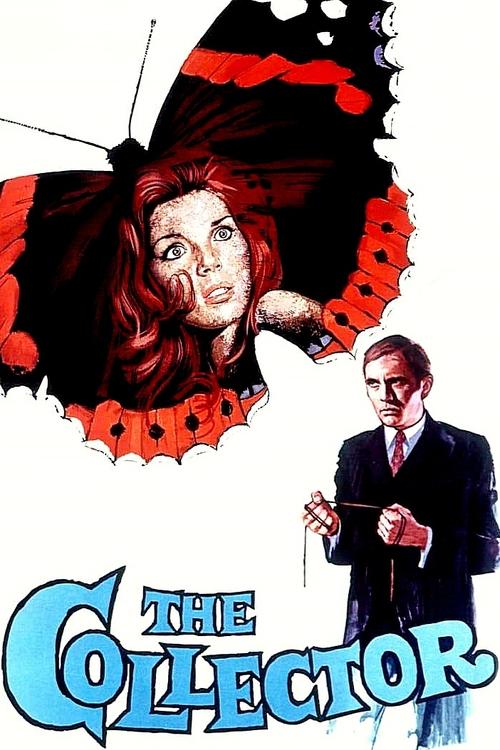
Wyler emigrated to the United States in 1921 where he worked first for Universal Studios in New York before moving to Los Angeles. By 1925, he was the youngest director at Universal, and in 1929 he directed Hell's Heroes, Universal's first sound production filmed entirely on location. Wyler went on to win the Academy Award for Best Director three times, for Mrs. Miniver (1942), The Best Years of Our Lives (1946), and Ben-Hur (1959), all of which also won for Best Picture. He was Oscar-nominated for Dodsworth (1936), Wuthering Heights (1939), The Letter (1940), The Little Foxes (1941), The Heiress (1949), Detective Story (1952), Roman Holiday (1953), Friendly Persuasion (1956), and The Collector (1965).
Film historian Ian Freer calls Wyler a "bona fide perfectionist", whose penchant for retakes and an attempt to hone every last nuance "became the stuff of legend." His ability to direct a string of classic literary adaptations into huge box-office and critical successes made him one of "Hollywood's most bankable moviemakers" from the 1930s to the 1960s. Through his talent for staging, editing, and camera movement, he turned dynamic theatrical spaces into cinematic ones. Wyler is also known for his work as an actors' director, often propelling them to stardom.
Contents
Early life
Wyler was born to a Jewish family in Mulhouse, Alsace-Lorraine (then part of the German Empire, now France). His Swiss-born father Leopold started as a traveling salesman but later became a thriving haberdasher in Mulhouse. His mother, Melanie (née Auerbach; died February 13, 1955, Los Angeles, aged 77), was German-born, and a cousin of Carl Laemmle, founder of Universal Pictures. During Wyler's childhood, he attended a number of schools and developed a reputation as "something of a hellraiser", being expelled more than once for misbehavior. His mother often took him and his older brother Robert to concerts, opera, and the theatre, as well as the early cinema. Sometimes at home his family and their friends would stage amateur theatricals for personal enjoyment.
Wyler was supposed to inherit the family haberdashery business in Mulhouse. After World War I and the ceding of Alsace-Lorraine to France, he spent a dismal year working in Paris at 100.000 Chemises selling shirts and ties. He was so poor that he often spent his time wandering around the Pigalle district. After realizing that Willy was not interested in the haberdashery business, his mother, Melanie, contacted her distant cousin, Carl Laemmle, who owned Universal Studios, about opportunities for him.
Laemmle was in the habit of coming to Europe each year, searching for promising young men who would work in the United States. In 1921, Wyler, while traveling as a Swiss citizen (his father's status automatically conferred Swiss citizenship on his sons), met Laemmle who hired him to work at Universal Studios in New York. As Wyler said: "America seemed as far away as the moon." Booked onto a ship to New York with Laemmle for his return voyage, Wyler met a young Czech man, Paul Kohner (later the famous independent agent), aboard the same ship. Their enjoyment of the first class trip was short-lived, however, as they found they had to repay the cost of the passage out of their $25 weekly income as messengers to Universal Pictures. After working in New York for several years, and even serving in the New York Army National Guard for a year, Wyler moved to Hollywood to become a director.
Career
1923–1929: Early work and silent films
Around 1923, Wyler arrived in Los Angeles and began work on the Universal Studios lot in the swing gang, cleaning the stages and moving the sets. His break came when he was hired as a second assistant editor. But his work ethic was uneven, and he would often sneak off and play billiards in a pool hall across the street from the studio, or organize card games during working hours. After some ups and downs (including getting fired), Wyler put all his efforts into becoming a director. He started as a third assistant director and by 1925 he became the youngest director on the Universal lot directing the westerns that Universal was famed for turning out. Wyler was so engrossed in his work that he would dream about "different ways (for an actor) to get on a horse". In several of the one-reelers, he would join the posse in the inevitable chase of the 'bad man'.
He directed his first non-Western, the lost Anybody Here Seen Kelly?, in 1928. This was followed by his first part-talkie films, The Shakedown and The Love Trap. He proved himself an able craftsman. In 1928 he became a naturalized United States citizen. His first all-talking film, and Universal's first sound production to be filmed entirely on location, was Hell's Heroes, filmed in the Mojave Desert in 1929.
1930–1949: Career acclaim and stardom
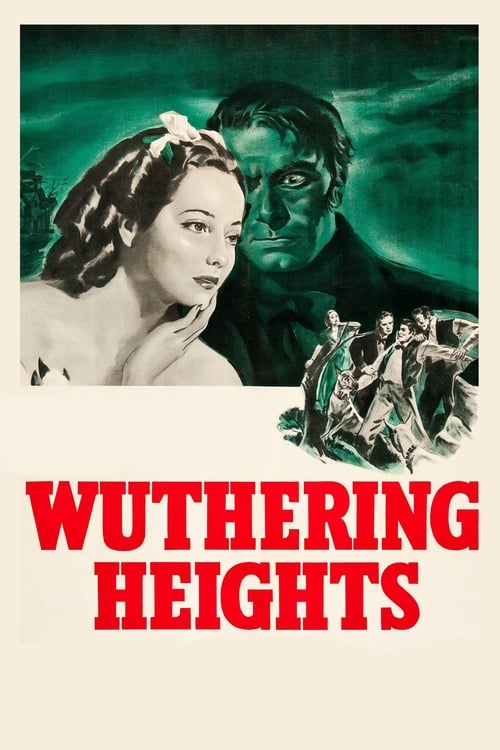
In the early 1930s Wyler directed a wide variety of films at Universal, ranging from high-profile dramas such as The Storm, A House Divided with Walter Huston, and Counsellor at Law with John Barrymore, to comedies like Her First Mate with Zasu Pitts and The Good Fairy with Margaret Sullavan. He became well known for his insistence on multiple retakes, resulting in often award-winning and critically acclaimed performances from his actors. After leaving Universal he began a long collaboration with Samuel Goldwyn for whom he directed such classics as Dodsworth (1936) where he earned his first nomination for the Academy Award for Best Director. The film starred Walter Huston, Ruth Chatterton and Mary Astor, "sparking a 20-year run of almost unbroken greatness." He also directed These Three (1936) with Miriam Hopkins and Merle Oberon, Dead End (1937) with Humphrey Bogart, Wuthering Heights (1939) with Laurence Olivier and Merle Oberon, The Westerner (1940) with Gary Cooper and Walter Brennan, The Little Foxes (1941) with Bette Davis, and The Best Years of Our Lives (1946) with Myrna Loy and Fredric March.
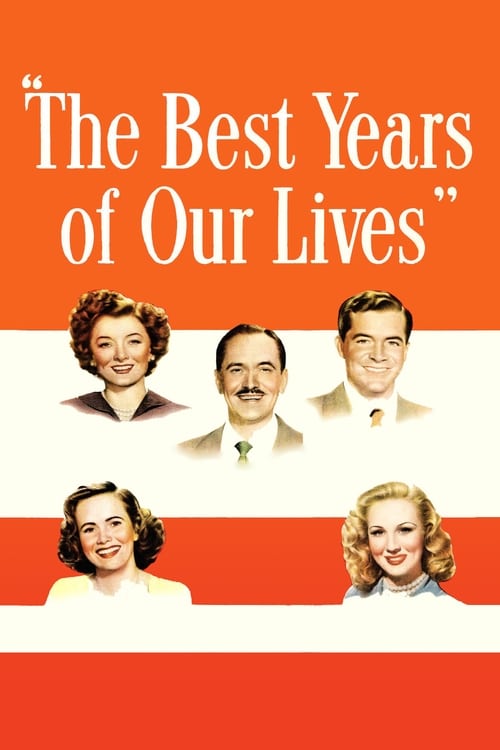
Wyler's visual style pioneered long, uncut takes in what has come to be called deep-focus cinematography - the use of lenses which can take in the entire depth of a room, keeping everything in focus, i.e. depth of field, and thus can contain dramatic changes in lighting and characters' movements in the same shot. In this, he collaborated with the pathbreaking young cinematographer of 1940's Citizen Kane, Gregg Toland. Gregg Toland shot three of the director's films: Wuthering Heights (1939), where Toland's use of low angles, dark shadows and diffusion won him the Oscar for best cinematography; next in Lillian Hellman's adaptation of her searing stage play, The Little Foxes, into Wyler's 1941 film, which had Wyler and Toland working closely together to bring the hard-edged deep focus from Citizen Kane to bear on another tale of soul-destroying family wealth - including inventing a totally white make-up scheme for its star, Bette Davis, conveying her soullessness. Third, is Toland's work in one of the cinematographer's last films The Best Years of Our Lives (1946). This story of three American servicemen struggling to adjust to civilian life after fighting in World War 2 hit a chord with postwar audiences. Memorable examples of deep focus here include the complex scene in which the three men wind up at the same bar, unable to stay at home, and, in its powerful closing shot, a crowded family wedding disperses, leaving only two young lovers staring at one another across the expanse of an empty living room, as stunned in place, seemingly, as the camera. All three films were decorated with multiple Oscars (see the following section).
1950–1959: Established director
In 1951, Wyler produced and directed Kirk Douglas and Eleanor Parker in Detective Story, portraying a day in the lives of the various people in a detective squad. Lee Grant and Joseph Wiseman made their screen debuts in the film, which was nominated for four Academy Awards, including one for Grant. Critic Bosley Crowther lauded the film, describing it as "a brisk, absorbing film by producer-director William Wyler, with the help of a fine, responsive cast."
Carrie was released in 1952 starring Jennifer Jones in the title role and Laurence Olivier as Hurstwood. Eddie Albert played Charles Drouet. Carrie received two Academy Award nominations: Costume Design (Edith Head), and Best Art Direction (Hal Pereira, Roland Anderson, Emile Kuri). Wyler was reluctant to cast Jennifer Jones, and the filming was subsequently plagued by a variety of troubles. Jones had not revealed that she was pregnant; Wyler was mourning the death of his year-old son; Olivier had a painful leg ailment, and he developed a dislike for Jones. Hollywood was reeling under the effects of McCarthyism, and the studio was afraid to distribute a film that could be attacked as immoral. Ultimately, the ending was changed and the film was cut to make it more positive in tone.
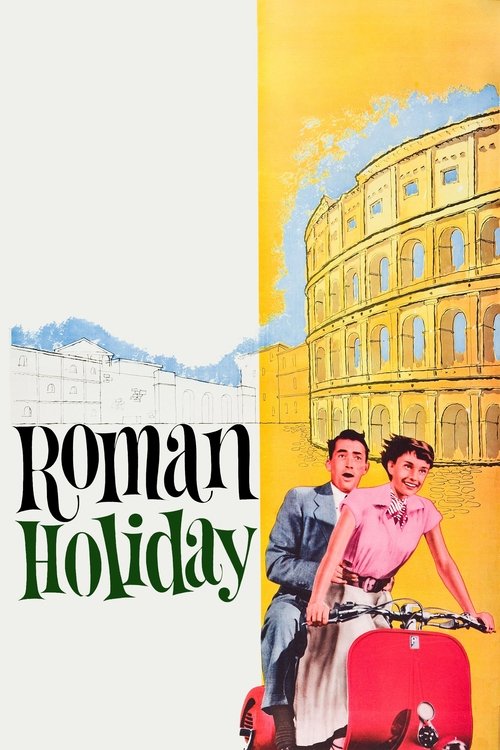
During the immediate postwar period, Wyler directed a handful of critically acclaimed and influential films. Roman Holiday (1953) introduced Audrey Hepburn to U.S. audiences in her first starring role, winning her an Academy Award for Best Actress. Wyler said of Hepburn years later, when describing truly great actresses, "In that league there's only ever been Garbo, and the other Hepburn, and maybe Bergman. It's a rare quality, but boy, do you know when you've found it." The film was an instant hit, also winning for Best Costume Design (Edith Head), and Best Writing (Dalton Trumbo). Hepburn would eventually do three movies with Wyler, who her son said was one of the most important directors in her career.
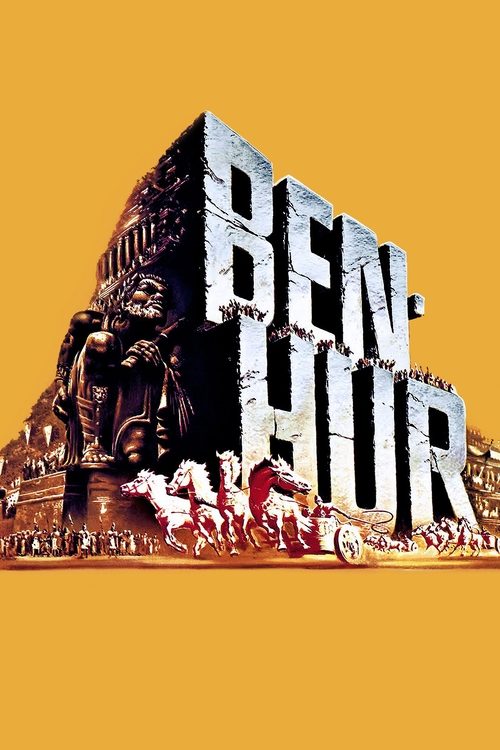
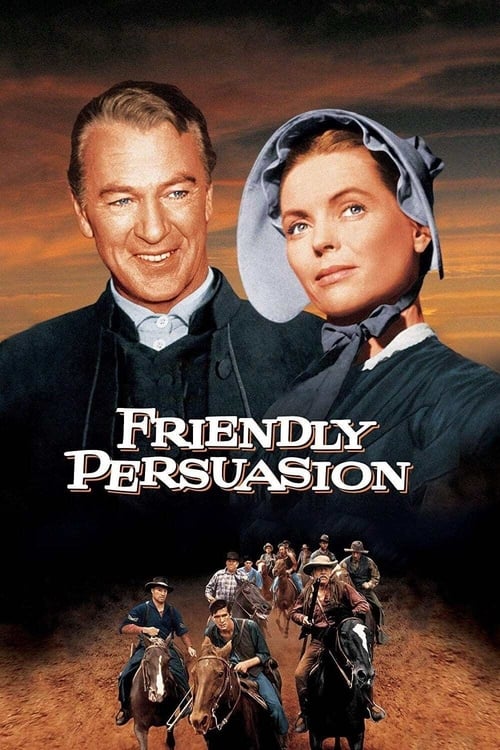
Friendly Persuasion (1956) was awarded the Palme d'Or (Golden Palm) at the Cannes Film Festival. And in 1959, Wyler directed Ben-Hur, which won 11 Oscars, a feat unequaled until Titanic in 1997 and The Lord of the Rings: The Return of the King in 2003. He had also assisted in the production of the 1925 version.
Wyler and its star, Charlton Heston, both knew what the film meant for MGM, which had massive investments in its outcome, with the film's budget having gone from $7 million to $15 million, and the fact that MGM was already in dire financial straits. They were aware that if it failed at the box office, MGM might go bankrupt.
1960–1970: Later work and final films
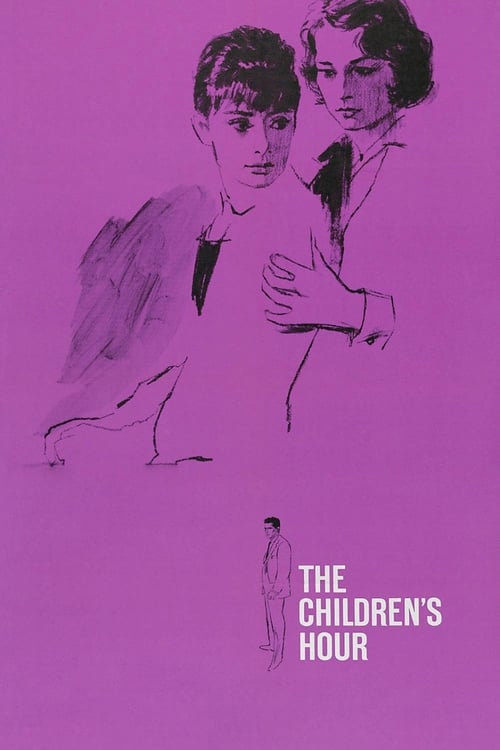
In 1961, he became a director for 20th Century Fox and also cast James Garner in The Children's Hour with Audrey Hepburn and Shirley MacLaine. Garner had beaten Warner Bros. in a lawsuit, enabling him to leave the television series Maverick, and had been briefly graylisted as a result but Wyler broke the graylist by casting him; the following year, Garner played a leading role in four major motion pictures.
In 1968, he directed Barbra Streisand in her debut film, Funny Girl, costarring Omar Sharif, which became a huge financial success. It was nominated for eight Academy Awards, and like Audrey Hepburn in her first starring role, Streisand won as Best Actress, becoming the thirteenth actor to win an Oscar under his direction.
Streisand had already starred in the Broadway musical of Funny Girl, with seven hundred performances. And although she knew the part well, Wyler still had to mold her stage role for the screen. She naturally wanted to be involved in the film's production, often asking Wyler questions, but they got along well. "Things were ironed out when she discovered some of us knew what we were doing," kidded Wyler.
What originally attracted him to direct Streisand was similar to what attracted him to Audrey Hepburn, who had also been new to film audiences. He met with Streisand during her musical run and became excited at the prospect of guiding another new star into an award-winning performance. He sensed and admired that Streisand had the same kind of dedication to being an actress as did Bette Davis, early in her career. "It just needed to be controlled and toned down for the movie camera." Wyler said afterwards, "I'm terribly fond of her. She was very professional, very good, a hard worker, too hard at times. She would work day and night if you would let her. She is absolutely tireless".
Wyler was hired to direct Patton (1970), but quit before the beginning of production in 1969.
The last film Wyler directed was The Liberation of L.B. Jones, released in 1970.
Style and technique
Visual style
Wyler had worked with cinematographer Gregg Toland for six of his films, mostly in the 1930s. Toland used deep focus photographic technique for most of them, whereby he could keep all objects on the screen, whether foreground or background, in sharp focus at the same time. The technique gives the illusion of depth and therefore makes the scene more true to life.
A perfectionist, Wyler earned the nickname "40-take Wyler". On the set of Jezebel, Wyler forced Henry Fonda through 40 takes of one particular scene, his only guidance being "Again!" after each take. When Fonda asked for more direction, Wyler responded, "It stinks." Similarly, when Charlton Heston quizzed the director about the supposed shortcomings of his performance in Ben-Hur, Wyler simply told Heston "Be better!" However, Heston notes that by the time a scene is done, regardless of how hard it was to do, it always came off well:
The only answer I have is that his taste is impeccable and every actor knows it. Your faith in his taste and what it will do for your performance is what makes casting a Wyler picture a cinch...doing a film for Wyler is like getting the works in a Turkish bath. You darn near drown, but you come out smelling like a rose.
Actors' director
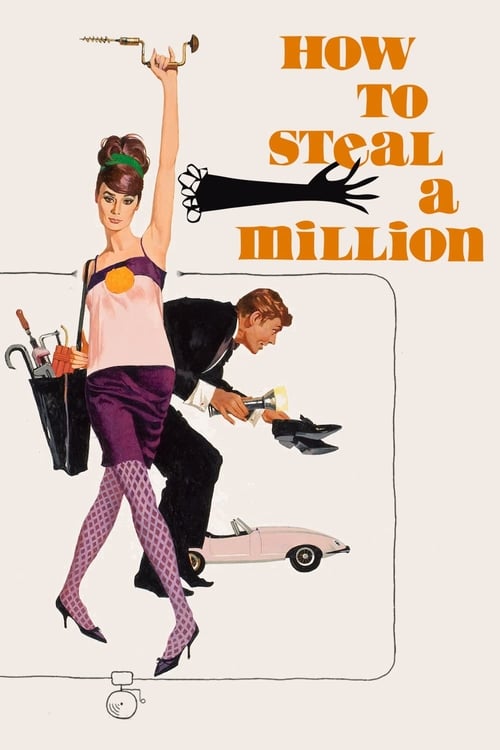
He helped propel a number of actors to stardom, including finding and directing Audrey Hepburn in her debut starring role, Roman Holiday (1953), and directing Barbra Streisand in her debut film, Funny Girl (1968), with both actresses winning Academy Awards. Olivia de Havilland and Bette Davis both won their second Oscars in Wyler films, de Havilland for The Heiress (1949) and Davis for Jezebel (1938). Davis said Wyler made her a "far, far better actress" than she had ever been, while Laurence Olivier, who received his first Oscar nomination for Wyler's Wuthering Heights (1939), credited Wyler with teaching him how to act for the screen. Wyler's three Best Picture-winning films each featured a Best Actress or Actor Oscar winner – Greer Garson in Mrs Miniver, Fredric March in The Best Years of Our Lives, and Charlton Heston in Ben-Hur. Other popular Wyler films include: The Westerner (1940) with Gary Cooper, The Letter (1940) again with Davis, Detective Story (1951) with Kirk Douglas, Friendly Persuasion (1956) with Cooper and Dorothy McGuire, The Big Country (1958) with Gregory Peck and Heston, The Children's Hour (1961) with Hepburn, Shirley MacLaine and James Garner, and How to Steal a Million (1966) with Hepburn and Peter O'Toole.
Personal life
Wyler was briefly married to actress Margaret Sullavan (from November 25, 1934 – March 13, 1936) and married actress Margaret "Talli" Tallichet on October 23, 1938. The couple remained together until his death. They had five children: Catherine, Judith, William Jr., Melanie and David. Catherine said during an interview that her mother played an important part in his career, often being his "gatekeeper" and his reader of scripts presented to him.
Wyler was a Freemason.
He fluently spoke German, Alsatian, French and English.
Death
On July 24, 1981, Wyler gave an interview with his daughter, Catherine, for Directed by William Wyler, a PBS documentary about his life and career. Three days later, he died of a heart attack. He is interred at Forest Lawn Memorial-Park in Glendale, California.
Legacy
Fourteen actors won Oscars under Wyler's direction, including Bette Davis in Jezebel (1938) and her nomination for The Letter (1940). Davis summed up their work together: "It was he who helped me to realize my full potential as an actress. I met my match in this exceptionally creative and talented director."
Other Oscar winners were Olivia de Havilland in The Heiress (1949); Audrey Hepburn in Roman Holiday (1953); Charlton Heston in Ben-Hur (1959); and Barbra Streisand in her debut film, Funny Girl (1968).
Wyler's films garnered more awards for participating artists and actors than any other director in the history of Hollywood. He received 12 Oscar nominations for Best Director, while dozens of his collaborators and actors won Oscars or were nominated. In 1965, Wyler won the Irving G. Thalberg Memorial Award for career achievement. Eleven years later, he received the American Film Institute Life Achievement Award. In addition to his Best Picture and Best Director Oscar wins, 13 of Wyler's films earned Best Picture nominations. Other late Wyler films include The Children's Hour (1961), which was nominated for five Academy Awards. Later films included The Collector (1963), Funny Girl (1968), and his final film, The Liberation of L.B. Jones (1970).
Many of Wyler's home movies are held by the Academy Film Archive; the archive preserved a number of them in 2017.
Awards and honors
Wyler is the most decorated film director in Academy Awards history with twelve nominations, and holds the record for the longest streak with four consecutive Best Director nominations between 1939 to 1942. He won the Academy Award for Best Director on three occasions, for Mrs. Miniver (1942), The Best Years of Our Lives (1946), and Ben-Hur (1959). He is tied with Frank Capra and behind John Ford, who won four Oscars in this category. He is also the only director in Academy history to direct three Best Picture-winning films (the three for which he won Best Director), and shares with Steven Spielberg the record for directing the greatest number of Best Picture nominees (thirteen).
He has the distinction of having directed more actors to Oscar-nominated performances than any other director in history: thirty-six. Out of these nominees, fourteen went on to win Oscars, also a record. He received the fourth AFI Life Achievement Award in 1976. Among those who thanked him for directing her in her debut film was Barbra Streisand. For his contributions to the motion picture industry, on February 8, 1960, Wyler has a star on the Hollywood Walk of Fame at 1731 Vine Street. In 1961, Wyler was chosen as one of 50 outstanding Americans of meritorious performance in the fields of endeavor, to be honored as a Guest of Honor to the first annual Banquet of the Golden Plate in Monterey, California. The honor was awarded by vote of the National Panel of Distinguished Americans of the Academy of Achievement.