Career
Oates moved to Los Angeles, where in the 1950s, he began to establish himself in guest roles in weekly television Westerns, including Wagon Train, Tombstone Territory, Buckskin, Rawhide, Trackdown, Tate, The Rebel, Wanted Dead or Alive, The Virginian, Have Gun – Will Travel, Lawman, The Big Valley, Bat Masterson, and Gunsmoke.
In the episode "Subterranean City" (October 14, 1958) of the syndicated Rescue 8, Oates played a gang member, Pete, who is the nephew of series character Skip Johnson (Lang Jeffries). In the story line, rescuers Johnson and Wes Cameron (Jim Davis) search for a lost girl in the sewer tunnels and encounter three criminals hiding out underground. Pete soon breaks with his gang companions and joins the firemen Wes and Skip in locating the missing child.
In 1961, Oates guest-starred in the episode "Artie Moon" in NBC's The Lawless Years crime drama about the 1920s. In 1962, he appeared as Ves Painter in the short-lived ABC series Stoney Burke, co-starring Jack Lord, a program about rodeo contestants.
Oates also played in a number of guest roles on The Twilight Zone (in "The Purple Testament" and "The 7th Is Made Up of Phantoms" (1963), in which he costarred with Randy Boone and Ron Foster), The Outer Limits ("The Mutant" [1964]), Combat! ("The Pillbox" [1964]) and Lost in Space ("Welcome Stranger" [1965]). During the 1960s and 1970s, he guest-starred on such shows as Twelve O'Clock High ("The Hotshot" [1965]), Lancer, and The Virginian. While making a guest appearance on a segment of the Western television series Dundee and the Culhane, Oates managed to steal the show with his off-camera antics and bloopers that had everyone on the set rolling. After a long day of filming, he headed over and set his footprints in concrete along with all the other stars who appeared at Apacheland Movie Ranch.
"There were 40 [Western] series, and I went from one to the other. I started out playing the third bad guy on a horse and worked my way up to the number-one bad guy," Oates once quipped. Oates did play the good guy once as Deke Bassop in the title role of the episode “The Bassops” on Gunsmoke in 1964.
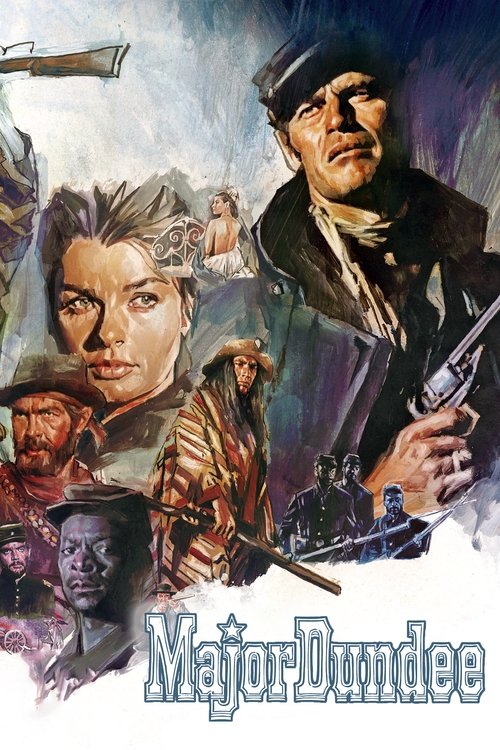
Oates first met Peckinpah when he played a variety of guest roles in The Rifleman (1958–1963), a popular television series co-created and sometimes directed by Peckinpah. He also played a supporting role in Peckinpah's short-lived series The Westerner in 1960. The collaboration continued as he worked in Peckinpah's early films Ride the High Country (1962) and Major Dundee (1965) and resulted in two of his most famous film roles.
In the 1969 Western classic The Wild Bunch, he portrayed Lyle Gorch, a long-time outlaw who chooses to die with his friends during the film's violent conclusion. According to his wife at the time, Teddy, Oates had the choice of starring in Support Your Local Sheriff!, to be filmed in Los Angeles, or The Wild Bunch in Mexico. "He had done Return of the Seven in Mexico; he got hepatitis, plus dysentery, but off he went again with Sam [Peckinpah]. He loved going on location. He loved the adventure of it. He had great admiration for Sam."
In Bring Me the Head of Alfredo Garcia, the dark 1974 action/tragedy also filmed in Mexico, Oates played the lead role of Bennie, a hard-drinking, down-on-his-luck musician and bartender hoping to make a final score. The character was reportedly based on Peckinpah. For authenticity, Oates wore the director's sunglasses while filming scenes of the production.
Although the Peckinpah film roles are his best-known, his most critically acclaimed role is GTO in Monte Hellman's 1971 cult classic Two-Lane Blacktop. The film, although a failure at the box office, is studied in film schools as a treasure of the 1970s, in large part due to Oates' performance. Film critic Leonard Maltin remarked that Oates' performance as GTO was as good as any he had seen and should have won the Oscar.
Oates had a close relationship with Hellman, and worked with him on three other films: the Western film The Shooting (1966), co-starring a young Jack Nicholson, Cockfighter (1974), and China 9, Liberty 37 (1978), in which Peckinpah, who was also a friend of Hellman's, featured in a rare acting role. Oates' wife Teddy said, "Sam Peckinpah and Monte Hellman were the two directors with whom Warren would work anytime, anywhere."
In addition to Peckinpah and Hellman, Oates worked with several major directors of his era, including Leslie Stevens in the 1960 film Private Property, his first starring role; Norman Jewison in In the Heat of the Night (1967); Joseph L. Mankiewicz in There Was a Crooked Man... (1970); John Milius in Dillinger (1973); Terrence Malick in Badlands (1973); Philip Kaufman in The White Dawn (1974); William Friedkin in The Brink's Job (1978); and Steven Spielberg in 1941 (1979).
He appeared in the Sherman Brothers' musical version of Tom Sawyer (1973), as Muff Potter, the town drunk. He also starred in The Rise and Fall of Legs Diamond (1960), Return of the Seven (1966), The Split (1968), The Thief Who Came to Dinner (1973), Drum (1976), and played the title role in a 1971 crime drama, Chandler. Oates costarred three times with friend Peter Fonda in The Hired Hand (1971), Race with the Devil (1975), and 92 in the Shade (1975).
Oates was cast in Roger Donaldson's 1977 New Zealand film Sleeping Dogs together with New Zealand actor Sam Neill. A political thriller with action film elements, Sleeping Dogs follows the lead character "Smith" (Neill) as New Zealand plunges into a police state, as a fascist government institutes martial law after industrial disputes flare into violence. Smith gets caught between the special police and a growing resistance movement, and reluctantly becomes involved. Oates plays the role of Willoughby, commander of the American forces stationed in New Zealand and working with the New Zealand fascist government to find and subdue "rebels" (the resistance movement).
A year before his death, Oates costarred with Bill Murray in the 1981 military comedy Stripes. In the role of the drill sergeant, Sgt. Hulka, Oates played the straight man to Murray's comedic character. The film was a huge financial success, earning $85 million at the box office. In 1982, he costarred opposite Jack Nicholson in director Tony Richardson's The Border.
In 1981, Oates also costarred as a fanatical Southern preacher-turned-Confederate officer in The Blue and the Gray, a CBS TV miniseries that aired in November 1982. His last two films were not released until 1983: Blue Thunder and Tough Enough, both filmed in late 1981. Both films are dedicated to him, along with Monte Hellman's 1988 film Iguana, which ends with the titles "For Warren".