MGM
Irving Thalberg signed Beery to Metro-Goldwyn-Mayer (MGM) as a character actor. The association began well when Beery played the savage convict Butch, a role originally intended for Lon Chaney (who died that same year), in the highly successful 1930 prison film The Big House, directed by George W. Hill; Beery was nominated for the Academy Award for Best Actor.
Beery's second film for MGM was also a huge success: Billy the Kid (1930), an early widescreen picture in which he played Pat Garrett. He supported John Gilbert in Way for a Sailor (1930) and Grace Moore in A Lady's Morals (1930), portraying P. T. Barnum in the latter.
Beery was well known as a leading man and character actor. The picture that established him as one of cinema's foremost stars was Min and Bill (1930) opposite Marie Dressler and directed by George W. Hill, a sensational success.
Beery made a third film with Hill, The Secret Six (1931), a gangster movie with Jean Harlow and Clark Gable in key supporting roles. The picture was popular, but was surpassed at the box office by The Champ, which Beery made with Jackie Cooper for director King Vidor. The film, especially written for Beery, was another box-office sensation. Beery shared the Best Actor Oscar with Fredric March. Though March received one vote more than Beery, Academy rules at the time—since rescinded—defined results within one vote of each other as "ties." (An alternate account has MGM head Louis B. Mayer storming backstage at the Oscars and demanding that March and Beery share that year's Academy Award for Best Actor since the vote was so close.)
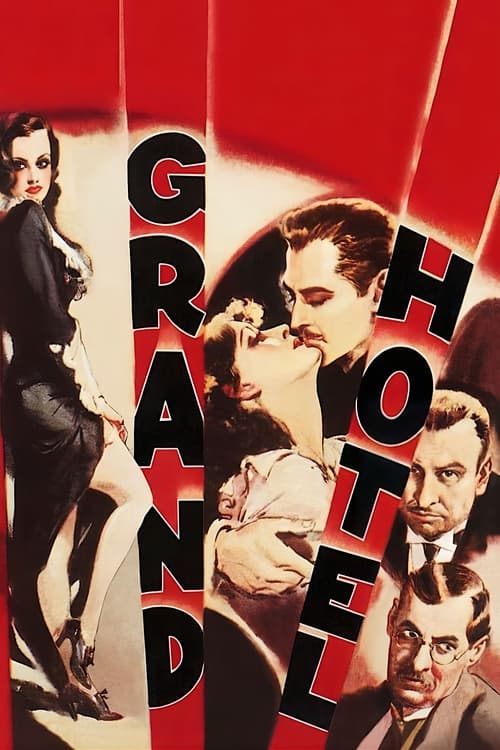
Beery's career went from strength to strength. Hell Divers (1932), a naval airplane epic also starring a young Clark Gable billed under Beery, was a big hit. So, too, was the all-star Grand Hotel (1932), in which Beery was billed fourth, under Greta Garbo, John Barrymore, and Joan Crawford, one of the very few times he would not be top billed for the rest of his career. In 1932, his contract with MGM stipulated that he be paid a dollar more than any other contract player at the studio, making him the world's highest-paid actor.
Beery was a German wrestler in Flesh (1932), a hit directed by John Ford, but Ford removed his directorial credit before the film opened, so the picture screened with no director listed despite being labeled "A John Ford Production" in the opening title card. Next Beery was in another all-star ensemble blockbuster, Dinner at Eight (1933), with Jean Harlow holding her own as Beery's comically bickering wife. This time, Beery was billed third, under Marie Dressler and John Barrymore.
Beery was lent to the new 20th Century Pictures for the boisterously fast-paced comedy/drama The Bowery (1933), also starring George Raft, Jackie Cooper, and Fay Wray, and featuring Pert Kelton, under the direction of Raoul Walsh. The picture was a smash hit.
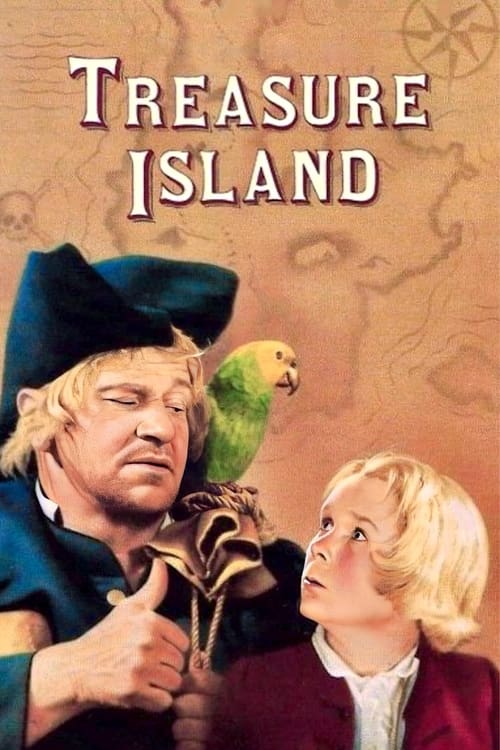
Back at MGM, he played the title role of Pancho Villa in Viva Villa! (1933) and was reunited with Dressler in Tugboat Annie (1933), a massive hit. He was Long John Silver in Treasure Island (1934), MGM's third-largest hit of the season, and remains currently viewed as featuring one of Beery's iconic performances.
Beery returned to 20th Century Productions for The Mighty Barnum (1934), in which he played P. T. Barnum again. Back at MGM, he was a kindly sergeant in West Point of the Air (1935) and was in an all-star spectacular, China Seas (1935), this time billed beneath Clark Gable.
O'Shaughnessy's Boy (1935) reunited Beery and Jackie Cooper. He had the lead as the drunken uncle in MGM's adaptation of Ah, Wilderness! (1936) and went back to 20th Century – now 20th Century Fox – for A Message to Garcia (1936) with Barbara Stanwyck.
At MGM, he was in Old Hutch (1936) and The Good Old Soak (1937), then he was back at Fox for Slave Ship (1937), taking second billing under Warner Baxter, a rarity for Beery after Min and Bill catapulted his career into the stratosphere in 1931, during which he received top billing in all but six films (Min and Bill, Grand Hotel, Tugboat Annie, Dinner at Eight, China Seas with Gable and Harlow, and Slave Ship).
The status of Beery's films went into a decline. After an abrupt European vacation, Beery was in The Bad Man of Brimstone (1938) with Dennis O'Keefe (and Noah Beery Sr. in a cameo role as a bartender), Port of Seven Seas (1938) with Maureen O'Sullivan, Stablemates (1938) with Mickey Rooney, Stand Up and Fight (1939) with Robert Taylor, Sergeant Madden (1939) with Tom Brown, Thunder Afloat (1939) with Chester Morris, The Man from Dakota (1940) with Dolores del Río, and 20 Mule Team (1940) with Marjorie Rambeau, Anne Baxter, and Noah Beery Jr., enjoying top billing in all of them.
Wyoming (1940) teamed Beery with Marjorie Main. After The Bad Man (1941), which also stars Lionel Barrymore and future President of the United States Ronald Reagan, and was the remake of a Walter Huston picture, MGM reunited Beery and Main in Barnacle Bill (1941), The Bugle Sounds (1941), and Jackass Mail (1942).
Beery appeared in a war film, a Technicolor comedy titled Salute to the Marines (1943), then was back with Main in Rationing (1944). Barbary Coast Gent (1944), an extremely broad Western comedy in which Beery played a bombastic con man, teamed him with Binnie Barnes. He did another war film, This Man's Navy (1945), then made another Western with Main, Bad Bascomb (1946), a huge hit, helped primarily by Margaret O'Brien's casting.
The Mighty McGurk (1947) put Beery with another child star of the studio, Dean Stockwell. Alias a Gentleman (1947) was the first of Beery's films to lose money during the sound era. Beery received top billing for the hit A Date with Judy (1949), a popular musical featuring Elizabeth Taylor. Beery's last film, again featuring Main, Big Jack (1949), also lost money according to Mannix's reckoning. Beery died of a heart attack three days after the picture's release.