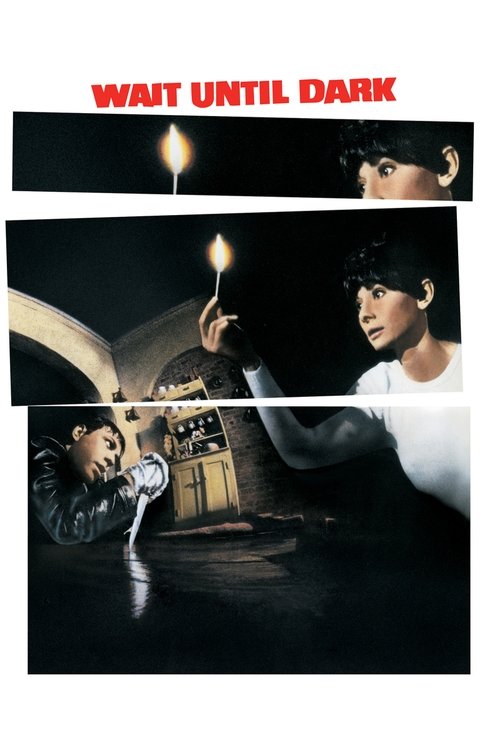
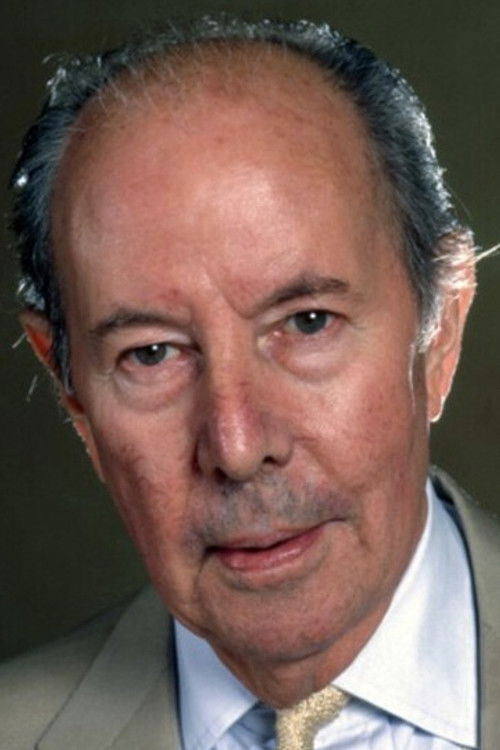
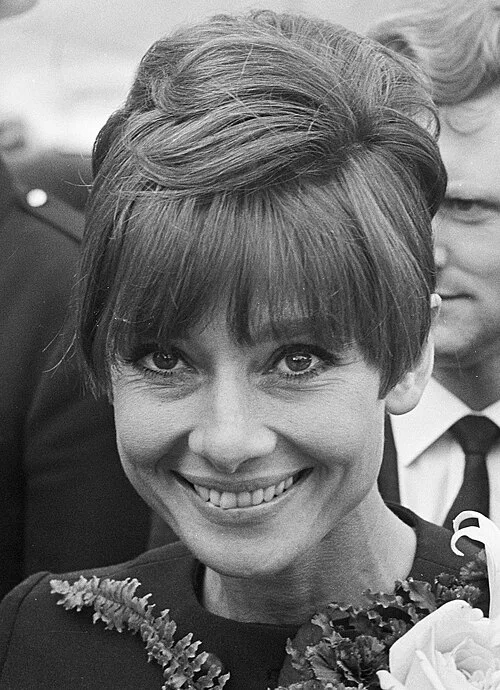


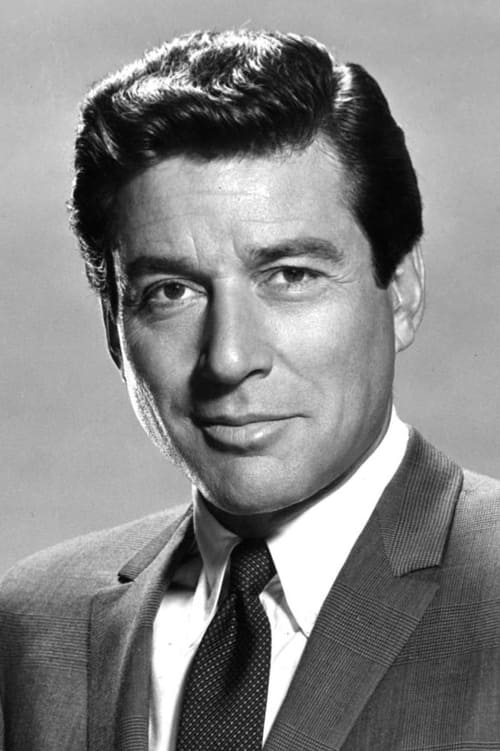
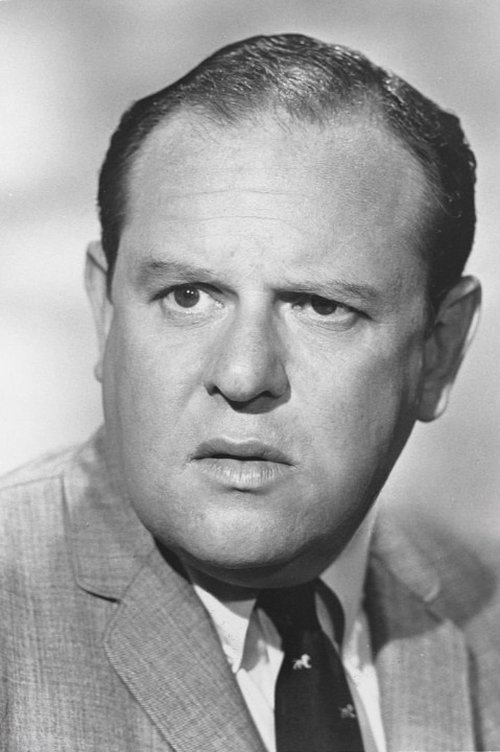
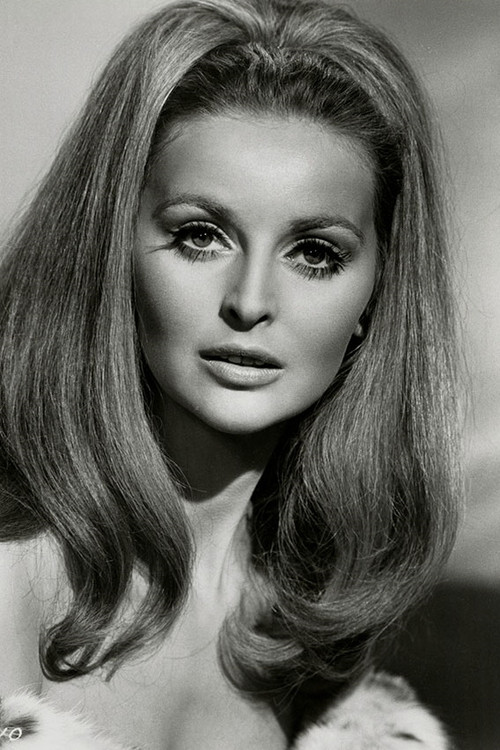
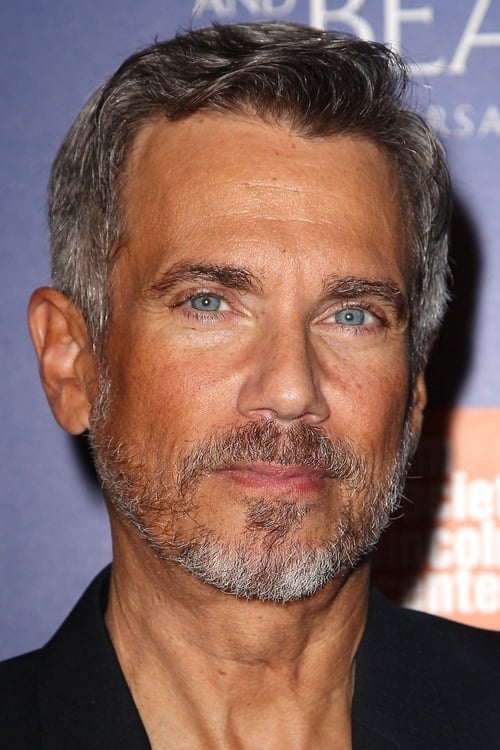
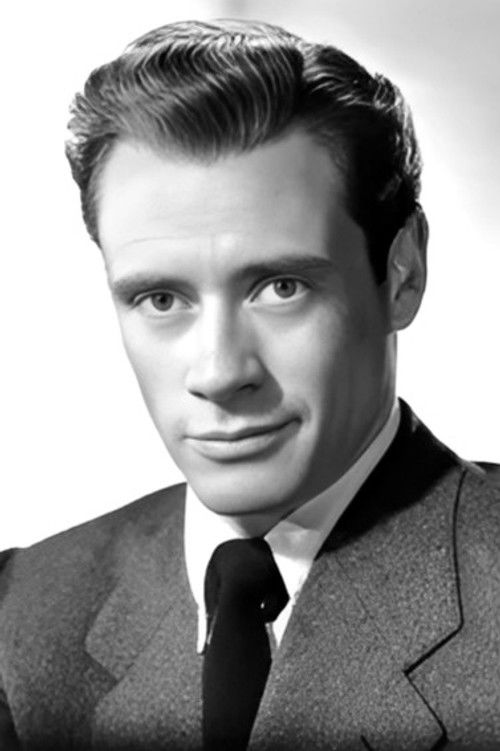


Wait Until Dark is a 1967 American psychological thriller film directed by Terence Young, adapted by Robert and Jane-Howard Carrington from Frederick Knott's 1966 play. It stars Audrey Hepburn, Alan Arkin, Richard Crenna, Jack Weston and Efrem Zimbalist Jr.. The film is about a blind woman (Hepburn) who is terrorized in her apartment by a trio of thugs searching for a lost drug shipment. Produced by Mel Ferrer, Hepburn's then-husband, Wait Until Dark was released by Warner Bros.-Seven Arts on October 26, 1967.
Hepburn earned nominations for the Academy Award for Best Actress and the Golden Globe Award for Best Actress in a Motion Picture – Drama for her performance, while Zimbalist was nominated for the Golden Globe Award for Best Supporting Actor – Motion Picture. The film is ranked number 55 on the American Film Institute's 2001 "100 Years...100 Thrills" list, and its climax is ranked tenth on Bravo's 100 Scariest Movie Moments. Wait Until Dark also marked Audrey Hepburn's final film before her semi-retirement in 1968.
Contents
Plot
An attractive drug mule, Lisa, flies from Montreal to New York City, smuggling heroin inside a stuffed doll. Disembarking, she sees a threatening man staring at her; using a ruse, she gives the doll to a fellow passenger, professional photographer Sam Hendrix, for temporary safekeeping. She is roughly escorted off by the scowling man.
Con artists Mike Talman and Carlino arrive at a Greenwich Village basement apartment they believe to be Lisa's, but instead is the Hendrixes'. Finding nothing, the criminals are confronted by the man from the airport, calling himself "Harry Roat Jr." He says Lisa double-crossed him, and pays them to help find the doll. Talman and Carlino served jail time for a previous scam that Lisa had been a partner in, while she went free. Talman is curious about a locked closet in the apartment, and when Roat becomes evasive, he and Carlino manage to force him to hand over the key. Inside is Lisa's corpse. Roat blackmails them into covering up the murder, pointing out that the apartment is now covered in their fingerprints and they're known associates of Lisa. Suddenly, Sam's wife, Susy, arrives. The men hide, and realize she is blind. Once Susy leaves, they dispose of the body, furnished by Roat with a fake ID. The three collaborate on a plan to persuade Susy to help them search the apartment.
The next day, Susy learns that the police have found a woman's body nearby. Her husband, Sam, had received a call from Lisa, but couldn't find her doll. Sam is sent on a wild goose chase to Asbury Park – Roat has phoned him posing as an agent for a model, Lejiana, whom Sam was to photograph. Mike arrives and tells Susy that he is an old friend of Sam's from the Marines. Once he leaves, Roat, disguised as an old man, barges in, perturbs Susy, and steals the Hendrixes' wedding photos. Mike returns and calls the police, and Carlino arrives impersonating a detective. He pointedly asks about Sam's whereabouts the night before. Roat returns, posing as the old man's son, explaining that his father broke in to find proof Sam was involved with his daughter-in-law, Lejiana, who hasn't been seen since last night. He describes the doll, saying it was Lejiana's, and she may have left it at the apartment. Susy concludes the murdered woman was the fictional Lejiana Roat. Although she can't believe her husband could be responsible, with Mike's coaxing she becomes desperate to find the doll to eliminate any connection between Sam and the killing.
Unaware of the unfolding situation, Gloria, a young girl who lives in the building and often helps Susy with errands, sneaks in to return the doll she had harmlessly "borrowed". Susy asks her to look outside, to confirm Mike's claim that a police car is watching the building. Upon hearing that there is only a van outside with a man lingering nearby, Susy enlists Gloria to stake out a phone booth across the street, which leads to the discovery that all the phone calls Susy has received are being made from there. Terrified, Susy realizes the men are all criminals, and hides the doll. She diverts them to Sam's studio; Carlino stays behind on guard. Susy sends Gloria off to intercept Sam on his way back from. Confidently, she dials the police, Only to learn the phone line has been cut. Almost succumbing to despair, Susy knocks over a lamp. This gives her the idea to shatter every lightbulb in the apartment but for the darkroom safelight.
Production
Filming
Principal photography occurred from January 15 to April 7, 1967, in New York City, Montreal, and at the Warner Bros. Studios in Burbank, California. The exterior of Susy Hendrix (Audrey Hepburn)'s apartment building was filmed at 4 St. Luke's Place in Greenwich Village, Manhattan. Hepburn was 37 during production and her wardrobe was notably not designed by Givenchy. In an interview with Barbara Walters in 1989, when asking Hepburn the reason why she decided to step away from acting after Wait Until Dark, Hepburn replied, "Very simple reason, because my son had then reached the age of six. Sean had to go to school, could no longer travel with me, and in fact I made Wait Until Dark when he had just started school and he was not with me, 'cause that picture's made in Hollywood. And I was just miserable. You know, I'd call home and he'd have a fever or something and he was so far away, and I missed him terribly. And I [had] longed for this child. It seemed so ridiculous . I kept saying to myself, 'yeah, I wanted this child so badly and now I'm separated from him,' and it just made me too unhappy so I more or less quit movies then to stay home [with him]." Walters also notes that despite the film going on to become a "huge hit, surprisingly it marked the end of her full time acting career. Audrey virtually disappeared, and became somewhat of a mystery."
Release
To immerse viewers in the suspense of the climactic scene, movie theater owners were encouraged to dim their lights, then turn them off, one by one to the legal limit.
Reception
Box office
The film was one of the more popular of its year, earning North American rentals of $7.35 million (equivalent to $71 million in 2025). In Spain, translated as Sola en la oscuridad (Alone in the Dark), it was released in March 1968 and sold 1.9 million tickets. It was re-released in August 1980 with 203,036 tickets sold.
Critical response
Bosley Crowther called it a "barefaced melodrama, without character revelation of any sort, outside of the demonstration of a person with the fortitude to overcome an infirmity;" he liked Hepburn's performance, saying "the sweetness with which Miss Hepburn plays the poignant role, the quickness with which she changes and the skill with which she manifests terror attract sympathy and anxiety to her and give her genuine solidity in the final scenes."
Time magazine said the film had a "better scenario, set and cast" than the play's Broadway production that preceded it, and while "the story is as full of holes as a kitchen colander," "Hepburn's honest, posture-free performance helps to suspend the audience's disbelief" and she is "immensely aided by the heavies: Jack Weston, Richard Crenna, and Alan Arkin....With virtuosity, Hepburn and Arkin collaborate to revive an old theme—The-Helpless-Girl-Against-the-Odds—that has been out of fashion since Dorothy McGuire and Barbara Stanwyck screamed for help in The Spiral Staircase and Sorry, Wrong Number."
Roger Ebert gave the movie three and a half stars upon release, writing "Miss Hepburn is perhaps too simple and trusting, and Alan Arkin (as a sadistic killer) is not particularly convincing in an exaggerated performance. But there are some nice, juicy passages of terror (including that famous moment when every adolescent girl in the theater screams), and after a slow start the plot does seduce you."
On the review aggregator website Rotten Tomatoes, the film holds an approval rating of 96% based on 25 reviews, with an average rating of 8.1/10. The website's critics consensus reads, "Nail-bitingly tense and brilliantly acted, Wait Until Dark is a compact thriller that makes the most of its fiendishly clever premise." Metacritic, which uses a weighted average, assigned the film a score of 81 out of 100, based on 9 critics, indicating "universal acclaim". The film was ranked tenth on Bravo's 100 Scariest Movie Moments for its riveting climax.
Despite the film's acclaim and receiving an Oscar nomination, Hepburn stepped away from film acting after Wait Until Dark's release and would not appear on film again until Robin and Marian in 1976.
Accolades
American Film Institute recognition:
2001 – AFI's 100 Years...100 Thrills – No. 55
Soundtrack
The score for the film was composed by Henry Mancini, who had scored other Audrey Hepburn films such as Breakfast at Tiffany's and Two for the Road. The Wait Until Dark score is notable for Mancini's use of two pianos, tuned a quarter-tone apart, with the out of tune instrument's notes providing discordance that heightens the eerie effect.