
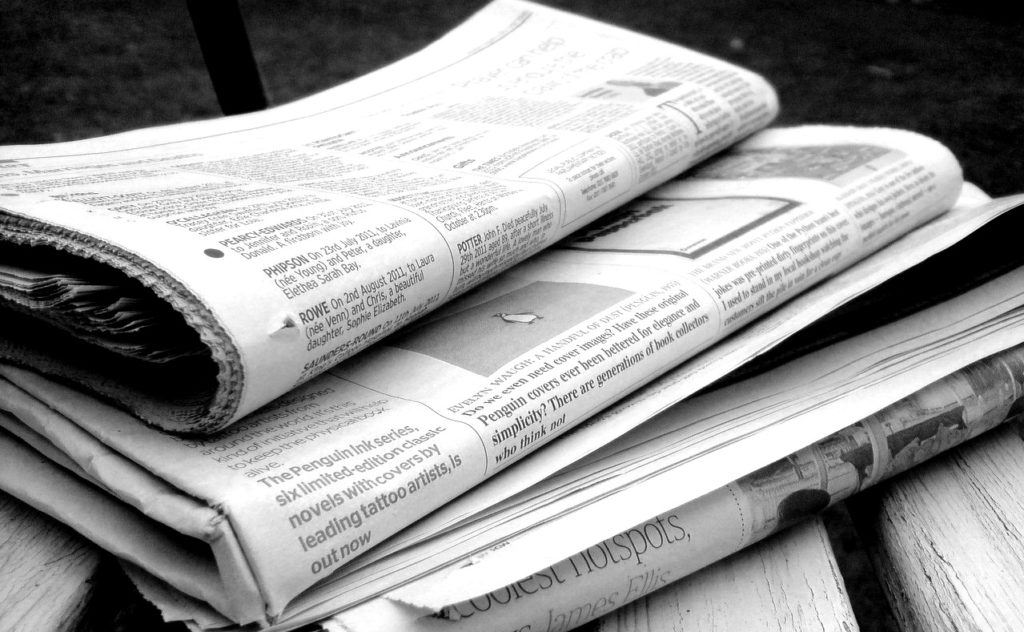
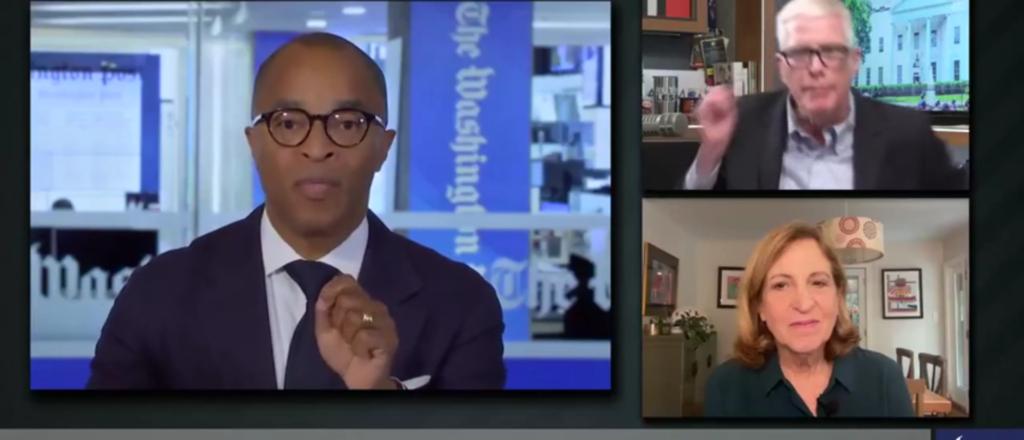
The Washington Post is an American daily newspaper published in Washington, D.C. It is the most widely circulated newspaper in the Washington metropolitan area and is considered a newspaper of record in the United States. In 2023, the Post had 130,000 print subscribers and 2.5 million digital subscribers, both ranking third among American newspapers after The New York Times and The Wall Street Journal. In 2025, the number of print subscribers sank below 100,000 for the first time in 55 years.
Locally known as The Post and informally as WaPo or WP, the paper was founded in 1877. In its early years, it went through several owners and struggled financially and editorially. In 1933, financier Eugene Meyer purchased it out of bankruptcy and revived its health and reputation; his successors Katharine and Phil Graham, Meyer's daughter and son-in-law, bought out several rival publications and continued this work. The Post's 1971 printing of the Pentagon Papers helped spur opposition to the Vietnam War. Reporters Bob Woodward and Carl Bernstein led the investigation into the break-in at the Democratic National Committee, which developed into the Watergate scandal and the 1974 resignation of President Richard Nixon. In October 2013, the Graham family sold the newspaper to Nash Holdings, a holding company owned by Jeff Bezos, for US$250 million.
The newspaper has won 76 Pulitzer Prizes, second only to The New York Times. Washington Post journalists have received 18 Nieman Fellowships and 368 White House News Photographers Association awards. Well-known for its political reporting in the U.S., it is one of the few American newspapers that still operate foreign bureaus, with international breaking news hubs in London and Seoul.
Contents
Bureaus and circulation
As of 2021, the newspaper had 21 foreign bureaus: Baghdad, Beijing, Beirut, Berlin, Brussels, Cairo, Dakar, Hong Kong, Islamabad, Istanbul, Jerusalem, London, Mexico City, Moscow, Nairobi, New Delhi, Rio de Janeiro, Rome, Seoul, Tokyo, and Toronto. The newspaper has local bureaus in Maryland (Annapolis, Montgomery County, Prince George's County, and Southern Maryland) and Virginia (Alexandria, Fairfax, Loudoun County, Richmond, and Prince William County). In 2009, the newspaper closed three U.S. regional bureaus—in Chicago, Los Angeles, and New York City—as part of an increased focus on Washington, D.C.–based political stories and local news.
The Washington Post does not print an edition for distribution outside the East Coast. In 2009, the newspaper ceased publication of its National Weekly Edition due to shrinking circulation. The majority of its newsprint readership is in Washington, D.C., and its suburbs in Maryland and Northern Virginia. As of March 2023, the Post's average printed weekday circulation was 139,232, making it the third-largest newspaper in the country by circulation.
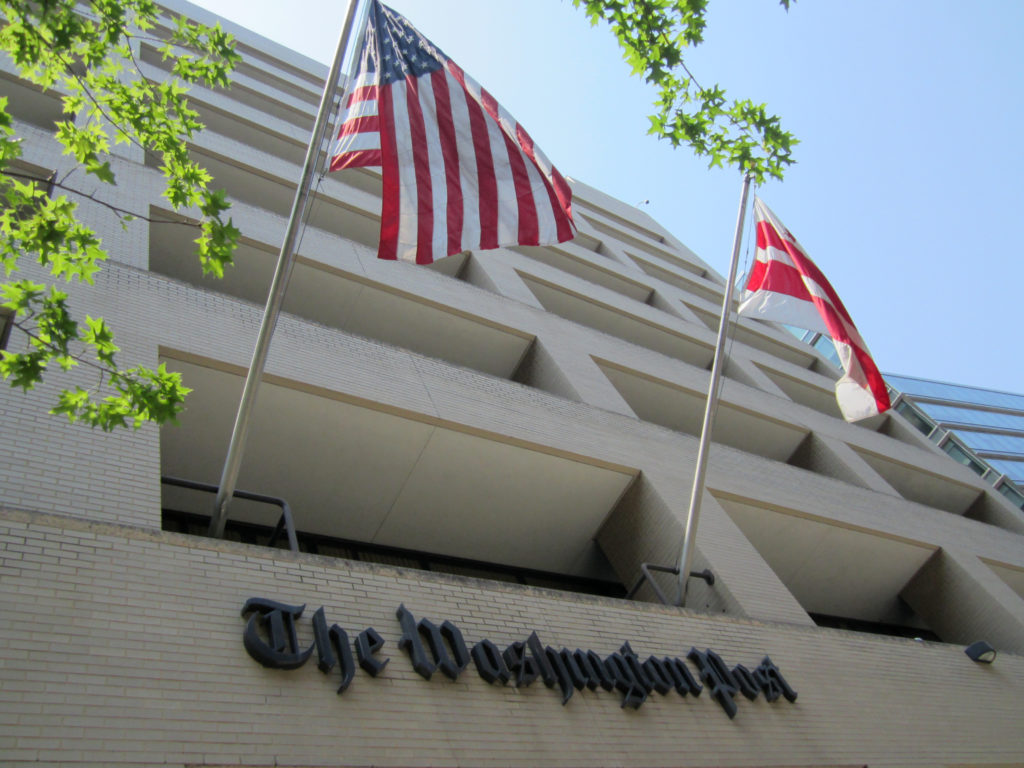
For many decades, the Post had its main office at 1150 15th Street NW. This real estate remained with Graham Holdings when the newspaper was sold to Jeff Bezos' Nash Holdings in 2013. Graham Holdings sold 1150 15th Street, along with 1515 L Street, 1523 L Street, and land beneath 1100 15th Street, for $159 million in November 2013. The Post continued to lease space at 1150 L Street NW. In May 2014, The Post leased the west tower of One Franklin Square, a high-rise building at 1301 K Street NW in Washington, D.C. The Post has its own ZIP Code, 20071.
History
19th century
The newspaper was founded in 1877 by Stilson Hutchins (1838–1912); in 1880, it added a Sunday edition, becoming the city's first newspaper to publish seven days a week.
In April 1878, about four months into publication, The Washington Post purchased The Washington Union, a competing newspaper which was founded by John Lynch in late 1877. The Union had only been in operation about six months at the time of the acquisition. The combined newspaper was published from the Globe Building as The Washington Post and Union beginning on April 15, 1878, with a circulation of 13,000. The Post and Union name was used about two weeks until April 29, 1878, returning to the original masthead the following day.
In 1889, Hutchins sold the newspaper to Frank Hatton, a former Postmaster General, and Beriah Wilkins, a former Democratic congressman from Ohio. To promote the newspaper, the new owners requested the leader of the United States Marine Band, John Philip Sousa, to compose a march for the newspaper's essay contest awards ceremony. Sousa composed "The Washington Post". It became the standard music to accompany the two-step, a late 19th-century dance craze, and remains one of Sousa's best-known works. In 1893, the newspaper moved to a building at 14th and E streets NW, where it would stay until 1950. This building combined all functions of the newspaper into one headquarters – newsroom, advertising, typesetting, and printing – that ran 24 hours per day.
In 1898, during the Spanish–American War, the Post printed Clifford K. Berryman's classic illustration Remember the Maine, which became the battle-cry for American sailors during the War. In 1902, Berryman published another famous cartoon in the Post – Drawing the Line in Mississippi. This cartoon depicts President Theodore Roosevelt showing compassion for a small bear cub and inspired New York store owner Morris Michtom to create the teddy bear. Wilkins acquired Hatton's share of the newspaper in 1894 at Hatton's death.
20th century
After Wilkins died in 1903, his sons John and Robert ran the Post for two years before selling it in 1905 to John Roll McLean, owner of the Cincinnati Enquirer. During the Wilson presidency, the Post was credited with the "most famous newspaper typo" in D.C. history according to Reason magazine; the Post intended to report that President Wilson had been "entertaining" his future-wife Mrs. Galt, but instead wrote that he had been "entering" Mrs. Galt.
When McLean died in 1916, he put the newspaper in a trust, having little faith that his playboy son Edward "Ned" McLean could manage it as part of his inheritance. Ned went to court and broke the trust, but, under his management, the newspaper slumped toward ruin. He bled the paper for his lavish lifestyle and used it to promote political agendas. During the Red Summer of 1919 the Post supported the white mobs and even ran a front-page story which advertised the location at which white servicemen were planning to meet to carry out attacks on black Washingtonians.
In 1929, financier Eugene Meyer, who had run the War Finance Corp. since World War I, secretly made an offer of $5 million for the Post, but he was rebuffed by Ned McLean. On June 1, 1933, Meyer bought the paper at a bankruptcy auction for $825,000 three weeks after stepping down as Chairman of the Federal Reserve. He had bid anonymously, and was prepared to go up to $2 million, far higher than the other bidders. These included William Randolph Hearst, who had long hoped to shut down the ailing Post to benefit his own Washington newspaper presence.
The Post's health and reputation were restored under Meyer's ownership. In 1946, he was succeeded as publisher by his son-in-law, Philip Graham. Meyer eventually gained the last laugh over Hearst, who had owned the old Washington Times and the Herald before their 1939 merger that formed the Times-Herald. This was, in turn, bought by and merged into the Post in 1954. The combined paper was officially named The Washington Post and Times-Herald until 1973, although the Times-Herald portion of the nameplate became less and less prominent over time.
The merger left the Post with two remaining local competitors, the Washington Star (Evening Star) and The Washington Daily News. In 1972, the two competitors merged, forming the Washington Star-News.
Jeff Bezos era (since 2013)
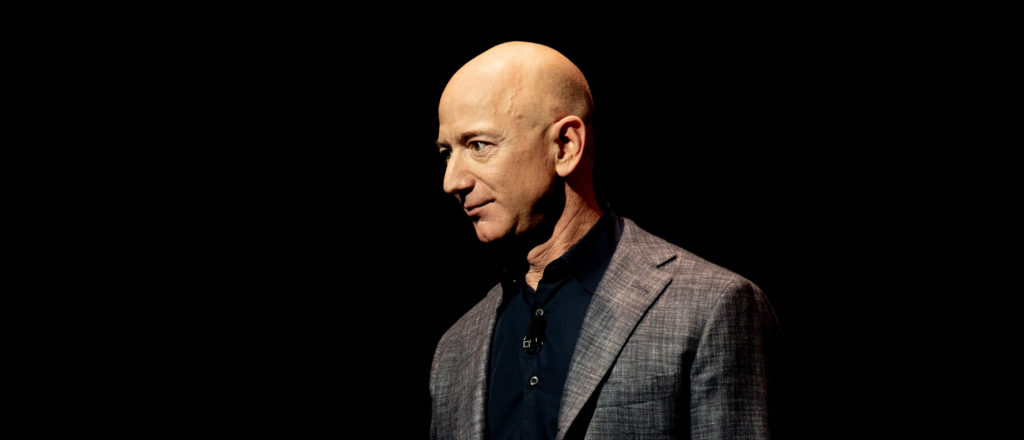
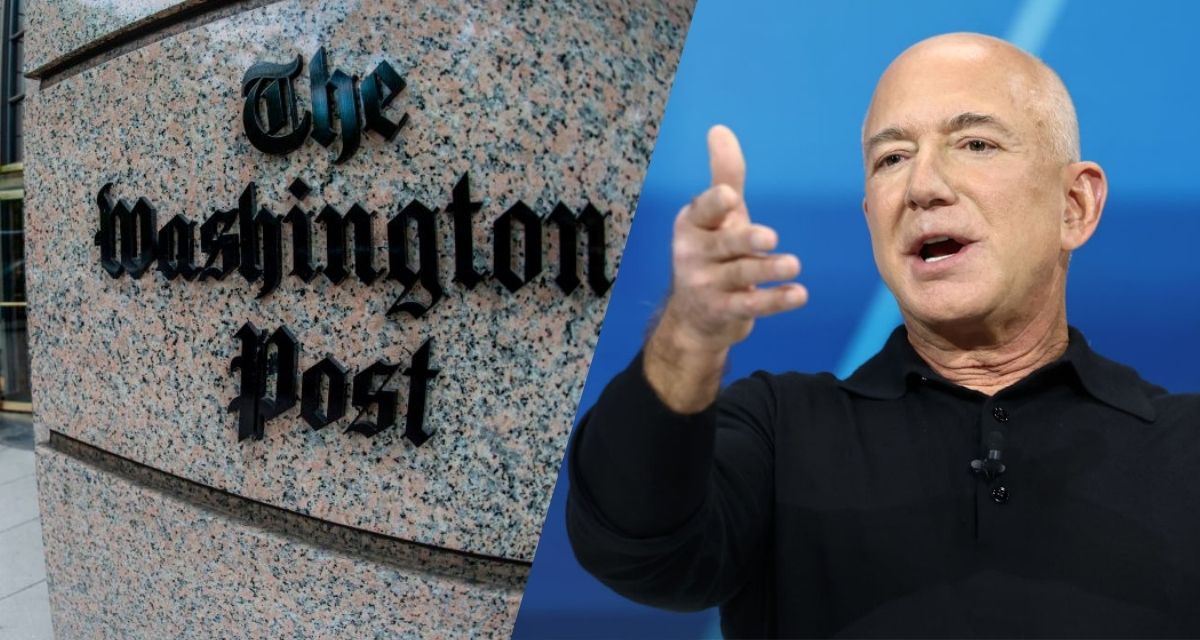
In August 2013, Jeff Bezos purchased The Washington Post and other local publications, websites, and real estate for US$250 million, transferring ownership to Nash Holdings LLC, Bezos's private investment company. The paper's former parent company, which retained some other assets such as Kaplan and a group of TV stations, was renamed Graham Holdings shortly after the sale.
Nash Holdings, which includes the Post, is operated separately from technology company Amazon, which Bezos founded and where he is as of 2022 executive chairman and the largest single shareholder, with 12.7% of voting rights.
Bezos said he has a vision that recreates "the 'daily ritual' of reading the Post as a bundle, not merely a series of individual stories..." He has been described as a "hands-off owner", holding teleconference calls with executive editor Martin Baron every two weeks. Bezos appointed Fred Ryan (founder and CEO of Politico) to serve as publisher and chief executive officer. This signaled Bezos' intent to shift the Post to a more digital focus with a national and global readership.
In 2015, the Post moved from the building it owned at 1150 15th Street to a leased space three blocks away at One Franklin Square on K Street. Since 2014 the Post has launched an online personal finance section, a blog, and a podcast with a retro theme. The Post won the 2020 Webby People's Voice Award for News & Politics in the Social and Web categories.
In 2017, the newspaper hired Jamal Khashoggi as a columnist. In 2018, Khashoggi was murdered by Saudi agents in Istanbul.
In 2018, Monica Hesse was appointed the paper's first ever gender columnist. 17 days later, the Post published "Why can’t we hate men?", a #MeToo-inspired op-ed written by Suzanna Danuta Walters, the director of women’s studies at Northeastern University. Some media outlets objected to it, including The Atlantic, the American Enterprise Institute, The National Review, Quillette, and The Washington Post itself. Six months after Hesse's appointment, the Post published Amber Heard's op-ed, "I spoke up against sexual violence — and faced our culture’s wrath. That has to change." This article ultimately led to a lawsuit filed in 2019 by Johnny Depp against Amber Heard for defamation. After a 7-week jury trial, Heard was found liable for defaming Depp, who received $15 million in damages.
Political positions
20th century
In 1933, financier Eugene Meyer bought the bankrupt Post, and assured the public that neither he nor the newspaper would be beholden to any political party. But as a leading Republican who had been appointed Chairman of the Federal Reserve by Herbert Hoover in 1930, his opposition to Roosevelt's New Deal colored the paper's editorials and news coverage, including editorializing news stories written by Meyer under a pseudonym. His wife Agnes Ernst Meyer was a journalist from the other end of the spectrum politically. The Post ran many of her pieces including tributes to her personal friends John Dewey and Saul Alinsky.
In 1946, Meyer was appointed head of World Bank, and he named his son-in-law Phil Graham to succeed him as Post publisher. The post-war years saw the developing friendship of Phil and Kay Graham with the Kennedys, the Bradlees and the rest of the "Georgetown Set", including many Harvard University alumni that would color the Post's political orientation. Kay Graham's most memorable Georgetown soirée guest list included British diplomat and communist spy Donald Maclean.
The Post is credited with coining the term "McCarthyism" in a 1950 editorial cartoon by Herbert Block. Depicting buckets of tar, it made fun of Sen. Joseph McCarthy's "tarring" tactics, i.e., smear campaigns and character assassination against those targeted by his accusations. Sen. McCarthy was attempting to do for the Senate what the House Un-American Activities Committee had been doing for years—investigating Soviet espionage in America. The HUAC made Richard Nixon nationally known for his role in the Hiss/Chambers case that exposed communist spying in the State Department. The committee had evolved from the McCormack-Dickstein Committee of the 1930s.
Phil Graham's friendship with John F. Kennedy remained strong until they died in 1963. FBI Director J. Edgar Hoover reportedly told the new President Lyndon B. Johnson, "I don't have much influence with the Post because I frankly don't read it. I view it like the Daily Worker."
Ben Bradlee became the editor-in-chief in 1968, and Kay Graham officially became the publisher in 1969, paving the way for the aggressive reporting of the Pentagon Papers and Watergate scandals. The Post strengthened public opposition to the Vietnam War in 1971 when it published the Pentagon Papers. In the mid-1970s, some conservatives referred to the Post as "Pravda on the Potomac" because of its perceived left-wing bias in both reporting and editorials. Since then, the appellation has been used by both liberal and conservative critics of the newspaper.
21st century
In the PBS documentary Buying the War, journalist Bill Moyers said in the year before the Iraq War there were 27 editorials supporting the Bush administration's desire to invade Iraq. National security correspondent Walter Pincus reported that he had been ordered to cease his reports that were critical of the administration. According to author and journalist Greg Mitchell: "By the Post's own admission, in the months before the war, it ran more than 140 stories on its front page promoting the war, while contrary information got lost".
On March 23, 2007, Chris Matthews said on his television program, "The Washington Post is not the liberal newspaper it was [...] I have been reading it for years and it is a neocon newspaper". It has regularly published a mixture of op-ed columnists, with some of them left-leaning (including E. J. Dionne, Dana Milbank, Greg Sargent, and Eugene Robinson), and some of them right-leaning (including George Will, Marc Thiessen, Michael Gerson and Charles Krauthammer).
Responding to criticism of the newspaper's coverage during the run-up to the 2008 presidential election, former Post ombudsman Deborah Howell wrote: "The opinion pages have strong conservative voices; the editorial board includes centrists and conservatives; and there were editorials critical of Obama. Yet opinion was still weighted toward Obama." According to a 2009 Oxford University Press book by Richard Davis on the impact of blogs on American politics, liberal bloggers link to The Washington Post and The New York Times more often than other major newspapers; however, conservative bloggers also link predominantly to liberal newspapers.
Since 2011, the Post has been running a column called "The Fact Checker" that the Post describes as a "truth squad". The Fact Checker received a $250,000 grant from Google News Initiative/YouTube to expand production of video fact checks.
In mid-September 2016, Matthew Ingram of Forbes joined Glenn Greenwald of The Intercept, and Trevor Timm of The Guardian in criticizing The Washington Post for "demanding that [former National Security Agency contractor Edward] Snowden ... stand trial on espionage charges".
After Donald Trump was elected in 2016, the Post adopted the slogan "Democracy Dies in Darkness" for its masthead. Communications Director of the Post Shani George said they choose this slogan because it "conveys who we are to the many millions of readers who have come to us for the first time over the last year". He also stated that the slogan was not added in response to Trump's actions.
Incidents, controversies, and concerns
"Jimmy's World" fabrication
In September 1980, a Sunday feature story appeared on the front page of the Post titled "Jimmy's World" in which reporter Janet Cooke wrote a profile of the life of an eight-year-old heroin addict. Although some within the Post doubted the story's veracity, the paper's editors defended it, and assistant managing editor Bob Woodward submitted the story to the Pulitzer Prize Board at Columbia University for consideration. Cooke was awarded the Pulitzer Prize for Feature Writing on April 13, 1981. The story was subsequently found to be a complete fabrication, and the Pulitzer was returned.
Private "salon" solicitation
In July 2009, amid an intense debate over health care reform, Politico reported that a health-care lobbyist had received an "astonishing" offer of access to the Post's "health-care reporting and editorial staff". Post publisher Katharine Weymouth had planned a series of exclusive dinner parties or "salons" at her private residence, to which she had invited prominent lobbyists, trade group members, politicians, and business people. Participants were to be charged $25,000 to sponsor a single salon, and $250,000 for 11 sessions, which were closed to the public and to the non-Post press.
The idea drew swift criticism as an apparent ploy to allow insiders to purchase face time with Post staff. Weymouth quickly canceled the salons, saying, "This should never have happened." White House counsel Gregory B. Craig reminded officials that under federal ethics rules, they need advance approval for such events. Post Executive Editor Marcus Brauchli, who was named on the flier as one of the salon's "Hosts and Discussion Leaders", said he was "appalled" by the plan, adding, "It suggests that access to Washington Post journalists was available for purchase."
China Daily advertising supplements
Dating back to 2011, The Washington Post began to include "China Watch" advertising supplements provided by China Daily, an English language newspaper owned by the Publicity Department of the Chinese Communist Party, on the print and online editions. Although the header to the online "China Watch" section included the text "A Paid Supplement to The Washington Post", James Fallows of The Atlantic suggested that the notice was not clear enough for most readers to see. Distributed to the Post and multiple newspapers around the world, the "China Watch" advertising supplements range from four to eight pages and appear at least monthly. According to a 2018 report by The Guardian, "China Watch" uses "a didactic, old-school approach to propaganda."
In 2020, a report by Freedom House, titled "Beijing's Global Megaphone", criticized the Post and other newspapers for distributing "China Watch". In the same year, 35 Republican members of the U.S. Congress wrote a letter to the U.S. Department of Justice in February 2020 calling for an investigation of potential FARA violations by China Daily. The letter named an article that appeared in the Post, "Education Flaws Linked to Hong Kong Unrest", as an example of "articles [that] serve as cover for China's atrocities, including ... its support for the crackdown in Hong Kong." According to The Guardian, the Post had already stopped running "China Watch" in 2019.
In March 2020, China's Ministry of Foreign Affairs revoked the press credentials of American journalists working for the Post, The New York Times, and The Wall Street Journal, barring them from working as journalists in mainland China, Hong Kong, and Macau. Beijing described the expulsions as retaliation for U.S. restrictions on Chinese state media, which the Trump administration had designated as foreign missions the previous month.
Felicia Sonmez
In 2020, The Post suspended reporter Felicia Sonmez after she posted a series of tweets about the 2003 rape allegation against basketball star Kobe Bryant after Bryant's death. She was reinstated after over 200 Post journalists wrote an open letter criticizing the paper's decision. In July 2021, Sonmez sued The Post and several of its top editors, alleging workplace discrimination; the suit was dismissed in March 2022, with the court determining that Sonmez had failed to make plausible claims.
In June 2022, Sonmez engaged in a Twitter feud with fellow Post staffers David Weigel, criticizing him over what he later described as "an offensive joke", and Jose A. Del Real, who accused Sonmez of "engaging in repeated and targeted public harassment of a colleague". Following the feud, the newspaper suspended Weigel for a month for violating the company's social media guidelines, and the newspaper's executive editor Sally Buzbee sent out a newsroom-wide memorandum directing employees to "Be constructive and collegial" in their interactions with colleagues. The newspaper fired Sonmez, writing in an emailed termination letter that she had engaged in "misconduct that includes insubordination, maligning your co-workers online and violating The Post's standards on workplace collegiality and inclusivity." The Post faced criticism from the Post Guild after refusing to go to arbitration over the dismissal, stating that the expiration of the Post's contract "does not relieve the Post from its contractual obligation to arbitrate grievances filed prior to expiration."
Lawsuit by Covington Catholic High School student
In 2019, Covington Catholic High School student Nick Sandmann filed a defamation lawsuit against the Post, alleging that it libeled him in seven articles regarding the January 2019 Lincoln Memorial confrontation between Covington students and the Indigenous Peoples March. A federal judge dismissed the case, ruling that 30 of the 33 statements in the Post that Sandmann alleged were libelous were not, but allowed Sandmann to file an amended complaint as to three statements. After Sandmann's lawyers amended the complaint, the suit was reopened on October 28, 2019.
In 2020, The Post settled the lawsuit brought by Sandmann for an undisclosed amount.
Op-eds and columns
Several Washington Post op-eds and columns have prompted criticism, including a number of comments on race by columnist Richard Cohen over the years, and a controversial 2014 column on campus sexual assault by George Will.
The Post's decision to run an op-ed by Mohammed Ali al-Houthi, a leader in Yemen's Houthi movement, was criticized by some activists on the basis that it provided a platform to an "anti-Western and antisemitic group supported by Iran."
In 2022, actor Johnny Depp successfully sued ex-wife Amber Heard for an op-ed she wrote in The Washington Post where she described herself as a public figure representing domestic abuse two years after she had publicly accused him of domestic violence.
Criticism by elected officials
Speaking on behalf of President Nixon, White House Press Secretary Ron Ziegler accused The Washington Post of "shabby journalism" for their focus on Watergate, only to apologize when the damning reporting on Nixon was proven correct.
45th/47th president Donald Trump repeatedly spoke out against The Washington Post on his Twitter account, having "tweeted or retweeted criticism of the paper, tying it to Amazon more than 20 times since his campaign for president" by August 2018. In addition to often attacking the paper itself, Trump used Twitter to blast various Post journalists and columnists.
During the 2020 Democratic Party presidential primaries, Senator Bernie Sanders repeatedly criticized The Washington Post, saying that its coverage of his campaign was slanted against him and attributing this to Jeff Bezos' purchase of the newspaper. Sanders' criticism was echoed by the socialist magazine Jacobin and the progressive journalist watchdog Fairness and Accuracy in Reporting. Washington Post executive editor Martin Baron responded by saying that Sanders' criticism was "baseless and conspiratorial".
Fossil fuel advertising
A 2023 investigation by The Intercept, The Nation, and DeSmog found that The Washington Post creates and publishes advertising ("advertorial") for the fossil fuel industry. Journalists who cover climate change for the Post said they were concerned that conflicts of interest with the companies and industries that caused climate change and obstructed action would reduce the credibility of their reporting on climate change and cause readers to downplay the climate crisis.
Organization
Executive officers and editors
Major stockholders
Stilson Hutchins (1877–1889)
Frank Hatton and Beriah Wilkins (1889–1905)
John R. McLean (1905–1916)
Edward (Ned) McLean (1916–1933)
Eugene Meyer (1933–1948)
The Washington Post Company (1948–2013)
Nash Holdings (Jeff Bezos) (since 2013)
Publishers
Stilson Hutchins (1877–1889)
Beriah Wilkins (1889–1905)
John R. McLean (1905–1916)
Edward (Ned) McLean (1916–1933)
Eugene Meyer (1933–1946)
Philip L. Graham (1946–1961)
John W. Sweeterman (1961–1968)
Katharine Graham (1969–1979)
Donald E. Graham (1979–2000)
Boisfeuillet Jones Jr. (2000–2008)
Katharine Weymouth (2008–2014)
Frederick J. Ryan Jr. (2014–2023)
William Lewis (2024–2026)
Jeff D'Onofrio (since 2026)
Journalists
Current journalists at The Washington Post include: Yasmeen Abutaleb, Dan Balz, Will Englund, Marc Fisher, Robin Givhan, David Ignatius, Ellen Nakashima, Ashley Parker, Sally Quinn, Michelle Singletary, Ishaan Tharoor, and Joe Yonan.
Former journalists of The Washington Post include: Scott Armstrong, Melissa Bell, Ann Devroy, Edward T. Folliard, Malvina Lindsay, Mary McGrory, Christine Emba, Walter Pincus, and Bob Woodward.
Publishing service
Arc XP is a department of The Washington Post, which provides a publishing system and software for news and media organizations such as the Boston Globe, Le Parisien, The Irish Times, Libération, Dallas Morning News, The Globe and Mail, Record, Graham Media Group, and Sky News.
Mary Jordan was the founding editor, head of content, and moderator for Washington Post Live, the Post's editorial events business, which organizes political debates, conferences and news events for the media company. This includes "The 40th Anniversary of Watergate" in June 2012, that featured key Watergate figures including former White House counsel John Dean, Washington Post editor Ben Bradlee, and reporters Bob Woodward and Carl Bernstein, which was held at the Watergate hotel. Regular hosts include Frances Stead Sellers. Lois Romano was formerly the editor of Washington Post Live.
Unions
In 1975, the Washington Post pressmen's union went on strike. The Post hired replacement workers to replace the pressmen's union, and other unions returned to work in February 1976.
In 1986, during negotiations between the Post and the Newspaper Guild union over a new contract, five employees, including Newspaper Guild unit chairman Thomas R. Sherwood and assistant Maryland editor Claudia Levy, sued the Post for overtime pay, stating that the newspaper had claimed that budgets did not allow for overtime wages.
In June 2018, over 400 employees of The Washington Post signed an open letter to the owner Jeff Bezos demanding "fair wages; fair benefits for retirement, family leave and health care; and a fair amount of job security." The open letter was accompanied by video testimonials from employees, who alleged "shocking pay practices" despite record growth in subscriptions at the newspaper, with salaries rising an average of $10 per week, which the letter claimed was less than half the rate of inflation. The petition followed on a year of unsuccessful negotiations between The Washington Post Guild and upper management over pay and benefit increases.
As of 2023, the Washington Post Guild represented around 1,000 staff members at the Post. In December 2023, more than 750 journalists and staffers at the Post went on strike, accusing the company of refusing to "bargain in good faith" on issues including issues including pay increases, pay equity, remote work policies, and mental health resources. Later the same month, the Washington Post Guild won a new three-year contract with the paper, ending 18 months of negotiations.
In May 2025, a majority of technology workers at the Post voted to unionize as the Washington Post Tech Guild, representing more than 300 engineering, product design, and data workers at the Post.