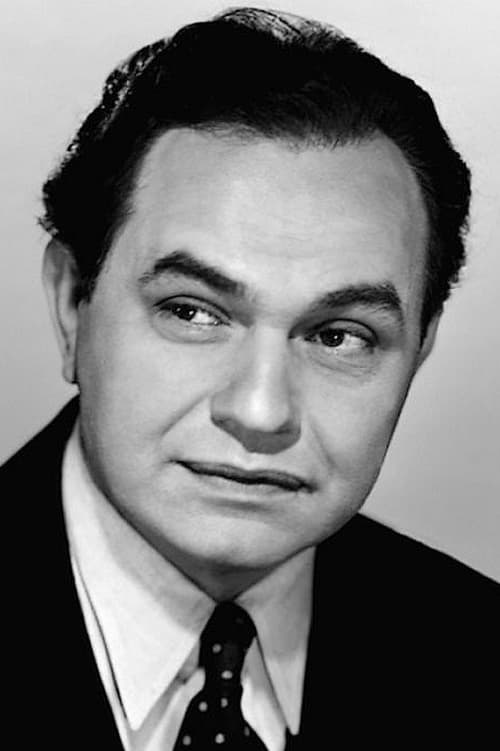
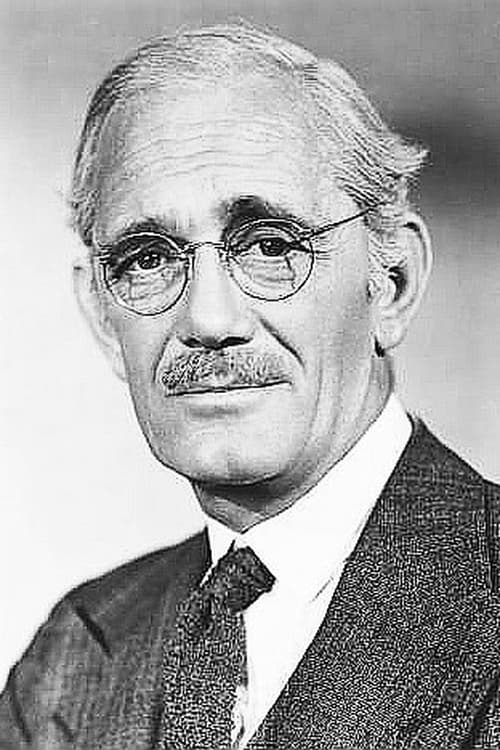
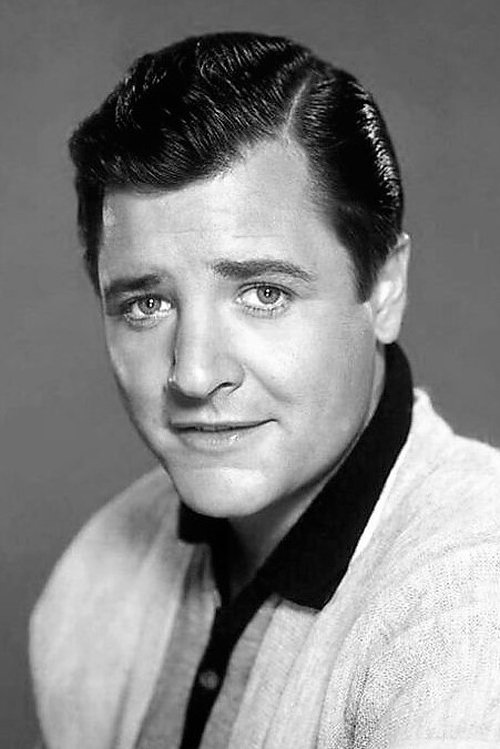
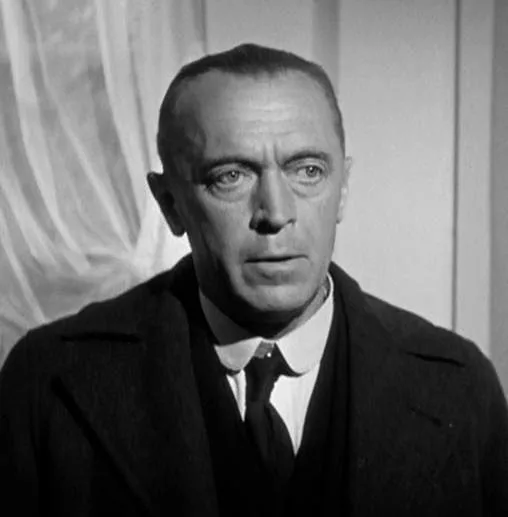
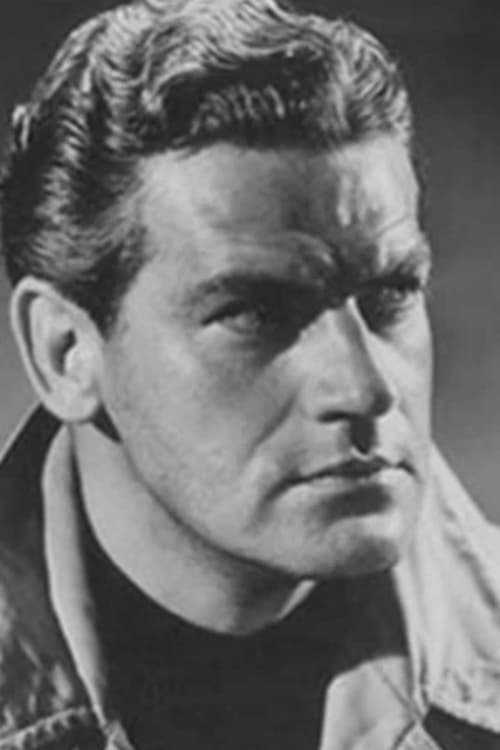
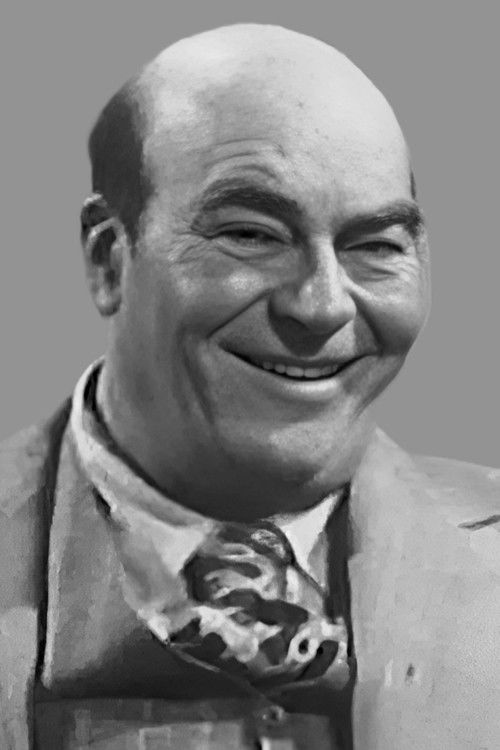
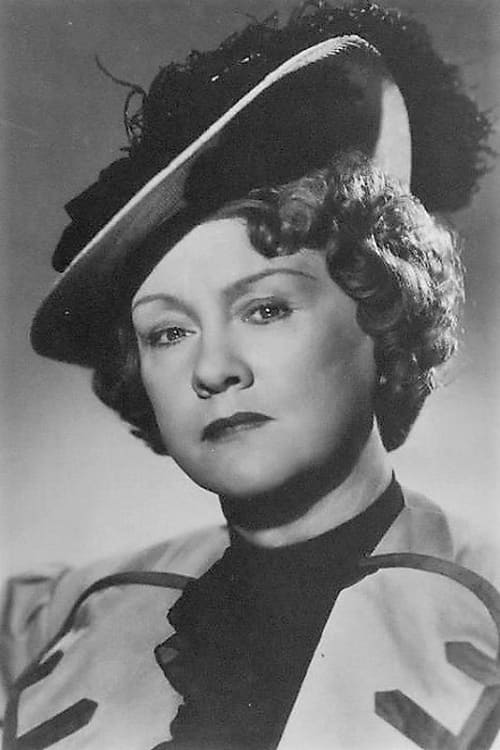
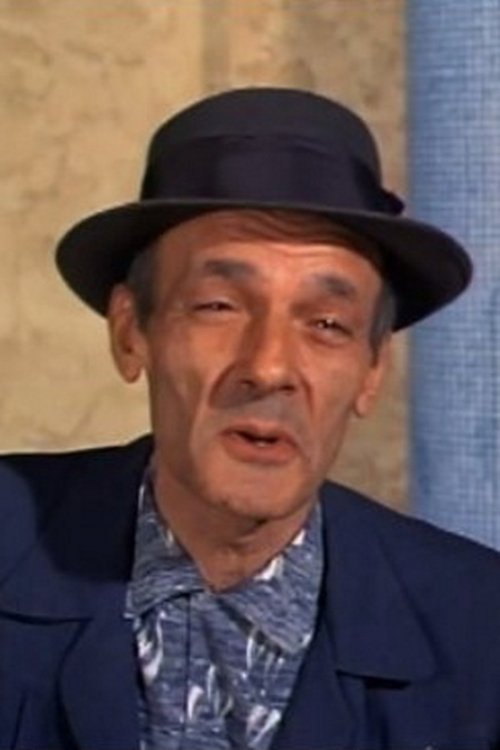
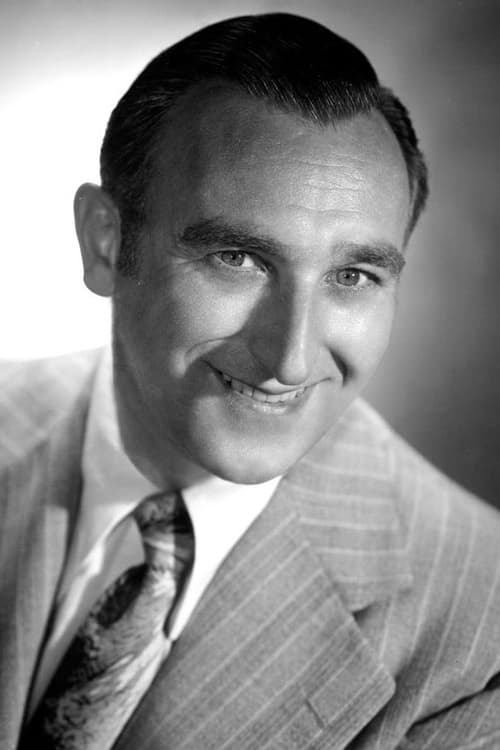
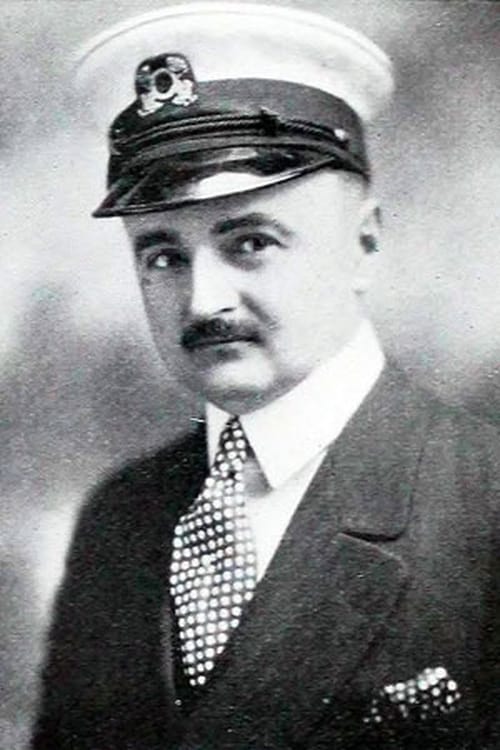
The Stranger is a 1946 American thriller film noir directed and (although uncredited) co-written by Orson Welles, starring himself along with Edward G. Robinson and Loretta Young. Welles's third completed feature film as director and his first film noir, it centers on war crimes investigator Wilson tracking high-ranking Nazi fugitive Franz Kindler to a Connecticut town. It was the first Hollywood film to incorporate actual documentary footage of the Holocaust.
The film was nominated for the Golden Lion (then-called the ‘Grand International Prize’) at the 8th Venice International Film Festival. Screenwriter Victor Trivas received a nomination for the Academy Award for Best Story. The film entered the public domain when its copyright was not renewed.
Contents
Plot
Mr. Wilson, an agent of the United Nations War Crimes Commission, is hunting for Franz Kindler, a Nazi fugitive and war criminal. Having erased all evidence that might identify him, Kindler is only known to the UNWCC for his nearly maniacal passion for clocks.
Wilson releases Kindler's former associate Konrad Meinike, hoping the man will lead him to Kindler. He follows Meinike to the small town of Harper, Connecticut, but Meinike knocks him out cold before meeting Kindler. Kindler has assumed a new identity as "Charles Rankin", a teacher at a local prep school. He is about to marry Mary Longstreet, daughter of Supreme Court Justice Adam Longstreet, and is involved in repairing a 400-year-old Habrecht-style clock mechanism with religious automata that crowns the belfry of a church in the town square. Repentant and having become a Christian, Meinike begs Kindler to confess his own crimes. Fearing he might be exposed, Kindler strangles Meinike and buries him in the woods.
Recovering from his injury, Wilson begins investigating newcomers to Harper. While initially not suspecting Rankin, he comes to realize that Rankin must be Kindler when the latter states offhandedly that since Karl Marx was a Jew, he could not be a German. Even so, not having witnessed the meeting with Meinike, Wilson still requires proof, and only Mary knows about the meeting. To secure her admission, Wilson attempts to convince her that her husband is a criminal before Kindler decides to eliminate the threat by killing her. Kindler's facade begins to unravel when Red, the family dog, discovers Meinike's body. To further protect his secret, Kindler poisons Red.
Meanwhile, Mary grows suspicious of her husband. Kindler admits to killing Meinike and Red, but claims Meinike was in town to blackmail her and her father. Wilson shows Mary graphic footage of Nazi concentration camps and explains how Kindler developed the idea of genocide. Mary, seeking to protect Kindler, lies about Meinike but remains torn between her love and her desire for the truth. Kindler tries to arrange a fatal "accident" for Mary, but she discovers the plot. Finally accepting that Rankin is Kindler, she dares her husband to kill her to his face. Kindler's attempt is prevented by the arrival of Wilson and Mary's brother, and he escapes from the house.
Kindler flees into the church belfry, followed by Mary and then Wilson. Meanwhile the residents of Harper, hearing the repaired clock bell, arrive outside the building. At the top of the tower, Kindler pulls a gun and a struggle ensues. Mary ends up with the gun and shoots Kindler. He staggers outside to the belfry's clock face, is impaled by the sword of one of the moving clock figures, and falls to his death.
Cast
Contemporary news items about the production add uncredited and unconfirmed cast members Neal Dodd, Nancy Evans, Fred Godoy, Joseph Granby, Ruth Lee, Lillian Molieri, Gabriel Peralta, Gerald Pierce, Robert Raison, Rebel Randall, Johnny Sands, and Josephine Victor.
Production
Produced by Sam Spiegel (who then billed himself as S. P. Eagle), The Stranger was the last International Pictures production distributed by RKO Pictures. Filming took place from late September to November 21, 1945, at Samuel Goldwyn Studios and Universal Studios. The film's musical score is by Bronisław Kaper.
Spiegel initially planned to hire John Huston to direct The Stranger. When Huston entered the military, Orson Welles was given the chance to direct the film and prove himself able to make a film on schedule and under budget—something he was so eager to do that he accepted a disadvantageous contract. In September 1945, Welles and his wife Rita Hayworth signed a guarantee that Welles would owe International Pictures any of his earnings, from any source, above $50,000 a year if he did not meet his contractual obligations. He also agreed to defer to the studio in any creative dispute. The Stranger was Welles's first job as a film director in four years.
Editor Ernest J. Nims was given the power to cut any material he considered extraneous from the script before shooting began. "He was the great supercutter," Welles said, "who believed that nothing should be in a movie that did not advance the story. And since most of the good stuff in my movies doesn't advance the story at all, you can imagine what a nemesis he was to me."
For directing and acting in The Stranger, Welles was to receive $2,000 a week plus $50,000 when the film was completed, and a chance to sign a four-picture deal with International Pictures, making films of his own choosing.
Welles was given some degree of creative control. He worked on the general rewrite of the script, wrote all of the scenes in the drugstore, and wrote scenes at the beginning of the picture that were shot but subsequently cut by Spiegel and executive producer William Goetz. Welles had endeavored to personalize the film and develop a nightmarish tone. There is uncertainty about how much of this material was actually shot and how much was removed. Some scenes elaborated on Konrad Meinike (Konstantin Shayne)'s flight through Latin America, shadowed by an agent named Marvales and his wife, a woman in distinctive gold earrings who is murdered by savage dogs kept by the Nazis-in-exile. A brief vestige of the sequence remains in the final release version. In a 1982 interview, Nims said 32 pages of the script were eliminated at his suggestion, including the first 16 pages.
Release
Box office
The Stranger was the only film made by Welles to have been a bona fide box office success upon its release. Its cost was $1.034 million; it earned $2.25 million in U.S. rentals in its first six months, and 15 months after its release it had grossed $3.216 million.
Critical reception
"The Stranger exists as an answer to the critics who complained that Welles could not make a 'program' picture," wrote film noir scholar Carl Macek. "He did, and it has found a niche in the canon of the film noir."
The Stranger holds a 97% rating at Rotten Tomatoes based on 29 critic reviews, including two contemporaneous reviews. The sole negative review is that of The New York Times critic Bosley Crowther, published in July 1946. Crowther called the film a "bloodless, manufactured show" in which Welles "gave no illusion of the sort of depraved and heartless creatures that the Nazi mass-murderers were. He is just Mr. Welles, a young actor, doing a boyishly bad acting job in a role which is highly incredible—another weak feature of the film. As a matter of fact, the writing of The Stranger, by Anthony Veiller, is the weakest thing about it—and that estimation includes another silly performance by Loretta Young as the killer's wife. For the premise is not only farfetched, but the whole construction of the tale relieves very soon all the mystery and suspense that such a story should have."
More favorable coverage was found in Variety, which called the film "a socko melodrama, spinning an intriguing web of thrills and chills. Director Orson Welles gives the production a fast, suspenseful development, drawing every advantage from the hard-hitting script from the Victor Trivas story. … A uniformly excellent cast gives reality to events that transpire. The three stars, Robinson, Young and Welles, turn in some of their best work, the actress being particularly effective as the misled bride."
Life magazine featured The Stranger as Movie of the Week in its issue dated June 3, 1946. The film was screened in competition at the 1947 Venice Film Festival. Critic James Agee wrote in The Nation in 1946: "Orson Welles's new movie, The Stranger, is a tidy, engaging thriller about a Nazi arch-criminal ... There is nothing about the picture that even appears to be "important" or "new", but there is nothing pretentious or arty either, and although I have occasionally seen atmospheres used in films in far grander poetic context, I don't think I have seen them more pleasantly or expertly appreciated. In a quite modest way the picture is, merely, much more graceful, intelligent, and enjoyable that most other movies ... " Leslie Halliwell wrote: "Highly unconvincing and artificial melodrama enhanced by directorial touches, splendid photography and no-holds-barred climax involving a church clock."
Awards
At the 19th Academy Awards, Victor Trivas received a nomination for the Academy Award for Best Story. The award went to Clemence Dane for Vacation from Marriage.
Home media
After the film fell into the public domain, a number of poor-quality versions of The Stranger were released by various sources. Some versions were duplicated from second- or third-generation releases, and were severely and badly edited, until MGM Home Entertainment (the owners of most of the International Pictures catalog) restored the film and released it on DVD in 2004.
An archival restoration was released on DVD and Blu-ray Disc by Kino Classics in October 2013. Kino's release was mastered from a 35mm print at the Library of Congress. The release includes audio commentary by Bret Wood. The DVD includes excerpts of Death Mills (1945), a U.S. War Department documentary on the Nazi death camps directed by Billy Wilder. Other extras include four of Welles's World War II radio broadcasts: "Alameda" (Nazi Eyes on Canada, 1942), "War Workers" (Ceiling Unlimited, 1942), "Brazil" (Hello Americans, 1942), and "Bikini Atomic Test" (Orson Welles Commentaries, 1946). The disc is not captioned for the hearing impaired.
Olive Films also put out a Blu-Ray of the film sanctioned from MGM in 2017. The film is also available on the Netflix and Amazon Prime streaming services, and the Dailymotion and YouTube video-sharing platforms.
Adaptations
The debut issue (July–August 1946) of the short-lived pulp digest Movie Mystery Magazine presented a novelized condensation of the screenplay for The Stranger.
A half-hour adaptation of The Stranger aired on CBS Radio's This Is Hollywood on December 7, 1946. Robinson re-created his role from the film, performing with Ruth Hussey, Roland Morris, and Gerald Mohr.
Copyright
The copyright on the film originally belonged to The Haig Corporation, but the film is in the public domain because the producers did not renew the copyright in 1973.