Development
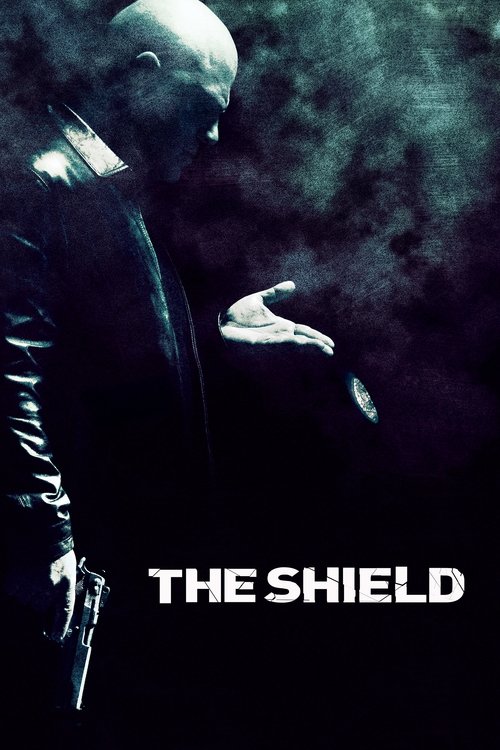
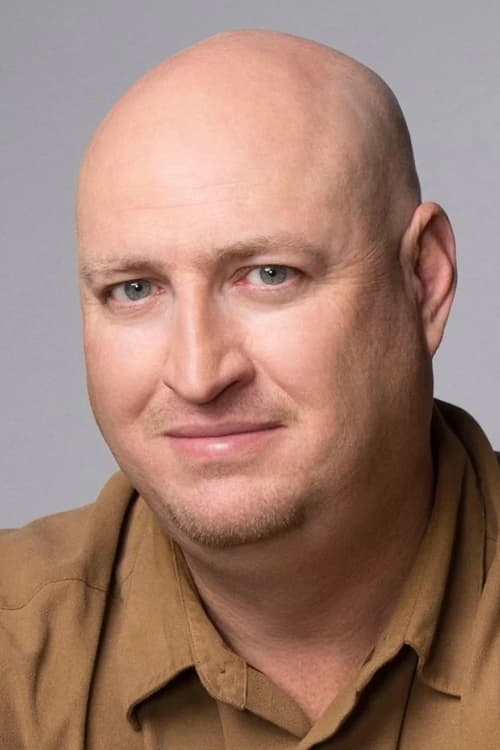
The series was created by Shawn Ryan. Ryan served as an executive producer for all seven seasons and was the series head writer and showrunner throughout its run. Prior to creating the series Ryan had been working as a producer and writer for the supernatural detective series Angel. He began his television career as a writer for the crime drama Nash Bridges. Nash Bridges was a more up-beat show, and Ryan was required to write scripts that showed the hero succeeding in a positive way, and Ryan sought to write something far different to get that out of his system. He had considered what a cop drama would be like on a premium cable network like HBO and Showtime, taking into account the edge that shows like Homicide: Life on the Street and NYPD Blue had brought to the genre. While trying to decide a direction, the Rampart scandal within the LAPD was exposed, and Ryan took inspiration from those events to craft out a pilot script. He also recently became a father, and wrote into the script his concerns about raising a child in a crime-ridden world. The pilot script had ended with Mackey shooting Crowley; Ryan had the idea of an alternate ending to Donnie Brasco, of where Al Pacino's mobster character would have shot Johnny Depp's undercover FBI character, revealing that the mobster had known his identity all along. He used this ending idea in the pilot for The Shield, not expecting to have to worry about any consequences as he was not sure the script would be picked up. Ryan later commented in 2017 that if he had known how long The Shield would have run for, he would have had a few more episodes to help establish Crowley's character before having Mackey kill him off.
Around 2000, the FX network was looking to find what would be the network's first drama series to help set the tone for their network, given the ongoing success of The Sopranos on rival network HBO. FX's Kevin Reilly wanted a show about an antihero but believed that the cop genre had become tired. However, Reilly was amazed by Ryan's script and greenlit the show in 2001. FX ordered the pilot in March 2001; the episode was filmed in June, and FX issued a series order on August 30, one day before the deadline. Reilly worked with Ryan to help determine how much violence and nudity could be used within the show, as unlike HBO, FX was an ad-sponsored cable channel and beholden to certain content considerations. As they were working towards this, the September 11 attacks occurred, and in their aftermath, Fox was concerned if the show would be appropriate at this time, believing that audiences would not be receptive to seeing police officers portrayed in a negative light. The situation changed following the theatrical release of Training Day in October 2001, a film centered around corrupt cops that was a financial success. Fox was assured by Training Day's reception from audiences that The Shield was allowed to continue, with the pilot first broadcast in March 2002.
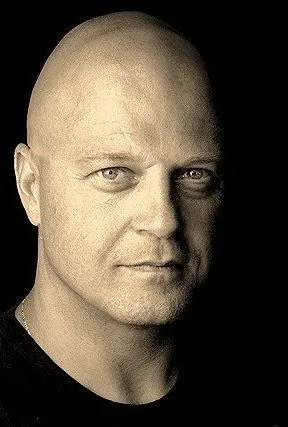
Ryan had written the part of Mackey for someone with a young Harrison Ford personality. Due to the complexities of the character, he was uncertain they would have found a suitable actor for the role, and cast his own doubt on his writing. During casting, Ryan had been surprised with Michael Chiklis's audition. Chiklis had gained a soft reputation within Hollywood based on his roles from The Commish and Daddio, and felt that he needed to have a change of pace in future roles, as he was finding himself cast for older, overweight parts. Chiklis spent six months away from acting and losing a significant amount of weight, and for his audition on The Shield, had shaved his head. Ryan was taken by this new appearance feeling it was not appropriate, but found that Chiklis had a certain charisma in his delivery that worked well into the Mackey character. This allowed Ryan to write Mackey as a compassionate figure, able to get away with certain improper actions through his charisma, which served to draw fans to sympathize with Mackey throughout the series. Ryan recognized that with Chiklis as his star, it validated his success as a writer.
Scott Brazil was a co-executive producer for the first season. He became an executive producer for the second season. He was a regular director for the series until his death during production of the sixth season. Brazil and Ryan had worked together on Nash Bridges.
Several of the series more junior writers became executive producers during its run. Glen Mazzara was an executive story editor for the first season and became an executive producer from the fifth season onwards. Mazzara had also worked with Ryan on Nash Bridges. Kurt Sutter and Scott Rosenbaum were staff writers for the first season and became executive producers for the sixth season onwards. Adam E. Fierro joined the crew as a co-producer and writer for the third season and was promoted to executive producer for the seventh season. Veteran television writer Charles H. Eglee joined the crew as a consulting producer for the third season and was promoted to executive producer from the fifth season onwards.
James Manos Jr. served as a consulting producer and writer for the first two seasons. He left the show to develop the Showtime serial killer drama Dexter. NYPD Blue veteran writer Kevin Arkadie was a co-executive producer for the first season only. Nash Bridges writer and producer Reed Steiner replaced Arkadie as co-executive producer for the second season only. Kevin G. Cremin was the series unit production manager throughout its run and became a co-executive producer from the sixth season onwards.
Angel writing team Elizabeth Craft and Sarah Fain joined the crew as co-producers for the third season and became supervising producers before leaving at the close of the sixth season. Dean White was a producer and regular director throughout the series run. Chiklis became a producer from the second season onward and also regularly directed episodes. Post-production supervisor Craig Yahata joined the crew in the third season and eventually became a producer for the seventh season.
The series pilot and finale were directed by Clark Johnson; Johnson had previously starred in Homicide: Life on the Street and made his directing debut on that series. Guy Ferland directed episodes for all seven seasons of The Shield. Rohn Schmidt was a cinematographer for all seven seasons and made his television directing debut on the show. Stephen Kay was a frequent director for the series. Gwyneth Horder-Payton was an assistant director for the show's early seasons and made her television directing debut in the fourth season, she continued to regularly direct episodes thereafter.
Film director Frank Darabont directed an episode for the series. Darabont later reunited with several writers from The Shield for his television adaptation of The Walking Dead comics, including Charles H. Eglee, Glen Mazzara and Adam Fierro. Acclaimed playwright and film writer and director David Mamet directed an episode of the series. Mamet and Ryan collaborated as executive producers on military thriller The Unit. Screenwriter Ted Griffin wrote a single episode of the show. Griffin later created Terriers and was reunited with Shawn Ryan as a fellow executive producer.