


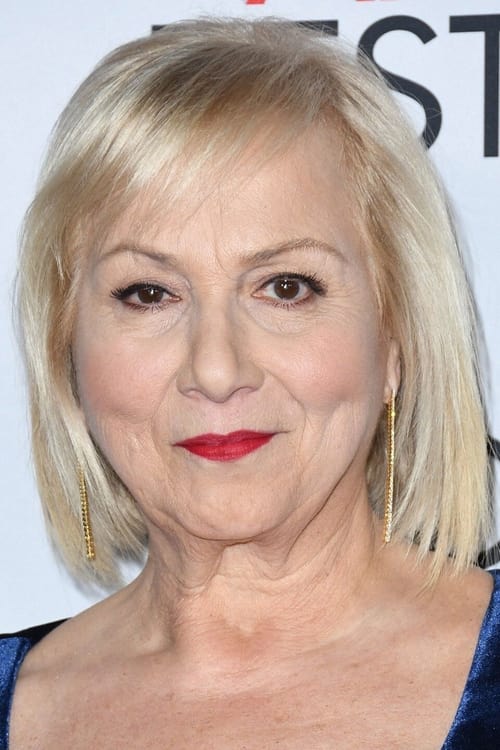
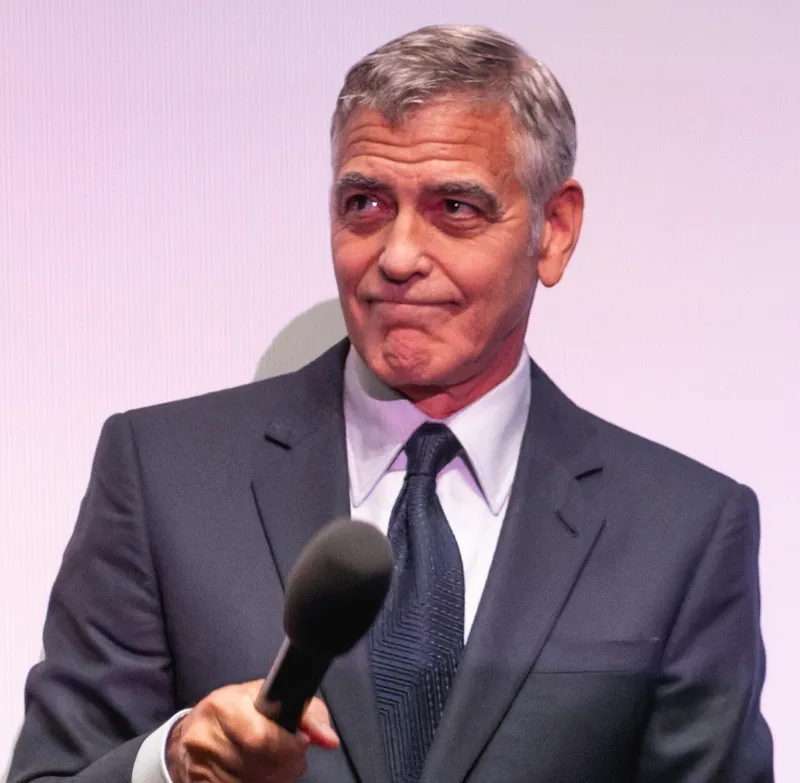
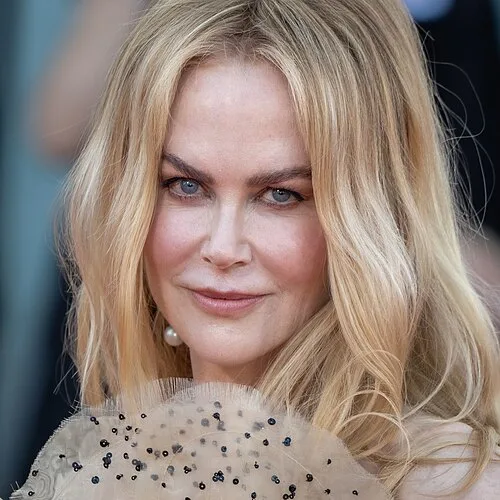

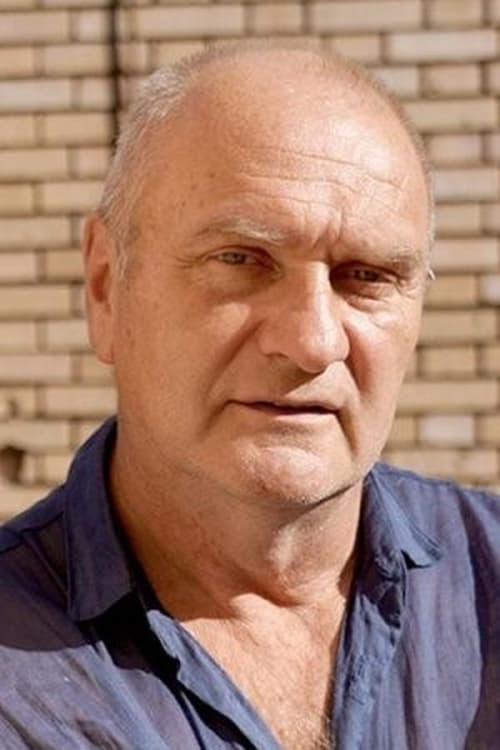


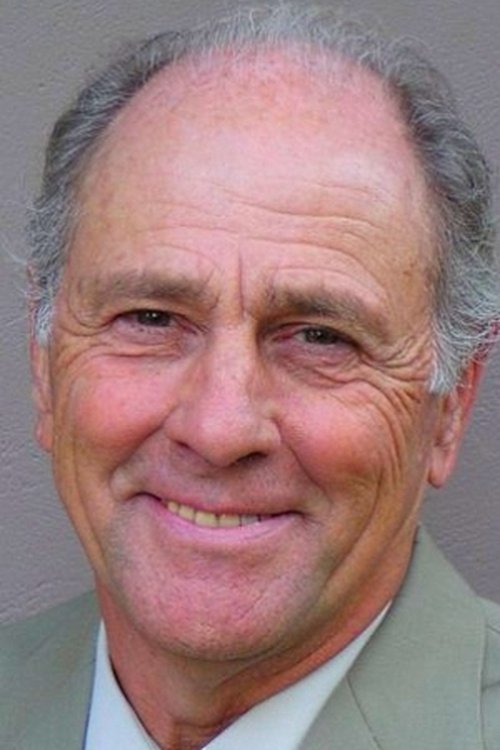
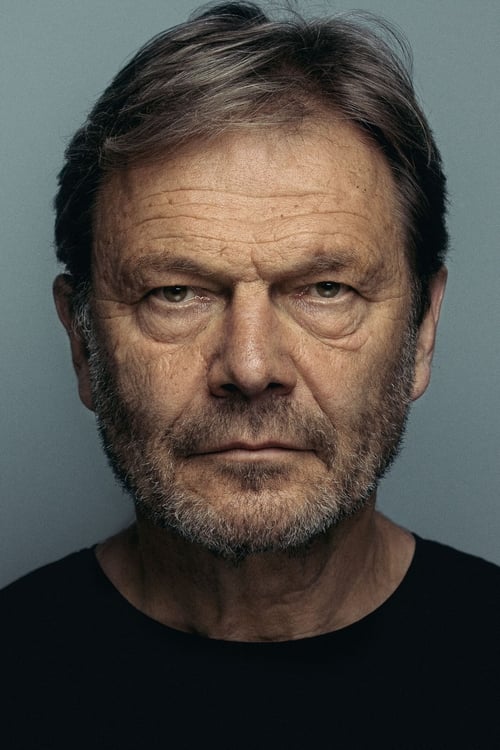
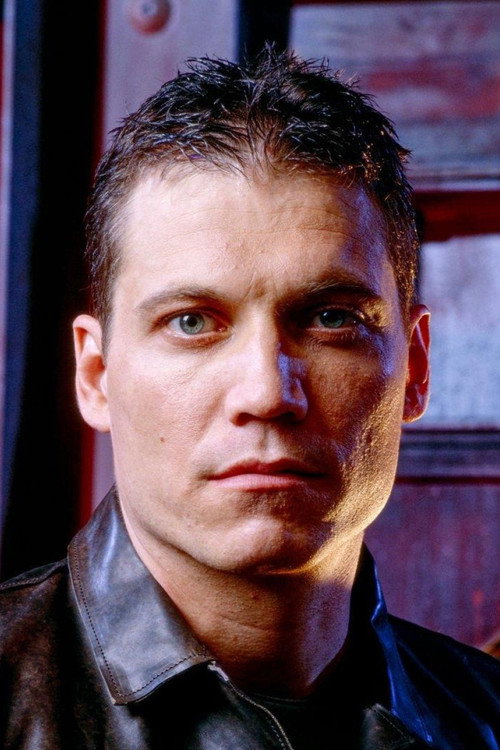
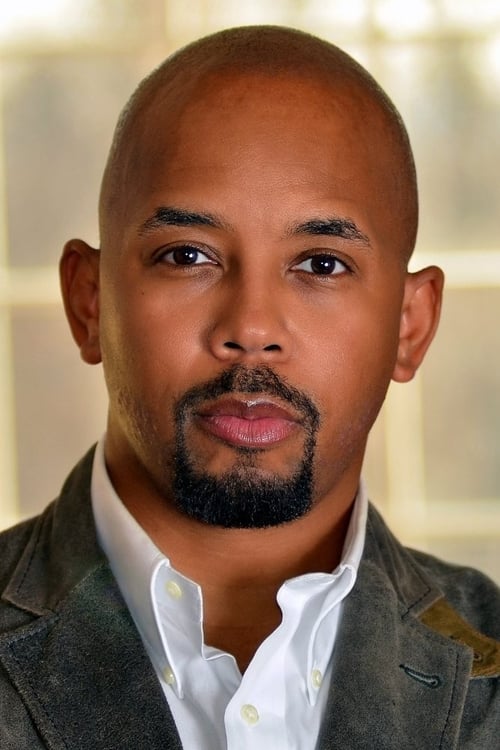
The Peacemaker is a 1997 American political action thriller film directed by Mimi Leder in her feature debut. Starring George Clooney, Nicole Kidman, Armin Mueller-Stahl, Marcel Iureș and Aleksandr Baluev, it was the first film distributed by DreamWorks Pictures. While the story takes place all over the world, it was shot primarily in Slovakia with some sequences filmed in New York City, Philadelphia and North Macedonia. The basis for the film was the 1997 book One Point Safe by Andrew and Leslie Cockburn, which examined the state of Russia's nuclear arsenal.
Contents
Plot
Outside a church celebrating an Eastern Orthodox baptism in Pale, Bosnia, the Bosnian Serb Finance Minister, a moderate pushing for peace in the ongoing Yugoslav Wars, is murdered.
At a missile base in Kartaly (Chelyabinsk Oblast), Russia, ten Soviet nuclear warheads that belong to a SS-18 Satan ICBM are loaded onto a train for transport to a dismantling facility. However, Russian Army General Aleksandr Kodoroff, along with a rogue Spetznaz unit, kills the soldiers on board and transfers nine warheads to another train.
Kodoroff then activates the timer on the remaining warhead and sends the transport on a collision course with a passenger train. The 500-kiloton warhead eventually detonates, killing thousands of civilians and delaying an investigation of the incident.
The detonation attracts the attention of the US government. Dr. Julia Kelly, head of the NSC Nuclear Smuggling Group, believes that Chechen are behind the incident.
Former US Army Ranger and Special Forces turned Military Intelligence Lieutenant Colonel Thomas Devoe interrupts her briefing to suggest that the incident was staged to hide the hijacking of the warheads. A call to Devoe's friend and Russian counterpart, FSB Colonel Dimitri Vertikoff, adds reliability to his theory, and he is assigned as Kelly's military liaison.
Kelly and Devoe secure information about the terrorists' hijacking operation through an Austrian trucking company that works as a front for the Russian Mafia. They meet Vertikoff in Vienna and assume identities to visit Shummaker, who organizes the Russian trucking.
After Devoe tortures Shummaker for information, he and Kelly leave the building and get in Vertikoff's car. They are chased by Shumaker's men, who kill Vertikoff while he is offering a bribe. Devoe shoots at the attackers and drives away but finds he and Kelly are being followed. Another chase ensues, followed by a crash, but Devoe and Kelly escape.
Information from the trucking company says that the nukes are going to Iran via Azerbaijan. When US spy satellites place the truck in a traffic jam of refugees in Dagestan, Devoe uses a ruse to identify it. This information is passed on to Russian authorities, hoping to stop the transfer to Iran. The Russian military stops Kodoroff at a roadblock, but he and his men kill the soldiers.
Production
Two years after initially forming, DreamWorks still had no live-action films in production, which was a serious concern for financiers. A reason for the slow start was since co-founder Steven Spielberg was busy directing The Lost World: Jurassic Park, a project not tied to his new studio. Among the DreamWorks scripts in development, The Peacemaker was the closest to shooting readiness, and it became the first to be officially greenlit. The other live-action scripts the studio was considering greenlighting were Amistad and Mouse Hunt (both released later in 1997) and Paulie (released in 1998). The Peacemaker script was inspired by a then-unpublished Vanity Fair article by Andrew Cockburn and Leslie Redlich Cockburn. The two were a married couple who worked as contributing editors for the publication. The Cockburns article was later turned into a book titled One Point Safe, and the couple served as producers on The Peacemaker. One Point Safe was published in October 1997, a month after The Peacemaker's release.
The film would end up being the inaugural release from DreamWorks Pictures. It featured the debut of the 25 second long CGI DreamWorks Pictures opening logo. The logo had accompanying music by John Williams, a frequent collaborator of Spielberg. This same logo would be used for early releases from DreamWorks Animation. The animation division launched a year later with the film Antz, and it was part of the same company as the live-action division until October 2004, when it split off into its own separate corporate entity.
George Clooney had initially been set to do a Green Hornet movie at Universal Pictures starring alongside Jason Scott Lee with Sam Raimi directing, but Clooney opted to sign on for The Peacemaker. Spielberg framed The Peacemaker as being DreamWorks' inaugural film project, which helped persuade Clooney. At that time, Clooney starred on ER, which was produced by Spielberg's other company Amblin Television. The Peacemaker was the first theatrical film directed by Mimi Leder, who was known for her work on ER and other television shows. Leder's only experience directing feature length projects was with her work on made-for-television movies. Leder was surprised that Spielberg wanted her to direct The Peacemaker, since she thought he would opt for an established director with more film directing experience. In retrospect, Leder said in 2023, "I wish they would make more movies like that. And I would make them because that's what I'm interested in! It was a very exciting experience to be able to keep The Peacemaker grounded in the real world. We actually shot the New York chase sequences first, and we were working at such a high level. We were like, 'Is it too big?' But you can't be too big in a chase where you're trying to save the world from a nuke!"
Music
On September 9, 1997, Hans Zimmer's background score for the film was released on an album titled The Peacemaker: Original Motion Picture Soundtrack. The release was handled by DreamWorks Records, which was primarily focused on releasing non-movie related albums by rock and pop artists. DreamWorks Records also released John Williams' score for Amistad in 1997, and starting in 1998, occasionally released multi-artist compilation albums for DreamWorks films. On May 20, 2014, La-La Land Records released an expanded 25 track version of the original 1997 album for The Peacemaker. This 2014 release was done in association with Universal Music Group, who purchased DreamWorks Records for $100 million in 2003.
Release
Promotion
A real billboard promoting The Peacemaker can be seen in the 1998 comedy film A Night at the Roxbury. This film was shot in Los Angeles between July 1997 and September 18, 1997, with the billboard having the date "9.26.97" on it, which was the actual date The Peacemaker would be released. A Night at the Roxbury was released by Paramount Pictures (the future owner of the live-action DreamWorks library from 2006 onward), and would end up having its soundtrack released by DreamWorks Records, with this being one of the label's only non DreamWorks Pictures-related soundtracks.
Box office
The film began its theatrical run on September 26, 1997, playing to nearly 2,500 theaters domestically. Earning $12.3 million in its opening weekend, The Peacemaker beat In & Out, Soul Food and The Edge to reach the number one spot. The film earned $41,263,140 in the US and $69,200,000 elsewhere, bringing its total to $110,463,140.
Reception
On the review aggregator website Rotten Tomatoes, 49% of 41 critics' reviews are positive, with an average rating of 6/10. Metacritic, which uses a weighted average, assigned the film a score of 43 out of 100, based on 20 critics, indicating "mixed or average" reviews. Audiences polled by CinemaScore gave the film an average grade of "B+" on an A+ to F scale.
Contemporary response
Janet Maslin of The New York Times gave praise to Clooney and Kidman for portraying a "charming rogue" and expressing "womanly professionalism as fierce, hostile sternness" in their respective roles and Leder's direction of the movie's action setpieces, highlighting the Manhattan climax for having "crisp economy and furious energy" throughout the scene. Marc Savlov of The Austin Chronicle said that despite the "ever-present plot holes and isoscelean character arcs" throughout the film's story and villains, he praised Leder's directorial skills for keeping things fresh throughout the runtime and adding "clever swagger" to the action scenes, concluding that: "By no means an embarrassment to the fledgling DreamWorks, The Peacemaker is instead a grand, noisy step in the right direction. What next, indeed?" In October 1997, CNN's Paul Tatara described it as a film that "just keeps rolling along at a steady clip". He also observed that Kidman slipped in and out of her Australian accent, saying "if you don't completely buy something (like, for instance, Kidman's highly unique Ameristralian accent), something else will be along in a minute to take its place."
Roger Ebert commended the "technical credits" and both Clooney and Kidman for expertly fulfilling their roles but felt the rest of the film was filled with "retreaded" and "off-the-shelf" thriller clichés and concluded with a bomb defusal third act that lacked the "real endings involving character developments and surprises" found in similar films like The Edge and Kiss the Girls. Entertainment Weekly's Owen Gleiberman gave the film an overall "C+" grade, giving Leder's direction credit for staging her scenes with "crisp exactitude, [and with] a pleasing flair for "rhythmic" visual detail" and adding "elegant and accomplished" atmospherics, but felt that it amounts to being "a well-crafted, utterly generic genre piece" that carries "an air of self-important solemnity that borders on the overblown", concluding that: "In The Peacemaker, nothing escapes the taint of cliche. As the inaugural feature from DreamWorks, the picture is vaguely depressing, because it suggests that the studio’s creators are working so laboriously to manufacture a hit that they’ve forgotten to put in the dream." James Berardinelli criticized the over-long runtime of the movie's "paper-thin plot", the "lack of creativity" in the death scenes and failing to sympathize with the villains' plight, concluding that: "The Peacemaker isn't much better or worse than the average James Bond movie, except, of course, that it doesn't have the cars, the gadgets, the girls, or Bond himself. There's a certain appeal to the premise, but the execution is uneven. The movie is likely to keep an audience's attention, but it's the kind of film that is quickly forgotten."
Retrospective response
In 2017, Chris Bumbray of JoBlo.com described it as being a rare example of an action film directed by a female, adding it was "a Tom Clancy-style techno thriller" and "an offbeat choice to launch the [DreamWorks] studio." Some have since labelled it as being a "forgotten" film, in spite of its initial press hype as being the first DreamWorks Pictures release.
Home media and rights
In 1998, the film was released on DVD and VHS by DreamWorks Home Entertainment. On July 27, 1998, it also received a US LaserDisc release by DreamWorks Home Entertainment. The following year, it received LaserDisc releases in France and Japan, with the French release being dubbed and the Japanese release being subtitled. In September 1997, a promotional CD-ROM press kit was released for the film, although it would not have any video game tie-in by DreamWorks Interactive, which ended up mainly releasing non-DreamWorks related video games. The film's 1998 DVD was briefly shown during a scene in the DreamWorks Animation film Flushed Away (2006). The scene depicted several DreamWorks Animation DVDs, alongside The Peacemaker and other live-action DreamWorks DVDs including Just like Heaven, Mouse Hunt, Old School, Paulie, Red Eye, The Last Castle and The Love Letter.
In February 2006, Viacom, now known as Paramount Skydance, acquired the rights to The Peacemaker and all other live-action films DreamWorks had released between 1997 and 2005. This occurred after its $1.6 billion-dollar acquisition of DreamWorks' live-action film and television studios, which included DreamWorks' live-action film library (then totaling 59 films) and the library of DreamWorks Television. As part of the deal, Viacom also signed a six-year distribution agreement with DreamWorks Animation, a separate company from the live-action divisions since 2004. For the next few years, the live-action DreamWorks studio became a semi-autonomous label of Viacom-owned Paramount Pictures, and it was still actively releasing new films. Due to tensions, the live-action studio eventually became an independent entity again in late 2008, even as Viacom/Paramount still retained ownership of all content they had released up until that point. Shortly after acquiring the live-action DreamWorks film library in 2006, Viacom sold a majority 51% stake in the library to a group of investors led by billionaire George Soros. This was done to help finance the acquisition of the live-action studio itself, as the film library alone was valued at $900 million. Viacom eventually reacquired the 51% stake in the library in February 2010, and prior to this, Paramount Home Entertainment had only released select DreamWorks titles on home video, with several notable titles such as the Oscar winning American Beauty not being released on Blu-ray until 2010 onward. On September 21, 2010, Paramount Home Entertainment released The Peacemaker on Blu-ray for the first time.
On March 4, 2021, it was made available on Paramount's then-new streaming service Paramount+, as one of its inaugural launch titles, and on June 24, 2025, a 4K Ultra HD edition of the film was released by Kino Lorber, under license from Paramount Pictures.
Television airings
The Peacemaker was pulled from its scheduled airing on ABC on September 14, 2001, due to the September 11 attacks.