Development
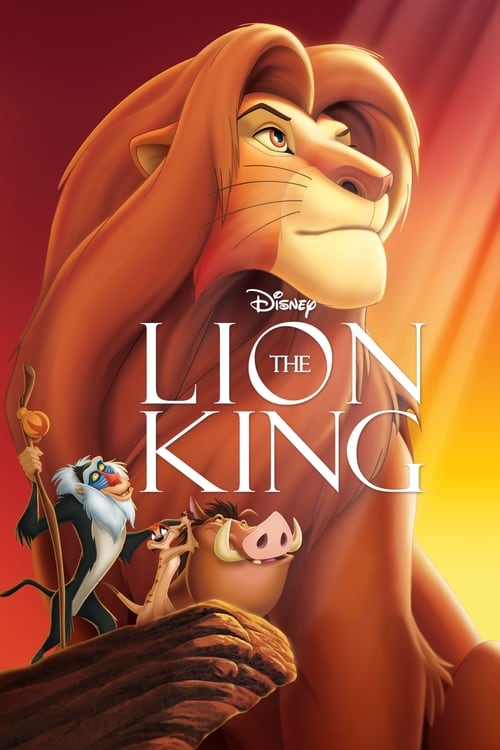
The origin of the concept for The Lion King is widely disputed. According to Charlie Fink (then-Walt Disney Feature Animation's vice president for creative affairs), he approached Jeffrey Katzenberg, Roy E. Disney, and Peter Schneider with a "Bambi in Africa" idea with lions. Katzenberg balked at the idea at first, but nevertheless encouraged Fink and his writers to develop a mythos to explain how lions serviced other animals by eating them. Another anecdote states that the idea was conceived during a conversation between Katzenberg, Roy E. Disney, and Schneider on a flight to Europe during a promotional tour. During the conversation, the topic of a story set in Africa came up, and Katzenberg immediately jumped at the idea. Katzenberg decided to add elements involving coming of age and death, and ideas from personal life experiences, such as some of his trials in his career in politics, saying about the film, "It is a little bit about myself."
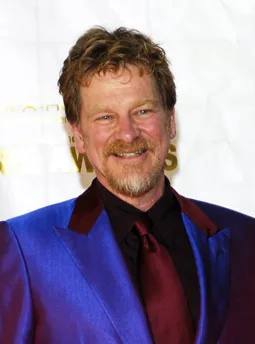
On October 11, 1988, Thomas Disch (the author of The Brave Little Toaster) had met with Fink and Roy E. Disney to discuss the idea, and within the next month, he had written a nine-paged treatment entitled King of the Kalahari. Throughout 1989, several Disney staff writers, including Jenny Tripp, Tim Disney, Valerie West and Miguel Tejada-Flores, had written treatments for the project. Tripp's treatment, dated on March 2, 1989, introduced the name "Simba" for the main character, who gets separated from his pride and is adopted by Kwashi, a baboon, and Mabu, a mongoose. He is later raised in a community of baboons. Simba battles an evil jackal named Ndogo, and reunites with his pride. Later that same year, Fink recruited his friend J. T. Allen, a writer, to develop new story treatments. Fink and Allen had earlier made several trips to a Los Angeles zoo to observe the animal behavior that was to be featured in the script. Allen completed his script, which was titled The Lion King, on January 19, 1990. However, Fink, Katzenberg, and Roy E. Disney felt Allen's script could benefit from a more experienced screenwriter, and turned to Ronald Bass, who had recently won an Academy Award for Best Original Screenplay for Rain Man (1988). At the time, Bass was too preoccupied to rewrite the script himself, but agreed to supervise the revisions. The new script, credited to both Allen and Bass, was retitled King of the Beasts and completed on May 23, 1990.
Sometime later, Linda Woolverton, who was also writing Beauty and the Beast (1991), spent a year writing several drafts of the script, which was titled King of the Beasts and then King of the Jungle. The original version of the film was vastly different from the final product. The plot centered on a battle between lions and baboons, with Scar being the leader of the baboons, Rafiki being a cheetah, and Timon and Pumbaa being Simba's childhood friends. Simba would not only leave the kingdom but become a "lazy, slovenly, horrible character" due to manipulations from Scar, so Simba could be overthrown after coming of age. By 1990, producer Thomas Schumacher, who had just completed The Rescuers Down Under (1990), decided to attach himself to the project "because lions are cool". Schumacher likened the King of the Jungle script to "an animated National Geographic special".
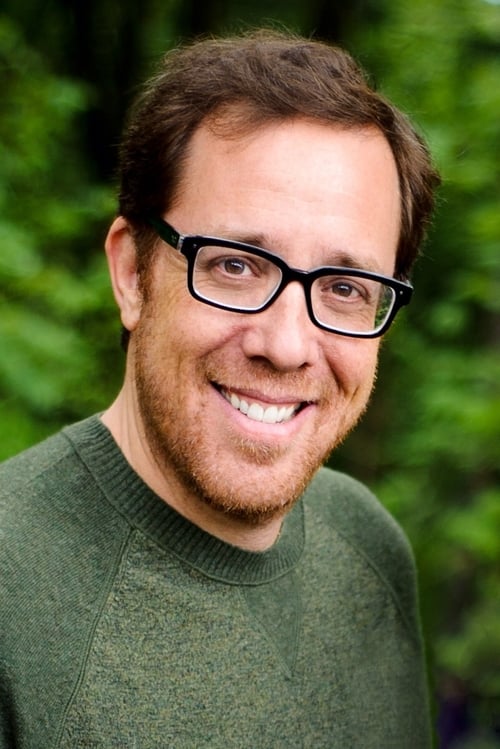
George Scribner, who had directed Oliver & Company (1988), was the initial director of the film, being later joined by Roger Allers, who was the lead story man on Beauty and the Beast (1991). Allers worked with Scribner and Woolverton on the project, but temporarily left the project to help rewrite Aladdin (1992). Eight months later, Allers returned to the project, and brought Brenda Chapman and Chris Sanders with him. In October 1991, several of the lead crew members, including Allers, Scribner, Chapman, Sanders, and Lisa Keene visited Hell's Gate National Park in Kenya, in order to study and gain an appreciation of the environment for the film. After six months of story development work, Scribner decided to leave the project upon clashing with Allers and the producers over their decision to turn the film into a musical, since Scribner's intention was of making a documentary-like film more focused on natural aspects. By April 1992, Rob Minkoff had replaced Scribner as the new co-director.
Don Hahn joined the production as the film's producer because Schumacher was promoted to Vice President of Development for Walt Disney Feature Animation. Hahn found the script unfocused and lacking a clear theme, and after establishing the main theme as "leaving childhood and facing up to the realities of the world", asked for a final retool. Allers, Minkoff, Chapman, and Hahn then rewrote the story across two weeks of meetings with directors Kirk Wise and Gary Trousdale, who had finished directing Beauty and the Beast (1991). One of the definite ideas that stemmed from the meetings was to have Mufasa return as a ghost. Allers also changed the character Rafiki from a more serious court advisor into a wacky shaman. The title was also changed from King of the Jungle to The Lion King, as the setting was not the jungle but the savannah. It was also decided to make Mufasa and Scar brothers, as the writers felt it was much more interesting if the threat came from someone within the family.
Allers and Minkoff pitched the revised story to Katzenberg and Michael Eisner, to which Eisner felt the story "could be more Shakespearean"; he suggested modeling the story on King Lear. Maureen Donley, an associate producer, countered, stating that the story resembled Hamlet. Continuing on the idea, Allers recalled Katzenberg asking them to "put in as much Hamlet as you can". However, they felt it was too forced, and looked to other heroic archetypes such as the stories of Joseph and Moses from the Bible. Aside from Disney's prior anthology films and The Rescuers Down Under (1990) (a sequel to The Rescuers (1977)), The Lion King was Disney's second animated feature film to feature an original story conception after The Aristocats (1970), although the final product was heavily modelled on Hamlet, Joseph and Moses. The story has also been compared to Shakespeare's lesser known plays Henry IV, Part 1 and Part 2.
By this point, Woolverton had left the production to work on the Broadway adaptation of Beauty and the Beast. To replace her, Allers and Minkoff met with numerous screenwriters, including Billy Bob Thornton and Joss Whedon, to discuss writing the new screenplay. During the summer of 1992, Irene Mecchi was hired as the new screenwriter, and months later, she was joined by Jonathan Roberts. Mecchi and Roberts took charge of the revision process, fixing unresolved emotional issues in the script and adding comedic situations for Pumbaa, Timon, and the hyenas.
Lyricist Tim Rice worked closely with the screenwriting team, flying to California at least once a month, as his songs for the film needed to work in the narrative continuity. Rice's lyrics—which were reworked up to the production's end—were pinned to the storyboards during development. Rewrites were frequent, with animator Andreas Deja saying that completed scenes would be delivered, only for the response to be that parts needed to be reanimated because of dialogue changes. Due to the rewrites, The Lion King missed its initial release window for Thanksgiving 1993, with The Nightmare Before Christmas (1993) assuming its release slot. Hahn stated the film was delayed to a summer 1994 release, "with much consternation, because people said you can't release animation in the summertime."