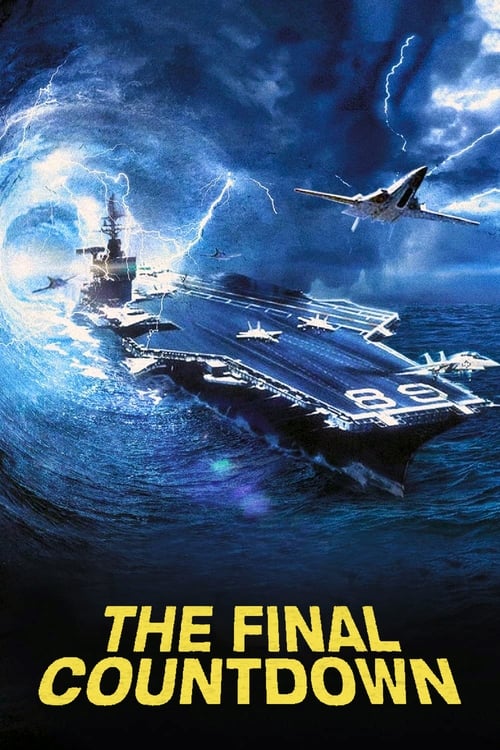


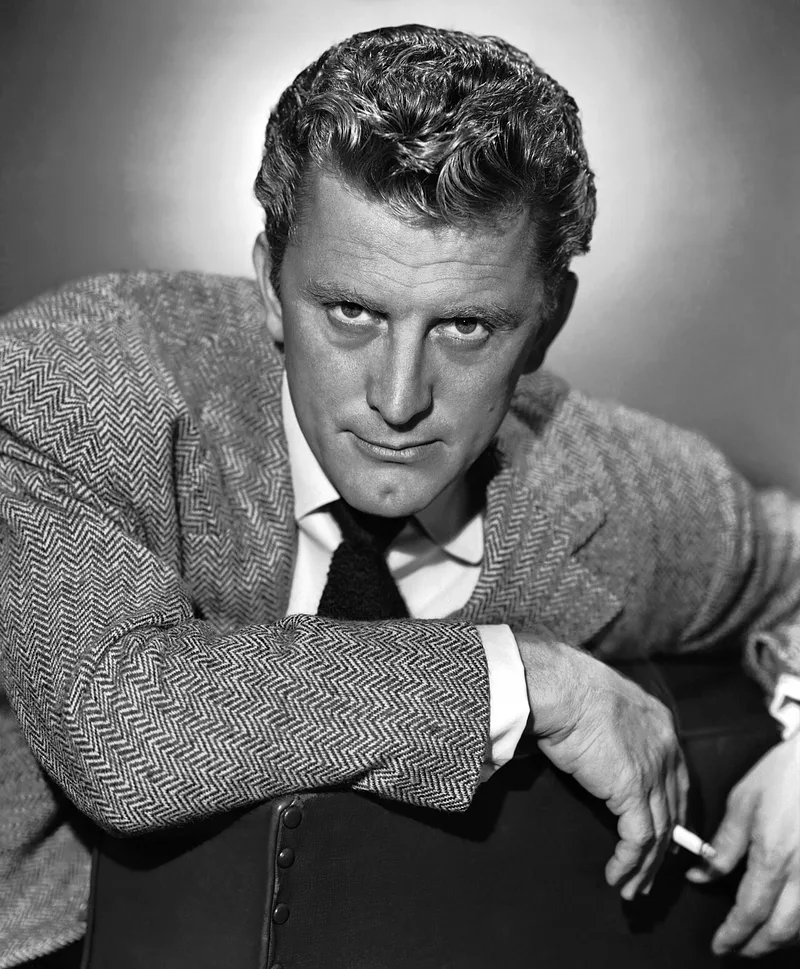



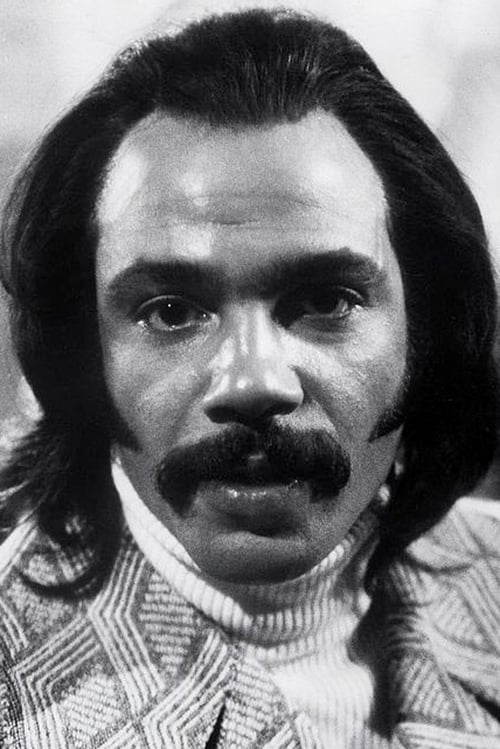





The Final Countdown is a 1980 American science fiction war film about a modern, nuclear-powered aircraft carrier that travels through time to the day before the December 7, 1941, attack on Pearl Harbor. It is directed by Don Taylor, his final theatrical film as director, and stars Kirk Douglas, Martin Sheen, James Farentino, Katharine Ross, Ron O'Neal, and Charles Durning.
The film was produced with the cooperation of the United States Navy's naval aviation branch and the United States Department of Defense. It was set and filmed on board USS Nimitz (CVN-68), filming operations of the modern, nuclear warship, which had been launched in the early 1970s. Troma Entertainment founder Lloyd Kaufman was an associate producer of the film, and also has a minor acting role.
The Final Countdown was released by United Artists on August 1, 1980. It received mixed reviews from critics, but was a box office success. It received Saturn Award nominations for Best Science Fiction Film and Best Actor (for Kirk Douglas).
Contents
Plot
In 1980, the aircraft carrier USS Nimitz departs Naval Station Pearl Harbor for naval exercises in the mid-Pacific Ocean. The ship takes on a civilian observer, Warren Lasky, a systems analyst for Tideman Industries working as an efficiency expert for the U.S. Department of Defense, on the orders of his reclusive employer, Mr. Tideman, whose secretive major defense contractor company designed and built the nuclear-powered warship.
Once at sea, the Nimitz encounters a mysterious electrically-charged vortex. While the ship passes through it, radar and other equipment become unresponsive. Unsure of what happened to them and without radio contact with U.S. Pacific Fleet Command at Pearl Harbor, Captain Yelland, commanding officer of the aircraft carrier, fears there may have been a nuclear strike on Hawaii or the continental United States. He orders general quarters and launches a RF-8 Crusader reconnaissance aircraft. The aircraft photographs Pearl Harbor, revealing an intact row of U.S. Pacific fleet battleships, of which several had been destroyed during the Japanese attack on Pearl Harbor on December 7, 1941.
When a surface contact is spotted on radar, Yelland launches two ready alert Grumman F-14 Tomcat fighter jets from VF-84 to intercept. The patrol witnesses the sinking of a civilian yacht by two Imperial Japanese Navy Mitsubishi A6M Zero fighters. The F-14s are ordered to drive off the Zeros without firing, but when the Zeros inadvertently head towards the Nimitz, Yelland gives clearance to shoot them down. The Nimitz rescues survivors from the yacht: U.S. Senator Samuel Chapman, his aide Laurel Scott, her dog Charlie, and one of the two downed Zero pilots. Commander Owens, an amateur historian, recognizes Chapman as a politician who could have been Franklin D. Roosevelt's running mate (and potential successor) during his final re-election bid, had Chapman not disappeared shortly before the Pearl Harbor attack.
When a Grumman E-2 Hawkeye scouting aircraft discovers the Japanese fleet task force poised to launch its attack on Pearl Harbor, the Nimitz crew realizes they've been transported in time to the day before the attack. Yelland has to decide whether to destroy the Japanese fleet and alter the course of history or to stand by and allow history to proceed as they know it. The American civilians and the Zero pilot are kept isolated. While being questioned, the Japanese pilot takes an M16 rifle from one of the guards, kills two U.S. Marine guards, and takes Scott, Owens, and Lasky hostage. He demands access to a radio to warn the Japanese fleet about the Nimitz. Lasky tells Commander Owens to recite the secret plans for the Japanese attack; the dumbfounded Japanese pilot is overcome, shot, and killed by the other U.S. Marines. In the aftermath, Scott and Owens develop an attraction for each other.
Production
Peter Douglas was the driving force behind The Final Countdown. With a limited budget and a promising script, he was able to attract interest from the U.S. Navy. Officials from the Department of Defense offered full cooperation after seeing a script, but insisted that for safety and operational readiness, the film schedule would be dependent on the "on location" naval consultant, William Micklos. Principal photography took place at Naval Air Station Key West, Naval Station Norfolk, and off the Florida Keys, over two five-week periods in 1979. Scenes at Pearl Harbor consisted of mainly stock footage with most of The Final Countdown exteriors shot on the Nimitz while at sea, and at drydock for interiors. During operations, an emergency landing took place with the production crew allowed to film the recovery of the aircraft on the Nimitz; the sequence appeared in the final film.
Crew members of the Nimitz were used as extras, a few with speaking parts; a total of 48 of the crew appear as "actors" in the final credits. The difficulties in filming a modern jet fighter were soon apparent when the first setup to record an F-14 takeoff at Naval Station Norfolk, Virginia, resulted in both camera and operator being pitched down a runway.
Dissension in the production crew led to major changes during location shooting, with a number of the crew being fired and replaced. Taylor's direction was considered workmanlike, as he had a reputation for bringing projects in on time and on budget, but suggestions from U.S. naval aviators were ultimately incorporated into the shooting schedules with the "B" crew placed in charge of all the aerial sequences that became the primary focus of the film.
Troma Entertainment founder Lloyd Kaufman was the film's associate producer and unit production manager. He also appears in a minor acting role as an eponymous Lieutenant Commander.
In order to film the aerial sequences, Panavision cameras were mounted on naval aircraft while camera-equipped aircraft and helicopters were leased from Tallmantz Aviation, including a Bell 206 Jet Ranger helicopter, a Learjet 35, and a B-25 bomber converted into a camera platform. Three Mitsubishi A6M Zero replicas, originally built for the film Tora! Tora! Tora! (1970), were flown by pilots from the Confederate Air Force, now called the Commemorative Air Force. Two of the replicas were featured in a dogfight with F-14 Tomcats; it was the first time such a dissimilar engagement had appeared in film, with the "totally different speeds...environments and weaponry" of the aircraft causing extreme challenges for the jet pilots.
Aircraft appearing in the production
Douglas EA-3B Skywarrior
Grumman F-14A Tomcat
Grumman E-2 Hawkeye
Grumman A-6E Intruder
Grumman EA-6B Prowler
Lockheed S-3 Viking
LTV A-7E Corsair II
McDonnell Douglas F-4 Phantom II (briefly)
North American RA-5C Vigilante Buno: 156632 (briefly)
North American T-6 Texan modified to resemble Mitsubishi A6M Zero
North American T-6 Texan modified to resemble Nakajima B5N Kate
Sikorsky SH-3 Sea King
Vought RF-8G Crusader
Vultee BT-13 Valiant modified to resemble Aichi D3A Val
Release
The Final Countdown was released to theaters in the United States on August 1, 1980. A novelization by Martin Caidin, based on the screenplay, was released in the same month and largely dovetailed with the film presented on screen (the novelization ending with Lasky accompanying Tideman/CDR Owens and Laurel to their home, where it is revealed that the time travel phenomenon explored in the film had an extraterrestrial origin that is not further expanded upon).
Home media
The film was released on DVD on March 30, 2004. It was later released by Blue Underground on a two-DVD set (with both full-screen and widescreen formats) and a special two-disc limited edition set with a hologram cover. Each DVD edition was accompanied by special featurettes, including a "behind-the-scenes" documentary and a commentary track by the producer and other studio principals. These THX certified releases also feature a Dolby Digital 5.1 EX audio track, as well as a DTS 6.1 ES audio track. On November 4, 2008, a high-definition two-disc Blu-ray set was released, but lacked some of the earlier background materials. A 4K Ultra High-Definition disc set was released in May 2021 as a limited edition with some additional special features, a copy of the film on Blu-ray disc and a copy of John Scott's original motion picture score on CD.
Reception
Critical reception
The Final Countdown received mixed reviews from critics. On the review aggregator website Rotten Tomatoes, the film received an approval rating of 52% based on 23 reviews, with an average rating of 5.9/10. Metacritic, which uses a weighted average, assigned the film a score of 51 out of 100, based on 9 critics, indicating "mixed or average" reviews.
Vincent Canby of The New York Times considered it more of an interesting, behind-the-scenes tour of Nimitz: "We see planes landing and taking off with beautiful precision and, just to let us know that things don't always run smoothly on Nimitz, we also see one plane, which has lost its landing hook, landing safely anyway because of the ship's emergency gear". Roger Ebert of The Chicago Sun Times gave the film 2 out of 4 stars, saying it had some entertaining scenes and was technologically impressive but the convoluted story “didn’t make much sense [and] biggest element of interest is the aircraft carrier itself". Later reviews concentrated on the intriguing aspect of the time travel story, again stressing that the military hardware was the real star. The U.S. Navy sponsored the film premiere and exploited the film as a recruiting tool to the extent that the theatrical poster appeared in U.S. Navy recruiting offices shortly after the film's release. Ebert and Gene Siskel selected the film as one of their "dogs of the year" in a 1980 episode of Sneak Previews, criticizing the characters' repeated failure to draw obvious conclusions and take obvious actions, the numerous slow stretches, and the anticlimax of the film ending without the soldiers actually going into battle.
Christopher John reviewed The Final Countdown in Ares Magazine #5 and commented that "there is nothing wrong with what is on the screen in Final Countdown; what is on the screen, however, is only half of the film. Maybe someday, like Close Encounters of the Third Kind, someone will go back and put in the missing half-hour of this movie".
Box office
The film grossed $3.25 million in its opening weekend from 681 screens and earned a total of $16.6 million in the United States and Canada.
The film made $3 million in Germany.
Awards
Nominee, Best Science Fiction Film of Year—Saturn Award (Peter Vincent Douglas)
Nominee, Best Actor—Saturn Award (Kirk Douglas)
Winner, Golden Screen Award (German box office award)