



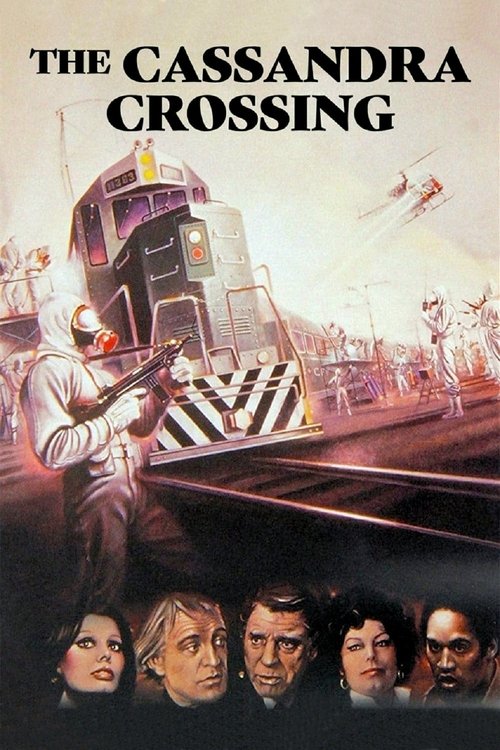
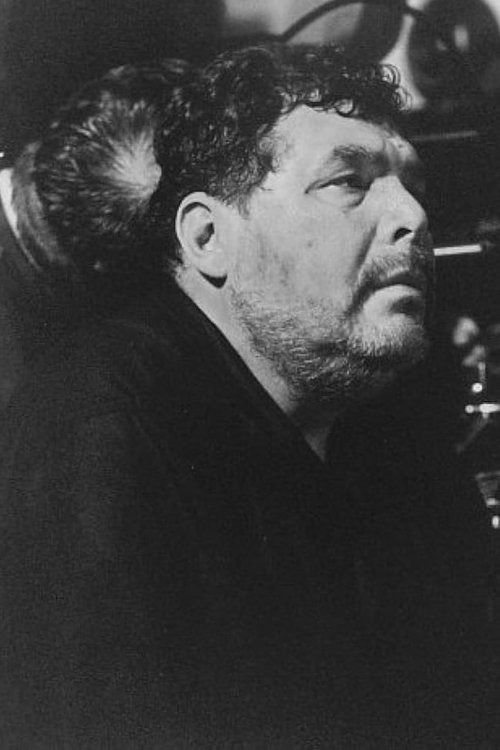

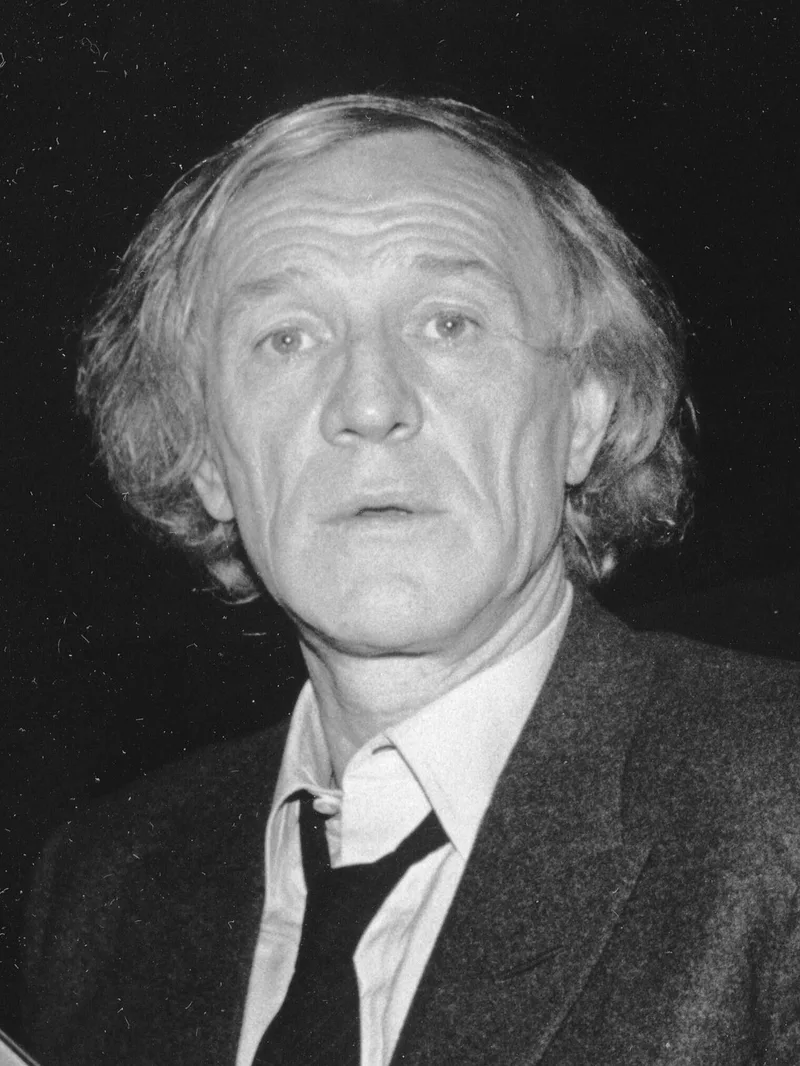
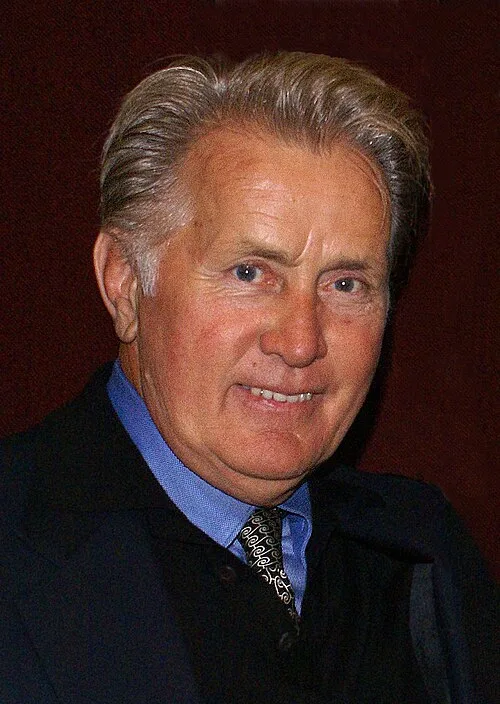

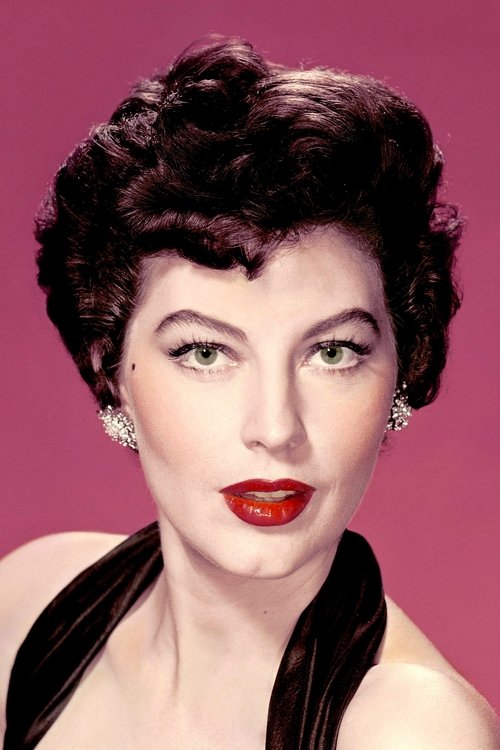
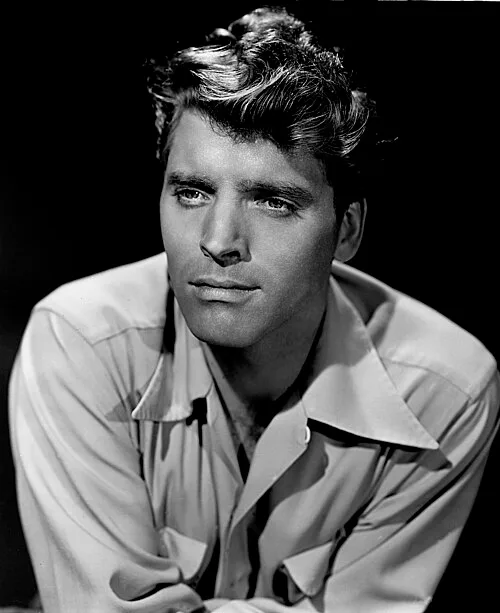

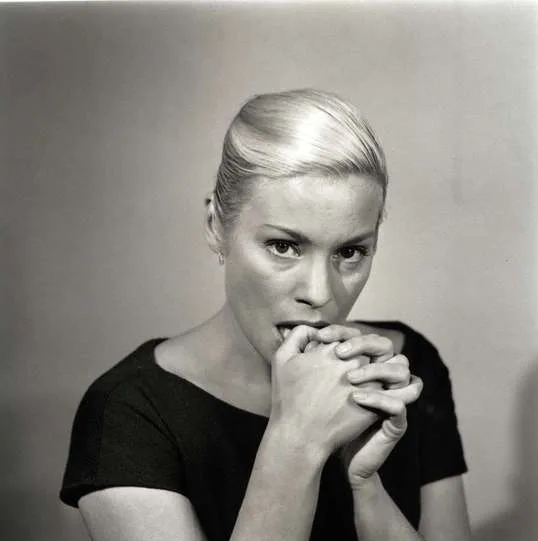
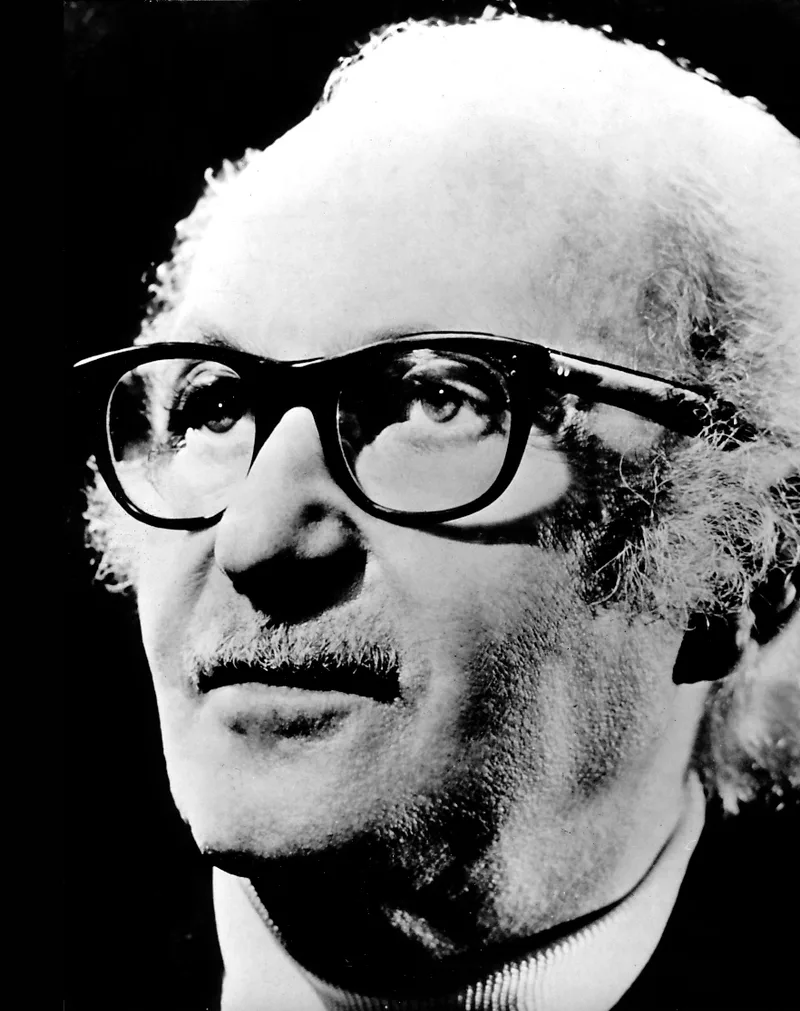
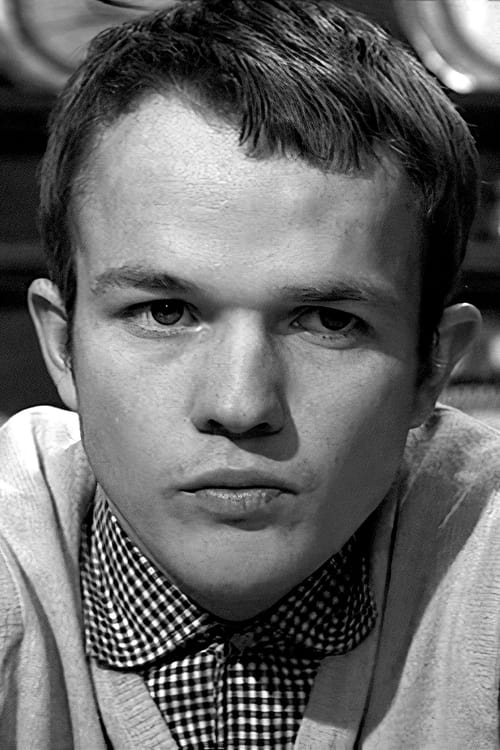
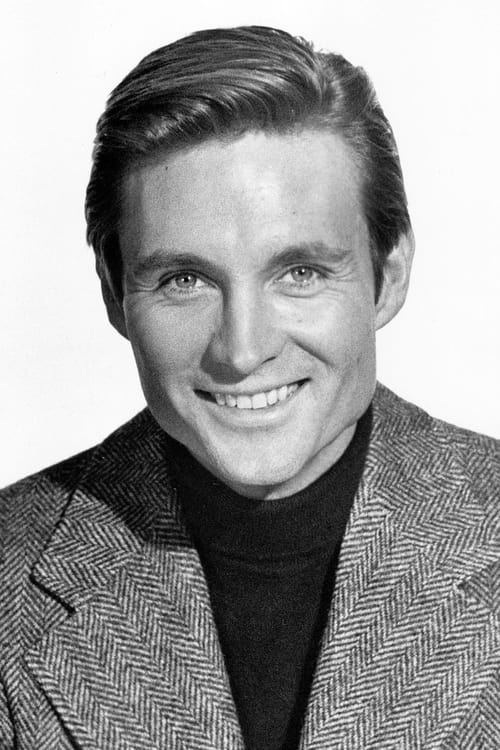

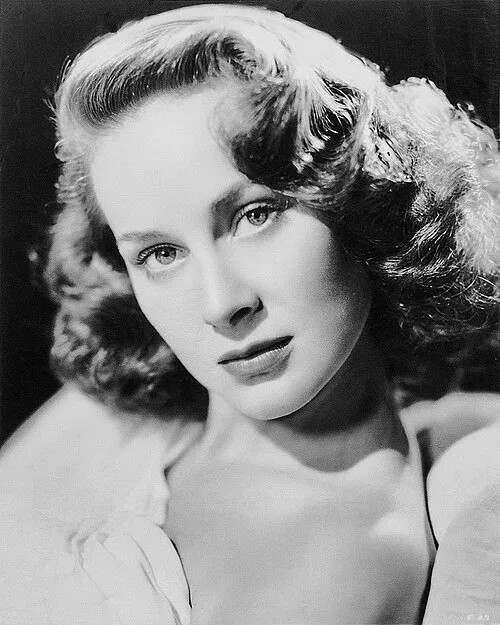
The Cassandra Crossing is a 1976 disaster thriller film directed by George Pan Cosmatos, from a screenplay he co-wrote with Tom Mankiewicz and Robert Katz. The film is about a viral outbreak aboard a cross-European train as it heads to a derelict arch bridge which is liable to collapse. It stars an ensemble cast, featuring Sophia Loren, Richard Harris, Ava Gardner, Martin Sheen, Burt Lancaster, Lee Strasberg, O. J. Simpson, Ingrid Thulin, Lionel Stander, Ann Turkel, John Phillip Law, and Alida Valli.
With the backing of media tycoon Sir Lew Grade (head of the British broadcast network Associated Television) and the Italian film producer Carlo Ponti, the film's international all-star cast was expected to attract a widespread audience; distribution rights were sold prior to filming, to both British and American concerns. Ponti also saw the production as a showcase for his wife, Loren. Shooting took place on-location in France and Switzerland, and at Cinecittà Studios.
The film was released in Italy on December 18, 1976. It had a generally unfavourable critical response, though it was financially successful.
Contents
Plot
Three terrorists enter a laboratory at the International Health Organization in Geneva and attempt to blow it up. Two of them are shot, one mortally, by security personnel, but one escapes. The surviving terrorist was exposed to a biological agent; he is hospitalized, quarantined and interrogated without success. His effects reveal he is a member of the Swedish peace movement.
Elena Stradner and US military intelligence Colonel Stephen Mackenzie argue over the nature of the deadly pathogen, a strain of the pneumonic plague. Stradner asserts it is a biological weapon, and that the United States military is illegally using its mission to conduct covert research on germ warfare in neutral Switzerland; Colonel Mackenzie counters the US was developing a countermeasure for it.
The third terrorist escapes and stows away on a train travelling from Geneva to Stockholm. Stradner believes that the train should be stopped so that the terrorist can be removed and quarantined, but Col. Mackenzie is concerned that all of the passengers on the train might be infected. Mackenzie insists on rerouting the train to a disused railway line which goes to Janov in then Warsaw Bloc Poland, where the passengers will be quarantined. However, the line crosses the dangerously unsound Kasundruv Bridge, a steel arch known locally as the "Cassandra Crossing" and out of use since 1948.
Mackenzie understands that the bridge might collapse as the train passes over it, and has the matter intensely scrutinized. The presence of the infected terrorist, and the rerouting of the train, creates conflict among passengers, which include Jonathan Chamberlain, a famous neurologist; his ex-wife Jennifer, a writer; a former inmate of a Nazi concentration camp in Janov Herman Kaplan; and Nicole Dressler, the wife of the top German arms dealer. She is embroiled in an affair with her young companion Robby Navarro.
Mackenzie informs Chamberlain of the presence of the infected terrorist, who is found hiding in the baggage car next to a caged dog, which is airlifted out by helicopter and taken to the IHO lab. Chamberlain is told that the plague has a 60% mortality rate. As a cover story to minimize panic, Mackenzie, informs passengers that reports of terrorist bombs placed along the rail line have closed it, and that the train will be rerouted to Nuremberg. There it is sealed and supplied with oxygen, and a US Army medical team is placed aboard. Armed guards with shoot-to-kill orders from Mackenzie also board the train, who wound Holocaust survivor Kaplan when he tries to escape. Chamberlain learns of the risk of the Cassandra Crossing.
Cast
Sources:
Production
The Cinecittà studios in Rome were chosen for interiors, with French and Swiss locales providing most of the location footage. The steel arch bridge depicted in the film is actually the Garabit Viaduct in southern France, built from 1880 to 1884 by Gustave Eiffel, who later constructed the Eiffel Tower.
Scenes of passengers arriving at Geneva railway station to embark on the train early in the film were shot at Basel SBB railway station. Green colored BVB trams and Basel's Central Station Square can be seen in the background.
Much of the film's special effects involved models and rear projection that was largely effective, although the studio artwork shows a typical US diesel locomotive that doesn't resemble anything seen in the film.
Peter O'Toole was offered the lead, but turned it down. Richard Harris accepted, and his wife, Ann Turkel, was cast as Susan.
The Cassandra Crossing was the third film made by George Pan Cosmatos. Ava Gardner said "the real reason I'm in this picture is money, baby, pure and simple." Tom Mankiewicz, who worked on the script, lampooned the film as The Towering Germ, referencing the much more successful contemporaneous all-star disaster film, The Towering Inferno.
Reception
Box office
The producers of the The Cassandra Crossing reported that they recouped the film's production costs out of Japan alone.
Critical response
The film was booed and hissed at preview screenings by critics.
The graphic scenes of the passengers being killed at the end of the film had ensured an "R" rating in theatres and led to two "censored" and "uncensored" versions being released for broadcast and home media.
Richard Eder of The New York Times called the film "profoundly, offensively stupid," with Ava Gardner "awful in an awful role" and Sophia Loren "totally miscast." Gene Siskel of the Chicago Tribune gave the film 1.5 stars out of 4 and called it "an unintentional parody of a disaster film. The catastrophes that befall the passengers of a Geneva to Copenhagen train in the picture are positively ridiculous." Variety dismissed the film as, "a tired, hokey and sometimes unintentionally funny disaster film in which a trainload of disease-exposed passengers lurch to their fate." Kevin Thomas of the Los Angeles Times called the film "a disaster picture quite literally disastrous and so awful it's unintentionally hilarious." Gary Arnold of The Washington Post wrote, "Cosmatos is an absentminded, huffing-puffing director who seems to keep hoping we'll overlook his frazzled continuity, which suggests an old serial slapped together in such a way that the cliffhanging bits are never resolved." Richard Combs of The Monthly Film Bulletin wrote, "The one remotely enjoyable aspect of The Cassandra Crossing is that it knows no proportion in anything—from performances through plotting, shooting style and special effects, it is constantly outdoing itself in monumental silliness."
The film holds a score of 42% on Rotten Tomatoes based on 12 reviews.