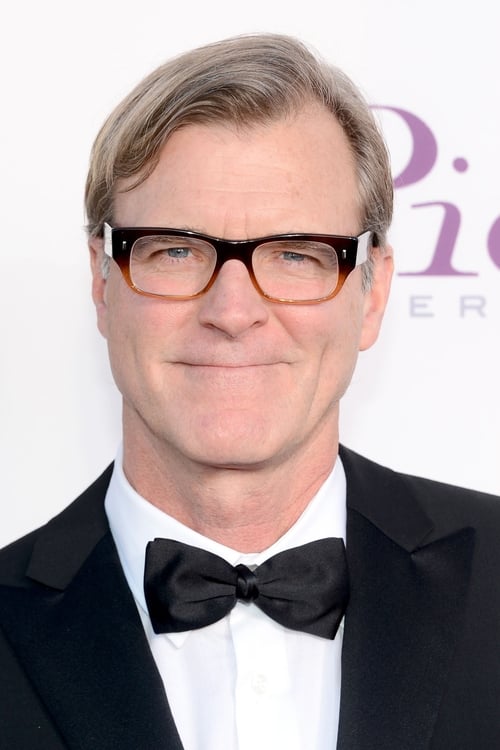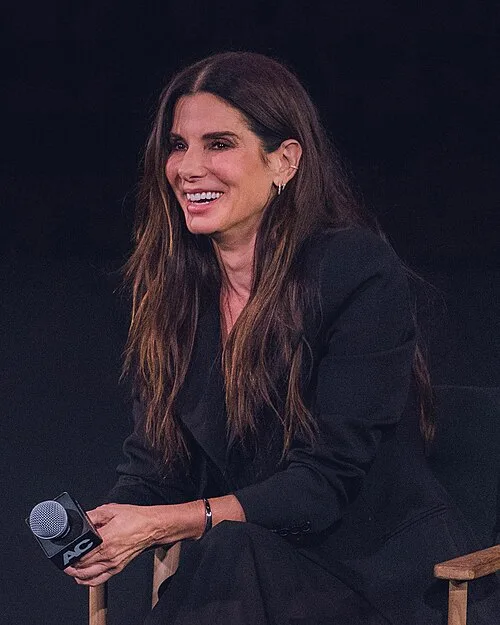



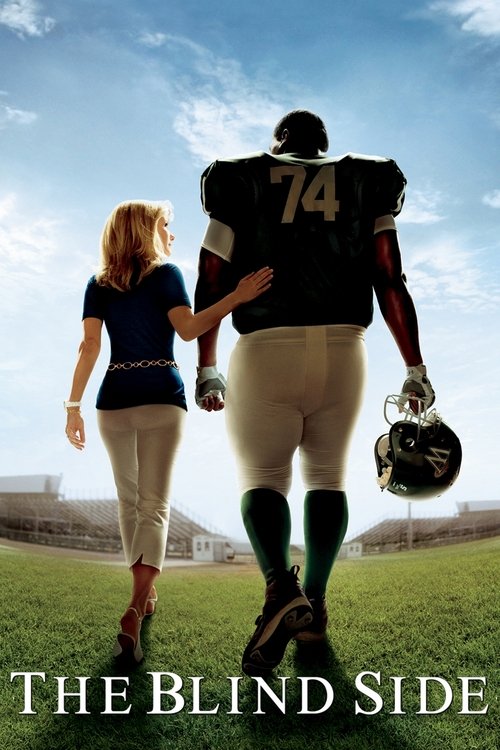
The Blind Side is a 2009 American biographical sports drama film written and directed by John Lee Hancock. Based on the 2006 book of the same name by Michael Lewis, the film tells the story of Michael Oher, a football offensive lineman who overcame an impoverished upbringing to play in the National Football League (NFL) with the help of Leigh Anne and Sean Tuohy. It stars Sandra Bullock as Leigh Anne, Tim McGraw as Sean, and Quinton Aaron as Oher.
The film was released by Warner Bros. Pictures on November 20, 2009, and was a commercial success, grossing $309 million on a $29 million budget. Despite mixed reviews from critics, Bullock's performance was universally praised, leading to her winning the Academy Award for Best Actress, the Golden Globe Award for Best Actress in a Motion Picture – Drama, and the Screen Actors Guild Award for Outstanding Performance by a Female Actor in a Leading Role.
The film was the subject of controversy in 2023 when Oher alleged the Tuohys tricked him into signing a conservatorship agreement instead of legally adopting him, which prevented him from receiving royalties while the family indirectly made millions.
Contents
Plot
Michael "Big Mike" Oher is a 17-year old who's been in foster care in Tennessee due to his biological mother's drug addiction. Every time he's placed in a new home, he tries to return to her. While living on a friend's couch, his friend's father notices Michael's size and athleticism and arranges for Burt Cotton, the football coach of Wingate Christian School, to enroll Michael despite his poor academic record.
Michael is befriended by a younger student named Sean Tuohy Jr. ("SJ"). SJ's mother, Leigh Anne, is a strong-minded interior designer and the wife of wealthy businessman Sean Sr. Michael receives news that his father has died in an accident. Leigh Anne and Sean notice Michael picking discarded food from the bleachers after a volleyball game. The evening before Thanksgiving, Leigh Anne notices Michael walking alone without adequate clothing. When she learns he plans to spend the night outside the school, she offers him shelter in the Tuohy home and asks him to Thanksgiving dinner with her family.
Leigh Anne unsuccessfully tries to return Michael to his biological mother's house, but it has an eviction notice posted. Michael becomes a member of the Tuohy family. Leigh Anne's friends suggest Collins, Leigh Anne's daughter, might not be safe around Michael. Collins rejects the notion. When Leigh Anne attempts to become Michael's legal guardian, she learns he was taken from his drug-addicted birth mother when he was seven; nobody knows her whereabouts.
Michael scores poorly in a career aptitude test but ranks in the 98th percentile for protective instincts. His grades improve enough to let him play on the school football team. Michael is hesitant to use his strength and size during practice. When Leigh Anne explains that an offensive linemen protect the quarterback, Michael's play improves to college level and the Tuohys hire Miss Sue, a private tutor, to get his grades to the minimum grade point average for college admission.
Leigh Anne locates Michael's mother Denise and asks about adopting him. Michael is heavily recruited by prestigious schools and endorsed by SJ. His grades improve and he opts to attend "Ole Miss". An NCAA official named Granger investigates the Tuohys to see if they influenced him just so he would play for their alma mater. Sean Sr. had played basketball for Ole Miss, and Leigh Ann and Miss Sue had both been cheerleaders. Michael becomes suspicious and confronts Leigh Anne about her motives for taking him in.
Cast
Several NCAA Division I Football Bowl Subdivision coaches and recruiters make brief appearances as themselves: Phillip Fulmer, Lou Holtz, Tom Lemming, Houston Nutt, Ed Orgeron, Pepper Rodgers, Nick Saban, and Tommy Tuberville. Oher's coach from high school, Hugh Freeze, has an uncredited cameo as a coach watching game film.
Production
The Blind Side was produced by Alcon Entertainment and released by Warner Bros. Pictures. The film's production budget was $29 million. Filming for the school scenes took place at Atlanta International School and The Westminster Schools in Atlanta, Georgia, and it features many of their students as extras. The film premiered on November 17 in New York City and New Orleans, and opened in theaters in the rest of the United States and in Canada on November 20.
The starring role was originally written for Julia Roberts, but she turned it down. Bullock initially turned down the starring role three times due to discomfort with portraying a devout Christian. By her own account, Bullock felt she could not objectively represent such a person's beliefs on screen. But after a visit with the real Leigh Anne Tuohy, Bullock not only won the role, but also took a pay cut and agreed to receive a percentage of the profits instead.
Release
Home media
The Blind Side was released on DVD and Blu-ray on March 23, 2010. It was available exclusively for rental from Blockbuster for 28 days.
Redbox and Netflix customers had to wait 28 days before they were able to rent the movie. This stems from the settlement of a lawsuit brought by Redbox against Warner Home Video, who, in an attempt to boost DVD sales, refused to sell wholesale titles to Redbox. On August 19, 2009, Redbox sued Warner Home Video to continue purchasing DVD titles at wholesale prices. On February 16, 2010, Redbox settled the lawsuit and agreed to a 28-day window past the street date.
As of July 9, 2013, units sold for the DVD stand at more than 8.4 million copies and it has grossed a further $107,962,159 adding to its total gross.
The Blu-ray was reissued as part of the Best of Warner Bros. 50 Film Collection in 2013. There was also a release of this Limited Edition set issued on DVD.
Reception
Box office
The Blind Side opened in second place behind The Twilight Saga: New Moon, earning $34.5 million during its opening weekend. It was the highest-grossing opening weekend of Sandra Bullock's career. The movie enjoyed a rare greater success for the second weekend, taking in an estimated $40 million ranking again in second place to New Moon. During its third weekend, The Blind Side moved up to first place, earning $20.4 million due to strong word-of-mouth. In its fourth weekend, it moved down to second place, earning an estimated $15.5 million.
By January 2010, the film had earned $200 million domestically, becoming an all-time career high for an actress whose sole name appears above the title. By June 2010, the film ended its domestic theatrical run, earning a total of nearly $256 million. In the United Kingdom and Ireland, the film was released on March 26, 2010. It was the third biggest release of that weekend behind Nanny McPhee and the Big Bang and Tim Burton's Alice in Wonderland.
The Blind Side has also become the highest grossing football film and sports drama of all time domestically, unadjusted for ticket inflation.
Critical response
Sandra Bullock's performance in The Blind Side received enormous critical praise. Review aggregation website Rotten Tomatoes gives the film a rating of 66%, based on 204 reviews, with an average rating of 6.3/10. The site's critical consensus reads, "It might strike some viewers as a little too pat, but The Blind Side has the benefit of strong source material and a strong performance from Sandra Bullock." Metacritic, which assigned a score of 53 out of 100, based on reviews from 29 critics, indicating "mixed or average reviews". Audiences polled by CinemaScore gave the film a rare "A+" grade.
A. O. Scott of The New York Times commented on the performances: "Ms. Bullock is convincing enough as an energetic, multitasking woman of the New South, who knows her own mind and usually gets her own way. And Tim McGraw, as Leigh Anne's affable husband, Sean, inhabits his character comfortably and knows how to get out of Ms. Bullock's way when necessary." He found the movie to be "made up almost entirely of turning points and yet curiously devoid of drama or suspense" and called it a "live-action, reality-based version of a Disney cartoon: it's the heartwarming tale of a foundling taken in by strangers, who accept him even though he's different and treat him as one of their own."
According to Michael Rechtshaffen of The Hollywood Reporter, Bullock's character is an "irrepressible hoot in writer-director John Lee Hancock's otherwise thoroughly conventional take on Michael Lewis' fact-based book". In spite of her "feisty" and "energetic" performance, he felt that there was a lack of development concerning Michael's character: "Not until the end of the film do we ever get a chance to really see what's going on in Oher's head—how he feels about being the chosen one plucked from the poverty-stricken projects of Memphis and thrown into this protected, nonliberal-leaning environment of privilege." Peter Bradshaw of The Guardian described Bullock's appearance as "strangely humourless" and felt that "there is something weirdly absent about this performance." Overall, he opined that the film provided "a Photoshopped image of reality that is bland, parochial, and stereotypically acted," and concluded: "There is a rich, complex story to be told about Michael Oher, and his mentor, Leigh Anne Tuohy. But this waxwork parade isn't it."
The film has been criticized for perpetuating the "white savior" trope. Jeffrey Montez de Oca of the University of Colorado-Colorado Springs writes that in The Blind Side's portrayal of adoption, "charity operates as a signifying act of whiteness that obscures the social relations of domination that not only make charity possible but also creates an urban underclass in need of charity." Melissa Anderson of the Dallas Observer argues that the "mute, docile" portrayal of Oher effectively endorses the Uncle Tom stereotype of African-American submission to white authority. In her book, White Fragility, Robin DiAngelo criticized The Blind Side's perpetuation of "negative racial stereotypes", calling it "fundamentally and insidiously anti-black". She refers to a scene in which Oher returns to his stereotypically violent former neighborhood, only leaving when Tuohy rescues him from it. She also argues that the film portrays Oher as a simpleton who uses instinct over intellect, as a psychological test concludes that Oher has little "ability to learn" but much "protective instinct" (a scientifically nonsensical statement, according to DiAngelo).
Accolades
The nomination of The Blind Side for Best Picture was considered a surprise, even to its producers. In an attempt to revitalize interest, the Academy of Motion Picture Arts and Sciences had upped the number of Best Picture nominees from a mandatory number of five to ten in time for the 82nd Academy Awards, the year The Blind Side was nominated. However, in 2011, the academy changed the policy, stating that the Best Picture category would feature from five to ten nominees depending on voting results, as opposed to a set number of nominees. The change was interpreted as a response to films like The Blind Side being nominated for Best Picture to fill up the set number of spots.
Legal dispute
In August 2023, Oher filed a lawsuit alleging that Leigh Ann and Sean Tuohy never actually adopted him, but instead created a conservatorship which gave them legal authority to make business deals in his name. He alleged that the Tuohys used their power as conservators to strike a deal that paid them and their two children millions of dollars in royalties from The Blind Side while Oher received nothing. SJ Tuohy, the biological son of the Tuohy family, claims to have received "$60,000–$70,000 over the course of the last four or five years."
The producers of The Blind Side, Broderick Johnson and Andrew Kosove denied the family was paid millions. However, the Tuohys were paid $700,000 after taxes, as well as the company's production company Alcon Entertainment making a charitable contribution to the Tuohy Family Foundation. They offered to donate an equal amount to a charity of Oher's choosing, which Oher declined.
Author Michael Lewis also denied millions were made, claiming Twentieth Century Fox paid $250,000 for the option to make the film, split 50–50 with the Tuohy family. According to Lewis, Oher also inexplicably declined his royalty checks adding, "They showered him with resources and love. That he's suspicious of them is breathtaking. The state of mind one has to be in to do that – I feel sad for him." In August 2024, The New York Times Magazine criticized Lewis for attributing Oher's lawsuit to CTE without evidence and promoting a white savior narrative, despite Oher already achieving high school football and academic success before meeting the Tuohys.
Oher's legal action asked the court to end the Tuohys' conservatorship and issue an injunction barring them from using his name and likeness or referring to themselves as his adopted family. It also asked for a full accounting of the money the Tuohys earned using Oher's name, to be paid his share of profits, and other compensatory and punitive damages. The lawyer representing the Tuohys released a statement regarding Oher's remarks, describing them as "hurtful and absurd", and alleging that Oher had threatened to "plant a negative story about them in the press unless they paid him $15 million", but did not deny that they misrepresented adopting Oher.
"The biggest for me was being portrayed as not being able to read or write. When you go into a locker room and your teammates don't think you can learn a playbook, that weighs heavy."
Soundtrack
The film features 23 songs by artists including Les Paul, Young MC, Lucy Woodward, the Books, Canned Heat, Five for Fighting, and the film's co-star Tim McGraw. However, when the score soundtrack by Carter Burwell was released on CD, none of the featured songs were included.