Critical response
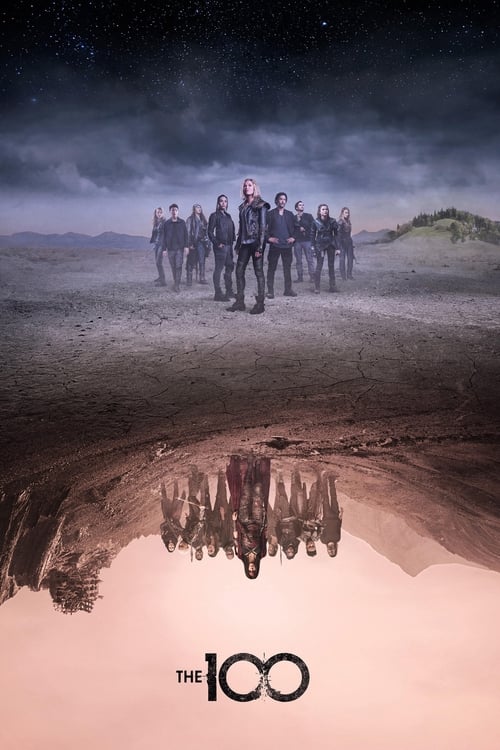
On Rotten Tomatoes, the show holds a 93 percent average approval rating across its seven seasons.
Its first season has a 76 percent approval rating based on 37 reviews, with an average score of 6.98/10. The site's consensus reads: "Although flooded with stereotypes, the suspenseful atmosphere helps make The 100 a rare high-concept guilty pleasure." On Metacritic, the first season scores 63 out of 100 points, based on 26 critics, indicating "generally favorable reviews". In an early negative review of the first season, Brian Lowry of The Boston Globe said: "Our attraction to Apocalypse TV runs deep, as our culture plays out different futuristic possibilities. That's still no reason to clone material, nor is it a reason to deliver characters who are little more than stereotypes." At the start of the series, Allison Keene of The Hollywood Reporter said the show "has a lot of interesting things to play with in terms of its narrative and world-building, but it chooses to gloss over them", presenting "The CW's ultimate vision for humanity: an Earth populated only by attractive teenagers, whose parents are left out in space." Kelly West of Cinema Blend gave it a more favorable review, noting: "It takes a little while for the series to warm up, but when The 100 begins to hit its stride, a unique and compelling drama begins to emerge." IGN's editor Eric Goldman also gave the show a positive review, writing: "Overcoming most of its early growing pains pretty quickly, The 100 was a very strong show by the end of its first season."
The second season was met with mostly positive reviews and holds a rating of 100 percent on Rotten Tomatoes based on 11 reviews, with an average score of 8.77/10. The site's consensus reads: "The 100 hones all of the things that make it tick for a dynamic second season complete with fast-paced storylines, vivid visuals, and interesting characters to root for – or against." In a review of the second-season finale, Kyle Fowle of The A.V. Club said, "Very few shows manage to really push the boundaries of moral compromise in a way that feels legitimately difficult. [...] The 100 has done the same, presenting a finale that doesn't shy away from the morally complex stakes it's spent a whole season building up." Maureen Ryan of The Huffington Post, wrote: "I've rarely seen a program demonstrate the kind of consistency and thematic dedication that The 100 has shown in its first two seasons. This is a show about moral choices and the consequences of those choices, and it's been laudably committed to those ideas from Day 1." IGN's Eric Goldman said the second season "elevated the series into the upper echelon, as the show become one of the coolest and most daring series on TV these days". In Variety, Ryan named The 100 one of the best shows of 2015.
The third season received an overall rating of 83 percent based on 12 reviews, with an average rating of 7.29/10. The critical consensus is, "The 100 goes macro in season 3, skillfully expanding the literal scope of the setting and figurative moral landscape." Variety's Maureen Ryan stated in an early review of the season: "The show is more politically complicated than ever, and the world-building that accompanies the depiction of various factions, alliances and conflicts is generally admirable." In a review of the third-season finale, Mariya Karimjee of Vulture wrote: "Every moment of this finale is pitch-perfect: the choreography of the fight scenes, the plotting and pacing, and the stunning way in which the episode finally reaches it apex. [The episode] elevates the season's themes and pulls together its disparate story lines, setting us up nicely for season four." In his review of the finale and the season overall, Fowle of The A.V. Club stated: "This has been a rocky season. The first half of it was defined by shoddy character motivations and oversized villains. The second half has done some work to bring the show back from the brink, [...] paying off with "a thrilling, forward-thinking finale that provides some necessary closure to this season."
The fourth season received a 93 percent on Rotten Tomatoes, with an average rating of 8.22/10 based on 14 reviews. The site's consensus reads, "Season 4 of The 100 rewards longtime viewers with a deeper look at their favorite characters, as well as adding exceptional nuance and depth to their thrilling circumstances." The latter half of the fourth season received better reception than the first, with the episodes "Die All, Die Merrily" and "Praimfaya" often cited as the best episodes of the season. "Die All, Die Merrily" has a 9.5/10 rating from IGN, a 5/5 rating from Vulture, and an A rating from The AV Club. "Praimfaya" has a 9.0/10 from IGN and an A rating from The AV Club.
On Rotten Tomatoes, the fifth season has a 100 percent with an average of 8.31/10, based on 13 reviews. The site's consensus is, "Five years in, The 100 manages to top itself once again with a audacious, addicting season." In a 4.5/5 review from Den of Geek, the third episode "Sleeping Giants" is described as a "good ol' fashioned episode of The 100", praising its balance of action, humour, and rich relationships.
The sixth season also has a 100 percent on Rotten Tomatoes, averaging a score of 7.20/10 based on 10 reviews. The site's consensus is, "The 100 successfully resets its game, proving that conflict lies within these characters rather than their environment, and sows the seeds for a killer final season." In particular, the sixth season's change of scenery was the subject of a range of reactions. Nicolene Putter of Cultured Vultures praised the new storylines, stating "the cutthroat plotlines will always have you sitting on the edge of your seat", and Selina Wilken of Hypable praised the season premiere for, despite introducing a lot of new information, overall being "a solid opening hour of a semi-reset version of The 100". On the other hand, Yana Grebenyuk of TV Fanatic criticized the various subplots, referring to the season finale "The Blood of Sanctum" as "a collective statement on what happens when there's too much plot and not enough time found to pace it".
The seventh season has a 100 percent rating on Rotten Tomatoes, with an average score of 7.50/10 based on 8 reviews. While the earlier episodes of season seven, such as the backdoor pilot to the cancelled prequel series "Anaconda", were generally met with praise, the later episodes and in particular the season and series finale received backlash. The 13th episode, "Blood Giant", was panned by critics and fans alike for its killing of Bellamy, one of the show's leads since the first season. Grebenyuk called the episode out for "undermin[ing] the two leads, their love for one another, and the show's entire message"; Den of Geek reviewer Delia Harrington viewed his re-characterization and subsequent death as "baffling". The season's final episode and series finale, "The Last War", was also widely criticized as an ineffective end to the series. Zack Giaimo of FanSided writes "despite some good scenes, the series finale of The 100 wastes a lot of the character development of the last seven seasons". In a more positive review, a SpoilerTV reviewer said that while the finale was not without mistakes, it was enough to satisfy long-time viewers and gave the leads a happy ending.
In 2016, Rolling Stone ranked the show #36 on its list of the "40 Best Science Fiction TV Shows of All Time".