Critical response
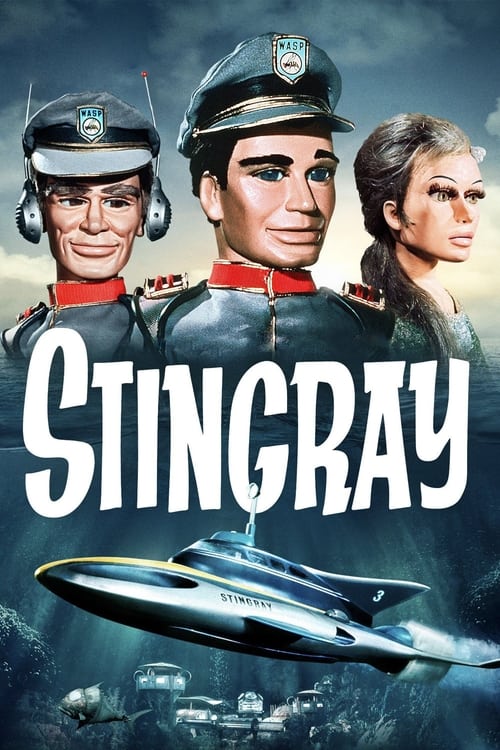
Writing in 2006, Robert Sellers described Stingray as the "first truly classic Anderson show", whose special effects "have stood the test of time remarkably well." Daniel O'Brien, author of SF:UK: How British Science Fiction Changed the World, considers it to be "perhaps the archetypal Gerry Anderson series". Ranking the Anderson productions, Morgan Jeffery of Digital Spy places Stingray fourth, calling it "a kids' adventure serial of the highest order". Andrew Blair of Den of Geek believes that when grouped with Thunderbirds and Captain Scarlet and the Mysterons, Stingray is "the lesser of the Holy Triumvirate of Supermarionation [...] It's shorter than the former, and lighter than the latter, giving it a comparatively breezy feel." He also describes it as "inherently a matinee adventure, an inspiring rush of mild peril and jaunty escapades".
Comparing Stingray to the Andersons' earlier productions, media historian Marcus Hearn writes that the series essentially "[transfers] the format of Fireball XL5 to an underwater setting." Peel suggests that the decision to locate the action under the sea was influenced by the 1960s vogue for ocean exploration inspired by adventurers such as Jacques Cousteau and Thor Heyerdahl. Kim Newman describes Stingray as a "patrol show" in the same vein as Fireball XL5 and Supercar. Clark notes that Stingray, like its space-bound precursor, uses "some very simple elements – a four-square hero, a fantastic craft which lends its name to the show and a mix of fast-paced action and innocent humour." Despite praising Stingray, Peel considers Fireball XL5 and Thunderbirds to be more appealing. Peel also argues that of all Gerry Anderson's series, it is Stingray in which his preferred "tongue-in-cheek" style of humour is most prominent.
Mike Fillis of TV Zone magazine regards Stingray as less "ambitious" than Thunderbirds but compares its "self-awareness" favourably to the "po-faced rigidity" of Captain Scarlet. He also praises its "well-drawn" characters and describes the water-based special effects as "surprisingly elegant". Paul Cornell, Martin Day and Keith Topping, authors of The Guinness Book of Classic British TV, view the effects as more "realistic" than those of earlier Anderson series. Though judging many of the episodes to be "predictable and corny", they add that the series' "knowingness" and "love of character [...] made the whole thing charming." Sangster and Condon describe the episodes as "mercifully shorter" than those of Thunderbirds, creating "tighter plotting and an engaging simplicity". The music has also been praised: Glenn Erickson describes it as "corny retro" appropriate to the series' tone, while Clark calls it the "best underwater adventure music ever written".
Some commentators have been critical of the puppetry and effects. Paul Mavis of DVD Talk writes that the use of aquaria makes the underwater scenes look "a tad creaky" but believes that they compare well to contemporary feature film effects. Erickson writes that as in other Supermarionation series, the puppets' lack of mobility makes scenes feel "rather static". He notes that this limitation forces a large amount of movement to be kept off-screen: "Almost every capture by Aquaphibians ellipses difficult-to-film interaction, skipping straight to static talking scenes instead."
Sangster and Condon argue that, while Stingray is mainly for children, it was also the first Anderson series to have adult appeal. According to Jon E. Lewis and Penny Stempel, authors of Cult TV: The Essential Critical Guide, the series combines "kiddie-time exciting narrative action" with imaginative spoofs for the "more sophisticated". Stingray has also attracted a variety of comment on its presentation of race and sex. Newman argues that through its use of "silver- and green-skinned" undersea villains and the "odd caricatured Arab baddie", Stingray, like Thunderbirds, conveys "square, almost 1950s" attitudes towards race. Mavis rejects claims of racism, noting that not all of the series' underwater beings are malevolent and that this is acknowledged in character dialogue. Nicholas J. Cull views the mute Marina as an example of a female Anderson character who is "subordinate" to men, while Erickson argues that Atlanta's role as an assistant makes her a gender stereotype. Erickson also writes that the love triangle between Atlanta, Troy and Marina (which Blair describes as an "unusual development" for a children's series) creates a "mild sexist tension". Mavis disagrees that the series is sexist, noting that while Atlanta "doesn't do much here except answer the phone", Marina saves Troy's life on several occasions.
Cull observes that in its depiction of the WASP, Stingray is one of several Gerry Anderson series that "assume the development of world government and world security institutions" and "reflect the 1960s vogue for stories set in secret organisations with extravagant acronyms." He compares the premise of the series to the Cold War, noting the conflict between the WASP and the undersea races and the latter's use of spies to infiltrate human society. He believes that the episode "Marineville Traitor", which focuses on a hunt for an "enemy within", has an "especially strong Cold War flavour". Cull also notes that while the Anderson productions often present nuclear technology as a threat, Stingray also shows it in a positive light: for example, the series' eponymous submarine is nuclear-powered.
Sarah Kurchak of The A.V. Club suggests that compared to villains of earlier Anderson series, Titan and the Aquaphibians serve as a "more classically Cold War-style villainous Other". She adds that in the world of Stingray, "the battle lines between land and sea are clearly defined, the enemy is always watching, and the target of their aggression is always close to home." Kurchak also suggests that through his "multiple nightmares" about threats to Marineville, Troy embodies Cold War anxieties. O'Brien writes that Stingray contains "more than a touch of the Cold War ethos", arguing that Titan "could have easily belonged to an underwater branch of the Soviet Bloc."