Stephen Valentine Patrick William Allen (December 26, 1921 – October 30, 2000) was an American television and radio personality, comedian, musician, composer, writer, and actor. Though he got his start in radio, he is best known for his extensive network television career.
Allen gained national attention as a guest host on Arthur Godfrey's Talent Scouts. In 1954, he achieved further national fame as the co-creator and first host of The Tonight Show, which was the first late-night nationwide television talk show. He then went on to host numerous game and variety shows, including his own The Steve Allen Show, I've Got a Secret, and The New Steve Allen Show. He was a regular panel member on CBS's What's My Line? and, from 1977 until 1981, he wrote, produced, and hosted the award-winning public broadcasting show Meeting of Minds, a series of historical dramas presented in a talk format.
Allen was a pianist and a prolific composer. By his own estimate, he wrote more than 8,500 songs, some of which were recorded by numerous leading singers. Allen won the 1964 Grammy Award for Best Original Jazz Composition for "Gravy Waltz," for which he wrote the lyrics. He also wrote more than 50 books, including novels, children's books, and books of opinions, including his final book, Vulgarians at the Gate: Trash TV and Raunch Radio (2001).
In 1996, Allen was presented with the Martin Gardner Lifetime Achievement Award from the Committee for Skeptical Inquiry (CSICOP). He has two stars on the Hollywood Walk of Fame and The Steve Allen Theater in Hollywood named in his honor.
Contents
Early life
Allen was born in New York City, the only child of Billy Allen (né Carroll Abler), of German ancestry, and Belle Montrose (born Isabelle Donohue), a husband-and-wife vaudeville comedy team. His birth name was Stephen Valentine Allen, but he later acquired two additional names, Patrick and William, during his childhood. He got the middle name Valentine from vaudeville actor, Val Stanton who was a close friend of the family. His father died when he was an infant. Allen was raised on the South Side of Chicago largely by his mother's Irish Catholic family. Milton Berle called Allen's mother "the funniest woman in vaudeville."
Allen ran away from home at 16 and described in interviews the ease with which he took to begging.
Allen's first radio job was on station KOY, in Phoenix, Arizona, after he left Arizona State Teachers College (now Arizona State University), in Tempe, while a sophomore. He enlisted in the United States Army during World War II in 1943. Trained as an infantryman, he served his enlistment period at Camp Roberts, California. Due to frequent asthma attacks, he was given a medical discharge from the Army after serving five months. Afterward, he returned to Phoenix, before moving back to California.
Career
Early career
Allen became an announcer for radio KFAC in Los Angeles, then moved to the Mutual Broadcasting System in 1946, talking the station into airing his five-nights-a-week comedy show Smile Time, co-starring Wendell Noble. After Allen moved to CBS Radio's KNX in Los Angeles, his music-and-talk half-hour format gradually changed to include more talk in an hour-long late-night format, boosting his popularity and creating standing-room-only studio audiences.
During a show's segment, Allen went into the audience with a microphone to ad lib on the air for the first time. This became a commonplace part of his studio performances for many years. His program attracted a huge local following; as the host of a 1950 summer replacement show for the popular comedy Our Miss Brooks, he found himself in front of a national audience for the first time.
Allen's first television experience came in 1949, when he answered an advertisement for a television announcer for professional wrestling. Knowing nothing about wrestling, he watched some shows to gain insight and discovered that the announcers did not have well-defined names for the wrestling holds: when he got the job, he created names for many of the holds, some of which still are in use. After the first match got under way, Allen began ad-libbing in a comedic style that had audiences outside the arena laughing. An example: Leone gives Smith a full nelson now, slipping it up from either a half-nelson or an Ozzie Nelson. Now the boys go into a double pretzel bend with variations on a theme by Veloz and Yolanda.
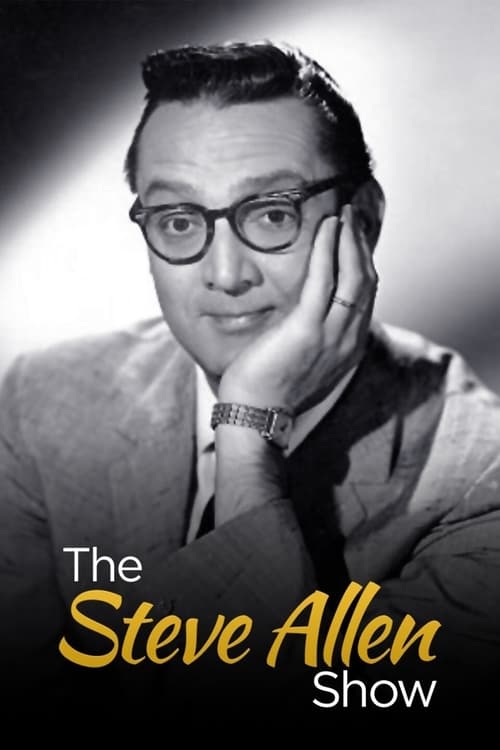
After CBS radio gave Allen a weekly prime time show, CBS television believed he could be groomed for national television stardom and gave him his first network show. The Steve Allen Show premiered at 11 a.m. on Christmas Day, 1950, and was later moved to a thirty-minute, early evening slot. The new show required him to relocate, with his family, from Los Angeles to New York. It ran until 1952, after which CBS tried several different formats to showcase Allen's talent.
He achieved national attention in early January 1951, when he was pressed into last-minute service to guest host the hugely popular Arthur Godfrey's Talent Scouts when Godfrey was unable to appear. He turned one of Godfrey's live Lipton tea and soup commercials upside down, preparing tea and instant soup on camera, then pouring both into Godfrey's iconic ukulele. With the audience (including Godfrey, watching from Miami) laughing uproariously and thoroughly entertained, Allen gained major plaudits both as a comedian and as a host. Variety magazine editors who had seen the show wrote, "One of the most hilarious one-man comedy sequences projected over the TV cameras in many a day ... The guy's a natural for the big time."
The Tonight Show
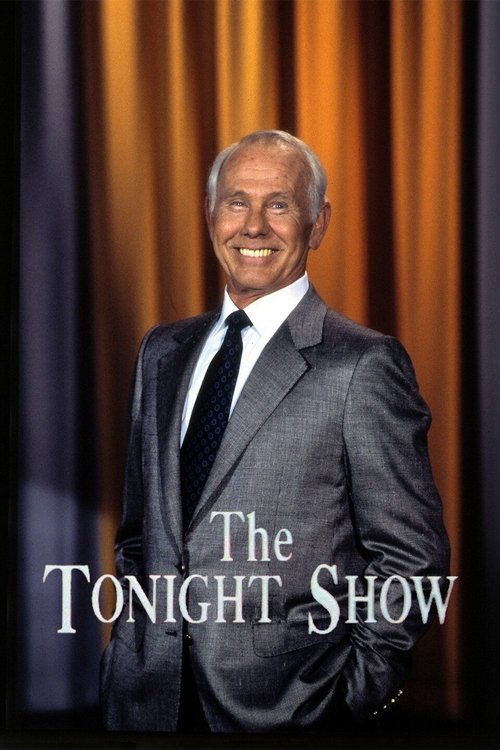
He then created a late-night New York talk/variety television program that debuted in July 1953 on local station WNBT-TV (now WNBC-TV). The following year, on September 27, 1954, the show went on the full NBC network as The Tonight Show, with fellow radio personality Gene Rayburn (who later went on to host hit game shows such as Match Game, 1962–1982) as the original announcer. The show ran from 11:15 p.m. to 1 a.m. on the East Coast.
While Today developer Sylvester "Pat" Weaver often is credited as the Tonight creator, Allen often pointed out that he had created it earlier as a local New York show. Allen told his nationwide audience that first evening: "This is Tonight, and I can't think of too much to tell you about it except I want to give you the bad news first: This program is going to go on forever ... You think you're tired now. Wait until you see one o'clock roll around!" It was as host of The Tonight Show that Allen pioneered the "man on the street" comedic interviews and audience-participation comedy breaks that went on to become staples of late-night TV.
The Steve Allen Show
In June 1956, NBC offered Allen a new prime-time, Sunday night variety hour, The Steve Allen Show. NBC's goal was to dethrone CBS's top-rated The Ed Sullivan Show. The show included a typical run of star performers, including early television appearances by rock-and-roll pioneers Elvis Presley, Jerry Lee Lewis, and Fats Domino. Many popular television and film personalities were guest stars, including Bob Hope, Kim Novak, Errol Flynn, Abbott and Costello, Esther Williams, Jerry Lewis, Martha Raye, The Three Stooges, Sammy Davis, Jr., Shelley Winters, Edward Everett Horton, and a host of others.
The show's regulars were Tom Poston, Louis Nye, Bill Dana, Don Knotts, Pat Harrington, Jr., Dayton Allen, and Gabriel Dell. Dell was the only show-business veteran, having appeared in the Bowery Boys, Dead End Kids, Little Tough Guys, and East Side Kids film series. Allen's other regulars were relatively obscure performers prior to their stints with Allen, and all went on to stardom. The comedians in Allen's gang often were seen in his "Man in the Street" interviews about some topical subject. Poston would appear as a dullard who could not remember his own name. Nye's character was an effete advertising executive named Gordon Hathaway, known for greeting the host with "Hi ho, Steverino!" Dana played amiable Latino "Jose Jimenez." Knotts was an exceedingly jittery man who, when asked if he was nervous, invariably replied with an alarmed "No!". Harrington was the Italian immigrant and former golf-pro Guido Panzini. Dayton Allen, who had gotten his start playing various characters on the children's television series "Howdy Doody," played wild-eyed zanies answering any given question with the question "Why not?" Dell usually played straight men in sketches (policemen, newsmen, dramatic actors, etc.), and occasionally played the character Boris Nadel, a Bela Lugosi/Dracula lookalike.
Other recurring routines included "Crazy Shots" (also known as "Wild Pictures"), a series of sight gags accompanied by Allen on piano; Allen inviting audience members to select three musical notes at random, and then composing a song based on the notes; a satire on radio's long-running The Answer Man and a precursor to Johnny Carson's Carnac the Magnificent (sample answer: "Et tu, Brute." Allen's reply: "How many pizzas did you eat, Caesar?"); and overdramatic readings of real letters to the editor from New York City newspapers.
Allen's show also had one of the longest unscripted "crack-ups" on live television when Allen began laughing hysterically during "Big Bill Allen's Sports Roundup". Allen, known for his infectious high-pitched cackling laugh, laughed uncontrollably for over a minute with the audience laughing along, because, as he later explained, he caught sight of his unkempt hair on an off-camera monitor. He kept brushing his hair and changing hats to hide the messy hair, and the more he tried to correct his appearance the messier and funnier it got.
Later television projects
From 1962 to 1964, Allen recreated The Tonight Show on a new show, The Steve Allen Show, which was syndicated by Westinghouse TV. The five-nights-a-week taped show was broadcast from an old vaudeville theater at 1228 North Vine Street in Hollywood that was renamed The Steve Allen Playhouse. The new Allen show could be programmed by local stations as an alternative to the networks' late-night shows, but many stations opted to broadcast the Allen show during the daytime hours.
The show was marked by the same wild, unpredictable stunts, and comedy skits that often extended across the side street to an all-night food outlet known as the Hollywood Ranch Market, where Allen had a hidden camera spying on unsuspecting shoppers. On one show, he had an elephant race down the side street, much to the annoyance of the occupants of the neighboring houses. On this show, he originated the term "little black things" in reference to anything regarding food, and the term "larger than Steve Allen's breadbox" in reference to any item under discussion. He also presented Southern California eccentrics, including health food advocate Gypsy Boots, quirky physics professor Dr. Julius Sumner Miller, wacko comic Professor Irwin Corey, and an early musical performance by Frank Zappa.
During one episode, Allen placed a telephone call to the home of Johnny Carson, posing as a rating company interviewer, asking Carson if the television was on, and what program he was watching. Carson did not immediately realize the caller was Allen. A rarity is an exchange between Allen and Carson about Carson's guests, permitting him to plug his own show on a competing network.
One notable program, which Westinghouse refused to distribute, featured Lenny Bruce during the time the comic repeatedly was being arrested on obscenity charges. Footage from this program was first telecast in 1998 in a Bruce documentary aired on HBO.
The show also featured many jazz songs played by Allen and members of the show's band, the Donn Trenner Orchestra, which included such virtuoso musicians as guitarist Herb Ellis and flamboyantly comedic hipster trombonist Frank Rosolino (whom Allen credited with originating the "Hiyo!" chant later popularized by Ed McMahon). While the show was not an overwhelming success in its day, David Letterman, Steve Martin, Harry Shearer, Robin Williams, and a number of other prominent comedians have cited Allen's "Westinghouse show," which they watched as teenagers, as being highly influential on their own comedic visions.
Songwriter
According to his own estimate, Allen was a prolific songwriter who wrote more than 8,500 songs, although only a small fraction of them were ever recorded. In one famous stunt, he made a bet with singer-songwriter Frankie Laine that he could write 50 songs a day for a week. Composing on public display in the window of Wallach's Music City, a Hollywood music store, Allen met the quota and won $1,000 from Laine. One of the songs, "Let's Go to Church (Next Sunday Morning)" became a chart hit for the duo of Jimmy Wakely and Margaret Whiting, hitting #13 pop and #2 country in 1950.
Allen began his recording career in 1951 with the album Steve Allen At The Piano for Columbia Records. He then signed with Decca Records, recording for their subsidiaries Brunswick Records and then Coral Records. Allen would release a mixture of novelty singles, jazz recordings and straight pop numbers for Decca throughout the 1950s, before switching to Dot Records in the 1960s.
In 1953 Allen added lyrics to "South Rampart Street Parade," a 1938 instrumental hit for Bob Crosby, written by Bob Haggart and Ray Bauduc. The vocal was introduced in the Donald O'Connor musical film Walking My Baby Back Home (1953). Though the song is best known as an instrumental, [1] Allen's lyrics are occasionally performed.
Allen's best-known song, "This Could Be the Start of Something (Big)", dates from 1954. Though it was never a hit, the song was recorded by numerous artists, including Count Basie, Tony Bennett, Bobby Darin, Ella Fitzgerald, Mark Murphy Judy Garland, Aretha Franklin, Lionel Hampton, Claire Martin, and Oscar Peterson. Allen used it as the theme song of The Tonight Show in 1956–57, and as the theme song to many of his later television projects.
Allen wrote the lyrics for the standard "Theme from Picnic" from the film Picnic in 1955; the song was a No. 13 U.S. hit in a vocal version for The McGuire Sisters in 1956. The song, however, is chiefly remembered as an instrumental, often performed in a medley with "Moonglow," a popular song from 1933. Two instrumental versions charted in the U.S. top 5 in 1956, including a No. 1 hit version by Morris Stoloff. Because he did not write the music, Allen was not credited as a songwriter on the instrumental versions.
In 1957, Jerry Vale had a minor hit (US #52) with the Allen composition "Pretend You Don't See Her". The song was later covered by Bobby Vee, who would also chart with it (US #97) in 1965, and Vale's recording would later be heard in the 1990 gangster film GoodFellas.
Allen and rock music
While Allen often was critical of rock and roll music, he also often booked rock and roll acts on his television program The Steve Allen Show. It featured such acts as Fats Domino, Jerry Lee Lewis, Louis Jordan & the Tympany Five, the Treniers, and the Collins Kids. Allen famously scooped Ed Sullivan by being one of the first to present Elvis Presley on network television (after Presley had appeared on the Tommy and Jimmy Dorsey Stage Show and Milton Berle shows).
While Presley was an exceedingly controversial act at the time, "Allen found a way ... to satisfy the Puritans. He assured viewers that he would not allow Presley 'to do anything that will offend anyone.' NBC announced that a 'revamped, purified and somewhat abridged Presley' had agreed to sing while standing reasonably still, dressed in black tie." Allen avoided any controversy by inviting Presley to participate in the show's comedy. Elvis wore white tie and tailcoat while singing "Hound Dog" to a hound, which was attired with a top hat. The singer was also featured in a country-music sketch with Allen, Andy Griffith, and Imogene Coca.
Allen also appeared on the shows of other entertainers, even the mildly rock and roll program The Pat Boone Chevy Showroom on ABC; Boone had appeared as a guest on Allen's variety hour.
Actor
Allen was an occasional actor. He wrote and starred in his first film, the Mack Sennett comedy compilation Down Memory Lane, in 1949; Allen cast himself as a "TV disc jockey" showing Sennett's old comedy films on live television. His most famous film appearance was in 1956's The Benny Goodman Story, in the title role. The film, while an average biopic of its day, was hailed for its music, featuring many alumni of the Goodman band. Allen later recalled his one contribution to the film's music, used in the early scenes. The accomplished Benny Goodman no longer could produce the sound of a clarinet beginner, and that was the only sound Allen could produce on a clarinet.
In 1960, he appeared as the character "Dr. Ellison" in the episode "Play Acting" on CBS's anthology series The DuPont Show with June Allyson though his The Steve Allen Show had been in competition with the program the preceding season.
Allen sometimes appeared as himself (or as thinly disguised versions of himself) as a TV host in feature films (such as The Comic) and TV shows (Batman and The Snoop Sisters).
During the late 1980s, Allen and Jayne Meadows, his second wife, made three appearances on the television drama series St. Elsewhere. They played the estranged birth parents of the character Dr. Victor Ehrlich, who had given him up for adoption. And, in 1998, Allen and Meadows guest-starred in an episode of Homicide: Life on the Street.
Allen did voice work in two episodes of The Simpsons in the 1990s, appearing once as the electronically "altered" voice of Bart Simpson in season 3's "Separate Vocations", and as himself in season 6's "'Round Springfield". In 1997, Allen was a guest on the Space Ghost Coast to Coast episode "Boat Show."
Author
Allen was a comedy writer and author of more than 50 books, including several volumes of autobiography; children's books; a series of mystery novels; and numerous volumes of essays and opinions. Twenty of his books were concerned with his views about religion.
Among his better-known non-fiction works are Dumbth, a commentary on the American educational system, and Steve Allen on the Bible, Religion, and Morality. Allen also ostensibly authored a long-running series of mystery novels in the 1980s and '90s "starring" himself and Meadows as amateur sleuths. They later were revealed to have been ghostwritten by Walter J. Sheldon and, later, by Robert Westbrook.
Despite his lifelong reputation for political liberalism, morally, Allen was highly critical of vulgarity on both television and radio, and particularly strident in criticizing Howard Stern and other shock jocks. At the time of his death, he was completing a book on the subject called Vulgarians at the Gate, about what he saw as "the rising tide of smut on television."
Scientific skepticism
Allen, a freethinker and humanist, became an outspoken critic of organized religion and an active member of the scientific skepticism movement. He worked to promote critical thinking with such humanist and skeptical organizations as the Council for Media Integrity, a group that debunked pseudoscientific claims, and the California-based group The Skeptics Society. He wrote many pieces for their publication, Skeptic, on such topics as the Church of Scientology, genius, and the passing of science fiction giant Isaac Asimov.
Working with Paul Kurtz, publisher of Prometheus Books, Allen published 15 books, including Dumbth: The Lost Art of Thinking with 101 Ways to Reason Better and Improve Your Mind, which was reissued in 1998. He produced Gullible's Travels, an audiotape with original music and script that was read and sung by him and his wife "in order to introduce youngsters to the brain and its proper use." Wishing to counter the influence of the American Christian right, Allen wrote both a 1990 critique of the Bible (Steve Allen on the Bible, Religion and Morality) as well as a sequel. A sample passage from the book that illustrated his view of the Judeo-Christian-Islamic God reads:
The proposition that the entire human race — consisting of enormous hordes of humanity — would be placed seriously in danger of a fiery eternity characterized by unspeakable torments purely because a man disobeyed a deity by eating a piece of fruit offered him by his wife is inherently incredible.
In 2011 Allen was selected for inclusion in the Committee for Skeptical Inquiry's Pantheon of Skeptics.
Activities in later years
In the late 1970s and early 1980s, Allen recorded a solo piano album for the Pianocorder Contemporary Artists Series, joining such other pop pianists of the day as Liberace, Floyd Cramer, Teddy Wilson, Roger Williams, and Johnny Guarnieri. His solo album was popular.
In 1986, Allen was inducted into the Television Hall of Fame.
Allen was on the advisory board of the Los Angeles Student Film Institute.
Allen appeared in a public service announcement advocating for New Eyes for the Needy in the 1990s.
Steve Allen had last guest-hosted The Tonight Show in 1982, and made his last appearance on it on September 27, 1994, for the show's 40th-anniversary broadcast. Host Jay Leno was effusive in his praise, and actually knelt and kissed Allen's ring.
Allen also narrated The Unreal Story of Professional Wrestling, a documentary of professional wrestling from its origins to 1998.
Personal life
Allen and Dorothy Goodman married in 1943 and had three children: Steve Jr., Brian, and David. That marriage ended in 1952. Allen's second wife was actress Jayne Meadows. They had one son, Bill Allen, named for Steve's father. They were married in Waterford, Connecticut, on July 31, 1954, and remained married until his death in 2000.
In the late 1950s, author and philosopher Gerald Heard worked with psychiatrist Sidney Cohen to introduce intelligent, adventurous people to LSD, and Steve Allen was one of these subjects.
Beliefs and politics
Although Allen was brought up Roman Catholic, he later became a secular humanist and Humanist Laureate for the Academy of Humanism, a member of CSICOP and the Council for Secular Humanism. He received the Rose Elizabeth Bird Commitment to Justice Award from Death Penalty Focus in 1998. He was a student and supporter of general semantics, recommending it in Dumbth and giving the Alfred Korzybski Memorial Lecture in 1992.
Allen was a Democrat, even though Jayne Meadows was a Republican. He endorsed Lyndon B. Johnson in the 1964 United States presidential election. In 1973, he cohosted the America Goes Public telethon, which raised money for the Democratic National Committee, and included a "Meeting of Minds" segment with actors portraying Abraham Lincoln, Theodore Roosevelt, Thomas Jefferson, and Cleopatra, speaking on democracy.
Allen wrote pamphlets on a variety of issues, including problems facing migrant workers, capital punishment and nuclear weapons proliferation. He once considered running for a seat in Congress from California, calling his politics "middle-of-the-road radicalism".
Despite his liberal position on free speech, he actively campaigned against obscenity on television and criticized comedians such as George Carlin and Lenny Bruce for their use of expletives in their stand-up routines; Allen admired their originality and humor but deplored what he considered their excessive profanity. His later concerns about the lewdness he heard on radio and television, particularly the programs of Howard Stern, caused him to make proposals to restrict the content of programs, allying himself with the Parents Television Council (PTC). His full-page ad on the subject appeared in newspapers just before his unexpected death.
Death and legacy
On October 30, 2000, Allen was involved in a minor traffic crash while traveling to visit his youngest son at home in Los Angeles. A driver struck the side of Allen's car while backing out of a driveway, causing Allen to suffer a ruptured blood vessel, among other injuries, though he apparently did not realize he was seriously hurt. After Allen arrived at his son's home, he took a nap and died in his sleep. Allen was 78. At first, it was believed that he had a heart attack. However, Allen's autopsy revealed that he actually died from hemopericardium, caused by injuries sustained in the crash. Though the condition was partially caused by atherosclerosis, the death was ruled accidental. According to his widow, Jayne Meadows, "Typical of Steve, [who] was the dearest, sweetest man: He was hit by a man, backing into him, breaking all of his ribs, that pierced his heart ... and when he got out of the car, he said to the man, 'What some people will do to get my autograph.'"
Allen is buried at Forest Lawn Memorial Park in Hollywood Hills, Los Angeles. He has two stars on the Hollywood Walk of Fame – a television star at 1720 Vine Street and a radio star at 1537 Vine Street. Jayne Meadows was buried next to Allen following her death in 2015.