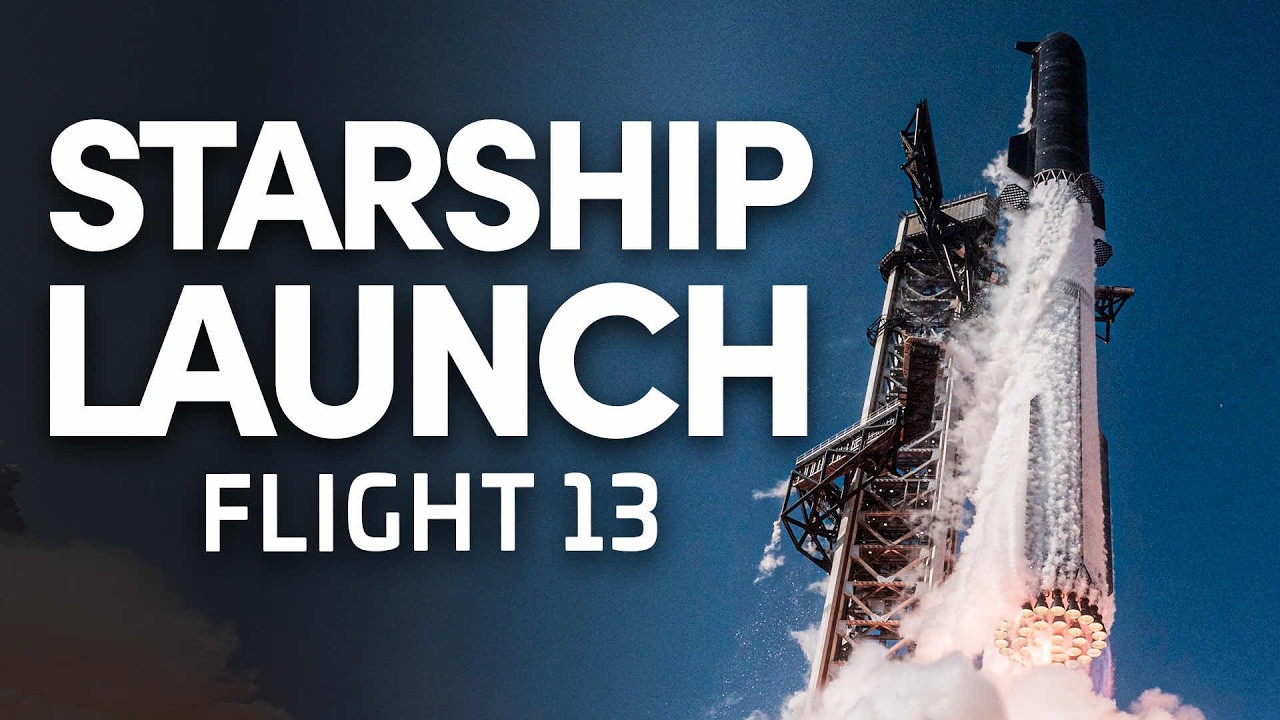




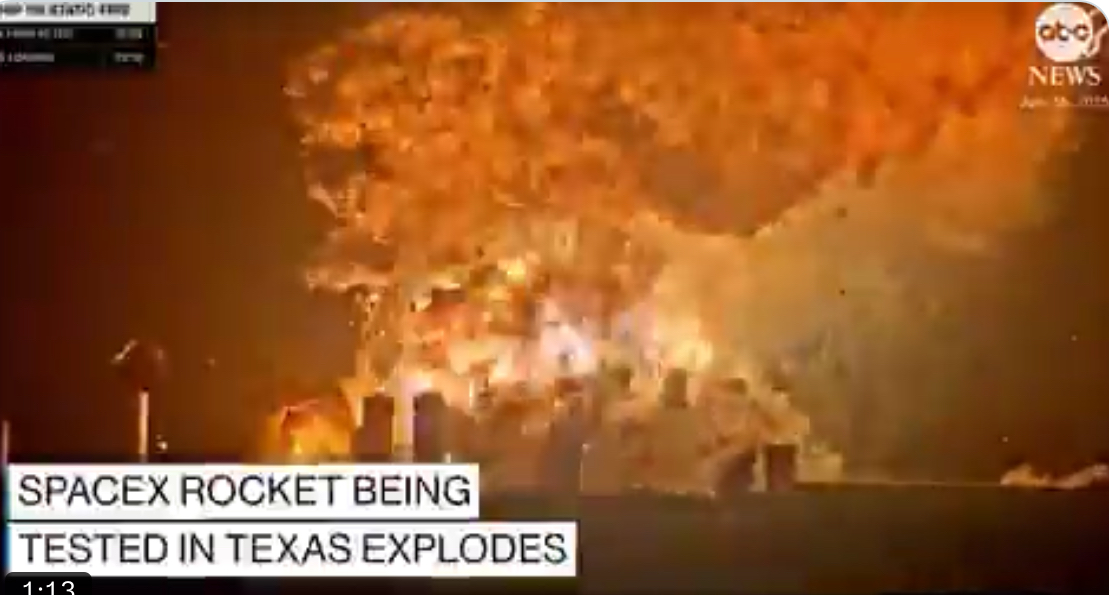

Starship is a two-stage, fully reusable, super heavy-lift launch vehicle under development by American aerospace company SpaceX. Currently built and launched from Starbase in Texas, it is intended as the successor to the company's Falcon 9 and Falcon Heavy rockets, and is part of SpaceX's broader reusable launch system development program. If completed as designed, Starship would be the first fully reusable orbital rocket and have the highest payload capacity of any launch vehicle to date. As of July 24, 2026, Starship has launched 13 times, with 8 successful flights and 5 failures.
The vehicle consists of two stages: the Super Heavy booster and the Starship spacecraft, both powered by Raptor engines burning liquid methane (the main component of natural gas) and liquid oxygen. Both stages are intended to return to the launch site and land vertically at the launch tower for potential reuse. Once in space, the Starship upper stage is intended to function as a standalone spacecraft capable of carrying crew and cargo. Missions beyond low Earth orbit would require multiple in-orbit refueling flights. At the end of its mission, Starship reenters the atmosphere using heat shield tiles similar to those of the Space Shuttle. SpaceX states that its goal is to reduce launch costs by reusing and mass producing both stages.
SpaceX initially expressed ambitions to use Starship for crewed missions to Mars, but the plan was revised to prioritize returning humans to the Moon. SpaceX has also proposed a wide range of missions for Starship, such as deploying large satellites, space station modules, and space telescopes. A crewed variant, the Starship Human Landing System, is being developed under a contract with NASA as part of the Artemis program, with a docking test as part of Artemis III, currently scheduled for 2027, and a crewed lunar landing scheduled for 2028.
SpaceX began developing concepts for a super heavy-lift reusable launch vehicle as early as 2005. Starship's current design and name were introduced in 2018. Development has followed an iterative and incremental approach, involving a high number of prototype vehicles and test flights. The first full Starship rocket was launched April 20, 2023, exploding four minutes after liftoff. The program has failed to meet many of its optimistic schedule goals, with several setbacks in development, including the failure of the first four Block 2 upper stages in 2025.
Contents
Description
When stacked and fully fueled, Starship has a mass of approximately 5,300 t (11,700,000 lb), a diameter of 9 m (30 ft) and a height of 121.3 m (398 ft). The rocket has been designed with the goal of being fully reusable to reduce launch costs; it consists of the Super Heavy booster and the Starship upper stage which are powered by Raptor (RSL) and Raptor Vacuum (RVac) engines.
The bodies of both rocket stages are made from stainless steel and are manufactured by stacking and welding stainless steel cylinders. These cylinders have a height of 1.83 m (6 ft), and a thickness of 3.97 mm (0.156 in).
A common dome inside the spacecraft separate the methane and oxygen tanks. SpaceX has stated that Starship, in its "baseline reusable design", will have a payload capacity of 100–150 t (220,000–331,000 lb) to low Earth orbit and 27 t (60,000 lb) to geostationary transfer orbit.
Super Heavy booster
Super Heavy was initially 71 m (233 ft) tall (in its Block 1 and Block 2 design, now retired), while Block 3 Super Heavy is 72.3 meters tall. It is 9 m (30 ft) wide, and is composed of four general sections, in ascending order: the engines, the liquid oxygen tank, the liquid methane tank, and the interstage.
The two cryogenic propellant tanks on Super Heavy are separated by a common bulkhead, a similar structural design to the S-II and S-IVB stages on the Saturn V rocket. After Starship's second flight test, the common dome's design was changed to be more elliptical, altering the propellant capacity of both tanks by a small amount. Each tank possesses roughly 74 stringers for structural reinforcement, attached to their interior walls. The booster's two tanks hold a combined 3,400 t (7,500,000 lb) of propellant: 2,700 t (6,000,000 lb) of liquid oxygen and 700 t (1,500,000 lb) of liquid methane. Fuel is fed to the engines via a single liquid downcomer, and channeled into distribution manifolds of the engines. This system was upgraded on Block 3 boosters, featuring a substantially larger transfer tube connecting the engines and the methane tank. Block 1 booster's have a single booster quick disconnect, along with multiple quick disconnects for the outer engines, while Block 3 boosters have two quick disconnects. One disconnect feeds liquid oxygen into the vehicle, the other feeds liquid methane.
The oxygen tank ends at the thrust puck of the vehicle. While the outer twenty engines are mounted on a ring attached to the first steel ring, the inner thirteen are mounted onto the thrust puck, a part of the aft dome. Large steel structures are attached to the bottom of the dome, reinforcing the puck sufficiently to fully support the inner thirteen engines, and at the same time providing pathways for methane and oxygen into the engines. In addition, large filters were added in this region beginning on Booster 10. Liquid oxygen is supplied by a header tank during landing burn for the inner thirteen engines. On Booster 15, the header tank had at least nine additional tanks attached, increasing capacity for the landing burn. The added tanks may have been present on Boosters 12, 13, and 14, though this was unconfirmed as of February 2025. Booster 5 was the only 29-engine booster to receive a header tank, mounted to the side of the oxygen tank instead of being integrated with the thrust puck.
The methane funnel is partially contained within the header tank, as the methane sump is directly below it. On Booster 7 and all subsequent vehicles, four aerodynamic chines are located on the outside of the oxygen tank, providing aerodynamic lift during descent, as well as housing batteries, composite overwrapped pressure vessels (COPVs) for spin start, and CO2 tanks for fire suppression. On vehicles with hydraulic power units (HPUs), COPVs dedicated to engine ignition, batteries, and communication antennae were located within the HPU cover instead of the chines.
Starship spacecraft
The Block 2 version of Starship is 52.1 m (171 ft) tall, 9 m (30 ft) wide, and is composed of four general sections: the engine bay, the oxygen tank, the fuel tank, and the payload bay. The retired Block 1 was constructed in a similar manner, though it was only 50.3 m (165 ft) tall. Elon Musk stated in 2021 that the vehicle has a dry mass of roughly 100 t (220,000 lb). The windward side is protected by a heat shield, which is composed of eighteen thousand hexagonal black tiles that can withstand temperatures of 1,400 °C (2,600 °F). It is designed to protect the vehicle during atmospheric entry and to be used multiple times with minimal maintenance between flights. The silica-based tiles are attached to Starship with pins, and had small gaps in between to allow for heat expansion. After flight test 4, SpaceX added a secondary ablative layer under the primary heat shield, though this was only added to the flaps of the flight test 6 vehicle. This ablative layer is likely composed of pyron, which is similar in composition to carbon composites. The total mass of the heat shield and ablative layer of a Block 1 ship is 10.5 t (23,000 lb). After flight test 10, SpaceX added a felt, called "crunch wrap," between the gaps in between the tiles to prevent heat seeping in.
The propellant tanks on Starship are separated by a common bulkhead, similar to the ones used on the S-II and S-IVB stages on the Saturn V rocket. While Block 2 vehicles use an elliptical dome, the common and forward domes of the Block 1 design were more conical. Block 1 vehicles only had 24 stringers within the oxygen tank, while Block 2 vehicles had these added to the methane tanks. The vehicle's tanks hold 1,500 t (3,300,000 lb) of propellant, consisting of 1,170 t (2,580,000 lb) of liquid oxygen and 330 t (730,000 lb) of liquid methane.
Fuel is fed to the engines via four downcomers, with three smaller downcomers feeding the Vacuum Raptors/RVacs and the central downcomer feeding the inner three engines. The central downcomer connects to a large sump, instead of directly to the methane tank itself. The original design only featured a single downcomer. The liquid oxygen (LOX) downcomer extends into the LOX tank, with a small expanded portion of unknown purpose. Two additional downcomers route methane and oxygen from the header tanks. A camera is located on the walls of the tank, pointed towards the payload bay.
The oxygen tank terminates with the thrust structure of the vehicle. The RVacs are mounted directly to the aft dome, which has reinforcements mounted inside of the tank. The three sea level engines are mounted on the thrust puck, which forms the bottom of the aft dome. A conical steel structure is mounted inside the bottom of the dome, reinforcing the thrust puck enough to enable its support of the inner three engines. The propellant lines on the vehicles are all vacuum jacketed, reducing boiloff while in orbit.
Raptor engine
Raptor is a family of rocket engines developed by SpaceX for use in Starship and Super Heavy vehicles. It burns liquid oxygen and methane in an efficient and complex full-flow staged combustion power cycle. The Raptor engine uses methane as fuel rather than kerosene because methane gives higher performance and prevents the build-up of deposits in the engine from coking. Methane can also be produced from carbon dioxide and hydrogen using the Sabatier reaction. The engines are designed to be reused many times with little maintenance.
Raptor operates with an oxygen-to-methane mixture ratio of about 3.6:1, lower than the stoichiometric mixture ratio of 4:1 necessary for complete combustion, since operating at higher temperatures would melt the engine. The propellants leave the pre-burners and get injected into the main combustion chamber as hot gases instead of liquid droplets, enabling a higher power density as the propellants mix rapidly via diffusion. The methane and oxygen are at high enough temperatures and pressures that they ignite on contact, eliminating the need for igniters in the main combustion chamber. The engine structure itself is mostly aluminum, copper, and steel; oxidizer-side turbopumps and manifolds subject to corrosive oxygen-rich flames are made of an Inconel-like SX500 superalloy. Some components are 3D printed.
A Raptor 2 engine produces 2.3 MN (520,000 lbf) at a specific impulse of 327 seconds (3.21 km/s) at sea level and 350 seconds (3.4 km/s) in a vacuum. Raptor vacuum, used on the Starship upper stage, is modified with a regeneratively cooled nozzle extension made of brazed steel tubes, increasing its expansion ratio to about 90 and its specific impulse in vacuum to 380 seconds (3.7 km/s). The main combustion chamber operates at a pressure of 350 bar (5,100 psi) exceeding that of any prior operational rocket engine. The Raptor's gimbaling range is 15°, higher than the RS-25's 12.5° and the Merlin's 5°. SpaceX has stated they aim to achieve a per unit production cost of US$250,000 upon starting mass production.
Versions
On April 4, 2024, Elon Musk provided an update on Starship at Starbase, where two new versions of Starship were announced, Block 2 and Block 3, intended to address the shortcomings of the pre-production prototypes.
Block 1
Block 1 was used after 2020–2021 flight tests, beginning with flight test 1 at the start of 2023, to flight tests 5 and 6, then retired.
Block 2
Block 2 for both stages was used beginning with flight test 7 at the start of 2025. Block 2 upper stage vehicles featured a thinner forward flap design, flaps that are positioned more leeward, a 25% increase in propellant capacity, redesigned avionics, two raceways, and an increase in thrust. The integrated vehicle is 3.1 m (10 ft) taller than the previous Block 1 vehicle and was planned to have a payload capacity of at least 100 tons to orbit when reused (similar to the original design before the Block 2 rework) but was retired before an orbital flight, with the final estimate of 35 t of payload to orbit. Additionally, Block 2 vehicles were planned to use Raptor 3 engines, removing the need for secondary engine shielding. However, the first Block 2 vehicle, S33, received upgraded Raptor 2 engines, with an unknown increase in thrust. The Block 2 ship and booster first flew on flight test 7. A total of six block 2 vehicles were produced. After flight test 11, Block 2 was retired.
Block 3
Block 3 ships have an improved tile design, Raptor 3 engines, as well as hardware for refueling operations LEO, such as docking ports and a redesigned quick disconnect. The switch to Raptor 3 also enables the removal of most of the aft section's shielding.
Block 3 boosters have an integrated vented interstage/forward dome, three grid fins instead of the prior four, and use the grid fins as tower catch points, eliminating the need for separate catch point structure. Like with the ship, the Block 3 boosters use Raptor 3 engines, allowing for the removal of the majority of the booster's engine shielding, reducing weight by over a ton per engine.
First test flights of Block 3 ships began in 2026.
Planned launch and landing profile
Payloads will be integrated into Starship at a separate facility and then rolled out to the launch site. Super Heavy and Starship are then to be stacked onto their launch mount and loaded with fuel via the ship quick disconnect (SQD) arm and booster quick disconnect (BQD). The SQD and BQD retract, all 33 engines of Super Heavy ignite, and the rocket lifts off.
At approximately 141 seconds after launch at an altitude of roughly 64 km (40 mi), Super Heavy cuts off 28 of its 33 engines, leaving 5 engines running at reduced throttle. Starship then ignites its engines while still attached to the booster, and separates. The booster then rotates to an aft-first attitude, before relighting the 28 other engines for a "boostback burn" which stops all forward velocity, then switching to 13 engines and finally 3 to precisely target the landing area. After the boostback burn, the booster's engines shut off with Super Heavy on a trajectory for a controlled descent to the launch site using its three grid fins for minor course corrections. Roughly six minutes after launch, shortly before landing, it ignites its inner 13 engines, then shuts off all but the same 5 used for hot-staging, to perform a landing burn which slows it sufficiently to be finally caught by a pair of electric actuating arms attached to the launch tower. The booster landing and catch was successfully demonstrated for the first time on October 13, 2024, with the landing of Booster 12, and twice more with Boosters 14 and 15.
Meanwhile, the Starship spacecraft continues accelerating to orbital velocity with its six Raptor engines. Once in orbit, the spacecraft is planned to be able to be refueled by another Starship tanker variant. Musk has estimated that 8 launches would be needed to refuel a Starship in low Earth orbit completely. NASA has estimated that 16 launches in short succession (due to cryogenic propellant boil-off) would be needed to refuel Starship for one lunar landing partially. To land on bodies without an atmosphere, such as the Moon, Starship will fire its engines to slow down. To land on bodies with an atmosphere, such as the Earth and Mars, Starship first slows by entering the atmosphere using a heat shield. The spacecraft would then perform a "belly-flop" maneuver by diving through the atmosphere at a 60° angle to the ground, controlling its fall using four flaps at the front and aft of the spacecraft. Shortly before landing, the Raptor engines fire, using fuel from the header tanks, to perform a "landing flip" maneuver to return to a vertical orientation, with the Raptor engines' gimbaling helping to maneuver the craft. Omitting the thermal protection system, flaps, and tower-catch hardware for a guided atmospheric deceleration and "Mechazilla" tower catch allows for significant weight savings on the HLS and depot.
Development
Early design concepts (2012–2019)
In November 2005, before SpaceX had launched its first rocket the Falcon 1, CEO Elon Musk first mentioned a high-capacity rocket concept able to launch 100 t (220,000 lb) to low Earth orbit, dubbed the BFR. Later in 2012, Elon Musk first publicly announced plans to develop a rocket surpassing the capabilities of Space X's existing Falcon 9. SpaceX called it the Mars Colonial Transporter, as the rocket was to transport humans to Mars and back. In 2016, the descriptor was changed to Interplanetary Transport System, as the rocket was planned to travel beyond Mars as well. The conceptual design called for a carbon fiber structure, a mass in excess of 10,000 t (22,000,000 lb) when fully fueled, a payload of 300 t (660,000 lb) to low Earth orbit while being fully reusable. By 2017, the concept was again re-dubbed the BFR.
In December 2018, the structural material was changed from carbon composites to stainless steel, marking the transition from early design concepts of the Starship. Musk cited numerous reasons for the change of material; low cost and ease of manufacture, increased strength of stainless steel at cryogenic temperatures, as well as its ability to withstand high heat. In 2019, SpaceX began to refer to the entire vehicle as Starship, with the second stage also being called Starship, and the booster Super Heavy. They also announced that Starship would use reusable heat-shield tiles similar to those of the Space Shuttle. The second-stage design had also settled on six Raptor engines by 2019: three optimized for sea-level and three optimized for vacuum. In 2019, SpaceX announced a change to the second stage's design, reducing the number of aft flaps from three to two to reduce weight. In March 2020 SpaceX released a Starship Users Guide, in which they stated the payload of Starship to Low Earth Orbit (LEO) would be over 100 t (220,000 lb), with a payload to GTO of 21 t (46,000 lb).
Low-altitude flight tests (2019–2021)
The first tests started with the construction of the first prototype in 2018, Starhopper, which performed several static fires and two successful low-altitude flights in 2019. SpaceX began constructing the first full-size Starship MK1 and MK2 upper-stage prototypes before 2019, at the SpaceX facilities in Boca Chica, Texas, and Cocoa, Florida, respectively. Neither prototype flew: MK1 was destroyed in November 2019 during a pressure stress test and MK2's Florida facility was deconstructed throughout 2020. Prototypes were built using 301 stainless steel. This was noted for its corrosion resistance and lower cost compared to carbon fiber but faced some challenges, particularly with interlaminar toughness at cryogenic temperatures.
SpaceX then began naming its new Starship upper-stage prototypes with the prefix "SN", short for "serial number". No prototypes between SN1 and SN4 flew either—SN1 and SN3 collapsed during pressure stress tests, and SN4 exploded after its fifth engine firing.
In June 2020, SpaceX started constructing a launch pad for orbital Starship flights. The first flight-capable prototype, SN5, was cylindrical as it had no flaps or nose cone: just one Raptor engine, fuel tanks, and a mass simulator. On August 5, 2020, SN5 performed a 150 m (500 ft) high flight and successfully landed on a nearby pad. On September 3, 2020, the similar-looking Starship SN6 repeated the hop; later that month, a Raptor vacuum engine underwent its first full duration firing at McGregor, Texas.
Starship SN8 was the first full-sized upper-stage prototype, though it lacked a heat shield. It underwent four preliminary static fire tests between October and November 2020. On December 9, 2020, SN8 flew, slowly turning off its three engines one by one, and reached an altitude of 12.5 km (7.8 mi). After SN8 dove back to the ground, its engines were hampered by low methane header tank pressure during the landing attempt, which led to a hard impact on the landing pad and subsequent explosion of the vehicle. SN7 used 304L stainless steel, which is less brittle and more weldable. Later vehicles used a proprietary alloy, 30X, whose composition is proprietary that costs slightly over €3.6/kg.
Because SpaceX had violated its launch license and ignored warnings of worsening shock wave damage, the Federal Aviation Administration investigated the incident for two months. During the SN8 launch, SpaceX ignored FAA warnings that the flight profile posed a risk of explosion. FAA space division chief Wayne Monteith said SpaceX's violation was "inconsistent with a strong safety culture", and criticized the company for proceeding with the launch "based on 'impressions' and 'assumptions,' rather than procedural checks and positive affirmations".
Integrated flight tests (2023–)
In June 2022, the Federal Aviation Administration determined that SpaceX must address more than 75 issues identified in the preliminary environmental assessment before flight tests could start.
In July 2022, Booster 7 tested the liquid oxygen turbopumps on all 33 Raptor engines, resulting in an explosion at the vehicle's base, which destroyed a pressure pipe and caused minor damage to the launchpad. By the end of November, Ship 24 had performed 2 static test fires, while Booster 7 had performed 6 static test fires and finally on February 9, 2023, a static fire with 31 engines at 50% throttle. In January 2023, the whole Starship stack underwent a full wet dress rehearsal.
After a launch attempt aborted on April 17, 2023, Booster 7 and Ship 24 lifted off on April 20 at 13:33 UTC in the first orbital flight test. Three engines were disabled during the launch sequence and several more failed during the flight. The booster later lost thrust vectoring control of the Raptor engines, which led to the rocket spinning out of control. The vehicle reached a maximum altitude of 24 mi (39 km). Approximately 3 minutes after lift-off the rocket's autonomous flight termination system was activated, though the vehicle tumbled for another 40 seconds before disintegrating. The first flight test blasted large amounts of sand and soil in the air, reaching communities within a 10.7 km (6.6 mi) radius. A brushfire on nearby state parkland also occurred, burning 3.5 acres (1.4 ha) of state parkland.
After the first test flight, SpaceX began work on the launch mount to repair the damage it sustained during the test and to prevent future issues. The foundation of the launch tower was reinforced and a water-powered flame deflector was built under the launch mount. Ship 25 and Booster 9 were rolled to the suborbital and orbital launch sites in May to undergo multiple tests.
On November 18, 2023, Booster 9 and Ship 25 lifted off the pad. All 33 engines continued to function until staging, where the second stage separated by pushing itself away from the first stage using a hot-staging technique. Following separation, the Super Heavy booster completed its flip maneuver and initiated the boostback burn, but then experienced multiple successive engine failures and exploded. Blockage in a liquid oxygen filter caused one of the engines to fail in a way that resulted in the destruction of the booster, which occurred three and a half minutes into the flight at an altitude of ~90 km over the Gulf of Mexico.
Cost and funding
SpaceX develops the Starship primarily with private funding. SpaceX Chief Financial Officer Bret Johnsen disclosed in court that SpaceX has invested more than $3 billion into the Starbase facility and Starship systems from July 2014 to May 2023. Elon Musk stated in April 2023 that SpaceX expected to spend about $2 billion on Starship development in 2023. In a 2024 response to a lawsuit, SpaceX stated that the cost of the Starship program was approximately $4 million per day, adding that any day of delay to the Starship program represented a loss of $100,000.
Musk has theorized that a Starship orbital launch might eventually cost SpaceX only $1 million to launch. Eurospace's director of research Pierre Lionnet stated in 2022 that Starship's launch price to customers would likely be higher because of the rocket's development cost. In an update on their website in late October 2025, SpaceX stated regarding Starship that "SpaceX is self-funding representing over 90% of system costs" [sic].
As part of the development of the Human Landing System for the Artemis program, SpaceX was awarded in April 2021 a $2.89 billion fixed-price contract from NASA to develop the Starship lunar lander for Artemis III. Blue Origin, a bidding competitor to SpaceX, disputed the decision and began a legal case against NASA and SpaceX in August 2021, causing NASA to suspend the contract for three months until the case was dismissed in the Court of Federal Claims. Two years later Blue Origin was awarded a $3.4 billion fixed-price contract for its lunar lander.
In 2022, NASA awarded SpaceX a $1.15 billion fixed-price contract for a second lunar lander for Artemis IV. The same year, SpaceX was awarded a $102 million five-year contract to develop the Rocket Cargo program for the United States Space Force.
Launch history
Past launches
In a talk in November 2024, Starbase General Manager Kathy Lueders announced that SpaceX hoped to be able to catch a Starship upper stage sometime in the next 6 months and have as many as 25 launches in 2025. This did not occur. Starship was launched five times in 2025.
Future launches
Future launches are listed chronologically when firm plans are in place. Launches are expected to take place "no earlier than" (NET) the listed date.
Potential missions
Starlink
SpaceX plans to use Starship to launch the second generation of satellites for SpaceX's Starlink system, which as of 2021 delivered high-speed internet to over 70 countries. An analyst at financial services company Morgan Stanley stated development of Starship and Starlink are intertwined, with Starship's planned launch capacity enabling cheaper Starlink launches, and Starlink's profits financing Starship's development costs. In deficit from its inception until the end of 2022, Starlink was first reported to be cash flow positive in the first quarter of 2023, though Elon Musk said that Starlink had only reached "break-even cashflow" in 2023. In December 2023, the FCC issued a final denial of a $885 million Starlink RDOF subsidy because of Starlink's "continuing inability to successfully launch on the Starship rocket".
Artemis Program
Starship HLS was initially chosen by NASA as the sole lunar Human Landing System for the planned Artemis III and Artemis IV crewed missions, as part of the Artemis program. Starship HLS is to be launched into a low Earth orbit, and refueled by multiple Starship tanker spacecraft. Once fueled, it would perform a trans lunar injection burn and enter a near-rectilinear halo orbit around the Moon, with a perilune of 1,500 km (930 mi) occurring over the north pole and an apolune of 70,000 km (43,000 mi) occurring over the south pole. The Orion spacecraft would then dock with Starship HLS and two of its four crew would transfer into Starship HLS. Starship HLS would then use its engines to make a powered descent and land near the lunar south pole. After the crew performs the surface portion of its mission, the HLS would ascend with the crew. The crew would then transfer into the Orion spacecraft and return to Earth.
Astronomy
Astronomers have called to consider Starship's larger mass to orbit and wider cargo bay for proposed space telescopes such as LUVOIR, and to develop larger telescopes to take advantage of these capabilities. Starship's 9 m (30 ft) fairing width could hold an 8 m (26 ft) wide space telescope mirror in a single piece, alleviating the need for complex unfolding such as that of the JWST's 6.5 m (21 ft) mirror, which added cost and delays.
Regarding larger mass to orbit limits, the Ariane 5 imposed a ~6,500 kg limit on the telescope's weight. Starship's low launch cost could also allow probes to use heavier, more common, less expensive materials, such as glass instead of beryllium for large telescope mirrors. With a 5 t (11,000 lb) mirror built using similar methods to the Hubble Space Telescope's mirror, the JWST would represent only 10% of the mass deliverable by a (refueled) Starship to the Sun–Earth L2 point, and therefore minimizing the weight of the telescope would not have been a dominant design consideration.
The National Academies of Science's 2020 survey recommended the Habitable Worlds Observatory (HWO); the space observatory, requiring a super heavy lift launch vehicle, will search for signs of life on exoplanets. The HWO's team hopes for the success of big launchers due to their critical importance to the HWO's mission. Lee Feinberg, NASA HWO lead architect and JWST manager, stays in communication with SpaceX to track Starship's progress and has visited them in 2024 for that purpose. The NASA Habitable Worlds Observatory will have a 6–8 meter mirror for now, but its design should be flexible to leverage launchers with potentially double the mass and volume by the time it launches in the 2040s. Former NASA JPL architect Casey Handmer believes the HWO to be far too conservative compared to what is possible with Starship. Handmer argues that Starship enables telescopes to scale up to the point of surface-level exoplanet imaging, perhaps big enough to detect seasonal migration patterns.
Rocket cargo
In January 2022, SpaceX was awarded a $102 million five-year contract to develop the Rocket Cargo program for the United States Space Force. The five-year contract is intended to "determine exactly what a rocket can achieve when used for cargo transport", and will see the Air Force Research Laboratory collect data during commercial launches of Starship. The contract includes an eventual demonstration mission with the launch and landing of a cargo-laden Starship in a point-to-point flight.
The Department of Defense has planned a test with Starship as part of its program to demonstrate the ability to rapidly deploy up to 100 tons of cargo and supplies, a capability it calls point-to-point delivery (P2PD). The test was envisioned to take place in FY25 or FY26.
Mars Sample Return
In 2024, the NASA-ESA Mars Sample Return project, one of NASA's highest priority flagship projects, suffered a setback when an independent review board assessing the project's feasibility concluded that the project could not be completed under its mission profile. In April 2024, the Administrator of NASA then announced that a new mission profile was needed for the project and that NASA would turn to industry for proposals, with responses due in fall 2024, and a high emphasis on lower total cost and lower risk. Starship was proposed by some space journalists as a leading candidate to serve as a central component of the new mission profile architecture.
Transportation
SpaceX has proposed using Starship for point-to-point flights (called "Earth to Earth" flights by SpaceX), traveling anywhere on Earth in under an hour. Musk stated that SpaceX would complete hundreds of cargo flights before launching with human passengers.
Space colonization
According to SpaceX, the design of Starship is driven by its requirement to be able to land crews on Mars, though SpaceX has not published technical plans or designs about Starship's life support systems, radiation protection, docking system, or in-orbit refueling system for Mars. The spacecraft would be launched to low Earth orbit and refueled in orbit before heading to Mars. After landing on Mars, the Sabatier reaction could be used to synthesize liquid methane and liquid oxygen, Starship's fuel, in a power-to-gas plant. The plant's raw resources would be Martian water and Martian carbon dioxide. On Earth, similar technologies could be used to make carbon-neutral propellant for the rocket. To date, there has been one proof of concept experiment (MOXIE) demonstrating the extraction of oxygen from Martian carbon dioxide, with George Dvorsky writing for Gizmodo commenting that we are not "remotely close" to turning this "into something practical".
SpaceX and Musk have stated their goal of colonizing Mars to ensure the long-term survival of humanity, with an ambition of having sent one million people to Mars by 2050. In March 2022, he estimated that the first crewed Mars landing could occur in 2029. This timeline has been criticized as unrealistic by Kevin Olsen, a physicist at the University of Oxford, England, who has said that "colony needs to become a factory" to produce air, fuel and water as it is "fundamentally impossible to create a completely closed environment in space", and that the technology to do so is "far, far behind the technology of space flight and habitation construction". Serkan Saydam, a mining engineering professor from the University of New South Wales, Australia, stated that humanity currently lacks the necessary technology to establish a Martian colony, and will likely lack the capacity to establish a Martian city with one million people by 2050.
Other missions
A future payload is the Superbird-9 communication satellite, which was Starship's first contract for externally made commercial satellites. Another planned payload is the Starlab space station, which Starship expects to launch in a single piece.
In the future, the spacecraft's crewed version could be used for space tourism—for example, for the third flight of the Polaris program.
Research conducted by Project Lyra determined that with refueling in LEO, a Starship could send a spacecraft to ʻOumuamua on a journey taking 20 years. A gravity assist would be required at Jupiter.
Facilities
Testing and manufacturing
Starbase consists of a manufacturing facility and launch site, and is located at Boca Chica, Texas. Both facilities operate 24 hours a day. A maximum of 450 full-time employees may be onsite. The site consists of two launch sites, one payload processing facility, one seven-acre (2.8 ha) solar farm, and other facilities.
Raptor engines are tested at the Rocket Development facility in McGregor, Texas. The facility has two main test stands: one horizontal stand for both engine types and one vertical stand for sea-level-optimized rocket engines. In the future, a nearby factory, which as of September 2021 was under construction, will make the new generation of sea-level Raptors while SpaceX's headquarters in California will continue building the Raptor Vacuum and test new designs.
At Florida, a facility at Cocoa purifies silica for Starship heat-shield tiles, producing a slurry that is then shipped to a facility at Cape Canaveral. In the past, workers constructed the Starship MK2 prototype in competition with Starbase's crews. The Kennedy Space Center, also in Florida, is planned to host other Starship facilities, such as a Starship launch site at Launch Complex 39A and a production facility at Roberts Road. This production facility is being expanded from "Hangar X", the Falcon rocket boosters' storage and maintenance facility. It will include a 30,000 m2 (320,000 ft2) building, loading dock, and a place for constructing integration tower sections. Adjacent to the Kennedy Space Center will be an additional launch site at Cape Canaveral Space Launch Complex 37, likely to service missions for the complex owner, the United States Space Force.
Launch sites
Starbase hosts two launch sites, named Pad A and Pad B or Orbital Launch Pads 1 and 2 (OLP-1 and 2). A launch site at Starbase has large facilities, such as a tank farm, an orbital launch mount, and an integration tower. Smaller facilities are present at the launch site: tanks surrounding the area containing methane, oxygen, nitrogen, helium, hydraulic fluid, etc.; subcoolers near the tank farm cool propellant using liquid nitrogen; and various pipes are installed at large facilities. Each tank farm consists of eight tanks, enough to support one orbital launch. The current launch mount on Pad A has a water-powered flame diverter, 20 clamps holding the booster, and a quick disconnect mount providing liquid fuel and electricity to the Super Heavy booster before it lifts off.
The integration tower or launch tower consists of steel truss sections, a lightning rod on top, and a pair of mechanical arms that can lift, catch and recover the booster. The decision to catch the booster with the arms was made to reduce the rocket's mass and mechanical complexity by removing the need for landing legs, as well as enabling more rapid reuse by placing the rocket directly back on the launchpad. The mechanical arms are attached to a carriage and controlled by a pulley at the top of the tower. The pulley is linked to a winch and spool at the base of the tower using a cable. Using the winch and the carriage, the mechanical arms can move vertically, with support from bearings attached at the sides of the carriage. A linear hydraulic actuator moves the arms horizontally. On top of the arms are tracks, which are used to position the booster or spacecraft. The tower is mounted with a quick disconnect arm extending to and contracting from the Starship spacecraft; its functions are similar to the quick disconnect mount that powers the booster.
SpaceX has been constructing a Starship launch pad at Kennedy Space Center Launch Complex 39A (LC-39A) since 2021. The site was leased to the company in 2014 and is used to launch Falcon 9 rockets. A Finding of No Significant Impact was issued by SpaceX's environmental impact statement (EIS), with NASA as the lead agency, earlier in September 2019 for the launch pad site. In 2024, the Federal Aviation Administration began the process of preparing an EIS evaluating the potential impacts of the new infrastructure and a higher launch cadence of up to 44 per year at LC-39A.
In June 2024, Blue Origin and United Launch Alliance (ULA) provided comments as part of the EIS process, both objecting to the impact that Starship launch operations may have on their own activities at the site. Blue Origin suggested several mitigations, including allowing other operators to object to a Starship launch that would conflict with one of its own, limiting Starship operations to particular times, or expanding the number of launchpads in the area to reduce the impact of conflicting launches. ULA suggested regulators prevent Starship from launching in Florida altogether because a fully fueled Starship would require an evacuation zone so large that it would prevent other operators from using their facilities, and the noise generated by repetitive launches could be injurious to those who live or work nearby. Elon Musk suggested that the two companies' comments were disingenuous and that their true motivation was to impede SpaceX's progress by lawfare.
Responses to Starship development
In order to compete with SpaceX and close their technological gap with the company, the China Aerospace Science and Tech Corp and other aerospace actors in China have reportedly been working on their own equivalent of Starship—the Long March 9 super-heavy lift rocket, which is also designed to eventually be fully reusable. In 2021, the China Academy of Launch Vehicle Technology (CALT) showed a rendered video of a rocket noted to be "strikingly" similar to Starship in appearance and function. In a 2022 event organized by the International Astronautical Federation and the Chinese Society of Astronautics, the CALT communicated performing research on a crewed launch vehicle powered by LOX-methane propellant, with a second stage that was very similar to Starship's.
SpaceNews noted that the Chinese start-up Space Epoch and engine maker Jiuzhou Yunjian were developing a smaller Starship-like rocket with a methane-LOX engine similar to Raptor, stainless steel tanks, and an iterative design. Starship's reusability and stainless-steel construction might also have inspired Project Jarvis, a reusable upper stage for Blue Origin's New Glenn heavy-lift launch vehicle intended to replace New Glenn's expendable upper stage in the future.
In 2021, members of the U.S. Congress voiced concerns about the U.S. FAA's response to SpaceX's launch license violations following the explosion of SN8, calling on the FAA to "resist any potential undue influence on launch safety decision-making". In 2023, prior to Starship's second test flight, SpaceX's vice president and ex-NASA engineer Bill Gerstenmaier made statements at the U.S. Senate on the importance of innovation in light of "strategic competition from state actors like China". He said SpaceX was under a contract with NASA to use Starship to land American astronauts on the Moon before China does, and that the Starship test flights campaign was being held up by "regulatory headwinds and unnecessary bureaucracy" unrelated to public safety.
Following the second flight test of Starship, the U.S. Government Accountability Office (GAO) made recommendations to the U.S. FAA to "improve its mishap investigation process", finding that historically they have allowed the launch operator to conduct their investigation with the FAA supervising. Several environmental groups have filed lawsuits against the FAA and SpaceX, claiming that environmental reviews were bypassed due to Musk's political and financial influence.