1960–1969: United Kingdom
After Indiscreet Donen made England his home until the early 1970s. Musicals' waning popularity caused Donen to focus on comedy films. He observed that his "London base afforded me the advantage of being away from the Hollywood rat race. Just going your own way in spite of whatever anyone else is doing or in spite of what you've done already was satisfying. I also had the advantage of the European influence: their way of looking at life, of making movies." While in the UK in the early 1960s, Donen was praised as an early influence on the then-emerging British New Wave film movement.
In the late 1950s, Donen signed a non-exclusive, three-film deal with Columbia Pictures. His first film under this contract was Once More, with Feeling! (1960). Adapted by Harry Kurnitz from his own stage play, the film was shot in Paris and starred Yul Brynner as a tyrannical orchestra conductor whose mistress (Kay Kendall) grows tired of his tantrums and plots to marry him in order to quickly divorce him for his money. Kendall was terminally ill with leukemia during the shoot and died before its release. The film was not successful financially or critically.
Donen quickly re-teamed with Brynner and Kurnitz for the film Surprise Package (also 1960). In this film Brynner plays an American gangster who is deported to the Greek island of Rhodes. Mitzi Gaynor plays the "surprise package" who is sent to the island to appease Brynner, and Noël Coward plays the King of Rhodes whom Brynner plots to dethrone. The film was not a financial success, and Donen stated that it was made because he "desperately needed money for personal reasons." These were the only two films that Donen completed for his Columbia contract. The studio cancelled the deal after their poor box-office returns, and Donen was unable to produce the projects that he was pursuing at that time: playwright Robert Bolt's A Man for All Seasons and A Patch of Blue, both of which became successful films for other directors.
Grandon Productions produced Donen's next film: The Grass Is Greener, released through Universal Pictures in December 1960. Cary Grant and Deborah Kerr play the earl and countess of a large estate in England who are forced to permit guided tours of their mansion in order to help their financial problems. Robert Mitchum plays an American oil tycoon who falls in love with Kerr and Jean Simmons plays an eccentric American heiress who is Grant's former girlfriend. The film was a financial disappointment in the United States, but was successful in England where the original stage version had been a West End hit.
One of Donen's most praised films was Charade (1963), starring Cary Grant, Audrey Hepburn, Walter Matthau, James Coburn, George Kennedy and Ned Glass. Donen said that he had "always wanted to make a movie like one of my favorites, Hitchcock's North by Northwest" and the film has been referred to as "the best Hitchcock movie that Hitchcock never made." Charade was produced by Stanley Donen Productions, released through Universal and adapted by Peter Stone from his own novel. Reggie Lampert (Hepburn) discovers that her husband has been murdered and (at least) three sinister men are all searching for the $250,000 in gold that he had hidden somewhere. Peter Joshua (Grant) befriends Reggie and helps her fight off the three thugs while the two begin to fall in love. The film was released in December 1963, only two weeks after the assassination of US President John F. Kennedy, and the word "assassinate" had to be redubbed twice. It was Donen's most financially successful film and influenced a number of romantic comedy-thrillers released in the years following it. Film critic Judith Crist called it a "stylish and amusing melodrama", and Pauline Kael said it had "a freshness and spirit that makes [it] unlike the films of any other country" and was "probably the best American film of [1963]". It was remade as The Truth About Charlie (2002), directed by Jonathan Demme.
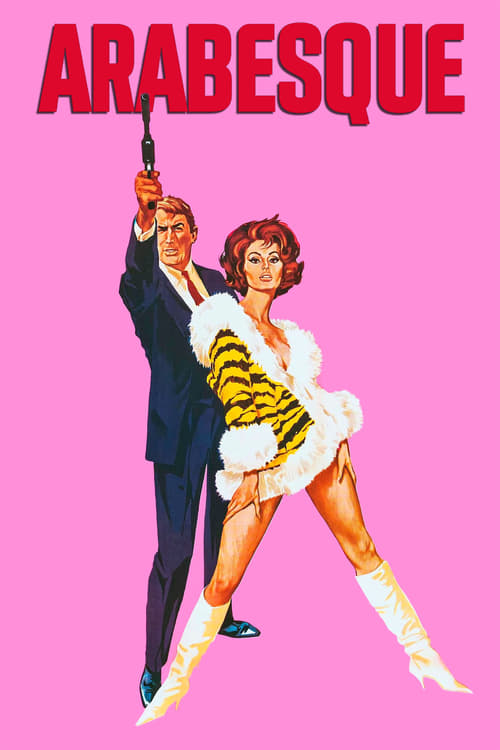
Donen made another Hitchcock-inspired film with Arabesque (1966), starring Gregory Peck and Sophia Loren. The film was written by Julian Mitchell and Stanley Price, with an uncredited rewrite by Peter Stone. Peck plays an American professor at Oxford University who is an expert in ancient hieroglyphics. He is approached by a Middle Eastern prime minister to investigate an organization that is attempting to assassinate him and uses hieroglyphic codes to communicate. The investigation leads Peck to one mystery after another, often involving the prime minister's mysterious mistress (Loren). The film was Donen's second consecutive hit.
Donen made Two for the Road (1967), starring Audrey Hepburn and Albert Finney with Eleanor Bron, William Daniels, and Jacqueline Bisset in supporting roles. The film was conceived by Donen and written by novelist Frederic Raphael, who was nominated for an Academy Award. It has been called one of Donen's most personal films, "with glints of passion never disclosed before", and "a veritable textbook on film editing." The film's complicated and non-linear story is about the 12-year relationship between Hepburn and Finney over the course of four separate (but interwoven) road trips that they take together throughout the years in the south of France. It was moderately successful at the box-office while the critical reception was extremely mixed. Bosley Crowther called the film "just another version of commercial American trash." It is also the film that Donen said he was most frequently asked about by film students.
While living in England, Donen became an admirer of the British stage revue Beyond the Fringe and wished to work with two of the show's participants, Peter Cook and Dudley Moore. The resulting film was Bedazzled (1967), an updated version of the Faust legend. It was written by Cook with music by Moore, and also starred Eleanor Bron and Raquel Welch. Moore plays a lonely young man whose unrequited love of his co-worker (Bron) drives him to attempt suicide. Just then the devil (Cook) appears and offers him seven wishes in exchange for his soul. The film's fun-loving association with the Swinging London of the 1960s divided critics, but Roger Ebert called its satire "barbed and contemporary ... dry and understated", and overall, a "magnificently photographed, intelligent, very funny film." On the other hand, Time magazine called it the feeblest of all known variations on the Faust theme. The film was a hit and was especially popular among American college students. Donen considered it a favorite among his own films and called it "a very personal film in that I said a great deal about what I think is important in life." It was remade as Bedazzled (2000) by director Harold Ramis.
Staircase (1969) is Donen's adaptation of the autobiographical stage play by Charles Dyer with music by Dudley Moore. Rex Harrison and Richard Burton star as a middle-aged gay couple who run a London barber shop and live together in a "bad marriage". The film was shot in Paris for tax purposes and was not a financial success. It received poor reviews upon release, but was re-evaluated by film critic Armond White in 2007. He called the film "a rare Hollywood movie to depict gay experience with wisdom, humor and warmth", and "a lost treasure".