


Stan Lee (born Stanley Martin Lieber ; December 28, 1922 – November 12, 2018) was an American comic book writer, editor, publisher, and producer. He rose through the ranks of a family-run business called Timely Comics, which later became Marvel Comics. He was Marvel's primary creative leader for two decades, expanding it from a small publishing house division to a multimedia corporation that dominated the comics and film industries.
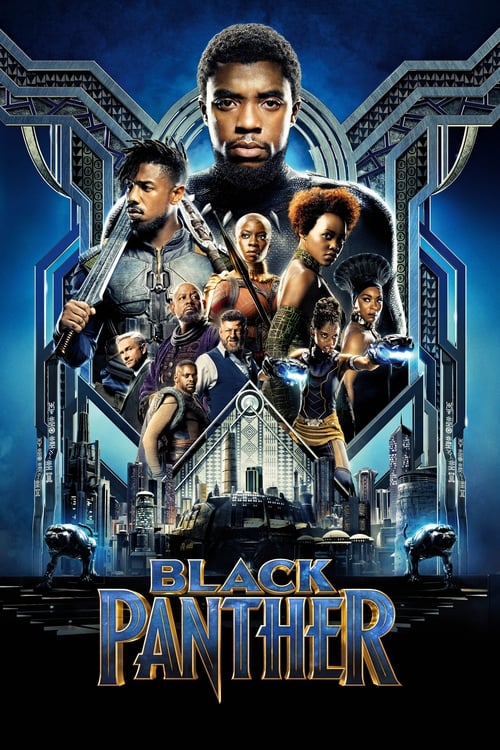
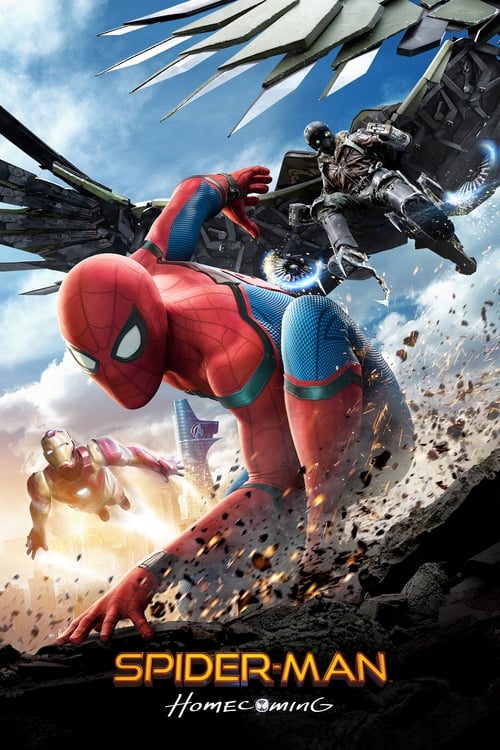
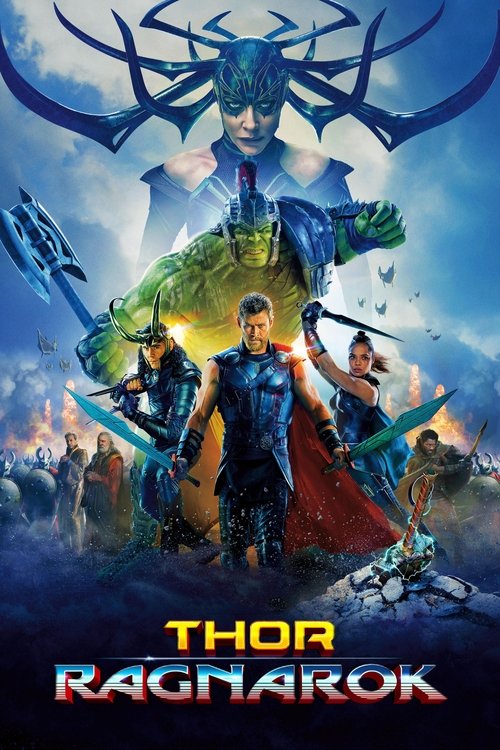
In collaboration with others at Marvel—particularly co-plotters and artists Jack Kirby and Steve Ditko—he co-created iconic characters, including Spider-Man, the X-Men, Iron Man, Thor, the Hulk, Ant-Man, the Wasp, the Fantastic Four, Black Panther, Daredevil, Doctor Strange, the Scarlet Witch, and Black Widow. These and other characters' introductions in the 1960s pioneered a more naturalistic approach in superhero comics. In the 1970s, Lee challenged the restrictions of the Comics Code Authority, indirectly leading to changes in its policies. In the 1980s, he pursued the development of Marvel properties in other media, with mixed results.
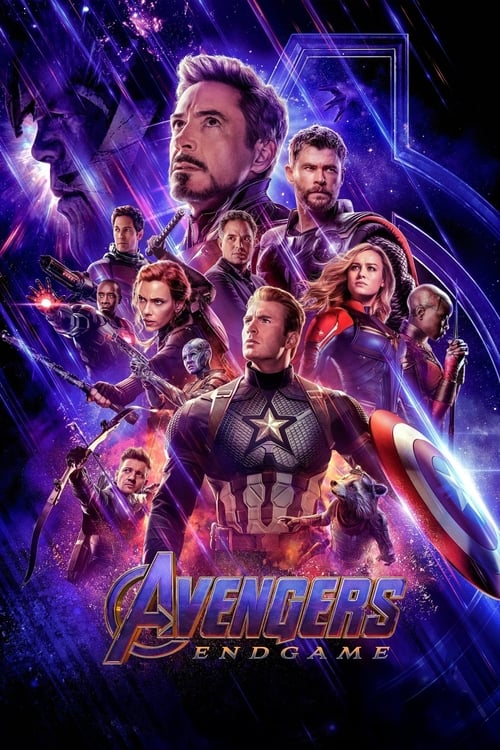
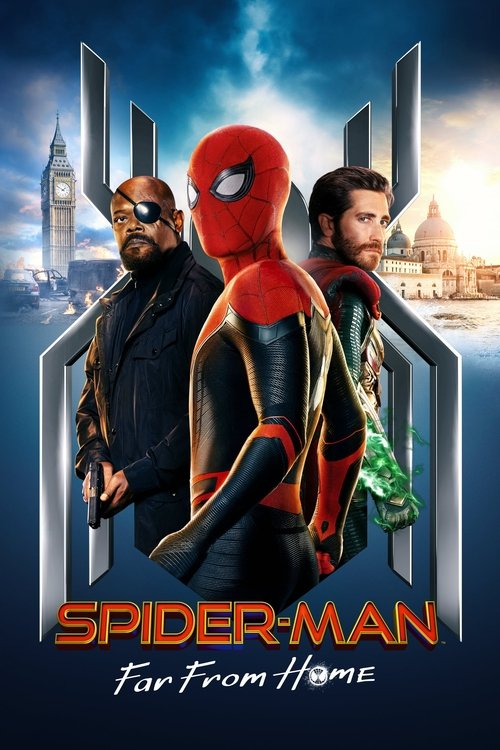
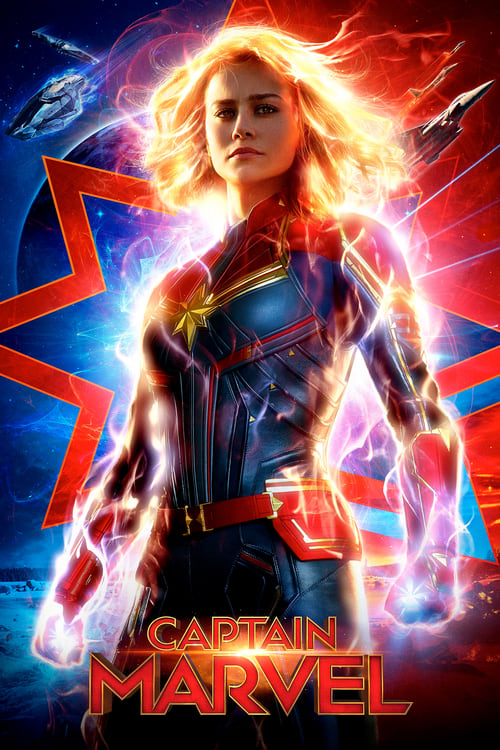
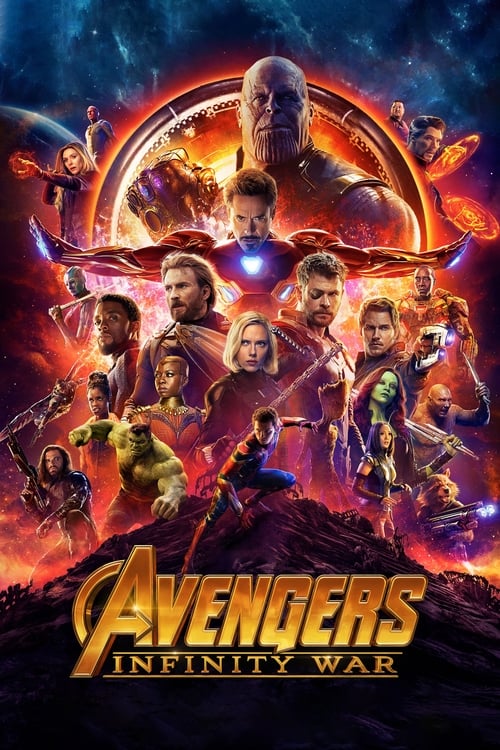
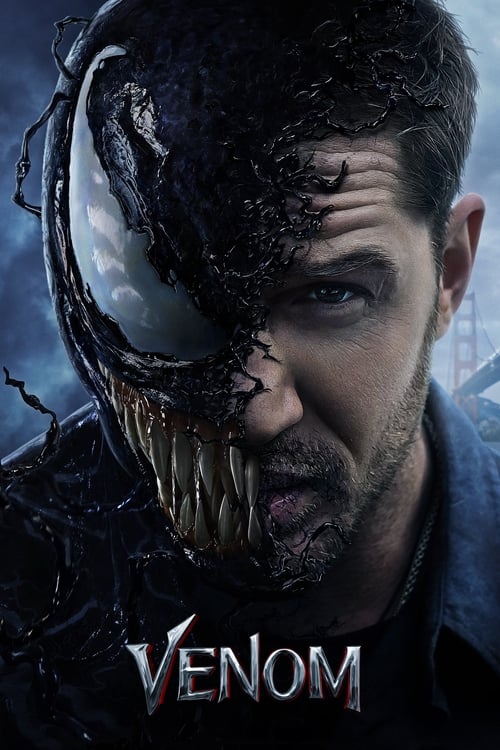
Following his retirement from Marvel in the 1990s, Lee remained a public figurehead for the company. He frequently made cameo appearances in films and television shows based on Marvel properties, on which he received an executive producer credit, which allowed him to become the actor with the highest-grossing film total ever. He continued independent creative ventures until his death, aged 95, in 2018. Lee was inducted into the comic book industry's Will Eisner Award Hall of Fame in 1994 and the Jack Kirby Hall of Fame in 1995. He received the NEA's National Medal of Arts in 2008.
Contents
Early life and education
Lee was born Stanley Martin Lieber on December 28, 1922, in Manhattan, in the apartment of his Romanian-born Jewish immigrant parents, Celia (née Solomon), originating in Huși, Romania, and Jack Lieber (born Iancu Lieber), originating in Botoșani, Romania, at the corner of West 98th Street and West End Avenue. Lee was raised in a Jewish household. In a 2002 interview, he stated when asked if he believed in God, "Well, let me put it this way... [Pauses.] No, I'm not going to try to be clever. I really don't know. I just don't know." In another interview from 2011, when asked about his Romanian origins and his relationship with the country, he said that he had never visited it and that he did not know Romanian because his parents never taught it to him.
Lee's father, trained as a dress cutter, worked only sporadically after the Great Depression. The family moved further uptown to Fort Washington Avenue, in Washington Heights, Manhattan. Lee had one younger brother named Larry Lieber. He said in 2006 that as a child he was influenced by books and movies, particularly those with Errol Flynn playing heroic roles. Reading The Scarlet Pimpernel, he called the title character "the first superhero I had read about, the first character who could be called a superhero." By the time Lee was in his teens, the family was living in an apartment at 1720 University Avenue in The Bronx. Lee described it as "a third-floor apartment facing out back". Lee and his brother shared the bedroom, while their parents slept on a foldout couch.
Lee attended DeWitt Clinton High School in the Bronx. In his youth, Lee enjoyed writing and entertained dreams of writing the "Great American Novel" one day. He said that in his youth he worked such part-time jobs as writing obituaries for a news service and press releases for the National Tuberculosis Center; delivering sandwiches for the Jack May pharmacy to offices in Rockefeller Center; working as an office boy for a trouser manufacturer; ushering at the Rivoli Theater on Broadway; and selling subscriptions to the New York Herald Tribune newspaper. At fifteen, Lee entered a high school essay competition sponsored by the New York Herald Tribune, called "The Biggest News of the Week Contest". Lee claimed to have won the prize for three straight weeks, goading the newspaper to write him and ask him to let someone else win. The paper suggested he look into writing professionally, which Lee claimed "probably changed my life." However, Lee's story is apocryphal, and so is his story of a life-changing plea from the editor, because the likelier story is that Lee won a seventh-place prize of $2.50 and two honorable mention awards. He graduated from high school early, aged sixteen and a half, in 1939 and joined the WPA Federal Theatre Project.
Publishing career
Early career
With the help of his uncle Robbie Solomon, Lee became an assistant in 1939 at the new Timely Comics division belonging to pulp magazine and comic-book publisher Martin Goodman. Timely, by the 1960s, would evolve into Marvel Comics. Lee, whose cousin Jean was Goodman's wife, was formally hired by Timely editor Joe Simon.
His duties were prosaic at first. "In those days [the artists] dipped the pen in ink, [so] I had to make sure the inkwells were filled", Lee recalled in 2009. "I went down and got them their lunch, I did proofreading, I erased the pencils from the finished pages for them". Marshaling his childhood ambition to be a writer, young Stanley Lieber made his comic-book debut with the text filler "Captain America Foils the Traitor's Revenge" in Captain America Comics #3 (cover-dated May 1941), using the pseudonym Stan Lee (a play on his first name, "Stanley"), which years later he would adopt as his legal name. Lee later explained in his autobiography and numerous other sources that because of the low social status of comic books, he was so embarrassed that he used a pen name so nobody would associate his real name with comics when he wrote the Great American Novel one day. This initial story also introduced Captain America's trademark ricocheting shield-toss. It would be adapted into a sequential art story in 2014 by Lee and Bruce Timm in Marvel's 75th Anniversary Celebration.
Lee graduated from writing filler to actual comics with a backup feature, "'Headline' Hunter, Foreign Correspondent", two issues later, using the pseudonym "Reel Nats". His first superhero co-creation was the Destroyer, in Mystic Comics #6 (August 1941). Other characters he co-created during this period, called the Golden Age of Comic Books, include Jack Frost, debuting in U.S.A. Comics #1 (August 1941), and Father Time, debuting in Captain America Comics #6 (August 1941).
When Simon and his creative partner Jack Kirby left in late 1941 following a dispute with Goodman, the 30-year-old publisher installed Lee, just under 19 years old, as interim editor. The youngster showed a knack for the business that led him to remain as the comic-book division's editor-in-chief, as well as art director for much of that time, until 1972, when he would succeed Goodman as publisher.
Lee entered the U.S. Army in early 1942 and served within the U.S. as a member of the Signal Corps, repairing telegraph poles and other communications equipment. He was later transferred to the Training Film Division, where he worked writing manuals, training films, slogans, and occasionally cartooning. His military classification, he said, was "playwright"; he added that only nine men in the U.S. Army were given that title. In the Army, Lee's division included many famous or soon-to-be famous people, including three-time Academy Award-winning director Frank Capra, New Yorker cartoonist Charles Addams, and children's book writer and illustrator Theodor Geisel, later known to the world as "Dr. Seuss".
Marvel Comics
In 1956, DC Comics editor Julius Schwartz revived the superhero archetype and experienced significant success with an updated version of the Flash, and later in 1960 with the Justice League of America super-team. In response, publisher Martin Goodman assigned Lee to come up with a new superhero team. Lee's wife suggested that he experiment with stories he preferred, since he was planning on changing careers and had nothing to lose.
Lee acted on the advice, giving his superheroes a flawed humanity, a change from the ideal archetypes typically written for preteens. Before this, most superheroes had been idealistically perfect people with no serious, lasting problems. Lee introduced complex, naturalistic characters who could have bad tempers, fits of melancholy, and vanity; they bickered amongst themselves, worried about paying their bills and impressing girlfriends, got bored or sometimes even physically ill.
The first superheroes Lee and artist Jack Kirby, created together were the Fantastic Four in 1961. The team's immediate popularity led Lee and Marvel's illustrators to produce a cavalcade of new titles. Again working with Kirby, Lee co-created the Hulk, Thor, Iron Man, and the X-Men; with Bill Everett, Daredevil; and with Steve Ditko, Doctor Strange and Marvel's most successful character, Spider-Man, all of whom lived in a thoroughly shared universe. Lee and Kirby gathered several of their newly created characters together into the team title The Avengers and would revive characters from the 1940s such as the Sub-Mariner and Captain America. Years later, Kirby and Lee would contest who deserved credit for creating The Fantastic Four.
Comics historian Peter Sanderson wrote that in the 1960s:
DC was the equivalent of the big Hollywood studios: After the brilliance of DC's reinvention of the superhero ... in the late 1950s and early 1960s, it had run into a creative drought by the decade's end. There was a new audience for comics now, and it wasn't just the little kids that traditionally had read the books. The Marvel of the 1960s was in its own way the counterpart of the French New Wave... Marvel was pioneering new methods of comics storytelling and characterization, addressing more serious themes, and in the process keeping and attracting readers in their teens and beyond. Moreover, among this new generation of readers were people who wanted to write or draw comics themselves, within the new style that Marvel had pioneered, and push the creative envelope still further.
Beyond Marvel
In 1976, Stan Lee was one of the cartoonists who illustrated the Costello's wall. He drew Spider-Man.
Lee stepped away from regular duties at Marvel in the 1990s, though he continued to receive an annual salary of $1 million as chairman emeritus. In 1998, he and Peter Paul began a new Internet-based superhero creation, production, and marketing studio, Stan Lee Media. It grew to 165 people and went public through a reverse merger structured by investment banker Stan Medley in 1999, but, near the end of 2000, investigators discovered illegal stock manipulation by Paul and corporate officer Stephan Gordon. Stan Lee Media filed for Chapter 11 bankruptcy protection in February 2001. Paul was extradited to the U.S. from Brazil and pleaded guilty to violating SEC Rule 10b-5 in connection with trading his stock in Stan Lee Media. Lee was never implicated in the scheme.
Following the success of 20th Century Fox's 2000 X-Men film and Sony's then-current Spider-Man film, Lee sued Marvel in 2002, claiming that the company was failing to pay his share of the profits from movies featuring the characters he had co-created. Because he had done so as an employee, Lee did not own them, but in the 1990s, after decades of making little money licensing them for television and film, Marvel had promised him 10% of any future profits. Lee and the company settled in 2005 for an undisclosed seven-figure amount.
In 2001, Lee, Gill Champion, and Arthur Lieberman formed POW! (Purveyors of Wonder) Entertainment to develop film, television, and video game properties. Lee created the risqué animated superhero series Stripperella for Spike TV. That same year, DC Comics released its first work written by Lee, the Just Imagine... series, in which Lee reimagined the DC superheroes Superman, Batman, Wonder Woman, Green Lantern, and the Flash.
In 2004, POW! Entertainment went public through a reverse merger again structured by investment banker Stan Medley. Also that year, Lee announced a superhero program that would feature former Beatle Ringo Starr as the lead character. Additionally, in August of that year, Lee announced the launch of Stan Lee's Sunday Comics, a short-lived subscription service hosted by Komikwerks.com. From July 2006 until September 2007 Lee hosted, co-created, executive-produced, and judged the reality television game show competition Who Wants to Be a Superhero? on the Sci-Fi Channel.
Personal life
Marriage and residences
From 1945 to 1947, Lee lived in the rented top floor of a brownstone in the East 90s in Manhattan. He married Joan Clayton Boocock, originally from Newcastle, England, on December 5, 1947, and in 1949, the couple bought a house in Woodmere, New York, on Long Island, living there through 1952. Their daughter Joan Celia "J. C." Lee was born in 1950. Another daughter, Jan Lee, died a few days after her birth in 1953.
The Lees resided in the Long Island community of Hewlett Harbor, New York, from 1952 to 1980. They also owned a condominium on East 63rd Street in Manhattan from 1975 to 1980, and during the 1970s, they owned a vacation home in Remsenburg, New York. For their move to the West Coast in 1981, they bought a home in West Hollywood, California, previously owned by comedian Jack Benny's radio announcer Don Wilson.
Philanthropy
The Stan Lee Foundation was founded in 2010 to focus on literacy, education, and the arts. Its stated goals include supporting programs and ideas that improve access to literacy resources, as well as promoting diversity, national literacy, culture, and the arts.
Lee regularly donated papers, photographs, recordings, and personal effects to the American Heritage Center at the University of Wyoming between 1981 and 2011. They cover the period from 1926 to 2011.
Legal concerns
In 2017, POW! was acquired by Camsing International, a Chinese company, during the period Lee was caring for his terminally ill wife and dealing with his own failing eyesight. Lee filed a US$1 billion lawsuit against POW! in May 2018, asserting that POW! had not disclosed the terms of its acquisition by Camsing to him. Lee stated that POW! CEO Shane Duffy and co-founder Gill Champion had presented him with what they said was a non-exclusive license for POW! for him to sign, under Camsing, to use his likeness and other intellectual property. This contract turned out to be an exclusive license, which Lee claimed he would never have entered into.
Lee's lawsuit contended that POW! took over his social media accounts and was impersonating him inappropriately. POW! considered these complaints without merit and claimed that both Lee and his daughter J.C. were aware of the terms. The lawsuit was dropped in July 2018, with Lee issuing the statement: "The whole thing has been confusing to everyone, including myself and the fans, but I am now happy to be surrounded by those who want the best for me" and saying that he was happy to be working with POW! again.
Following Lee's death, his daughter J.C. gathered a legal team to review the legal situation relating to Lee's intellectual property from his later years. In September 2019, J.C. filed a new lawsuit against POW! in the United States District Court for the Central District of California not only related to recent events but also to regain the intellectual property rights that Lee had set up when founding Stan Lee Entertainment in 1998. The complaint identified a period between 2001 and 2017 during which Lee's partners Gill Champion and Arthur Lieberman were said to have misled Lee about various intellectual property rights deals.
In June 2020, Judge Otis D. Wright II dismissed J.C. Lee's lawsuit against POW! Entertainment, declaring it "frivolous" and "improper", sanctioning J.C. Lee for $1,000,000, and sanctioning her lawyers for $250,000 severally. The court also gave POW! Entertainment the right to make a motion to recover legal fees. "We feel vindicated by the Court's decision today," said POW! in a statement. "Stan purposefully created POW! eighteen years ago with me as a place to safeguard his life's work. Before he passed, Stan was adamant that POW! continue to protect his creations and his identity after he was gone, because he trusted that we would safeguard his legacy for generations to come."
Later life and death
In September 2012, Lee underwent an operation to insert a pacemaker, which required cancelling planned appearances at conventions. Lee eventually retired from convention appearances by 2017.
On July 6, 2017, Joan Boocock, his wife of 69 years, died of complications from a stroke. She was 95 years old.
Lee died on November 12, 2018, at Cedars-Sinai Medical Center in Los Angeles, after being rushed there for a medical emergency earlier in the day. Lee had previously been hospitalized for pneumonia in February of that year. The immediate cause of death listed on his death certificate was cardiac arrest with respiratory failure and congestive heart failure as underlying causes. It also indicated that he suffered from aspiration pneumonia. His body was cremated and his ashes were given to his daughter.
Roy Thomas, who succeeded Lee as editor-in-chief at Marvel, had visited Lee two days prior to his death to discuss the upcoming book The Stan Lee Story and stated "I think he was ready to go. But he was still talking about doing more cameos. As long as he had the energy for it and didn't have to travel, Stan was always up to do some more cameos. He got a kick out of those more than anything else." Lee's last words to Thomas was "God bless. Take care of my boy, Roy", leading fans to speculate that he was referring to Spider-Man. However, Lee had long before nick-named Thomas as Roy "the Boy" Thomas, in line with the way Lee sometimes styled himself as Stan "the Man" Lee.