Electronics
Sony Corporation (Sony Electronics Corporation until 1 April 2021) is the electronics business unit of the Sony Group. It primarily conducts research and development (R&D), planning, designing, manufacturing and marketing for electronics products. Sony Global Manufacturing & Operations Corporation (SGMO) is a wholly owned subsidiary of Sony Corporation and responsible for managing manufacturing operations both in Japan and overseas, through its own factories as well as third party contract manufacturers.
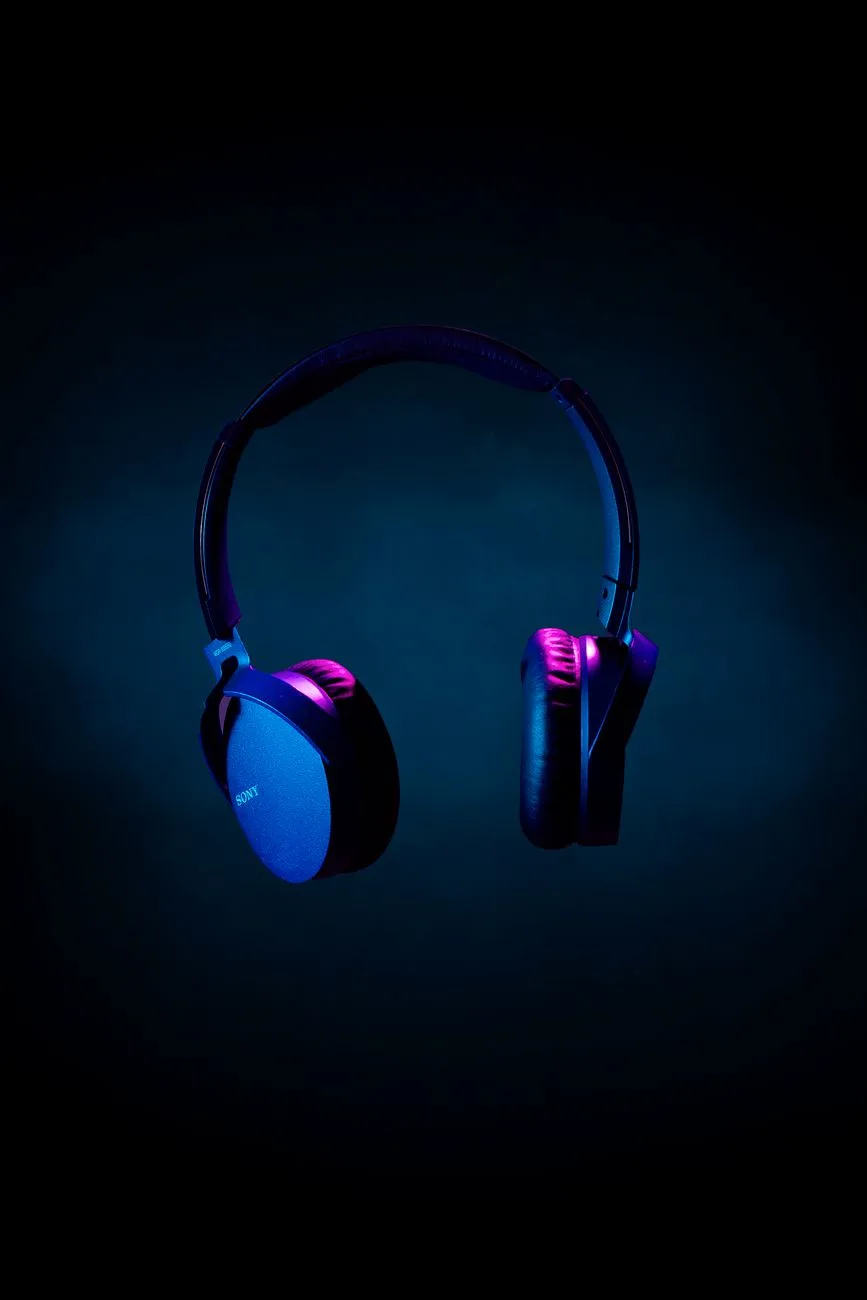
In 1979, Sony released the world's first portable music player, the Walkman, bundled with the MDL-3L2 headphones. This line fostered a fundamental change in music listening habits by allowing people to carry music with them and listen to music through lightweight headphones. Originally used to refer to portable audio cassette players, the Walkman brand has been widely adopted by the company to encompass its portable digital audio and video players as well as a line of former Sony Ericsson mobile phones.
In October 1982, Sony introduced the CDP-101, the world's first commercially available Compact Disc player. Its commercial success demonstrated the viability of digital audio, effectively initiating the transition away from vinyl records and cassette tapes.
In November 1984, Sony released the D-50, the world's first portable Compact Disc player. In late 1985, Sony released the D-50 Mk II, marking the official launch of the Discman brand name printed directly on the chassis. In 1997, Sony officially retired the Discman brand and rebranded its portable CD player lineup under the CD Walkman name.
In 1999, Sony's first portable digital audio players were introduced; one was a player using Memory Stick flash storage created by the Walkman division, and the other was a smaller pen-sized player with embedded flash storage created by the Vaio division; both accompanied with Sony's OpenMG copyright protection technology and PC software for music transfer. Sony continue to develop Walkman digital audio players, although it was unable to capture the large share and influence in the digital world as it did in the cassette era.
In 2025, a model TPS-L2 cassette Walkman from 1979 was included in Pirouette: Turning Points in Design, an exhibition at the Museum of Modern Art featuring "widely recognized design icons [...] highlighting pivotal moments in design history."
Sony is a major audio products manufacturer and one of the active noise control technology leaders.
Sony's high-end microphones and headphones for professional use are produced at Sony/Taiyo Corporation, a designated special subsidiary at which 67% of employees have a disability, in Ōita Prefecture, Japan.
Sony unveiled the TV8-301 in late 1959 and released it in May 1960 as its first television set, which was also the world's first all-transistor portable television. In 1968, the company introduced the Trinitron brand name for its lines of cathode-ray tube (CRT) televisions and computer monitors. In 1989, Sony introduced the 43-inch Trinitron PVM-4300, which became the largest commercial CRT television ever manufactured.
In 1997, Sony introduced the flat-screen FD Trinitron series under the WEGA brand, which eliminated glass curvature to minimize image distortion and glare. Sony introduced its first large-screen home LCD television in 2002 with the WEGA KLV-17HR1. The company continued to use the WEGA brand for its LCD and projection televisions until summer 2005, at which point it introduced the BRAVIA name for its line of high-definition LCD televisions, projection units, and home theater equipment. In 2007, Sony released the 11-inch XEL-1 as the world's first commercial OLED television. In 2008, after a 40-year production run, Sony formally ended global manufacturing of its Trinitron CRT televisions.
Sony expanded the BRAVIA range over the following years by adopting several new display formats and software platforms. During the height of 3D home media trends in 2010, the company released its first 3D-capable BRAVIA LCD HDTVs utilizing active-shutter glasses. That same year, Sony introduced the world's first HDTV powered by Google TV, as well as the BRAVIA KDL22PX300, which featured an integrated PlayStation 2 console built into its base. In 2012, Sony debuted its first 4K Ultra HD television, the 84-inch XBR-84X900. Starting in 2015, Sony transitioned its entire smart TV software ecosystem to Android TV. In 2017, the company introduced its consumer OLED BRAVIA models. In 2019, Sony launched its first 8K Ultra HD television, the ZG9. In 2022, Sony introduced the BRAVIA XR A95K, which was the world's first commercially available consumer television to use QD-OLED panel technology. In 2024, Sony overhauled its entire naming convention to simplify model tiers, designating its lineup under single-digit identifiers such as the BRAVIA 3, BRAVIA 7, BRAVIA 8 and BRAVIA 9. In 2026, Sony introduced RGB Mini LED technology in the flagship BRAVIA 9 II model to improve backlight performance.
During the height of the CRT era, Sony held a major portion of the global television market, driven by the success of its Trinitron lineup, which captured up to 20% of the television market in certain years. By 2012, intense competition from South Korean rivals such as Samsung and LG, along with rising Chinese manufacturers like TCL and Hisense, reduced its share to under 10% globally, causing consecutive years of business losses. In response, Sony deliberately shifted away from high-volume sales to focus on premium, large-format displays sold at higher price points. Sony's global television market share dropped below 2% by 2025.
In 1982, Sony introduced the Watchman, a line of portable pocket televisions featuring a flat monochrome CRT display. Later models transitioned to full-color LCD. Sony produced over 65 variations before discontinuing the product line in 2000 due to declining demand and the transition to digital broadcasting.
Sony developed dedicated gaming displays tailored for its interactive entertainment hardware and PC gaming markets. In late 2011, Sony Computer Entertainment launched the 24-inch PlayStation 3D Display, which featured active-shutter 3D technology and proprietary "SimulView" feature that allowed two players wearing 3D glasses to view distinct, full-screen 2D gameplay images simultaneously from a single screen. In June 2022, Sony expanded beyond its console accessory line by launching INZONE, a dedicated sub-brand of high-performance gaming monitors and headsets aimed at PC and PlayStation 5 gamers.
Sony built a dominant presence in the film and television production industry by developing dedicated professional master monitors. Under its TRIMASTER brand, Sony produced industry-standard reference displays engineered specifically for colorists, cinematographers, and post-production studios to evaluate raw footage with exact color accuracy and dynamic range. The line evolved from legacy CRT broadcast monitors to high-grade professional OLED panels, such as the BVM-E250 introduced in 2011 and the 4K HDR PVM-X2400 introduced in 2020.
Sony restructured its television business to reduce operational costs, downsizing internal units and outsourcing display panel production through corporate partnerships. In 2004, Sony established S-LCD Corporation as a major joint venture with Samsung Electronics to produce seventh-generation TFT LCD panels, but later sold its entire 50% stake back to Samsung for approximately $940 million in December 2011. Sony also entered into a joint venture with Sharp Corporation in July 2009 to operate Sharp Display Products Corporation for large-sized LCD panel production, an agreement that was eventually terminated in May 2012 as Sony parted ways. To streamline operations and focus on larger panel applications, Sony merged its small-and-medium LCD business with those of Toshiba and Hitachi to form Japan Display Inc. in 2012. In 2015, Sony integrated its medium-to-large OLED display business unit into JOLED, a joint venture formed alongside Panasonic and Innovation Network Corporation of Japan. JOLED eventually filed for bankruptcy protection and ceased operations in 2023 after failing to achieve commercial profitability against larger competitors.
Since 2017, Sony shifted entirely toward sourcing display panels from external suppliers rather than fabricating them internally. For its premium OLED lineup, Sony partnered directly with South Korean display manufacturers, sourcing WOLED panels from LG Display, while simultaneously purchasing QD-OLED panels from Samsung Display for flagship models such as the A95 series or BRAVIA 8 II.
In early 2026, Sony further extended its manufacturing transformation by entering a binding agreement with Chinese TCL Electronics to form a global joint venture named BRAVIA Inc., scheduled to begin operations in April 2027. Under the agreement, TCL acquired a 51% controlling stake while Sony retained 49%, transferring its entire home entertainment business, including consumer and commercial displays, product development, logistics and global manufacturing assets, to the new entity. Under the agreement, Sony retained control over product design, image processing technology, and brand standards under the Sony and BRAVIA names.
Over the decades, Sony's television and monitoring technologies have earned prominent industry recognitions and technical honors. In 1973, Sony’s Trinitron technology received a Technology & Engineering Emmy Award, making it the first Emmy presented to a video display innovation. Flat-panel developments brought further technical accolades, including a 2012 Emmy for the BVM-E250 OLED reference monitor and a subsequent 2021 Emmy award for the 4K HDR BVM-X300, both setting color accuracy standards for professional broadcast and film mastering. In the consumer space, flagship BRAVIA OLED models have consistently earned top industry titles, including seven consecutive "King of TV" honors at the annual Value Electronics TV Shootout from 2018 to 2025 and multiple EISA Best Product awards.
Sony offers a wide range of digital cameras. Its point-and-shoot models are branded Cyber-shot, while DSLRs and mirrorless models are branded Alpha, though Sony no longer makes DSLRs. It also produces action cameras and camcorders, with the company's cinema-grade products being sold under the CineAlta name.
Sony demonstrated a prototype of the Sony Mavica in 1981 and released it for the consumer market in 1988. The first Cyber-shot was introduced in 1996. Sony's market share of the digital camera market fell from a high of 20% to 9% by 2005.
Sony entered the market for digital single-lens reflex cameras in 2006 when it acquired the camera business of Konica Minolta. Sony rebranded the company's line of cameras as its Alpha line. Sony is the world's third largest manufacturer of the cameras, behind Canon and Nikon respectively.
In 2010, Sony introduced its first mirrorless interchangeable-lens cameras, which were the NEX-3 and the NEX-5. They also started a new lens mount system, which was the E-mount. There were quite a few NEX models out there, when Sony decided to melt the NEX series into the Alpha series. The first Alpha MILC was the α3000, which was introduced in August 2013. It was followed by the Full-Frame α7 and α7R in October, then the successors of the NEX-5, the NEX-6 and NEX-7, the α5000 and the α6000 in 2014. The α6000 became the most popular MILC ever and Sony became the largest MILC manufacturer.
Sony produced computers (SMC-777 personal computer, MSX home computers and NEWS workstations) during the 1980s. The company withdrew from the computer business around 1990. Sony entered again into the global computer market under the new VAIO brand, began in 1996. Short for "Video Audio Integrated Operation", the line was the first computer brand to highlight visual-audio features.
Sony faced considerable controversy when some of its laptop batteries exploded and caught fire in 2006, resulting in the largest computer-related recall to that point in history.
In a bid to join the tablet computer market, the company launched its Sony Tablet line of Android tablets in 2011. Since 2012, Sony's Android products have been marketed under the Xperia brand used for its smartphones.
On 4 February 2014, Sony announced that it would sell its VAIO PC business due to poor sales and Japanese company Japan Industrial Partners (JIP) will purchase the VAIO brand, with the deal finalized by the end of March 2014. As of 2018, Sony maintained a 5% stake in the new, independent company.
In the 1990s, Sony was contracted to manufacture laptop computers for Apple and Dell. The Raspberry Pi Foundation delegates the manufacture of its single-board computers to Sony. Most Raspberry Pi computers are made at Sony UK Technology Centre in Pencoed, Wales, UK.
Sony has targeted medical, healthcare and biotechnology business as a growth sector in the future. The company acquired iCyt Mission Technology, Inc. (renamed Sony Biotechnology Inc. in 2012), a manufacturer of flow cytometers, in 2010 and Micronics, Inc., a developer of microfluidics-based diagnostic tools, in 2011.
In 2012, Sony announced that it would acquire all shares of So-net Entertainment Corporation, the largest shareholder of M3, Inc., an operator of portal sites (m3.com, MR-kun, MDLinx and MEDI:GATE) for healthcare professionals.
On 28 September 2012, Olympus and Sony announced that the two companies will establish a joint venture to develop new surgical endoscopes with 4K resolution (or higher) and 3D capability. Sony Olympus Medical Solutions Inc. (Sony 51%, Olympus 49%) was established on 16 April 2013.
On 28 February 2014, Sony, M3 and Illumina established a joint venture called P5, Inc. to provide a genome analysis service for research institutions and enterprises in Japan.
In 2000, Sony was a marginal player in the mobile phone market with a share of less than 1 percent. In 2001, Sony entered into a joint venture with Swedish telecommunications company Ericsson, forming Sony Ericsson Mobile Communications. Initial sales were rocky, and the company posted losses in 2001 and 2002. However, Sony Ericsson reached a profit in 2003. The company distinguished itself with multimedia-capable mobile phones, which included features such as cameras. These were unusual at the time. Despite its innovations, Sony Ericsson faced intense competition from Apple's iPhone, which was released in 2007. From 2008 to 2010, amid a global recession, Sony Ericsson slashed its workforce by several thousand. In 2009, Sony Ericsson was the fourth-largest mobile phone manufacturer in the world (after Nokia, Samsung and LG). By 2010, its market share had fallen to sixth place. Sony acquired Ericsson's share of the venture in 2012 for over US$1 billion. Sony Mobile focuses exclusively on the smartphone market under the Xperia brand.
In 2013, Sony contributed to around two percent of the mobile phone market with 37 million mobile phones sold. Sony Mobile's sales reached a peak in 2014 with 40 million handsets, the volume has since decreased. Sony shipped 13.5 million phones in 2017, 6.5 million in 2018, and 2.9 million handsets in FY 2020.
Since the late 1990s, Sony has released numerous consumer robots, including dog-shaped robots called AIBO, a music playing robot called Rolly, and a humanoid robot called QRIO. Despite being a pioneer in the field, Sony had ceased robotics-related operations for 10 years due to financial difficulties, until it decided to revive them in 2016.
In 2015, Sony partnered with an autonomous driving startup ZMP INC. to establish an aerial surveillance and reconnaissance drone manufacturer named Aerosense. At the CES 2021, Sony unveiled a drone with the brand Airpeak, the smallest of its kind that can incorporate a Sony Alpha camera according to the company, entering the drone business on its own for the first time.
In 2019, as part of the London Design Festival, Sony Design showcased Affinity in Autonomy, a conceptual environmental art installation in the Prince Consort Gallery of the Victoria and Albert Museum that represented the company's vision of the future of AI and Robotics.