OpenAI
OpenAI was initially founded as a nonprofit organization by Altman, Greg Brockman, Elon Musk, Jessica Livingston, Peter Thiel, Microsoft, Amazon Web Services, Infosys, and YC Research. Altman tenaciously recruited Ilya Sutskever and Dario Amodei by giving them attention and offering YC stock. In his early conversations with Musk, he framed OpenAI as competing against Google's AI development. Google was far ahead; Musk and Altman modeled their strategy after the Manhattan Project with an emphasis on recruiting AI technology leaders and convincing the world that they were protecting against the AI threat.
When OpenAI launched in 2015, it had raised pledges for $1 billion. In 2019, OpenAI said that $130 million of the pledged funds had been collected. TechCrunch reported that YC Research never contributed any of their pledged funds.
Altman said in 2015 that they were partly motivated by concerns about AI safety and existential risk from artificial general intelligence. He said that open-source would reduce those risks, arguing that if everyone has access to powerful AI, its users would be able to counter a small minority of bad actors. Altman noted it would be a decades-long project that eventually surpasses human intelligence. Walter Isaacson opined that Altman had "Musk-like intensity".
In 2018, Musk, a long-time personal friend of Altman's, resigned from his Board of Directors seat, citing "a potential future conflict [of interest]" with his role as CEO of Tesla due to Tesla's AI development for self-driving cars. In February 2024, Musk sued OpenAI and Altman, alleging they broke the company's founding agreement by prioritizing profit over benefit to humanity. OpenAI executives, including Altman, dismissed these claims in a blog post. The post said that the startup received only $45 million from Musk instead of his pledged $1 billion, and that Musk proposed to merge it with Tesla.
In March 2019, Altman left Y Combinator and began focusing full-time as CEO of OpenAI. Through 2017, Brockman and Sutskever oversaw the day to day business and Altman touched base approximately once a week. Sutskever opposed Altman moving to an AI role because Altman's motivation were unclear and it opened the possibility of an "AI dictator". The three leaders made an informal agreement that Altman would step down if the other two requested. OpenAI planned to spend $1 billion "within five years, and possibly much faster". Altman stated that even a billion dollars may turn out to be insufficient, and that the lab may ultimately need "more capital than any non-profit has ever raised" to achieve artificial general intelligence (AGI).
In December 2022, OpenAI received widespread media coverage after launching a free preview of ChatGPT, a new AI chatbot based on GPT-3.5. According to OpenAI, the preview received over a million signups within the first five days. According to anonymous sources cited by Reuters in December 2022, OpenAI Global, LLC was projecting $200 million of revenue in 2023 and $1 billion in revenue in 2024.
Altman testified before the United States Senate Judiciary Subcommittee on Privacy, Technology and the Law on May 16, 2023, about issues of AI oversight. After the success of ChatGPT, Altman made a world tour in May 2023, during which he visited 22 countries and met multiple leaders and diplomats, including British prime minister Rishi Sunak, French president Emmanuel Macron, Spanish prime minister Pedro Sánchez, German chancellor Olaf Scholz, Indian prime minister Narendra Modi, South Korean president Yoon Suk-yeol, Israeli president Isaac Herzog, and European Commission president Ursula von der Leyen. Altman was named one of the 100 most influential people in the world by Time magazine. Altman stated that being CEO was fun until the release of ChatGPT; then the decisions became much more difficult.
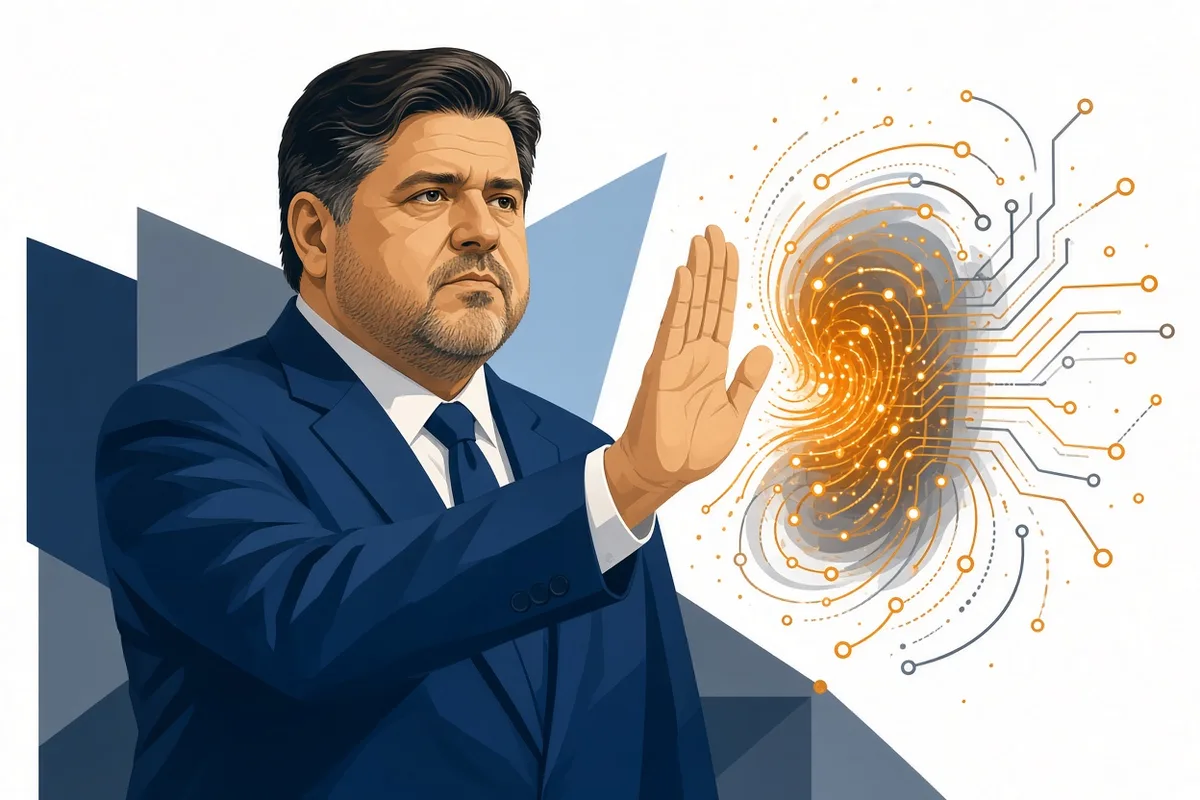
The emergence of the Chinese AI company DeepSeek led major Chinese tech firms to embrace an open-source strategy, intensifying competition with OpenAI. Altman acknowledged the uncertainty regarding U.S. government approval for AI cooperation with China, but emphasized the importance of fostering dialogue between technological leaders in both nations.
On November 17, 2023, OpenAI's board, composed of researcher Helen Toner, Quora CEO Adam D'Angelo, AI governance advocate Tasha McCauley, and, most prominently in the firing, OpenAI co-founder and chief scientist Ilya Sutskever, announced that they had made the decision to remove Altman as CEO and Greg Brockman from the board, both of whom were co-founders. The announcement cited that Altman "was not consistently candid in his communications". In response, Brockman resigned from his role as President of OpenAI. According to The New Yorker, Altman returned to his home and coordinated with consultant Chris Lehane, Airbnb executive Brian Chesky, and a team of staff to implement a strategy for his reinstatement. Altman stated that his team was focused on damaging interim CEO Mira Murati's reputation. The day after Altman was removed, the board discussed bringing him back to OpenAI.
On November 20, 2023, Microsoft CEO Satya Nadella announced that Altman would be joining Microsoft to lead a new advanced AI research team. Two days later, OpenAI employees published an open letter to the board threatening to leave OpenAI and join Microsoft, where all employees had been promised jobs, unless all board members step down and reinstate Altman as CEO. 505 employees initially signed, which later grew to over 700 out of 770 total employees. This included Ilya Sutskever, who initially advocated for firing Altman, but then stated on Twitter "I regret my participation in the board's actions." On November 20, the board reached an agreement where most of the existing board members departed, an independent investigation into Altman's conduct was planned and Altman and Brockman returned to their roles. On November 21, 2023, after continued negotiations, Altman and Brockman returned to the company. D'Angelo remained on the board and was joined by Bret Taylor (as chairman) and Lawrence Summers. Brockman took a sabbatical from August 2024 to November 2024.
In May 2024, after OpenAI's non-disparagement agreements were exposed, Altman was accused of lying when claiming to have been unaware of the equity cancellation provision for departing employees who don't sign the agreement. Also in May, former board member Helen Toner explained the board's rationale for firing Altman in November 2023. She stated that Altman had withheld information, for example by not informing the board in advance of ChatGPT's release and by not disclosing his ownership of OpenAI's startup fund. She also alleged that two executives in OpenAI had reported "psychological abuse" from Altman, and provided screenshots and documentation to support their claims. She said that many employees feared retaliation if they didn't support Altman, and that when Altman was Loopt's CEO, the management team asked twice to fire him for what they called "deceptive and chaotic behavior".
On September 2, 2026, Altman spoke at the G20 Innovation Ministerial in Chapel Hill, North Carolina, where he urged countries to adopt AI, describing its use as "non-negotiable" because of its potential economic and societal benefits. He compared the importance of adopting AI to the adoption of electricity more than a century earlier. Altman also warned that inadequate cybersecurity measures could cause significant problems and set back AI development.
On April 27, 2026, jury selection began in OpenAI co-founder Elon Musk's lawsuit against OpenAI and its current executives, including Altman. On April 28, 2026, trial testimony was by now underway, with Elon Musk beginning his testimony against Altman and OpenAI. On April 30, 2026 Musk would enter his third day of testimony. Musk ultimately lost the case, with the jury unanimously agreeing he waited too long to file suit against Altman and OpenAI.