Singing and songwriting
Bagdasarian's first major songwriting success came with "Come On-a My House", which he co-wrote with William Saroyan in 1939. Many record companies rejected the song for being "too ethnic", and it was not recorded until 1950 (by Kay Armen). The songwriters themselves recorded it as a duet in 1951. Mitch Miller of Columbia Records came across the song and persuaded Rosemary Clooney to record it. It became a million-selling hit. It is an adaptation of an Armenian folk song Bagdasarian wrote with his cousin William Saroyan. The song was originally composed for their off-Broadway musical The Son. It launched Clooney's career, reaching number one on Billboard charts and was number four on Billboard year-end top 30 singles of 1951. The song sold some 750,000 records in a month. In 1954, Bagdasarian wrote "Hey, Brother, Pour the Wine", a hit for Dean Martin.
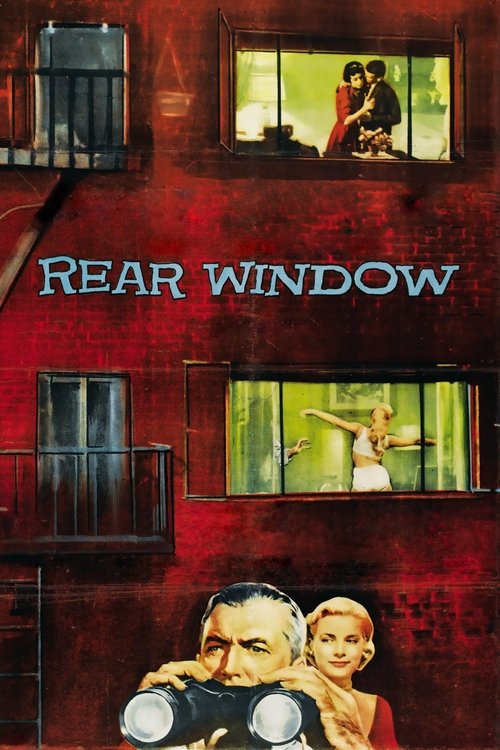
In 1955, Bagdasarian signed with the then-newly established Liberty Records. In early 1956 he had a transcontinental hit with the novelty record "The Trouble with Harry" (inspired by the homonymous Hitchcock film) credited to Alfi & Harry, although Alfi & Harry was just one person, Bagdasarian himself. It reached No. 44 on the Billboard chart and was a bigger hit in the United Kingdom reaching No. 15.
In 1956, he wrote an instrumental "Armen's Theme" named after his wife. The executives at Liberty Records suggested that he adopt a pseudonym as they thought his name was too difficult to pronounce. In December 1956, he charted with his first record credited to his David Seville pseudonym, and "Armen's Theme" reached No. 42 on the Billboard chart.
Bagdasarian's rise to prominence came with the song "Witch Doctor" in 1958, which was created after he experimented with the speed control on a tape recorder bought with $200 (equivalent to $2,200 in 2025) from the family savings. Liberty Records released this novelty record under the David Seville name. It is a duet between his real voice and an accelerated version. The record went on to become a Billboard number-one single by April 28, 1958, and further established him as a songwriter. It sold 1.5 million copies.
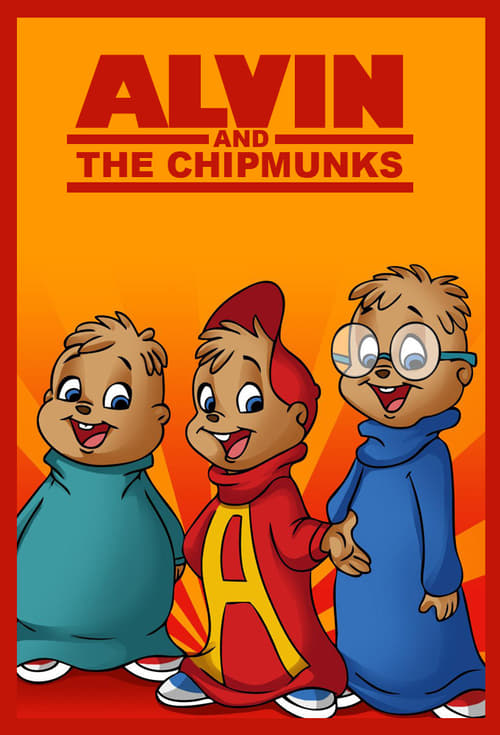
Bagdasarian went on to create his trio of Chipmunks named after the executives of Liberty Records: Simon, Theodore, and Alvin, named for Simon "Si" Waronker, Theodore "Ted" Keep, and Alvin Bennett. Their debut song, "The Chipmunk Song (Christmas Don't Be Late)" was released on November 17, 1958, and became a number one hit by New Years Day. The song sold 4 million records in the first few months. It topped Billboard charts the two weeks before and two weeks after New Years and won three Grammy Awards at the 1st Annual Grammy Awards on May 4, 1959: Best Recording for Children, Best Comedy Performance, and Best Non-Classical Engineered Song. Bagdasarian won the first two as David Seville. The song was the 23rd most-performed Christmas song of the 20th century.
Shana Alexander, writing for Life magazine in 1959, noted that Bagdasarian was the first case in the "annals of popular music that one man has served as writer, composer, publisher, conductor and multiple vocalist of a hit record, thereby directing all possible revenues from the song back into his pocket." Alexander also found it remarkable that Bagdasarian "can neither read nor write music nor play any musical instrument in the accepted sense of the word." Bagdasarian owned Chipmunk Enterprises, which sponsored Chipmunk-related sales. By 1963, some 15 companies were using or planned to use Alvin figures. By that year, Billboard magazine estimated the total income from the Chipmunks' record sales (including overseas sales) and record club sales to be around $20 million ($157 million adjusted for inflation in 2024 dollars).
In the following years, the Chipmunks released several hit songs: "Alvin's Harmonica" (1959), "Ragtime Cowboy Joe" (1959), "Alvin's Orchestra" (1960), "Rudolph the Red Nosed Reindeer" (1960), "The Alvin Twist" (1962), and the album The Chipmunks Sing the Beatles Hits in 1964 during the British Invasion.
Bagdasarian produced The Alvin Show, a half-hour TV cartoon show broadcast on CBS from October 1961 to September 1962.
In 1968, Alvin and the Chipmunks recorded a version of "The Chipmunk Song" with the rock band Canned Heat, who also recorded for Liberty Records.