Reception
Rossen was one of the directors who developed film gris (French for "grey film"). In his films for Warner Brothers between 1937 and 1944, consistent themes were the conditions of working people, the portrayal of gangsters and racketeers, and opposition to fascism. After Dust Be My Destiny, written by Rossen and released in 1939, Frank Nugent, who regularly reviewed for The New York Times, complained about Warner Brothers' long line of melodramas about boys from poor neighborhoods. Unlike filmmakers such as John Ford and Howard Hawks, Rossen was willing to explain his aims as a director: "The element common to many of my films is the desire for success, ambition, which is an important element in American life. It is an important element, and has become increasingly more important in what is known as Western Civilization." Polonsky commented that "Rossen's talent is force applied everywhere without let-up." Neve acknowledged that social concerns were central in most of Rossen's works, but commented that Lilith was different from Rossen's earlier films as it emphasized mood rather than narrative and examined through pictures and silences the nature of maladjustment and madness.
Farber noted the strong female characters of the 1930s and 1940s, and laments the replacement of them by all-male relationships from the 1950s onward. For the earlier pattern Farber cited Rossen's 1946 script The Strange Love of Martha Ivers, which was over melodramatic but portrayed a woman consumed by power, money and success. Lilith created one of the few strong women in the 1960s. Rossen generally destroyed the main character.
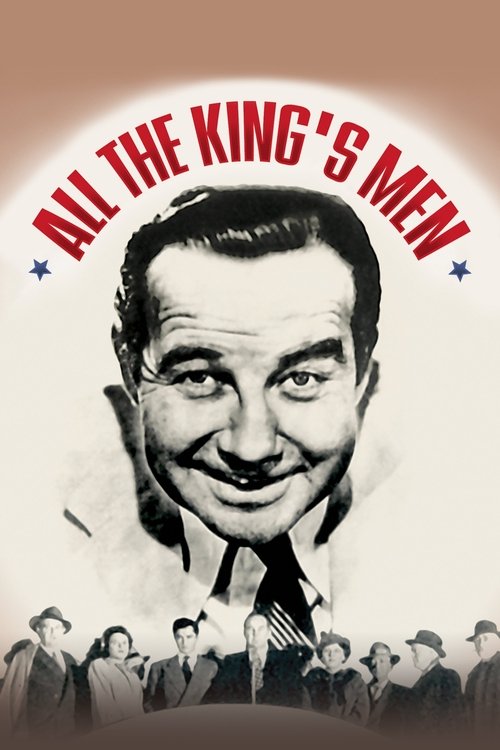
All of Rossen's playscripts were adaptations except Marked Woman, Racket Buster and Alexander the Great, based on real events. Before he was blacklisted in 1951, only two of Rossen's adaptions were of serious novels, and Rossen's early drafts of the script for All the King's Men received serious criticisms within Columbia.
While head of production at Warner, Hal Wallis considered that some of his best films – including The Roaring Twenties, Marked Woman and The Sea Wolf – were written by Rossen. Wallis was very pleased with Rossen's script in 1946 for The Strange Love of Martha Ivers, which was produced by Wallis own company. However, Rossen turned down Wallis's next two films. Both Wallis as producer and Rossen as writer-director wanted to operate as independents, rather than under the control of a studio.
All the King's Men was one of the later social "message" films as America turned conservative. Thomas Schatz regarded All the King's Men as possibly the best of the genre, as it examined alcoholism, adultery, political corruption and the influence of journalism. In 2001 the United States National Film Registry preserved the film as "culturally, historically, or aesthetically significant."
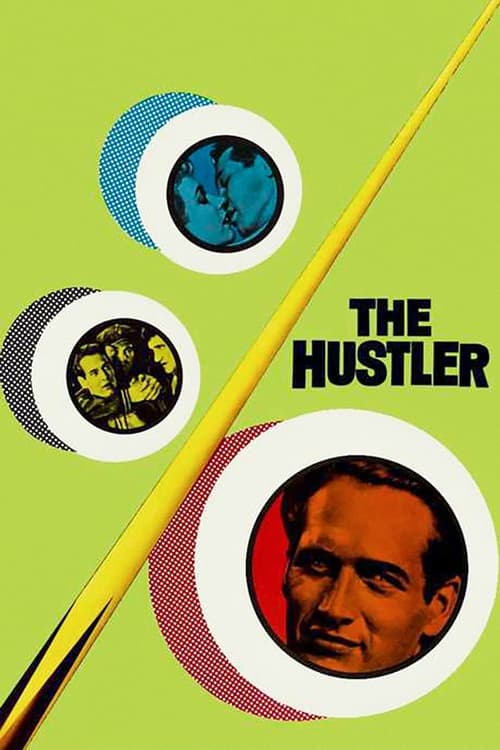
Rossen produced, directed and co-wrote The Hustler in 1961. At the time, Variety praised the cast, complained about the "sordid aspects" of the story and felt the film was far too long. The New Republic praised the cast and Rossen's "sure, economical" direction, but thought the script "strains hard to give an air of menace and criminality." The film won two Academy Awards and was nominated for another seven, was nominated in four of the Golden Globes' categories, and gained many other awards and nominations.
In 1997. the National Film Registry preserved The Hustler as "culturally, historically, or aesthetically significant." In 2002, Roger Ebert described the film as one "where scenes have such psychic weight that they grow in our memories" and praised Rossen's decision to develop all four main characters, and James Berardinelli listed the film in his All Time Top 100 for similar reasons. Ebert also praised Rossen's decision to shoot the film in the "stygian gloom of the billiard parlor" created by black-and-white. Other accolades appeared in the 2000s (decade).
Nina Leibman regarded Lilith as the most extreme of the American film industry's applications, or rather misapplications, of psychoanalytic concepts, as the patient is already psychotic and has a track record of previous conquests. In The New Biographical Dictionary of Film, David Thomson describes Lilith as "an oddity, the only one of [Rossen's] films that seems passionate, mysterious and truly personal. The other films will look increasingly dated and self-contained, but Lilith may grow."