Epics
At MGM, he teamed up with producer Pandro S. Berman, with whom he made Ivanhoe (1952). This was a huge commercial success (earning a DGA nomination for Thorpe) and led to a series of expensive epics produced by Berman, including The Prisoner of Zenda (1952), Knights of the Round Table (1953), All the Brothers Were Valiant (1953) and The Adventures of Quentin Durward (1955). Pandro Berman later called Thorpe "the most efficient director I ever knew in terms of things technical. The beauty of Thorpe was that if you had a script he liked, he just shot it."
Joan Fontaine, who starred in Ivanhoe later wrote "I found that director Thorpe cared more about the performance of the horses than the actors."
According to James Mason, when making The Prisoner of Zenda star Stewart Granger asked to do a second take. Thorpe refused, saying "You can’t improve things to an extent that represents value at the box office. In my experience I have found that if you print the first take which has a reasonable tempo and in which all the actors say their lines in a way that’s completely intelligible then there is no point in retaking it." Granger confirmed "If you remembered the lines and got through the scene, Richard would print it. He didn’t believe in ten or fifteen takes in order to catch some subtle difference only appreciated by the director. I loved working like this, and that’s the reason the film was made in such an incredibly short time."
Thorpe was noted for working quickly and efficiently—skills he had learned in the 1930s while working for low-budget Chesterfield Pictures. Freddie Young said "Dick Thorpe was the favorite director at MGM because he always finished on schedule. He made a point of it. The studio kept giving him a shorter and shorter schedule, but he always beat it." Young described Thorpe's "special method for working fast":
On Ivanhoe he'd start with a long shot and keep filming until one of the actors fluffed. 'Cut!' Then he'd move the camera to a closer set-up. 'Come on, let's go. Action!' And shoot on until the next hold-up. 'Move in closer still. Continue!' And so on until we finished up with just two big heads filling the screen. In other words, the close-ups in the finished film were quite arbitrary, depending on the pure chance of the interruptions in shooting on that particular day. Thorpe never reshot anything. That's how he beat the schedule. For a cameraman it was boring as hell.
Between the various camera angles, Thorpe shot enough footage to patch together into a completed sequence.
Thorpe also directed The Girl Who Had Everything (1951) with Elizabeth Taylor, and two musicals with Edmund Purdom, The Student Prince (1954) and Athena (1954). The Student Prince was originally meant to star Mario Lanza.
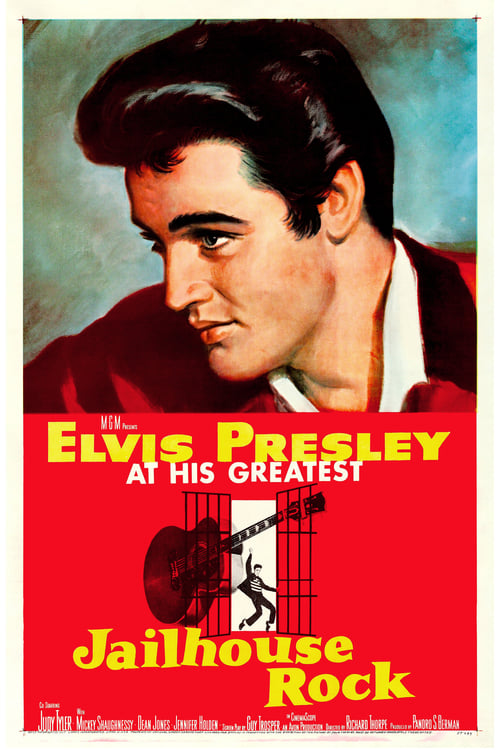
In 1957 Thorpe made two unsuccessful films, Tip on a Dead Jockey and Ten Thousand Bedrooms. The latter, Dean Martin's first film after breaking up with Jerry Lewis, was a flop. Thorpe followed these with the movie Jailhouse Rock, produced by Berman and starring Elvis Presley, which became a huge hit.