1960–1969: Broadway, Hamlet and films with Elizabeth Taylor
In 1960, Burton appeared in two films for Warner Bros., neither of which were successful: The Bramble Bush which reunited him with his Wuthering Heights director Petrie, and Vincent Sherman's adaptation of Edna Ferber's Ice Palace. Burton called the latter a "piece of shit". He received a fee of $125,000 for both films. Burton's next appearance was as the stammering secularist, George Holyoake in BBC's documentary-style television adaptation of John Osborne's A Subject of Scandal and Concern. According to Osborne's biographer Luc Gilleman, the film garnered little attention. Burton returned to the United States for the filming of John Frankenheimer's television adaptation of Ernest Hemingway's The Fifth Column. He also provided narration for 26 episodes of The Valiant Years, an American Broadcasting Company (ABC) series based on Winston Churchill's memoirs.
Burton made a triumphant return to the stage with Moss Hart's 1960 Broadway production of Camelot as King Arthur. The play, written by Alan Jay Lerner and Frederick Loewe, had Julie Andrews fresh from her triumph in My Fair Lady playing Guinevere, and Robert Goulet as Lancelot completing the love triangle. Roddy McDowall played the villainous Mordred. Hart first came up with the proposal to Burton after learning from Lerner about his ability to sing. Burton consulted Olivier on whether he should take the role, which came with a stipend of $4,000 a week. Olivier pointed out this salary was good and that he should accept the offer. The production was troubled, with both Loewe and Hart falling ill and the pressure was building, owing to great expectations and huge advance sales. The show's running time was nearly five hours. Burton's intense preparation and competitive desire to succeed served him well. He immediately drafted Philip, who revised the musical's script and cut its running time to three hours while also incorporating three new songs. Burton was generous and supportive to everyone throughout the production and coached the understudies himself. According to Lerner, "he kept the boat from rocking, and Camelot might never have reached New York if it hadn't been for him". Burton's reviews were excellent, with the critic from Time magazine observing that Richard "gives Arthur the skillful and vastly appealing performance that might be expected from one of England's finest young actors". Broadway theatre reviewer Walter Kerr noted Richard's syllables, "sing, the account of his wrestling the stone from the sword becomes a bravura passage of house-hushing brilliance" and complemented his duets with Andrews, finding Burton's rendition to possess "a sly and fretful and mocking accent to take care of the humor [sic] without destroying the man".
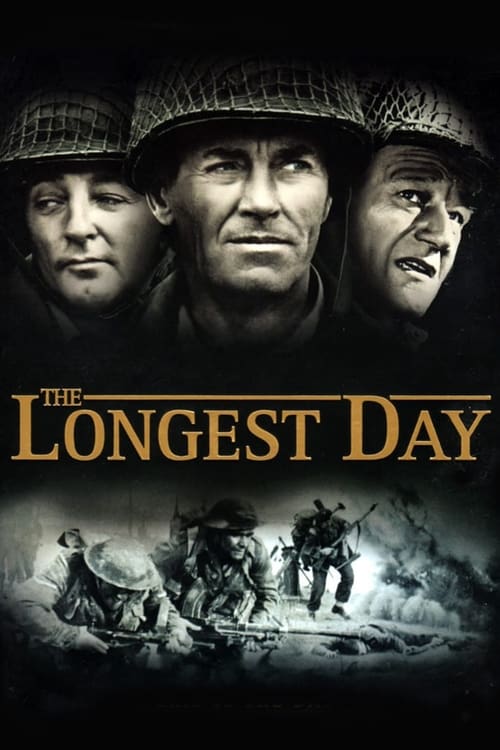
However, on the whole, the play initially received mixed reviews on its opening at the Majestic Theatre on Broadway and was slow to earn money. Advance sales managed to keep Camelot running for three months until a twenty-minute extract was broadcast on The Ed Sullivan Show which helped Camelot achieve great success, and an unprecedented three-year run overall from 1960 to 1963. Its success led to Burton being called "The King of Broadway", and he went on to receive the Tony Award for Best Actor in a Musical. The original soundtrack of the musical topped the Billboard charts throughout 1961 after its release at the end of 1960. John F. Kennedy, who was then the President of the United States, reportedly enjoyed the play and invited Burton to the White House for a visit. In 1962, Burton appeared as Flying Officer David Campbell, an RAF fighter pilot in The Longest Day, which included a large ensemble cast featuring: McDowall, George Segal, Henry Fonda, John Wayne, Mel Ferrer, Robert Mitchum, Rod Steiger and Sean Connery. The same year he provided narration for the Jack Howells documentary Dylan Thomas. The short won the Best Documentary Short Subject at the 35th Academy Awards ceremony.
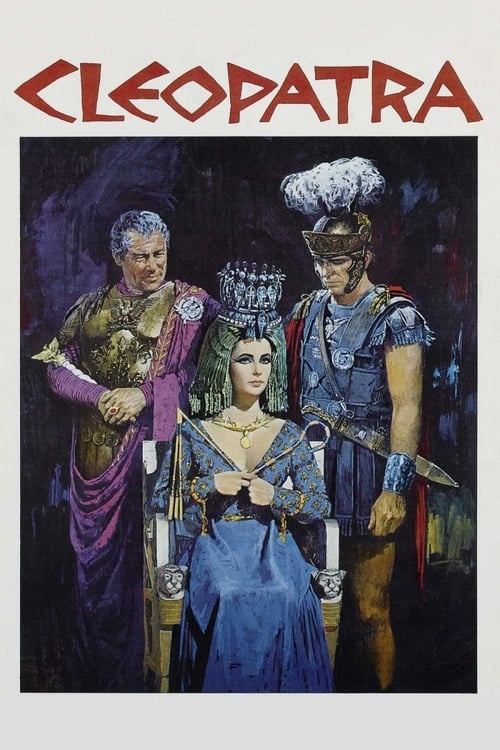
After performing Camelot for six months, in July 1961, Burton met producer Walter Wanger who asked him to replace Stephen Boyd as Mark Antony in director Joseph L. Mankiewicz's magnum opus Cleopatra. Burton was paid $250,000 for four months work in the film (equivalent to $2,629,076 in 2025). The gigantic scale of the film's troubled production, Taylor's bouts of illness and fluctuating weight, Burton's off-screen relationship with the actress, (which he gave the sardonic nickname "Le Scandale") all generated enormous publicity; Life magazine proclaimed it the "Most Talked About Movie Ever Made". Fox's future appeared to hinge on what became the most expensive movie ever made until then, with costs reaching almost $40 million. During filming, Burton met and fell in love with Elizabeth Taylor, who was then married to Eddie Fisher. According to Alpert, at their first meeting on the set while posing for their publicity photographs, Burton said, "Has anyone ever told you that you're a very pretty girl?" Taylor later recalled, "I said to myself, Oy gevalt, here's the great lover, the great wit, the great intellectual of Wales, and he comes out with a line like that." Bragg contradicts Alpert by pointing out that Burton could not stand Taylor at first, calling her "Miss Tits" and opined to Mankiewicz, "I expect she shaves"; he saw her simply as another celebrity with no acting talent. All that changed when, in their first scene together, Burton was shaky and forgot his lines, and she soothed and helped him; it was at this instance, according to Taylor, that she fell for him. Soon the affair began in earnest; both Fisher and Sybil were unable to bear it. While Fisher fled the sets for Gstaad, Sybil went first to Céligny and then headed off to London. Olivier, shocked by Burton's affair with Taylor, cabled him: "Make up your mind, dear heart. Do you want to be a great actor or a household word?". Burton replied "Both".
Cleopatra was finally released on 11 June 1963 with a run time of 243 minutes, to polarising reviews. The Time magazine critic found the film "riddled with flaws, [lacking] style both in image and in action", and wrote Burton "staggers around looking ghastly and spouting irrelevance". In a contradictory review, Crowther termed the film "generally brilliant, moving, and satisfying" and thought Burton was "exciting as the arrogant Antony". Richard Brody of The New Yorker commented positively on the chemistry between Burton and Taylor, describing it as "entrancing in the movie's drama as it was in life". Cleopatra grossed over $26 million (equivalent to $273,423,913 in 2025), becoming one of the highest-grossing films of 1963. It was not enough to prevent Fox from entering bankruptcy. The studio sued Burton and Taylor for allegedly damaging the film's prospects at the box office with their behaviour, but it proved unsuccessful. Cleopatra was nominated for nine Academy Awards, winning for Best Production Design, Best Costume Design and Best Visual Effects.
The film marked the beginning of a series of collaborations with Taylor, in addition to making Burton one of the Top 10 box office draws until 1967. Burton played her tycoon husband Paul Andros in Anthony Asquith's The V.I.P.s (1963), an ensemble cast film described by Alpert as a "kind of Grand Hotel story" that was set in the VIP lounge of London Heathrow Airport; it proved to be a box-office hit despite mixed reviews. It was after The V.I.P.s that Burton became considerably more selective about his roles; he credited Taylor for this as he simply acted in films "to get rich" and she "made me see what kind of rubbish I was doing". Burton divorced Sybil in April 1963 after completing The V.I.P.s while Taylor was granted divorce from Fisher on 6 March 1964. Taylor then took a two-year hiatus from films until her next venture with Burton, The Sandpiper (1965). The supercouple, dubbed "Liz and Dick" by the press, continued starring together in films in the mid-1960s, earning a combined $88 million over the next decade and spending $65 million. Regarding their earnings, in a 1976 interview with Lester David and Jhan Robbins of The Ledger, Burton stated that "they say we generate more business activity than one of the smaller African nations" and that the couple "often outspent" the Greek business tycoon Aristotle Onassis.
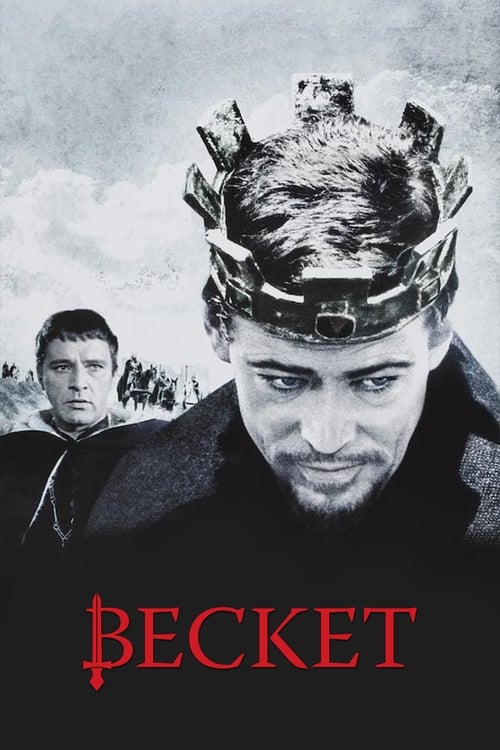
In 1964, Burton portrayed Thomas Becket, the Archbishop of Canterbury who was martyred by Henry II of England, in the film adaptation of Jean Anouilh's historical play Becket. Both Alpert and historian Alex von Tunzelmann noted Burton gave an effective, restrained performance, contrasting with co-actor and friend Peter O'Toole's manic portrayal of Henry. Burton asked the film's director, Peter Glenville, not to oust him from the project like he had done for Adventure Story before accepting the role of Becket. Writing for The Christian Science Monitor, Peter Rainer labelled Burton as "extraordinary". Kenneth Turan of the Los Angeles Times appreciated Burton's on-screen chemistry with O'Toole and thought his portrayal of Becket served as "a reminder of how fine an actor Burton was". The film received twelve Oscar nominations, including Best Actor for both Burton and O'Toole; they lost to Harrison for My Fair Lady (1964). Burton and O'Toole also received nominations for Best Actor – Motion Picture Drama at the 22nd Golden Globe Awards, with O'Toole emerging victorious. Burton's triumph at the box office continued with his next appearance as the defrocked clergyman Dr. T. Lawrence Shannon in Tennessee Williams' The Night of the Iguana (1964) directed by John Huston; the film was also critically well received. Alpert believed Burton's success was due to how well he varied his acting with the three female characters, each of whom he tries to seduce differently: Ava Gardner (the randy hotel owner), Sue Lyon (the nubile American tourist), and Deborah Kerr (the poor, repressed artist). The success of Becket and The Night of the Iguana led Time magazine to term him "the new Mr. Box Office".
During the production of Becket, Burton went to watch Gielgud perform in the 1963 stage adaptation of Thornton Wilder's 1948 novel, The Ides of March. There he was confronted by Gielgud who asked what Burton planned to do as a part of the celebration of Shakespeare's quatercentenary. Burton told him he was approached by theatrical producer Alexander H. Cohen to do Hamlet in New York City. Burton had accepted Cohen's offer under the condition that Gielgud would direct it, which he conveyed to Gielgud. Gielgud agreed and soon production began in January 1964 after Burton had completed his work in Becket and The Night of the Iguana. Taking into account Burton's dislike for wearing period clothing, as well as fellow actor Harley Granville-Barker's notion that the play was best approached as a "permanent rehearsal", Gielgud decided for Hamlet to be performed in a 'rehearsal' version with an incomplete set with the actors performing wearing their own clothes. Unaccustomed to this freedom, the cast found it hard to select the appropriate clothes and wore different attire day by day. After the first performance in Toronto, Gielgud decreed that the actors must wear capes as he felt it "lacked colour". In addition to being the play's director, Gielgud appeared as the Ghost of Hamlet's father. According to Gielgud's biographer Jonathan Croall, Burton's basic reading of Hamlet was "a much more vigorous, extrovert" version of Gielgud's own performance in 1936. Burton varied his interpretations of the character in later performances; he even tried a homosexual Hamlet.
When the play debuted at the Lunt-Fontanne Theatre in New York City, Burton garnered good reviews for his portrayal of a "bold and virile" Hamlet. Howard Taubman of The New York Times called it "a performance of electrical power and sweeping virility", noting that he had never known or seen "a Hamlet of such tempestuous manliness". A critic from Time magazine said that Burton "put his passion into Hamlet's language rather than the character. His acting is a technician's marvel. His voice has gem-cutting precision." Walter Kerr felt that though Burton carried "a certain lack of feeling" in his performance, he appreciated Burton's "reverberating" vocal projections. The opening night party was a lavish affair, attended by six hundred celebrities. The play ran for 137 performances, beating the previous record set by Gielgud himself in 1936. The most successful aspect of the production, apart from Burton's performance, was generally considered to be Hume Cronyn's performance as Polonius, winning him the only Tony Award he would ever receive in a competitive category. Burton himself was nominated for his second Tony Award for Best Actor in a Play but lost to Alec Guinness for his portrayal of the poet Dylan Thomas. The performance was immortalised in a film that was created by recording three live performances on camera from 30 June 1964 to 1 July 1964 using a process called Electronovision; it played in US theatres for a week in 1964. The play was also the subject of books written by cast members William Redfield and Richard L. Sterne.
Burton helped Taylor make her stage debut in A Poetry Reading, a recitation of poems by the couple as well as anecdotes and quotes from the plays Burton had participated in thus far. The idea was conceived by Burton as a benefit performance for his mentor Philip, whose conservatory, the American Musical and Dramatic Academy, had fallen short of funds. A Poetry Reading opened at the Lunt-Fontanne on 21 June 1964 to a packed house; the couple received a standing ovation at the end of their performance. Burton remarked on Taylor's performance, "I didn't know she was going to be this good."
After Hamlet came to a close in August 1964, Burton and Taylor continued making films together. The first film after their marriage, The Sandpiper, was poorly received but still became a commercially successful venture. According to Bragg, the films they made during the mid-1960s contained a lot of innuendos that referred directly to their private lives. Burton went on to star opposite Claire Bloom and Oskar Werner in The Spy Who Came In from the Cold (1965), a Cold War espionage story about a British Intelligence agent, Alec Leamas (Burton), who is sent to East Germany on a mission to find and expose a mole working within his organisation for an East German Intelligence officer, Hans-Dieter Mundt (Peter van Eyck). Martin Ritt, the film's director and producer, wanted Burton's character to exhibit more anonymity, which meant no display of eloquent speeches or intense emotional moments. Bragg believed this decision worried Burton, as he had generated his reputation as an actor with those exact traits, and wondered how the film's would turn out. Ritt, a non-drinker, was displeased with Burton's drinking habits as he felt it "lacked a certain discipline" and expected the same level of commitment from him as everyone else during filming. In spite of their differences, Alpert notes that the film transpired well. Based on the 1963 novel of the same name by John le Carré, The Spy Who Came in from the Cold garnered positive reviews, with Fernando F. Croce of Slant Magazine describing Burton's performance as more of "tragic patsy than swashbuckler" and believed his scenes with Werner "have sharp doses of suspicion, cynicism and sadness". Dave Kehr of the Chicago Reader called the film "Grim, monotonous, and rather facile", he found Burton's role had "some honest poignancy". Variety thought Burton fitted "neatly into the role of the apparently burned out British agent". Burton also made a brief appearance the same year in Clive Donner's comedy What's New Pussycat? as a man who meets the womaniser Michael James (O'Toole) in a bar.
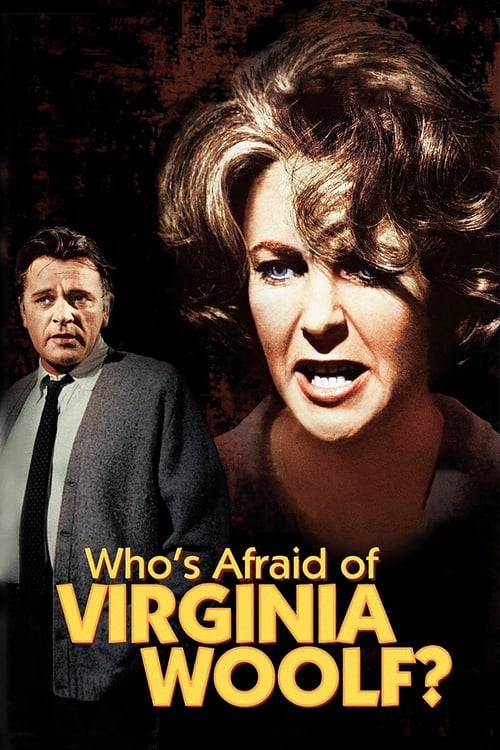
In 1966, Burton and Taylor enjoyed their greatest on-screen success in Mike Nichols's film version of Edward Albee's black comedy play Who's Afraid of Virginia Woolf?, in which a bitter erudite couple trade vicious barbs in front of their guests, Nick (George Segal) and Honey (Sandy Dennis). Burton wanted Taylor for the character of Martha "to stop everyone else from playing it". He didn't want anyone else to do it as he thought it could be for Elizabeth what Hamlet was for him. Burton was not the first choice for the role of George. Jack Lemmon was offered the role initially, but when he turned it down, Warner Bros. president Jack L. Warner agreed on Burton and paid him $750,000. Nichols was hired to helm the project at Taylor's request, despite having never directed a film. Albee preferred Bette Davis and James Mason for Martha and George respectively, fearing that the Burtons' strong screen presence would dominate the film. Instead, it proved to be what Alpert described as "the summit of both Richard's and Elizabeth's careers".
The film's script, adapted from Albee's play by Ernest Lehman, broke new ground for its raw language and harsh depiction of marriage. So immersed had the Burtons become in the roles of George and Martha over the months of shooting that, after it was wrapped up, he and Taylor found it difficult not to be George and Martha, "I feel rather lost." Later the couple would state that the film took its toll on their relationship, and that Taylor was "tired of playing Martha" in real life. Who's Afraid of Virginia Woolf? garnered critical acclaim, with film critic Stanley Kauffmann of The New York Times calling it "one of the most scathingly honest American films ever made". Kaufman observed Burton to be "utterly convincing as a man with a great lake of nausea in him, on which he sails with regret and compulsive amusement", and Taylor "does the best work of her career, sustained and urgent". In her review for The New York Daily News, Kate Cameron thought Taylor "nothing less than brilliant as the shrewish, slovenly. blasphemous, frustrated, slightly wacky, alcoholic wife" while noting that the film gave Burton "a chance to display his disciplined art in the role of the victim of a wife's vituperative tongue". However, Andrew Sarris of The Village Voice criticised Taylor, believing her performance "lack[ed] genuine warmth" but his review of Burton was more favourable, noting that he gave "a performance of electrifying charm". Although all four actors received Academy Award nominations for their roles in the film, which received a total of thirteen nominations, only Taylor and Dennis went on to win. Both Burton and Taylor won their first BAFTA Awards for Best British Actor and Best British Actress respectively; the former also for his role in The Spy Who Came in from the Cold.
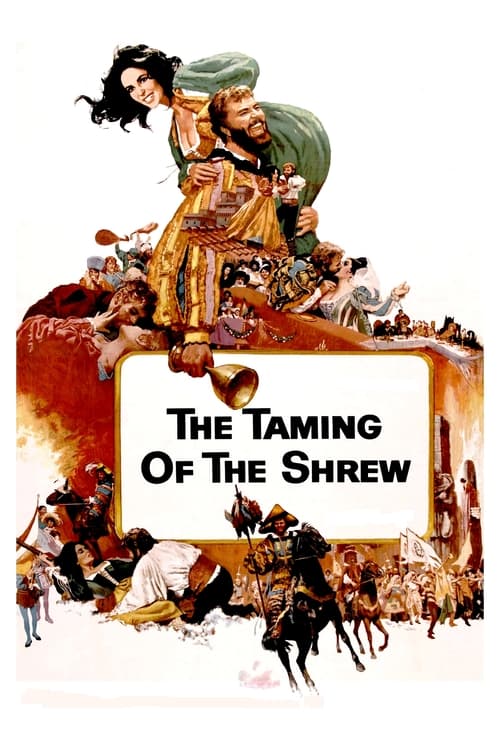
Burton and Taylor next performed a 1966 Oxford Playhouse adaptation of Christopher Marlowe's Doctor Faustus; the couple did the play to benefit the Oxford University Dramatic Society and as a token of Burton's gratitude to Nevill Coghill. Burton starred as the titular character, Doctor Faustus while Taylor played her first stage role as Helen of Troy, a non-speaking part. The play received negative reviews but Burton's and Taylor's performances were reviewed constructively. Irving Wardle of The Times called it "University drama at its worst" while the American newspaper columnist John Crosby, in his review for The Observer, lauded Burton's speech where he asks God to be merciful, stating that: "It takes a great actor to deliver that speech without wringing a strangled sob of laughter out of one. But Burton did it." The play nevertheless made $22,000, which Coghill was happy with. Doctor Faustus was adapted for the screen the following year by both Burton and Coghill, with Burton making his directorial debut. He also co-produced the film with Taylor and Coghill; it was critically panned and was a box office failure. The couple's next collaboration was Franco Zeffirelli's lively version of Shakespeare's The Taming of the Shrew (1967). The film was a challenge for Burton, who had to chase Taylor on rooftops, noting that he was "permitted to do extreme physical things that wouldn't have been allowed with any other actress". Zeffirelli recalled that Taylor, who had no prior experience performing in a Shakespeare play, "gave the more interesting performance because she invented the part from scratch". Of Burton, the director felt he was, to an extent, "affected by his knowledge of the classics". The Taming of the Shrew also became a notable critical and commercial success. He had another quick collaboration with Zeffirelli narrating the documentary, Florence: Days of Destruction, which was about the 1966 flood of the Arno that devastated the city of Florence, Italy; the film raised $20 million for the flood relief efforts. By the end of 1967, the combined box office gross of films Burton and Taylor had acted in had reached $200 million. According to biographers John Cottrell and Fergus Cashin, when Burton and Taylor contemplated taking a three-month break from acting, Hollywood "almost had a nervous breakdown" as nearly half the U.S. cinema industry's income for films in theatrical distribution came from pictures starring one or both of them. Later collaborations from the Burtons like The Comedians (1967), which was based on Graham Greene's 1966 novel of the same name, and the Tennessee Williams adaptation Boom! (1968) were critical and commercial failures.
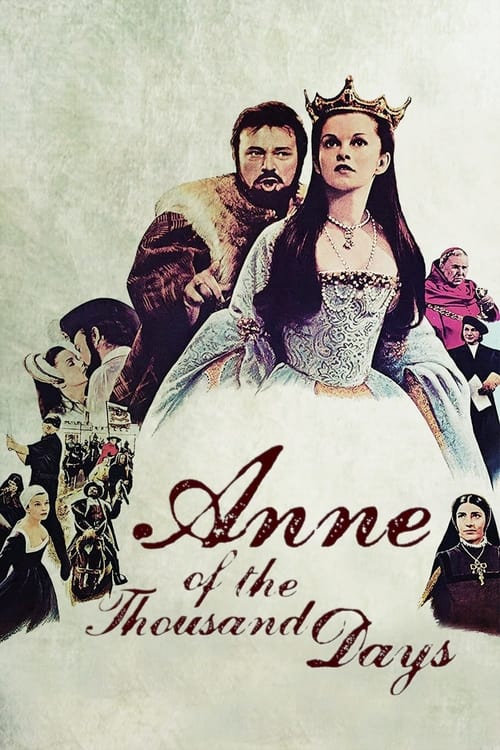
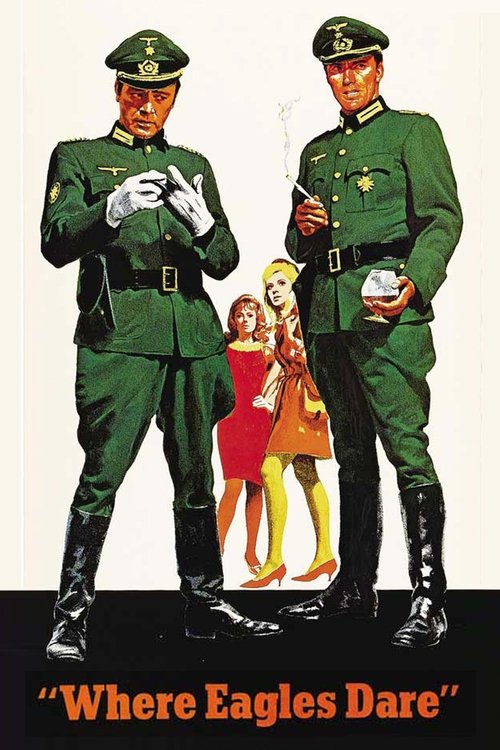
In 1968, Burton enjoyed a commercial blockbuster with Clint Eastwood in the World War II action film Where Eagles Dare; he received a $1 million fee plus a share of the film's box office gross. According to his daughter Kate Burton, "He did that one for us kids, because we kept asking him, 'Can you do a fun movie that we can go see?'" Eastwood thought the script "terrible" and was "all exposition and complications". He asked the film's producer Elliott Kastner and its screenwriter Alistair MacLean to be given less dialogue, later remarking "I just stood around firing my machine gun while Burton handled the dialogue." Burton enjoyed working with Eastwood and said of the picture that he "did all the talking and [Eastwood] did all the killing". Burton's last film of the decade, Anne of the Thousand Days (1969) for which he was paid $1.25 million, (equivalent to $10,974,365 in 2025) was commercially successful but garnered mixed opinions from reviewers. Noted British film critic Tom Milne of Time Out magazine believed that Burton "plays throughout on a monotonous note of bluff ferocity". Conversely, Vincent Canby of The New York Times appreciated Burton's portrayal of the English monarch, noting that he "is in excellent form and voice—funny, loutish and sometimes wise". Anne of the Thousand Days received ten nominations at the 42nd Academy Awards, including one for Burton's performance as Henry VIII of England, which many thought to be largely the result of an expensive advertising campaign by Universal Studios. The same year, Staircase in which he and his Cleopatra co-star Rex Harrison appeared as a bickering homosexual couple, received negative reviews and was unsuccessful.