Topic
Top videos

Jon on Trump's Meme Assault on Canada & the Alternate Reality He's Constructed | The Daily Show
YouTube · 9.8M views

Steam Frame Review - This Changes Everything
YouTube · 2.9M views

Landon Barker - If I Ever Talk To God (Official Music Video)
YouTube · 196k views

ABC World News Tonight with David Muir Full Broadcast - Sept. 14, 2026
YouTube · 1.5M views
Not who you're looking for? Others named rice: city in Minnesota, United States · Japanese rock band · unincorporated community in Prince Edward County, Virgina · Middlesex cricketer
“As we emerge from the twilight zone of the , it is clear that they established something like a cultural unity in northern India. The valley was by the seventh century the great centre of Indian population. It may be the cultivation of rice made this possible.”
Quotes via Wikiquote (CC BY-SA), each with its original source.
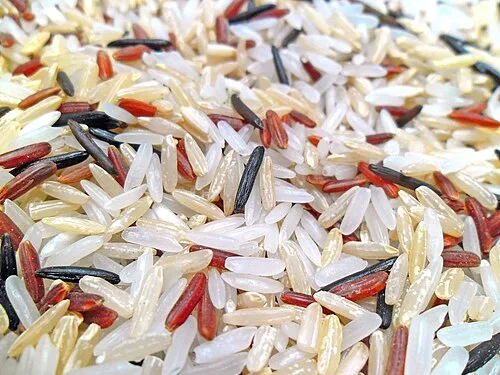
Rice is a cereal grain and, in its domesticated form, is the staple food of over half of the world's population, particularly in Africa and Asia. Rice is the seed of the grass species Oryza sativa —or, less commonly, Oryza glaberrima. Asian rice was domesticated in China some 13,500 to 8,200 years ago; African rice was domesticated independently in West Africa about 3,000 years ago. Rice has become commonplace in many cultures worldwide; in 2023, 800 million tons were produced, placing it third after sugarcane and maize. Only some 8% of rice is traded internationally. China, India, and Indonesia are the largest consumers of rice. A substantial amount of the rice produced in developing nations is lost after harvest through factors such as poor transport and storage. Rice yields can be reduced by pests including insects, rodents, and birds, as well as by weeds, and by diseases such as rice blast. Traditional rice polycultures such as rice-duck farming, and modern integrated pest management seek to control damage from pests in a sustainable way.
Open questions
On Watch
Studio characters