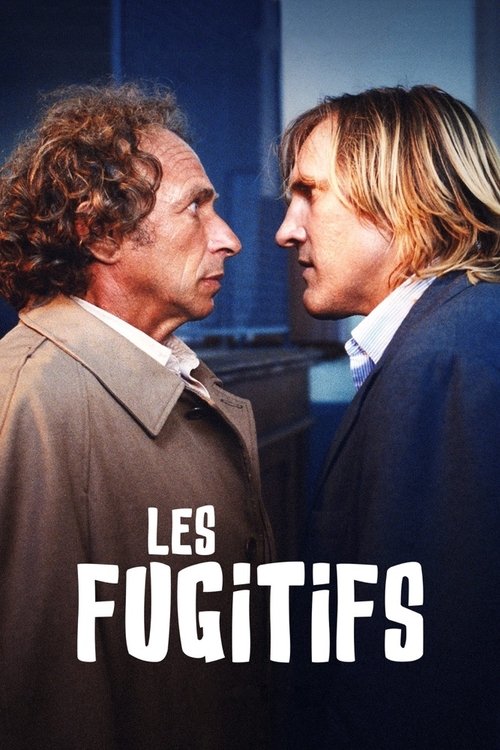
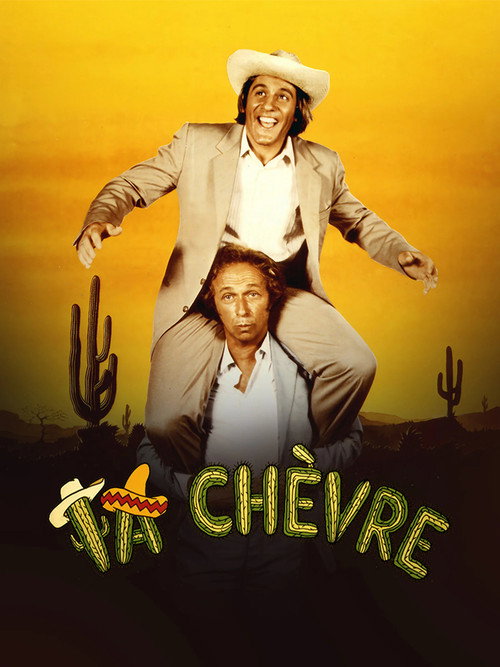
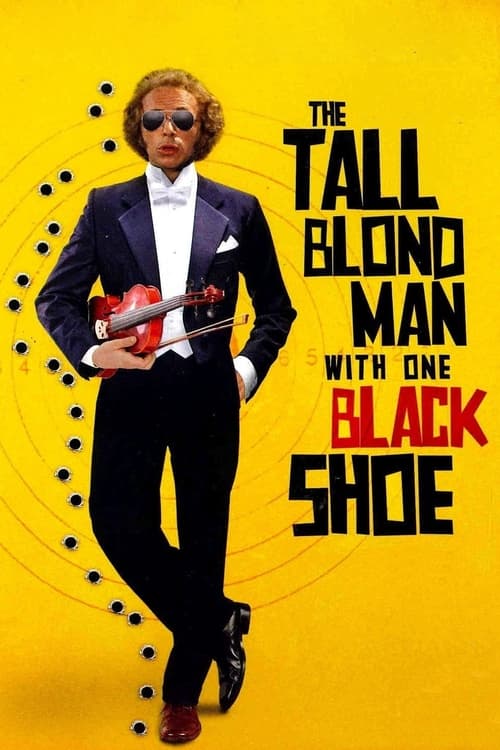
Pierre Richard (born Pierre-Richard Maurice Charles Léopold Defays; 16 August 1934) is a French actor, film director and screenwriter, best known for his roles in comedy films. Richard rose to prominence in 1970 with the film Le Distrait, which he directed and starred in. He quickly became a prominent comedic star of French cinema, typically playing clumsy and offbeat characters. Richard alternated between directing his own projects and working with other filmmakers, maintaining a distinct, clown-like persona built on slapstick and blunders. His major box-office successes include The Tall Blond Man with One Black Shoe (1972), Lucky Pierre (1974), La Chèvre (1981), Les Compères (1983) and Les Fugitifs (1986).
Richard remained one of France’s most popular film stars throughout the 1970s and 1980s. Beginning in the 1990s, his career shifted to a lower profile as he moved away from his classic screen persona to explore new types of roles, though he has continued to appear on screen regularly.
Contents
Early life
Pierre-Richard Defays was born in a wealthy bourgeois family from Valenciennes. His paternal grandfather, Léopold Defays, was the chairman of the iron and steel company Escaut-et-Meuse. His first name comes from the stage name of Pierre Richard-Willm, who was his mother's favorite actor. His maternal grandfather was an Italian immigrant who had become a successful businessman in France. Richard later described his family as "half-aristocratic, half-immigrant".
Richard's father abandoned his family before his birth, and later went on to squander much of his fortune; they eventually met when Richard was seven years old but, despite seeing each other from time to time, never built a real connection. Richard spent his childhood and a part of his teenage years in his native city where he was a student at the Henri-Wallon high school.
Skipping classes regularly to go to the cinema, it was Danny Kaye in Up in Arms that revealed his vocation. This was received with only a moderate enthusiasm by his family, but he decided nonetheless to go to Paris to study dramatic arts at the famous Charles Dullin school. His beginnings were difficult (he wanted to play straight drama, which was not in his nature) and he studied kinesiotherapy to have a backup plan if needed, but did not renounce acting. He earned his degree as a kinesiotherapist and even briefly opened a practice, though he did not pursue this activity seriously; to reassure his family, he had his acting colleagues Victor Lanoux and Danielle Minazolli pretend to be his patients.
Career
After a short stint as an extra at Jean Vilar's Théâtre National Populaire, Pierre Richard started his career in theatre, under the direction of Antoine Bourseiller. To augment his income, he created a comedy duet with Victor Lanoux; they performed sketches they had written themselves in famous Parisian cabarets and music halls. In 1968, he had his first significant film role in Very Happy Alexander (Alexandre le Bienheureux), directed by Yves Robert. During filming, Robert told him that he was "not an actor, but a character." Initially upset by this remark, Richard was eventually encouraged to make his own films, based on his personal brand of humor.
Richard later showed the script for Le Distrait (The Daydreamer) to Robert, who recommended it to producer Alain Poiré of Gaumont. The film, which Richard directed and starred in, was a surprise success in 1970; it turned Richard into a popular performer in France and enabled him to establish a comedic persona based on slapstick humor, which drew inspiration from directors and performers such as Jacques Tati, Pierre Étaix, Jerry Lewis and Harpo Marx. Richard's persona, which he reproduced in subsequent vehicles, typically combined a lanky, elastic, and highly kinetic style of physical comedy with a generally naive, hapless, and socially mistreated character.
Richard's next film as a director, Les Malheurs d'Alfred (1972), in which he also starred, was equally successful as his first. The same year, his next collaboration with Yves Robert, The Tall Blond Man with One Black Shoe (Le Grand Blond avec une chaussure noire, 1972), was an international box-office hit and cemented Richard's status as France's new comedic superstar. Richard next directed and starred in I Don't Know Much, But I'll Say Everything (Je sais rien, mais je dirai tout, 1973) and starred in a sequel to Robert's film, The Return of the Tall Blond Man with One Black Shoe (1974).
Richard followed up with a series of highly successful comedies, playing on his persona as a klutzy blunderer. In 1974, he co-starred with Jane Birkin in the film Lucky Pierre (La moutarde me monte au nez !), directed by Claude Zidi, which was a box-office hit in France. The next year, Richard and Birkin re-teamed with Zidi for another success, The Wild Goose Chase (La Course à l'échalote). Richard took advantage of his new superstar status to support independent, unconventional projects such as Un nuage entre les dents (1974) and The Castaways of Turtle Island (1976), but these attempts to depart from his usual style were not successful. In his own directorial efforts, Richard sought to convey dissenting ideas, such as criticism of capitalism, militarism, and the mass media.
Other activities
Since 1986, Richard has also become a businessman and winemaker. He owns the restaurant Au pied de chameau in Paris and a 50-hectare vineyard which produces some 80,000 bottles a year (red and rosé) labelled as Château Bel Évêque in Gruissan in the department of Aude.
Personal life
Richard's first wife was dancer and actress Danielle Minazzoli, whom he married in 1960 and who appeared with him onscreen several times. The had two sons together, both of whom became actors and musicians. Olivier is a group member of "Blues trottoir" and plays the saxophone and Christophe plays the double bass. In 2019, Christophe succeeded his father as the manager of the family's wine business. Richard and Minazzoli eventually divorced; he was later in a relationship with actress Muriel Dubrulle. In 1996, he remarried to Ceyla Lacerda, a Brazilian businesswoman and former model. His grandson, Arthur Defays, is a model and actor.
Throughout most of his life, Pierre Richard had distinctive curly hair. In 2012, his hair became straight following a minor surgical procedure—a phenomenon that doctors were unable to explain.
Filmography
Richard has acted in all the films he directed.
Books
Pierre Richard (1989). Olivier Orban (ed.). Le petit blond dans un grand parc.
Pierre Richard (2003). Cherche-Midi (ed.). Comme un poisson sans eau, détournement de mémoire.
Pierre Richard; Gwendal Le Bec (2010). Gallimard Jeunesse Giboulées (ed.). Le petit blond avec un mouton blanc. Paris. p. 75. ISBN 978-2-07-062104-0.{{cite book}}: CS1 maint: location missing publisher (link)
Pierre Richard and Jérémie Imbert, Je sais rien mais je dirai tout (autobiography). Foreword by Gérard Depardieu. Éditions Flammarion, 2015.
Accolades and honors
Karlovy Vary International Film Festival 1996 : Best Actor for A Chef in Love
Just for Laughs Festival of Montréal 2004 : Honorary Prize
31st César Awards 2006 : Honorary Cesar
Magritte Awards 2015 (Belgium) : Honorary Prize
Chevalier (Knight) of the Legion of Honour
Documentaries
Un jour, un destin : Pierre Richard, l'incompris (A film by Laurent Allen-Caron). Broadcast on France 2 on 6 September 2015 and again on 31 December 2015.
Pierre Richard, the quiet one directed by Gregory Monro in 2018