Non-Hammer film work
Although best known for his Hammer performances from the 1950s to the 1970s, Cushing worked in a variety of other roles during this time, and actively sought roles outside the horror genre to diversify his work. In an interview published in ABC Film Review in November 1964, Cushing stated, "People look at me as if I were some sort of monster, but I can't think why. In my macabre pictures, I have either been a monster-maker or a monster-destroyer, but never a monster. Actually, I'm a gentle fellow. Never harmed a fly. I love animals, and when I'm in the country I'm a keen bird-watcher." In an interview published in 1966, he added, "I do get terribly tired with the neighbourhood kids telling me 'My mum says she wouldn't want to meet you in a dark alley'." He continued to perform in occasional stage productions, such as Robert E. MacEnroe's The Silver Whistle at Westminster's Duchess Theatre in 1956. Around the same time he appeared in the film Alexander the Great (1956) as the Athenian General Memnon of Rhodes. In 1959 Cushing originally planned to appear in the lead role of William Fairchild's play The Sound of Murder, while shooting a film at the same time. The hectic schedule became overbearing for Cushing, who had to drop out of the play and resolved to never again attempt a film and play simultaneously.
He appeared in the biographical epic film John Paul Jones (1959), in which Robert Stack played the title role of the American naval fighter in the American Revolutionary War. Cushing became very ill with dysentery during filming and lost a considerable amount of weight as a result. Cushing played Robert Knox in The Flesh and the Fiends (1960), based on the true story of the doctor who purchased human corpses for research from the serial killer duo Burke and Hare. Cushing had previously stated Knox was one of his role models in developing his portrayal of Baron Frankenstein. The film was called Mania in its American release. Cushing appeared in several films released in 1961, including Fury at Smugglers' Bay, an adventure film about pirates scavenging ships off the English coastline; The Hellfire Club, where he played a lawyer helping a young man expose a cult; and The Naked Edge, a British-American thriller about a woman who suspects her husband framed another man for murder. The latter film starred Deborah Kerr, Cushing's co-star from The End of the Affair, and Gary Cooper, one of Cushing's favourite actors. In 1965 Cushing appeared in the Ben Travers farce play Thark at Garrick Theatre in Westminster. It was his final stage performance for a decade, but he continued to stay active in film and television during this period.
Cushing took the lead role in two science fiction films by AARU Productions based on the British television series Doctor Who. Although Cushing's protagonist was derived from television scripts used for First Doctor serials, his portrayal of the character differed in the fact that Cushing's Dr. Who was a human being, whereas the original Doctor as portrayed on TV by William Hartnell was extraterrestrial. Cushing played the role in Dr. Who and the Daleks (1965) and Daleks' Invasion Earth 2150 A.D. (1966).
Cushing later starred in the fifteen-episode BBC television series Sherlock Holmes, once again reprising his role as the title character with Nigel Stock as Watson, though only six episodes now survive. The episodes aired in 1968. Douglas Wilmer had previously played Holmes for the BBC, but he turned down the part in this series due to the extremely demanding filming schedule. Fourteen days of rehearsal was originally scheduled for each episode, but they were cut down to ten days for economic reasons. Many actors turned down the role as a result, but Cushing accepted, and the BBC believed his Hammer Studios persona would bring what they called a sense of "lurking horror and callous savagery" to the series. Production lasted from May to December, and Cushing adopted a strict regimen of training, preparation and exercise. He tried to keep his performance identical to his portrayal of Holmes from The Hound of the Baskervilles. Although the series proved popular, Cushing felt he could not give his best performance under the hectic schedule, and he was not pleased with the final result.
Cushing appeared in a handful of horror films by the independent Amicus Productions, including Dr. Terror's House of Horrors (1965), as a man who could see into the future using Tarot cards; The Skull (1965), as a professor who became possessed by a spiritual force embodied within a skull; and Torture Garden (1967), as a collector of Edgar Allan Poe relics who is robbed and murdered by a rival. Cushing also appeared in non-Amicus horror films like Island of Terror (1966) and The Blood Beast Terror (1968), in both of which he investigates a series of mysterious deaths. He appeared in Corruption (1968), a film that was billed as so horrific that "no woman will be admitted alone" into theatres to see it. Cushing played a surgeon who attempts to restore the beauty of his wife (played by Sue Lloyd), whose face is horribly scarred in an accident.
In July 1969, Cushing appeared as the straight man in the sketch comedy series The Morecambe & Wise Show. In the skit, Cushing portrayed King Arthur, while the other two gave comedic portrayals of characters like Merlin and the knights of the Round Table. Cushing continued to make occasional cameos in the series over the next decade, portraying himself desperately attempting to collect a payment for his previous acting appearance on the show. Cushing and Lee made cameos as their old roles of Frankenstein and Dracula in the comedy One More Time (1970), which starred Peter Lawford and Sammy Davis Jr. The single scene took only one morning of filming, which Cushing agreed to after Davis asked him to do it as a favour. The next year Cushing appeared in I, Monster (1971), which was adapted from Robert Louis Stevenson's Strange Case of Dr Jekyll and Mr Hyde, alongside Lee as the Jekyll/Hyde figure. Later that year he was set to appear in Blood from the Mummy's Tomb (1971), an adaptation of the Bram Stoker novel The Jewel of Seven Stars. He was forced to withdraw from the film to care for his wife, and was ultimately replaced by Andrew Keir.
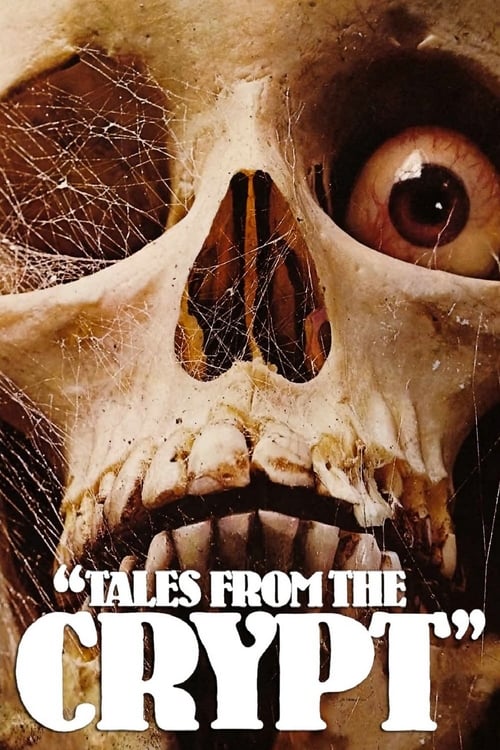
In 1971, Cushing contacted the Royal National Institute for the Blind and offered to provide voice acting for some of their audiobooks. They immediately accepted, and among the works Cushing recorded was The Return of Sherlock Holmes, a collection of thirteen one-hour stories. He appeared alongside Vincent Price in Dr. Phibes Rises Again! (1972), a sequel to The Abominable Dr. Phibes, and then co-starred with Price again in the film Madhouse (1974). He once again starred with his longtime collaborator Christopher Lee in Horror Express (1972). Cushing continued to appear in several Amicus Productions films during this period, including Tales from the Crypt (1972), From Beyond the Grave (1973), And Now the Screaming Starts! (1973) and The Beast Must Die (1974).
For Tales from the Crypt, an anthology film made up of several horror segments, Cushing was offered the part of a ruthless businessman but did not like the part and turned down the role. Instead, Cushing asked to play Arthur Grymsdyke, a kind, working-class widower who gets along well with the local children, but falls subject to a smear campaign by his snobbish neighbours. Eventually, the character is driven to commit suicide, but returns from the grave to seek revenge against his tormentors. After Cushing was cast in the role, several changes were made to the script at his suggestion. Originally, all of the character's lines were spoken aloud to himself, but Cushing suggested he should speak to a framed photograph of his deceased wife instead, and the director, Freddie Francis, agreed. Cushing used the emotions from the recent loss of his wife to add authenticity to the widower character's grieving. The makeup artist Roy Ashton designed the costume and makeup Cushing wore when he rose from the dead, but Cushing helped Ashton to develop the costume, and donned a pair of false teeth that he previously used in a disguise during the Sherlock Holmes television series. His performance in Tales from the Crypt won him the Best Male Actor award at the 1971 French Convention of Fantasy Cinema in France.
In 1975, Cushing was anxious to return to the stage, where he had not performed in ten years. Around this time he learned that Helen Ryan, an actress who impressed him in a televised play about King Edward VII, was planning to run the Horseshoe Theatre in Basingstoke with her husband, Guy Slater. Cushing wrote to the couple and suggested they should stage The Heiress, a play by Ruth and Augustus Goetz, with Cushing himself in the lead role. Ryan and Slater agreed, and Cushing later said performing the part was his most pleasant experience since his wife had died four years earlier. Cushing also starred in several horror films released in 1975. Among them were Land of the Minotaur, where he played Baron Corofax, the evil leader of a Satanic cult opposed by a priest played by Donald Pleasence. Another was The Ghoul, where he played a former priest hiding his cannibalistic son in an attic. That film marked the first occasion on Cushing worked with the producer Kevin Francis, who worked in minor jobs at Hammer and had long aspired to work with Cushing, whom he admired deeply. They went on to make two other films together, Legend of the Werewolf (1975) and The Masks of Death (1984) with Cushing playing Sherlock Holmes once more. Cushing appeared in the television film The Great Houdini (1976) as Sir Arthur Conan Doyle, the creator of Sherlock Holmes. Cushing wrote the forewords to two books about Holmes: Peter Haining's Sherlock Holmes Scrapbook (1974) and Holmes of the Movies: The Screen Career of Sherlock Holmes (1976), by David Stuart Davies. Cushing also appeared in the horror film The Uncanny (1977).