Personal life
Ray was the youngest child in his family, and the only boy, called "Ray" or "Junior." His three sisters were significantly older than he: Alice, born 1900; Ruth, born 1903; and Helen, born 1905. (He had two half-sisters, from his father's first marriage. They had both married but continued to live near their father.) Raymond Sr. was a building contractor, age forty-eight when his son was born. After World War I, he retired and moved his family from the small town of Galesville to his own hometown, the larger community of La Crosse, where they would be nearer his mother. Raymond Sr. loved to read and he loved music, and so did Ray, who remembered hearing Louis Armstrong and Lil Hardin, playing on the banks of the Mississippi River, around 1920. Mother Lena was a Lutheran and teetotaler, but the father drank and frequented speakeasies. Raymond Sr. went missing in 1927; Ray tracked down his father's mistress, who led him to a hotel room where his father was insensate. Raymond Sr. died the next day. Ray was sixteen.
As the youngest, Ray had been indulged by his mother and sisters, death had left him the only male in the family. One by one his sisters left home. By 1924, Alice had completed training as a nurse, married and moved to Madison, and, by the time her father died, Oshkosh. Middle sister Ruth had taken Ray to his first movie, The Birth of a Nation (1915), and she was the first in the family with theatrical ambitions — "stagestruck," as he later characterized her — but they were foiled by the family. She moved to Chicago and married a scientist, but indulged her love of the arts as an avid audience member. Helen too had performance in her veins, working awhile reading stories on a children's radio broadcast, then becoming a teacher.
Increasingly unmanageable after his father's death, Ray was sent to Chicago to live with his sister Ruth and enroll in Robert A. Waller High, returning to La Crosse Central midway through his final year. He was popular, with a good sense of humor about himself. He played football and basketball, and was involved in the "Falstaff Club," the school's drama group, though not as an onstage presence. His mellifluous, deep voice earned him a scholarship to be an announcer at the local radio station, WKBH, for a year, while he was enrolled in La Crosse Teachers College.
As in high school, he joined the drama society, the Buskin Club, where he dated Kathryn Snodgrass, daughter of the school's president. They also collaborated as editors on the Racquet, the school newspaper, she on features, and he on sports, and as co-writers of a stage revue revolving around a college student who goes to Hollywood. The couple was known around campus as "Ray and Kay." In April 1930, he played the lead in the school's major production, of The New Poor, a 1924 comedy by Cosmo Hamilton.
After improving his academic record, in fall 1931, Ray transferred to the University of Chicago to study with Thornton Wilder, who had already impressed Ray when he had seen the writer in La Crosse. Ray was pledged to a fraternity and played some football, but by his own account, he was more committed to drinking and pursuing college girls. Ray spent only one quarter at the University of Chicago, and returned to La Crosse in December, resuming enrollment at Teachers College in autumn 1932. That same year, he and his friend Clarence Hiskey agitated to start a chapter of the U.S. Communist Party.
At the end of 1932, Ray left college, and, now calling himself Nicholas Ray, sought new opportunities. Through Thornton Wilder, Ray met Frank Lloyd Wright, with the hope of joining Wright's Fellowship at Taliesin. Lacking the tuition fee, in 1933, Ray moved to New York City, and, staying in Greenwich Village, he had his first encounters with the city's bohemia. There, shortly before his stint at Taliesin, Ray met young writer Jean Evans (born Jean Abrahams, later Abrams), and they started a relationship. They married in 1936. When Ray took a position at the WPA in Washington, by January 1937 they had moved to Arlington, Virginia. They had one son, Anthony Nicholas (born November 24, 1937), known as Tony, and named for Ray's friend and fellow Federal Theatre director Anthony Mann. Washington government life wore on both Ray and Evans, and Ray's drinking and infidelity strained their marriage. Evans moved back to New York in 1940, having found a job at PM, the new leftist newspaper. Ray returned to New York in May of that year, but the couple soon separated. A few months later he again attempted to reconcile, while also living at Almanac House, a Greenwich Village loft occupied by Pete Seeger, Lee Hays, and Millard Lampell, core members of the Almanac Singers. Evans filed for divorce in December 1941, and the process was finalized the next summer.
Ray had been rejected for military service on medical grounds but worked for the Office of War Information (OWI), under John Houseman. There, Ray met Connie Ernst, the daughter of lawyer Morris L. Ernst, and a producer of The Voice of America. After his divorce, she and Ray lived together, in New York, from 1942 to 1944, when the OWI sent her to London prior to D-Day, and after she had begun seeing another staff member, Michael Bessie, whom she later married. Ray later wrote, "We had once wanted to marry," though she had remembered his drinking and gambling, commenting, "It was very tricky, being with Nick."
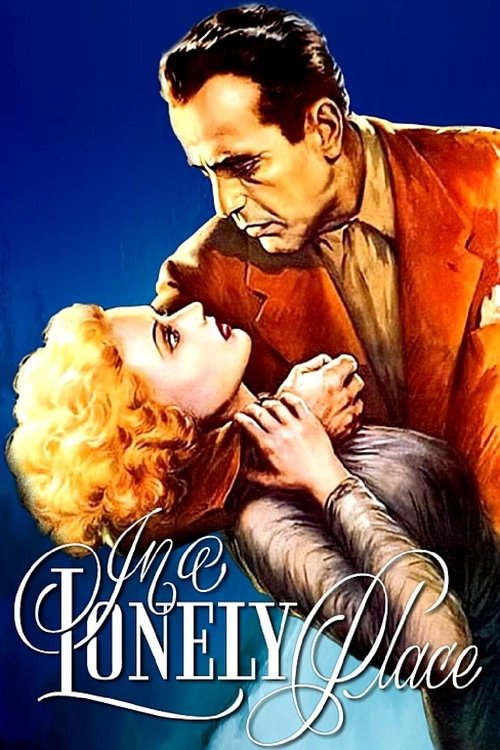
Relocating to Los Angeles to work with Elia Kazan, Ray first lived in a flat at the Villa Primavera, on the corner of Harper and Fountain, that became the model for the apartment building in In A Lonely Place, before moving into a house in Santa Monica. While at Fox, he socialized with fellow transplanted east coasters and theatre folk at Gene Kelly and Betsy Blair's house, among them Judith Tuvim, soon to be known as Judy Holliday, whom he had briefly, unsuccessfully pursued in New York, after his marriage ended. On one occasion, fueled by alcohol, they waded into Santa Monica Bay, an excursion that turned into a halfhearted double suicide attempt, before they changed their minds and struggled back to dry land.
While directing A Woman's Secret, he became involved with the film's co-star, Gloria Grahame, later remembering, "I was infatuated with her but I didn't like her very much." Nonetheless, they married in Las Vegas on June 1, 1948, just five hours after her divorce from her first husband was granted, and five months before the birth of their son, Timothy, on November 12. (RKO announced that he was born "almost four months before the date he was expected.") Tensions in their marriage were known early on, and by autumn 1949, while shooting In A Lonely Place, they had separated for the first time, keeping the split a secret from studio executives. In 1950, Ray and Grahame were reported to have reconciled, and were living in Malibu, though their marriage remained dysfunctional. Ray stated that he had discovered Grahame in bed with his son, Tony, who was 13 years old at the time. Although they were irreparably estranged, Ray and Grahame were nominally connected again, when he was called on to help rescue Macao (1952), a project Josef von Sternberg was directing for RKO. Grahame filed for divorce, and she testified in court that Ray had struck her twice, once at a party and once in private, at home, before the divorce was granted, on August 15, 1952. Gloria Grahame and Tony Ray married in 1960 and divorced in 1974. Tony Ray died June 29, 2018, age 80.
The HUAC investigations of Hollywood and the entertainment industry, which largely coincided with Ray's marriage to and divorce from Gloria Grahame, further weighed on him. Fellow RKO employees, such as Edward Dmytryk and Adrian Scott, were among the Hollywood 10, who had been cited for contempt of Congress in the aftermath of the 1947 hearings; Knock On Any Door and In A Lonely Place star Bogart was a charter member of the Committee for the First Amendment, which protested against the hearings; and Ray's old friend Elia Kazan testified confidentially in 1952, first refusing to name names, and later doing so, in order to protect his career. The date and content of Ray's own communication with the committee are unknown (McGilligan reports a gap in Ray's Freedom of Information files, between 1948 and 1963), but his ex-wife Jean Evans said that he later admitted to testifying against her.
By court order in the divorce, Ray started seeing psychoanalyst Carel Van der Heide. Even so, he continued womanizing and drinking, both prodigiously. He had romances with both Shelley Winters and Marilyn Monroe, who were roommates at the time, as well as Joan Crawford — with whom he was planning a suspense film, Lisbon, in 1952, and who later starred in Johnny Guitar — and Zsa Zsa Gabor. More lasting was his relationship with German Hanne Axmann (also known as Hanna Axmann, and later Hanna Axmann-Rezzori), an aspiring actress. She left her troubled marriage to actor Edward Tierney to live with Ray, but it was short-lived. While he was preparing Johnny Guitar (which featured her brother-in-law, Scott Brady), Ray asked her to return to Germany, and said he would join her there. He did not make good on that promise, though they remained in touch and friends for years thereafter.
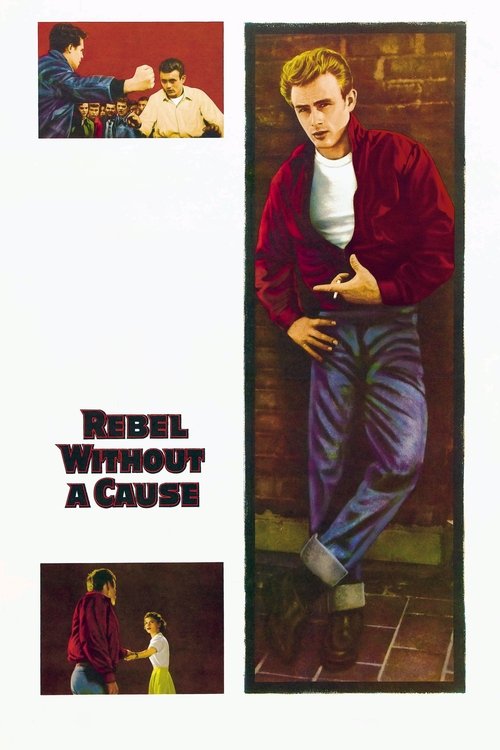
Johnny Guitar was placed reasonably well on Variety's list of "1954 Boxoffice Champs," increasing his professional capital. By now, he had moved into Bungalow 2 at the Chateau Marmont, his headquarters while shooting Rebel Without A Cause, a project of particular importance to him, about troubled young people. That was where he pitched his need to make such a film to Lew Wasserman, prompting his agent to send him to Warner Bros. The hotel residence also became Ray's headquarters and rehearsal space, and it was where James Dean arrived, aiming to meet the director. Dean started to attend Ray's "Sunday afternoons," his regular gatherings of friends at the bungalow, where scenes of the film to come were starting to take shape. Natalie Wood remembered Ray's relationship with Dean as "fatherly," and attributed the same quality to Sal Mineo's and her own connection to their director, even though the sixteen year-old also was sexually attracted to him, and his bungalow became the site of their assignations, while she was also involved with supporting player Dennis Hopper. Ray himself was also busy with roommates Monroe and Winters, Geneviève Aumont (then the professional name of Michèle Montau), and even Lew Wasserman's wife, Edie, while also interested in Jayne Mansfield, whom he tested for the role Wood won in Rebel.
Ray and Wood continued their affair for several months after production wrapped, and while he was shooting his next project, Hot Blood (1956), a pregnancy scare, which turned out to be false, prompted her to break off the romance. Dean had had apprehensions about Ray, but their trust, partnership and friendship grew, and they talked about forming a production company, collaborating again, and, after Rebel Without A Cause opened, sharing a Nicaragua holiday. None of those plans materialized, with Dean's death in a car crash, on September 30, 1955, that left Ray devastated and bereft. On a European tour at the time, he sought comfort with Hanne Axmann, and again in alcohol, in Germany. According to one friend, Ray had been more moderate for some time, and especially during the summer when he was working on Rebel, but, realizing that the filmmaker was drinking as he was, concluded; "I think it was all over on that September night of 1955."
Some biographers posit that Ray was bisexual, but Ray denied this in 1977, saying: "I am not bisexual, but anyone who denies having had a fantasy or a daydream denies having eaten a bowl of potatoes, mashed potatoes, you know, it has the same reality." Returning to Europe, in London, Ray met Gavin Lambert, with whom he had corresponded since Lambert's pioneering positive review of They Live By Night. Talking about In A Lonely Place, Lambert remembered Ray's comments about Dix Steele, Bogart's character, at the film's end: "Will he become a hopeless drunk, or kill himself, or seek psychiatric help? Those have always been my personal options, by the way." After a night of vodka and conversation, at 3:30 am, Ray and Lambert, who was gay, had sex, and Ray cautioned "that he wasn't really homosexual, not really even bisexual," advising that he had slept with many women, "but only two or three men." The next day, Ray urged Lambert to accompany him to Hollywood to work on what became Bigger Than Life, and Lambert remained a sometimes-sexual partner, while Ray continued to pursue women. According to Lambert, Ray "behaved like a possessive lover, expecting me to be always here on call..." while Ray continued to dwell on the loss of James Dean.
Bigger Than Life tells the story of a man who grows reliant on his abuse of medication, and consequently more and more broken. The connections to Ray, who had grown increasingly dependent on both alcohol and drugs, were not lost, even on Ray. In 1976, Ray confessed to himself, in a private journal entry, that he had lived in a "continuous blackout between 1957 or earlier until now," and his wife Susan, on seeing the film, commented to her husband, "This is your story before you lived it." Ray's drug use was abetted, while he was shooting Bitter Victory, by his new girlfriend, a heroin addict named Manon, and his gambling losses led to the end of his relationship with Lambert.
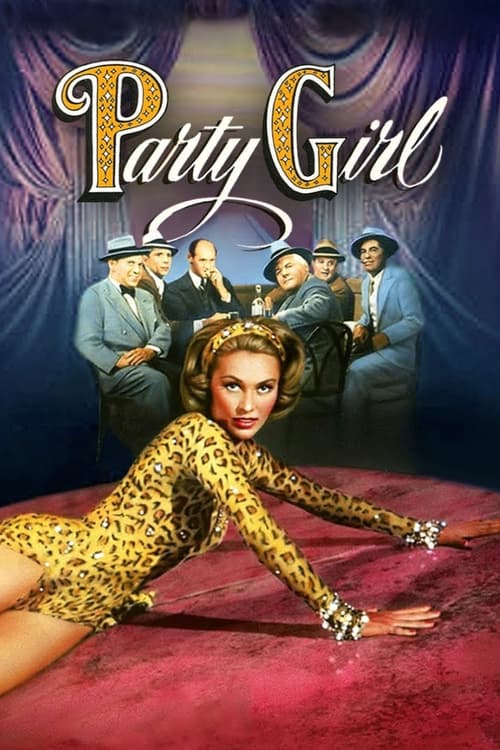
Seventeen-year-old Betty Utey first crossed paths with Ray in 1951, at RKO, when he was assigned to direct some additional scenes for Androcles and the Lion (1952), including one with a troupe of bikini-clad dancers. He described it as the "steam room of the vestal virgins." Some weeks after shooting the scene, in which he featured her, he asked her out to the ballet and dinner, and then took her to the house he was renting, having split with Gloria Grahame. At the end of their evening, like In a Lonely Place, he called a cab and sent her home. She subsequently did not hear from him for almost three years, when he called her to come to his Chateau Marmont bungalow for an assignation. He then disappeared again, until 1956, when he called again. In 1958, she won a place as one of the chorines in Party Girl, and, after shooting ended, they eloped to Maine, where Ray hoped to start his third marriage by drying out. En route, he collapsed at Boston's Logan Airport, suffering from the DTs. He recovered sufficiently to travel on to Kennebunkport, where the couple spent several weeks, before marrying on October 13, 1958. They had two daughters, both born in Rome: Julie Christina, on January 10, 1960, and Nicca, October 1, 1961. Ray's mother Lena had died in March 1959.
In early 1963, the family moved from Rome to Madrid, where Ray used money from his Samuel Bronston contract to try to develop projects, which never came to fruition. With a partner, he opened a restaurant and cocktail lounge called Nicca's, named after his younger daughter, and it became the hangout for film people working in Madrid, but also a place for Ray to sink a fortune, reportedly a quarter-million of his dollars in its first year. To manage it, he hired his nephew, Sumner Williams (whom he had cast in several pictures through the 1950s). Ray continued his chronic habits: too many drinks and pills, too little sleep. He and his wife separated in 1964, and she returned to the U.S. with their children, while he remained in Europe. They remained married until January 1, 1970, when their divorce was finalized and Betty Ray remarried.
Through the middle of the 1960s, Ray lived peripatetically, setting up in Paris, London, Zagreb, Munich and, for a while, Sylt, a German island in the North Sea. He had reacquainted himself with younger son Tim, then at Cambridge, and enlisted him to help with an autobiography — the elder Ray would record his recollections, and the younger would transcribe — for which a publisher had provided an advance, though no such memoir appeared in Nick Ray's lifetime. He periodically stopped drinking and regularly asked friends for handouts. Retrospectives of his films were marking the growth in his reputation, especially outside the U.S., including a double bill of Johnny Guitar and They Live By Night in Paris, in May 1968, placing Ray and his son amid the political uprising.
He returned to the United States on November 14, 1969, landing in Washington, DC just in time for the second Moratorium to End the War in Vietnam. Soon after, he announced plans for a documentary about "the young rebels of the 1960s," and relocated to Chicago, to shoot as the trial of the Chicago Eight, soon to become the Chicago Seven, proceeded. He filmed a party for the defendants and their team the evening of December 3, the day the prosecution ended its case. Overnight, the Chicago police killed Fred Hampton, Illinois chair of the Black Panther Party, in his sleep, and Ray and his crew were on the scene early in the morning to film the aftermath.
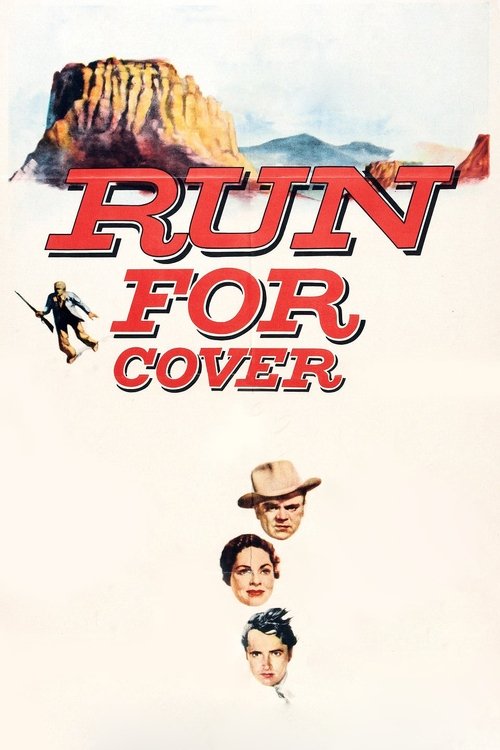
The project had mutated from a documentary to a strange dramatic reconstruction, for which Ray considered casting Dustin Hoffman or Groucho Marx or the long-retired James Cagney, as the trial judge, Julius Hoffman. According to Ray's own account, in late January 1970, not untypically, Ray was working through the night, and he fell asleep at the editing table, waking to feel a "heavy" sensation in his right eye. "It took me six hours to find a doctor, and if I had made it twenty minutes sooner, they would have been able to inject nicotinic acid and save the eye." He was hospitalized from January 28 to February 6, and according to writer Myron Meisel, that was Ray's first treatment for cancer. Despite this explanation, Ray remained somewhat elusive about the exact cause, and McGilligan notes several possible sources and witnesses to Ray's diminished vision, including a special-effects blast fifteen years previous, while shooting Run For Cover (1955). After 1970, however, Ray started regularly wearing a key prop in the construction of his mystique. He was tall, craggy, with a leonine mane of white hair, and now a black patch over his right eye, looking, in the remembrances of his student Charles Bornstein, "like a cross between Noah, a pirate, and God!"
During the trial, Chicago Seven lawyer William Kunstler introduced Ray to Susan Schwartz, an eighteen-year-old newly arrived to study at the University of Chicago, who skipped classes to watch the courtroom theatrics. In February 1970, as the jury deliberated, she found herself in a taxi, on the way to join the hive of activity that surrounded Ray at his house. "After only one day on Orchard Street," she later wrote, "the decision was easy: at the end of the term I would quit school and join the adventure, whatever it was."
They relocated to New York City, where Schwartz worked, in real estate and then publishing, to make a living for both of them while Ray sought money to continue work on the film and start other projects. They stayed with Ray's old cronies, including Alan Lomax and Connie Bessie, before finding a place of their own, while Ray continued to indulge his addictions and at night haunt the seamier corners of Times Square. When they crossed paths at a Grateful Dead show at the Fillmore East, Dennis Hopper invited Ray to his house in Taos, New Mexico, where Hopper was editing The Last Movie (1971). There Ray again found chaos of creativity and debauchery, of a type he had come to thrive upon, at least until the costs of hosting Nicholas Ray — Nicca Ray heard her father ran up a phone bill of $2,500, while Hopper himself likely exaggerated it as $30,000 a month — caused Hopper to ask him to leave. In Taos, Ray asked Susan to marry him, giving her his ring, and in return she gave him a pearl.
While in New Mexico, in spring 1971, Ray was invited to speak at Harpur College, an academic unit of the State University of New York at Binghamton. The event he presented convinced Larry Gottheim and Ken Jacobs that Ray should join them on faculty in the Cinema Department, then one of the U.S. epicenters of experimental film. Appointed on a two-year contract in the fall of 1972, Ray initially lived in an apartment in the university's infirmary.
Jacobs and Gottheim worked within the largely non-narrative and to varying degrees poetic and formalist realm of experimental film, while Ray's background was in drama and mainstream narrative cinema. Nonetheless, the project upon which he embarked with his students, envisioned as a feature-length film, first called Gun Under My Pillow (alluding to the character Plato, in Rebel Without A Cause) and finally titled We Can't Go Home Again, might have been seen as consistent with the avant-garde approaches to filmmaking that the department represented. There were criticisms of Ray, including the monopolization and abuse of the department's filmmaking equipment by his project, as well as his drug and alcohol habits and his students' emulation of him. As department chair, Gottheim had mediated the friction between his colleagues, but in spring 1973 Jacobs became acting chair, escalating the conflict; shortly thereafter, Ray's contract was not renewed. Jacobs would later characterize hiring Ray as a "calamitous error."
Ray's goal was to work on We Can't Go Home Again, in order to screen it at the Cannes Film Festival, in May 1973. Leaving Binghamton, followed by a few students who drove the film's elements across country in a driveaway car, he travelled wherever he might find cheap or free editing facilities, money to continue the project, and friends who would tolerate him as a guest. He started in Los Angeles, where he wound up back in Bungalow 2 at the Chateau Marmont, running up bills and seeking investment from his old Hollywood connections. But it was Susan who managed to find the money to get them both, and the film, to France. Ray's reputation in Europe might have helped secure a screening slot at Cannes, but it failed to convince the press and any other festivalgoers that the film warranted notice.
At loose ends, Ray and Susan spent some time in Paris, borrowing money from his longtime champion François Truffaut and racking up hotel costs paid by writer Françoise Sagan. Susan returned to New York, and Ray stayed awhile on a boat owned by Sterling Hayden, his "Johnny Guitar," from almost twenty years before. Ray travelled to Amsterdam, shooting a segment, The Janitor, for the feature-length Wet Dreams (1974), a softcore anthology produced by Max Fischer. He returned to New York by the end of the year, but in March 1974 he went back west, to the San Francisco Bay Area. The purpose was a retrospective of his films at the Pacific Film Archive, but he came with boxes of footage and personal goods, intending to stay awhile. He lived in a spare room at archive curator Tom Luddy's residence and worked overnight shifts in the editing rooms of Francis Coppola's Zoetrope facility, and, after he wore out that welcome, at the film collective CIne Manifest. While in the area, Ray was taken to hospital twice, once for alcoholic hemorrhaging.
Later in 1974, Ray returned to Southern California, to stay with his ex-wife Betty and their daughters, Julie, now fourteen, and Nicca, almost thirteen, whom he had not seen since they left Spain, ten years previous. Betty arranged for a house where he could stop drinking, but soon determined that he needed medical supervision and had him admitted to the detoxification unit at Los Angeles County Hospital. Ray resumed using, however, even persuading his older daughter to buy cocaine for him. On his departure, he left a letter advising that "it is best I live apart from you and our children," for many reasons, ending, "above all others I can bring you no joy."
He was deeply saddened by Sal Mineo's passing and attended his funeral in February 1976. They reconnected when Sal and his long-term partner Courtney Burr was invited to Ray's house in 1971. And, shortly after, he returned to New York City, where he was offered the opportunity to direct a film starring Marilyn Chambers and Rip Torn, which Ray titled City Blues, but financing fell through by July 1976, and the project never materialized. He continued to drink and abuse drugs heavily, and found himself in and out of hospital, with a variety of maladies and injuries due to impairment. Finally, Susan left him, and, on professional advice, gave him the ultimatum that she would not return unless he checked in to the Smithers Alcoholism and Rehabilitation Center, and was sober for one month. Shortly after, he had himself admitted. He remained for ninety days, and was discharged early in November 1976. He started attending Alcoholics Anonymous meetings, and he and Susan moved into a Soho loft, at 167 Spring Street.
In March 1977, Wim Wenders cast him in a small but notable role, alongside Dennis Hopper, in The American Friend (1977). At the same time, with the support of old friends Elia Kazan and John Houseman, Ray started to present workshops on acting and directing at the Lee Strasberg Theatre Institute, and then at New York University. He was also approached about directing a couple of films, including The Story of Bill W., about the founder of Alcoholics Anonymous. In November 1977, however, he was diagnosed with lung cancer.
He returned west in February 1978 to play a bit part in Miloš Forman's Hair (1979). Where he had looked robust in The American Friend, he now looked gaunt and drawn. After his scenes were shot, he visited Houseman in Malibu, and he summoned Nicca, so that he could tell her that he was dying of cancer. They remained in contact, but, it was the last time they saw each other.
On April 11, 1978, Ray underwent additional surgery, at Memorial Sloan-Kettering Cancer Center, involving therapeutic implantation of radioactive particles. Then, on May 26, he had surgery again, to remove a tumor on his brain. He was frail and coughed painfully and he had lost his hair; yet he was still active, and was hired to teach another summer workshop at NYU. He was then invited by László Benedek — once Ray's contemporary, as a Hollywood director, now chair of the NYU graduate film program — to teach in the autumn. He assigned Ray a teaching assistant, soon to become a friend, Jim Jarmusch.
With the imminent prospect of his death, Ray had spoken with his son Tim about making a documentary about a father-son relationship. Though that project remained unpursued, Tim Ray, experienced in cinematography, joined the crew that assembled to make Lightning Over Water, a collaboration of Ray and Wenders, though credited collectively to all the participants. With no appetite, and increasingly unable to swallow, Ray was wasting away, and had to be admitted to hospital for intravenous feeding, restoring some weight and buying some time. Ray was visited by friends including Kazan, Connie Bessie, Alan Lomax and his first wife, Jean, as well as students from Harpur College, and his more recent students.