Comics
After forming a friendship with Alan Moore, who taught him how to write comic scripts, Gaiman started writing comic books and picked up Miracleman after Moore finished his run on the series. He continued his professional relationship with Moore by contributing quotations for the supplemental materials in the Watchmen comic book series.
Gaiman and artist Mark Buckingham collaborated on several issues of the series before its publisher, Eclipse Comics, collapsed, leaving the series unfinished. His first published comic strips were four short Future Shocks for 2000 AD in 1986–87. He wrote three graphic novels with his favourite collaborator and long-time friend Dave McKean: Violent Cases, Signal to Noise, and The Tragical Comedy or Comical Tragedy of Mr. Punch. Impressed with his work, DC Comics hired him in February 1987, and he wrote the limited series Black Orchid. Karen Berger, who later became head of DC Comics's Vertigo, read Black Orchid and offered Gaiman a job: to re-write an old character, the Sandman, but to put his own spin on him.
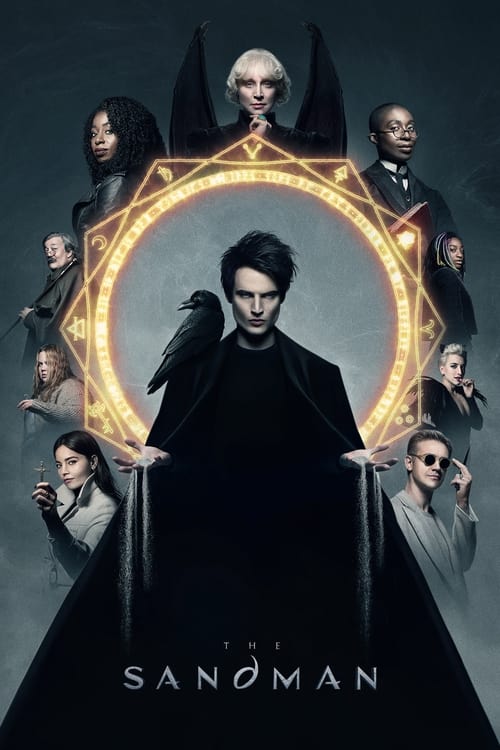
The Sandman tells the tale of the ageless, anthropomorphic personification of Dream that is known by many names, including Morpheus. The series began in January 1989 and concluded in March 1996. The various artists who contributed to the series include Sam Kieth, Mike Dringenberg, Jill Thompson, Shawn McManus, Marc Hempel, and Michael Zulli, with lettering by Todd Klein, colours by Daniel Vozzo, and covers by Dave McKean. The series became one of DC's top selling titles, eclipsing even Batman and Superman. The 75 issues of the regular series, along with an illustrated prose text and a special containing seven short stories, have been collected into 12 volumes that remain in print.
In the eighth issue of The Sandman, Gaiman and artist Mike Dringenberg introduced Death, the older sister of Dream, who became as popular as the series' title character. The limited series Death: The High Cost of Living launched DC's Vertigo line in 1993.
Comics historian Les Daniels called Gaiman's work "astonishing" and noted that The Sandman was "a mixture of fantasy, horror, and ironic humor such as comic books had never seen before". DC Comics writer and executive Paul Levitz observed that "The Sandman became the first extraordinary success as a series of graphic novel collections, reaching out and converting new readers to the medium, particularly young women on college campuses, and making Gaiman himself into an iconic cultural figure."
Gaiman and Jamie Delano were to become co-writers of the Swamp Thing series following Rick Veitch. An editorial decision by DC to censor Veitch's final storyline caused both Gaiman and Delano to withdraw from the title.
Gaiman produced two stories for DC's Secret Origins series in 1989: a Poison Ivy tale drawn by Mark Buckingham and a Riddler story illustrated by Bernie Mireault and Matt Wagner. A story that Gaiman originally wrote for Action Comics Weekly in 1989 was shelved due to editorial concerns but it was finally published in 2000 as Green Lantern/Superman: Legend of the Green Flame.
In 1990, Gaiman wrote The Books of Magic, a four-part mini-series that provided a tour of the mythological and magical parts of the DC Universe through a frame story about an English teenager who discovers that he is destined to be the world's greatest wizard. The miniseries was popular, and sired an ongoing series written by John Ney Rieber.
Gaiman's adaptation of Sweeney Todd, illustrated by Michael Zulli for Stephen R. Bissette's publication Taboo, was stopped when the anthology itself was discontinued.
In the mid-1990s, he also created a number of new characters and a setting that was to be featured in a title published by Tekno Comix. The concepts were then altered and split between three titles set in the same continuity: Lady Justice, Mr. Hero the Newmatic Man, and Teknophage, and tie-ins. Because the publisher aimed to expand their characters into other media such as television, Gaiman designed his concepts with potential TV and computer game adaptations in mind. Although his name appeared prominently as the creator of the characters, he was not involved in writing any of the above-mentioned books.
Gaiman wrote a semi-autobiographical story about a boy's fascination with Michael Moorcock's anti-hero Elric of Melniboné for Ed Kramer's anthology Tales of the White Wolf. In 1996, Gaiman and Kramer co-edited The Sandman: Book of Dreams. Nominated for the British Fantasy Award, the original fiction anthology featured stories and contributions by Tori Amos, Clive Barker, Gene Wolfe, Caitlín R. Kiernan, Tad Williams, and others.
Asked why he likes comics more than other forms of storytelling, Gaiman said: One of the joys of comics has always been the knowledge that it was, in many ways, untouched ground. It was virgin territory. When I was working on Sandman, I felt a lot of the time that I was actually picking up a machete and heading out into the jungle. I got to write in places and do things that nobody had ever done before. When I'm writing novels I'm painfully aware that I'm working in a medium that people have been writing absolutely jaw-droppingly brilliant things for, you know, three-four thousand years now. You know, you can go back. We have things like The Golden Ass. And you go, well, I don't know that I'm as good as that and that's two and a half thousand years old. But with comics I felt like – I can do stuff nobody has ever done. I can do stuff nobody has ever thought of. And I could and it was enormously fun.
Gaiman wrote two series for Marvel Comics. Marvel 1602 was an eight-issue limited series published from November 2003 to June 2004 with art by Andy Kubert and Richard Isanove. The Eternals was a seven-issue limited series drawn by John Romita Jr., which was published from August 2006 to March 2007.
In 2009, Gaiman wrote a two-part Batman story for DC Comics to follow Batman R.I.P. titled "Whatever Happened to the Caped Crusader?" a play-off of the classic Superman story "Whatever Happened to the Man of Tomorrow?" by Alan Moore. He contributed a twelve-part Metamorpho serial drawn by Mike Allred for Wednesday Comics, a weekly newspaper-style series. Gaiman and Paul Cornell co-wrote Action Comics #894 (December 2010), which featured an appearance by Death. In October 2013, DC Comics released The Sandman: Overture with art by J. H. Williams III. Gaiman's Angela character was introduced into the Marvel Universe in the last issue of the Age of Ultron miniseries in 2013.
Gaiman oversaw The Sandman Universe, a line of comic books published by Vertigo. The four series — House of Whispers, Lucifer, The Books of Magic, and The Dreaming — were written by new creative teams. The line launched on 8 August 2018.
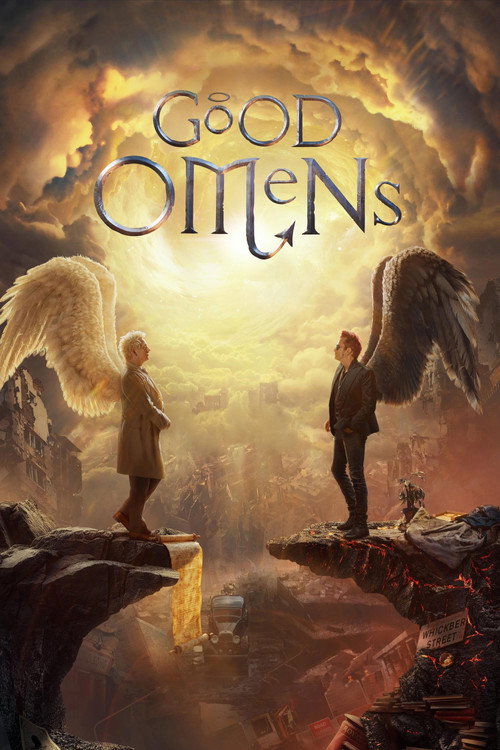
After teaming with Colleen Doran for a series of graphic novel adaptations based on his short stories "Troll Bridge", "Chivalry", and "Snow, Glass, Apples", Gaiman and the Terry Pratchett estate chose Doran to adapt Good Omens into graphic novel form, and to self publish the work via the Pratchett estate's Dunmanifestin label. It was financed on Kickstarter where it became a record-setter in less than a week as the top fan-supported and top-earning comics project in the history of the platform.