Later years
In 1987, Nancy Kwan co-founded the restaurant Joss Cuisine. Kwan, producer Ray Stark, and restaurateur and Hong Kong film director Cecile Tang financed the restaurant, located on the Sunset Strip in West Hollywood.
Kwan has sporadically recorded audiobooks. In 1995, Kwan recorded an audiobook for Anchee Min's memoir Red Azalea in what Publishers Weekly called a "coolly understated performance that allows the story's subtleties and unexpected turns to work by themselves". In 2011, she recorded an audiobook for the 1989 memoir When Heaven and Earth Changed Places by Le Ly Hayslip with Jay Wurts. The San Francisco Chronicle's Patricia Holt praised Kwan's intonation in her delivery, writing that "Kwan's faint Asian accent and careful pronunciation of Vietnamese words make Hayslip's weaving of her past and present lives a riveting experience".
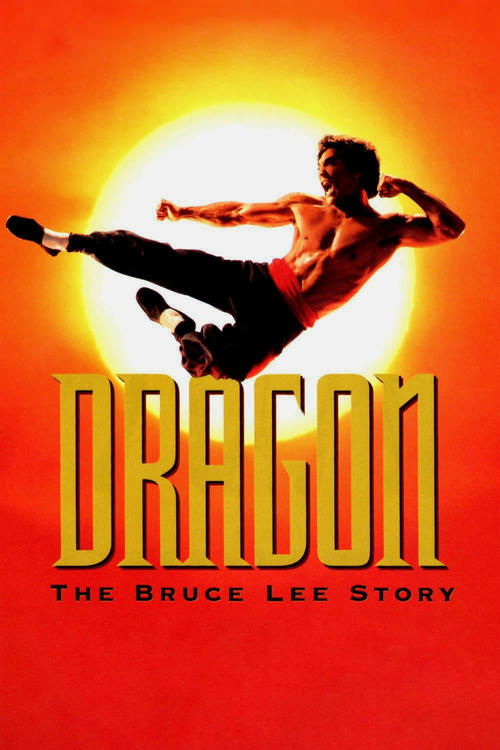
In 1993, Kwan played Gussie Yang, a "tough-talking, soft-hearted Hong Kong restaurateur", in the fictional Dragon: The Bruce Lee Story. She played a pivotal role in the film, a character based on Seattle restaurateur and political leader Ruby Chow who hires Bruce Lee as a dishwasher and gives him the funds to open a martial arts school.
In May 1993, she completed a film about Eurasians entitled Loose Woman With No Face, which she wrote, directed, and starred in. She called the film "a slice of life about Euro-Asians in Los Angeles, and it's something I know about".
Around that time, Kwan was asked about whether she was confronted with racism as a leading Asian Hollywood actress in the 1960s. Kwan replied, "That was 30 years ago and (prejudice) wasn't such a heavy issue then. I was just in great Broadway productions that were turned into films. I personally never felt any racial problems in Hollywood." In the 1990s, the number of parts available to her dried up. She attributed this to both her age and the movie business' aversion to casting Asians in non-Asian roles. In earlier years, she had been able to play an Italian and a Tahitian.
In the 1990s, there were more Hollywood films about Asians. Kwan could have capitalized on the trend through a role in the 1993 film The Joy Luck Club. But because the filmmakers refused to excise a line calling The World of Suzie Wong a "...horrible racist film," she passed on the role.
In November 1993, Kwan co-starred in the two-character play Arthur and Leila about two siblings who struggle with their Chinese identities. It debuted in the Bay Front Theater in Fort Mason, San Francisco, and moved to Los Angeles two weeks later. Variety reviewer Julio Martinez praised Kwan for her ability to "flo[w] easily between haughty sophistication and girlish insecurity".
In 1994, an article in the South China Morning Post said that she preserved her "dancer's figure" through the Chinese martial art tai chi and frequent dance sessions. That year, she assumed the role of 52-year-old Martha in Singapore Repertory Theatre's showing of Who's Afraid of Virginia Woolf?, an "intense psychological play" by Edward Albee.
In 1995, she produced and acted in the feature film Rebellious. Her son Bernie was the director, writer, and star of the film, which was co-produced by Norbert Meisel.
In 1996, when he was 33, Kwan's son, Bernie, died after contracting AIDS from a girlfriend Kwan had advised him to avoid. Four years after his death, poet and actress Amber Tamblyn compiled her debut poetry book Of the Dawn and dedicated it to Pock. Tamblyn had acted in Rebellious when she was nine, alongside her father Russ Tamblyn. Calling Pock a "big brother", she said he was the "first guy" to convince her to share her poems.
Nancy Kwan has appeared on television commercials into the 1990s and appeared in commercials for the cosmetic "Oriental Pearl Cream".
Kwan has been involved in philanthropy for AIDS awareness. In 1997, she published A Celebration of Life – Memories of My Son, a book about her son who died after being infected with HIV. She contributed the profits from both the book and a movie she made about him to support the study of AIDS and the promotion of AIDS awareness.
On March 17, 2006, cheongsam-wearing Kwan and her husband, Norbert Meisel, attended the debut performance of Hong Kong Ballet's depiction of Suzie Wong at Sha Tin Town Hall. Kwan told The Kansas City Star in 2007 that she had not considered retiring, saying that it leads to trouble. Retirees, she professed, frequently find themselves with nothing to do because they have not readied themselves for it. Kwan said, "I hope I'm working until the day I die. If work is a pleasure, why not?" In 2006, Kwan reunited with Flower Drum Song co-star James Shigeta to perform A. R. Gurney's two-person play Love Letters. They performed the play at Los Angeles' East West Players and San Francisco's Herbst Theatre.
Kwan appeared in Arthur Dong's 2007 documentary Hollywood Chinese, where she joined other Chinese luminaries in discussing past accomplishments and future prospects for people of Chinese descent in the movie industry.
Kwan and her husband Norbert Meisel write and direct films about Asian-Americans. Kwan believes that Asians are not depicted in enough films and TV shows. She and her husband have resolved to create their own scripts and films about Asian characters. In 2007, they wrote, directed, and produced Star of Sunshine, a Bildungsroman film starring Boys Don't Cry actress Cheyenne Rushing, who plays Rachel. An talented pianist growing up in a troubled home, Rachel journeys to find her peripatetic father, a musician who deserted her when she was a child. In Sunshine, Rachel is supported by Kwan, the manager of a jazz club, who knows a secret about her. In the film's final scene, Kwan dances, an activity she has enjoyed since her youth.
Kwan wrote an introduction to the 2008 book For Goodness Sake: A Novel of the Afterlife of Suzie Wong written by American author James Clapp under the pen name Sebastian Gerard. Clapp became acquainted with Kwan through director Brian Jamieson, who was filming a documentary about Kwan's life.
Kwan serves as a spokeswoman for the Asian American Voters Coalition, a pan-Asian political organization established in 1986 to support Asian actors.
In her performing arts career, Kwan has appeared in two television series and over 50 films. The Straits Times reported in March 2011 that Kwan continues to serve as a film screenwriter and executive.
Kwan currently resides in Los Angeles and has family members in Hong Kong. Once every few years, she travels to the former colony.